




SUMPs for BSR and BSR Urban Mobility projects showcased at EUSBSR Annual Forum in Tallinn 11–13 May 2026
09 June 2026
The SUMPs for BSR and BSR Urban Mobility projects joined hundreds of Baltic Sea Region stakeholders at the EUSBSR Annual Forum 2026 in Tallinn, highlighting the importance of cooperation in advancing sustainable urban mobility across the region. The Forum brought together cities, policymakers, researchers and project representatives to address shared challenges such as climate change, demographic shifts, and the transition towards more resilient and sustainable societies. Throughout the event, SUMPs for BSR was represented in the Networking Village at the Union of the Baltic Cities stand.
From Planning to Practice: BSR Projects Join Forces
The programme included a joint session organised by the SUMPs for BSR and BSR Urban Mobility projects called From plans to reality: governing urban mobility for resilience. The session explored the gap between planning and implementation and discussed how cities can more effectively deliver sustainable mobility solutions in practice. The session featured a panel discussion with representatives from cities and national and macro-regional levels, including:
- Heike Bunte, Head of Section Active Mobility, Free and Hanseatic City of Hamburg – Borough of Altona
- Merlin Rehema, Sustainable Mobility Specialist, National SUMP Contact Point, Estonian Ministry of Climate
- Miglė Panasenkienė, International Project Manager and EUSBSR PA Transport Coordinator, Transport Innovation Association
- Tīna Šipkēvica, Spatial Planning Expert and EUSBSR PA Spatial Planning Coordinator, VASAB Secretariat
- Alicja Pawłowska, Sustainable Mobility Senior Expert, City of Gdynia
- Jokūbas Leipus, Head of City Development Department, Panevėžys City Municipality
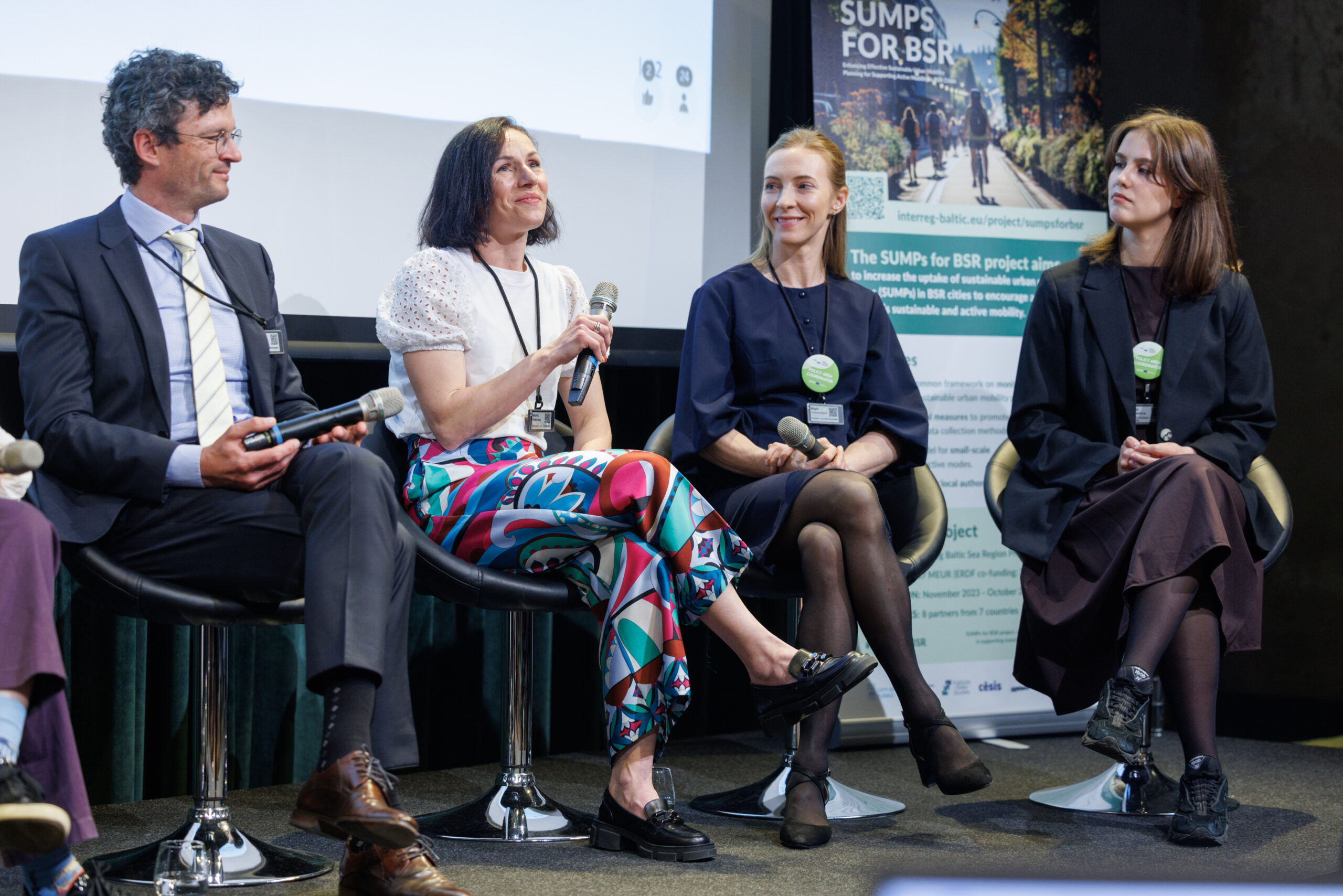
EUSBSR ANNUAL FORUM 2026, Day 2. Photo: Andras Kralla
Key findings from the discussion
The panel discussion and participants’ contribution highlighted several important insights for cities and decision-makers across the Baltic Sea Region:
- Fragmentation is a core barrier to implementation
The biggest challenge is not a single issue, but fragmented responsibilities, timelines and cooperation across local, regional and national levels. - Political and public acceptance is critical
Successful implementation depends on whether people and decision-makers understand and support the measures – not just on technical quality or funding availability. - Mismatch between long-term projects and short-term politics
Infrastructure projects take years, while political priorities can change quickly, risking delays or disruption of long-term mobility goals. - SUMP is important but not enough on its own
SUMPs are valuable strategic tools for planning and communication, but they cannot fully address fast-changing developments or guarantee implementation without additional governance mechanisms. - Stronger coordination and governance are needed
Cities highlighted the need for clearer roles, better cooperation, regular exchange platforms, and stronger national support to enable implementation.
Overall, the discussion emphasised that improving sustainable urban mobility is not only about better plans, but about better delivery conditions, cooperation and governance.
From discussion to next steps
To capture these insights and support further work, a discussion paper will be developed by BSR Urban Mobility project based on the session. This will summarise the key messages and share practical recommendations with a wider audience.
Thank you to all participants
The SUMPs for BSR team would like to warmly thank everyone who visited the stand, joined the session, and contributed to the discussion. Your insights and experiences are essential for shaping more sustainable, people-friendly mobility systems in the Baltic Sea Region.
Photographs used in the article were taken by Andras Kralla.

Additional links
details
-
Homepage
-
Project typeCore Project

-
ImplementationNovember 2023 - October 2026
-
StatusOngoing
-
Contribution to EUSBSRPolicy Area Spatial Planning

-
Target groups
- Local public authority
- National public authority
-
Social media
-
Additional links
-
Tags