




Panevėžys explores school-based pilots to support active mobility and data-driven planning
05 May 2026
Panevėžys, the fifth-largest city in Lithuania with a population of more than 85 000 residents, is a compact urban area where distances between residential districts and the city centre are relatively short and well connected. This creates favourable conditions for walking and cycling to become a natural part of everyday travel.
Within the SUMPs for BSR project, the city is exploring how to make better use of these conditions by testing practical solutions that combine infrastructure development, behaviour change and mobility data collection. Panevėžys is focusing on school-based pilots to better understand daily travel patterns and support the further development of its Sustainable Urban Mobility Plan (SUMP).
The city already has a strong cycling network, with cycle paths making up around 28% of the total road network. However, as in many cities, good infrastructure alone does not guarantee regular use. Understanding travel behaviour and encouraging more active commuting remains an important task.
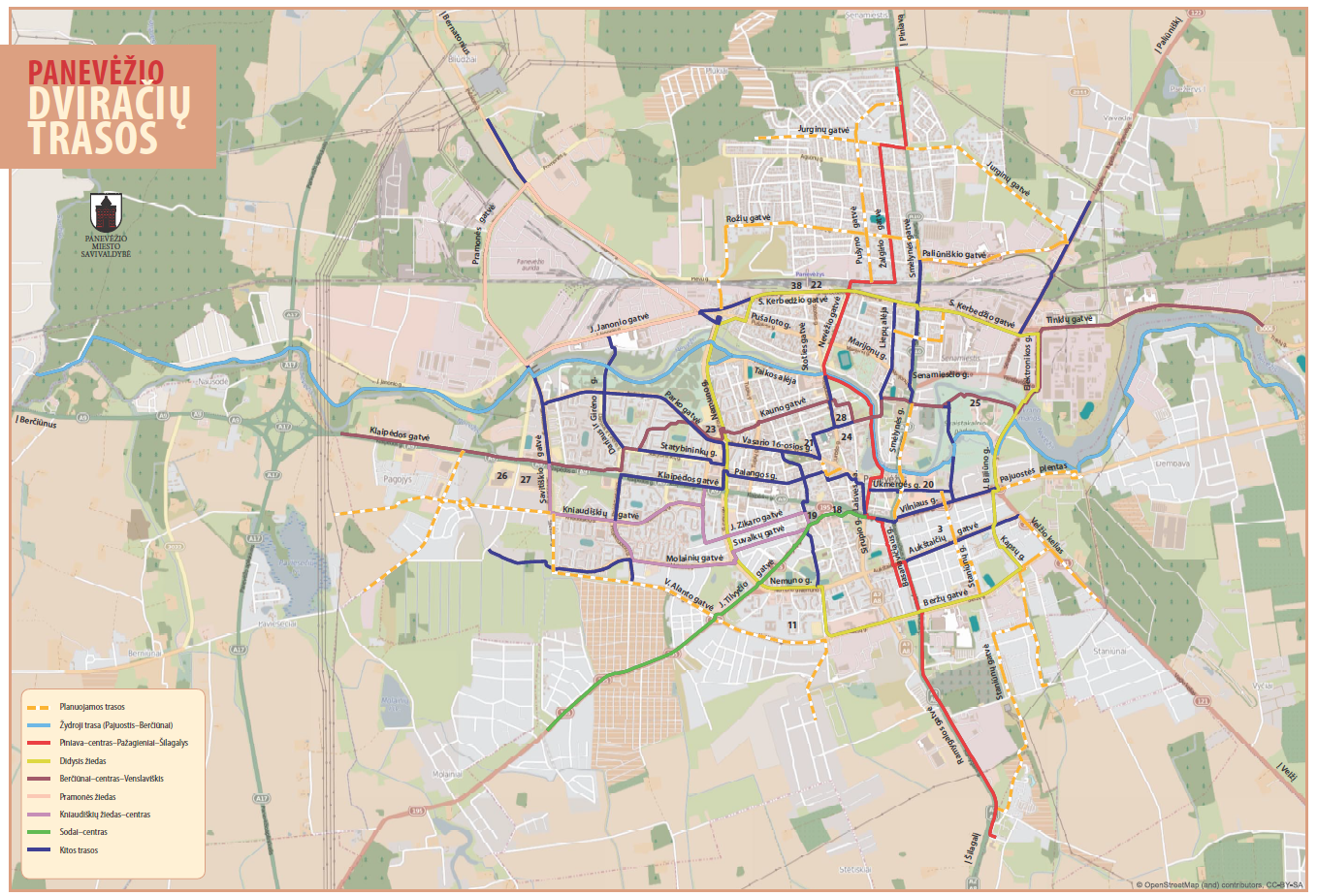
Map of bike trails in Panevėžys. Photo: Panevėžys city municipality administration.
Schools as a strategic focus for testing active mobility
Although Panevėžys offers good conditions for walking and cycling, the use of active mobility for everyday trips is still uneven. This is particularly visible in daily school commuting, where short distances and good connectivity do not always translate into more walking or cycling. The city has also faced challenges in systematically collecting and analysing mobility data, limiting its ability to assess the real impact of existing measures and to plan targeted improvements.
To address these challenges, Panevėžys selected ten city schools as pilot locations, based on criteria linked to the city’s SUMP priorities. Selected schools are located in the most densely populated and active parts of the city, including the central area and key residential districts. They are situated near main cycling routes and along important urban corridors. Selected schools also represent those with the largest number of students in the city, allowing the pilot to reach a broad and representative target group.
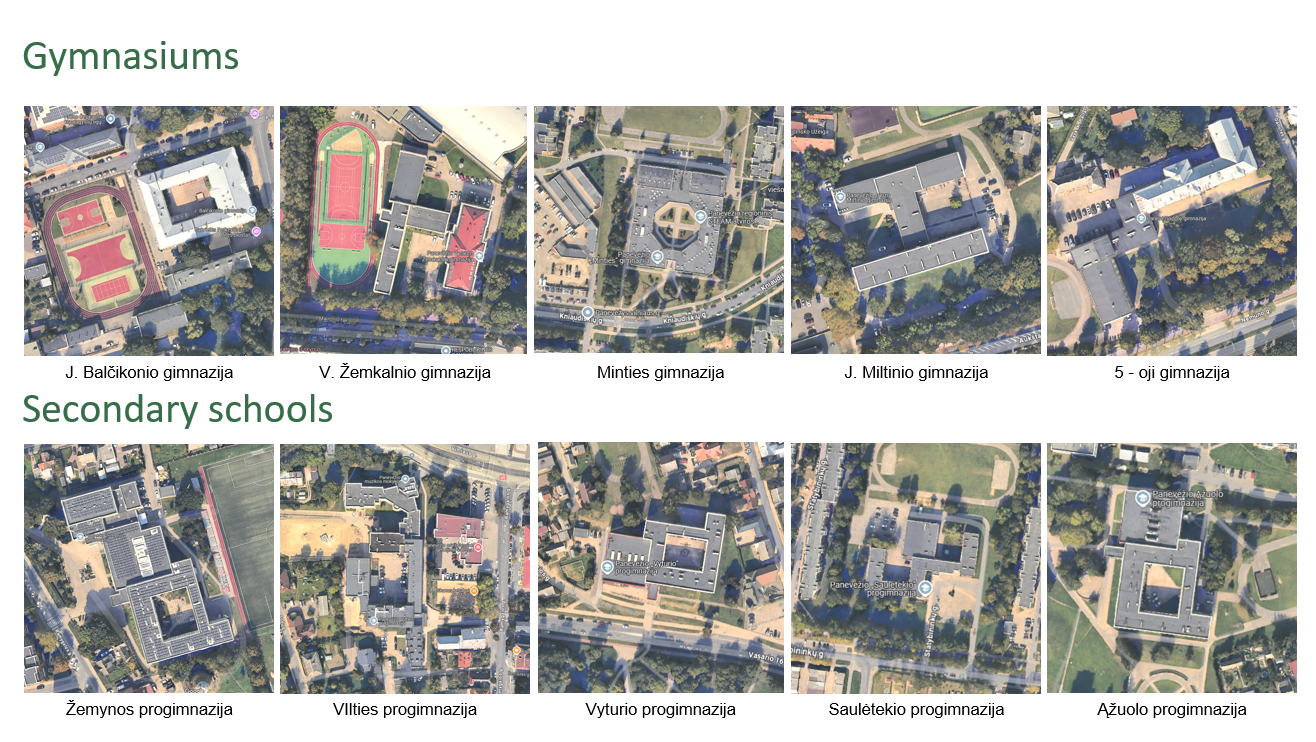
Ten schools selected for pilot activities in Panevėžys. Photo: Panevėžys city municipality administration.
School communities were therefore identified as a strategic focus for pilot activities. They provide a unique setting with daily and repetitive travel patterns, easy access to surveys and monitoring, and an opportunity to influence behaviour at an early stage, when mobility habits are still forming. At the same time, activities in schools ensure high visibility and public relevance, extending their impact beyond students to parents, teachers and the wider community.
Combining infrastructure, engagement and data collection in school-based pilots
Panevėžys implemented a structured sequence of pilot activities across ten selected schools, combining data collection, infrastructure development and behaviour change initiatives. The process began in spring 2024 with an initial data collection phase, which established a baseline of how students travel to school. A second round followed in autumn 2024, providing a clearer picture of existing mobility patterns before any interventions were introduced. Based on these insights, bicycle and scooter racks were installed at schools so that the infrastructure directly responds to identified needs and supports everyday travel choices more effectively.
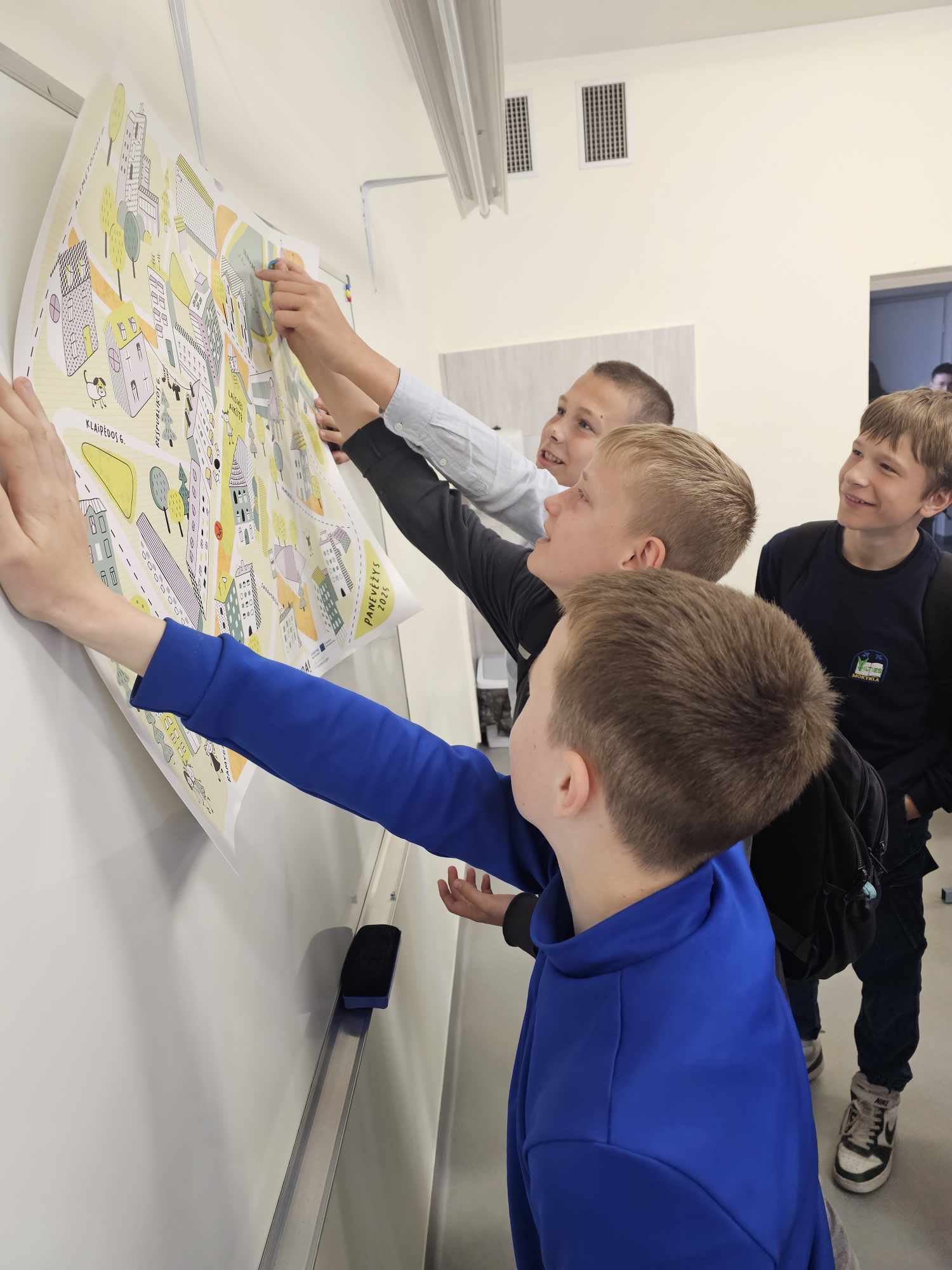
Students taking part in the “Our School Moves” initiative, placing cycling and scooter trip stickers on a city map. Photo: Panevėžys city municipality administration.
Alongside infrastructure instalment, the city launched two large-scale student engagement campaigns, “Our School Moves” and “Our School Moves 2.0”. The first initiative was introduced after the installation of infrastructure, encouraging students to actively use the new facilities and choose more sustainable ways of travelling to school. A third data collection phase was carried out in spring 2025 to assess early changes in behaviour following both infrastructure development and the first campaign.
The second campaign followed in autumn 2025, further reinforcing positive habits and maintaining engagement across school communities. Both campaigns achieved strong participation. Students from grades 5 to 12 were actively involved, and new bicycle and scooter racks were fully used, in some cases exceeding capacity. Active travel became more visible in school environments, showing that when infrastructure and engagement are combined, uptake can increase significantly. This experience points to the potential for continuing similar initiatives in the future.
A fourth data collection phase conducted in autumn 2025 enabled a comprehensive before-and-after comparison across the entire infrastructure pilot period. The results indicate a clear increase in the use of active mobility modes among students, particularly cycling and the use of scooters. Higher use of racks and increased participation during campaign periods suggest that the combined approach had a positive effect on daily travel choices.
Engaging stakeholders to shape pilot activities and monitoring approach
Stakeholder engagement played an important role in shaping the pilots’ activities in Panevėžys and ensuring their relevance to local needs. Meetings brought together representatives of the selected schools, municipal departments, local police, development agency and external mobility experts. Discussions focused on school mobility patterns, infrastructure conditions and safety issues, as well as the everyday challenges faced by city students.
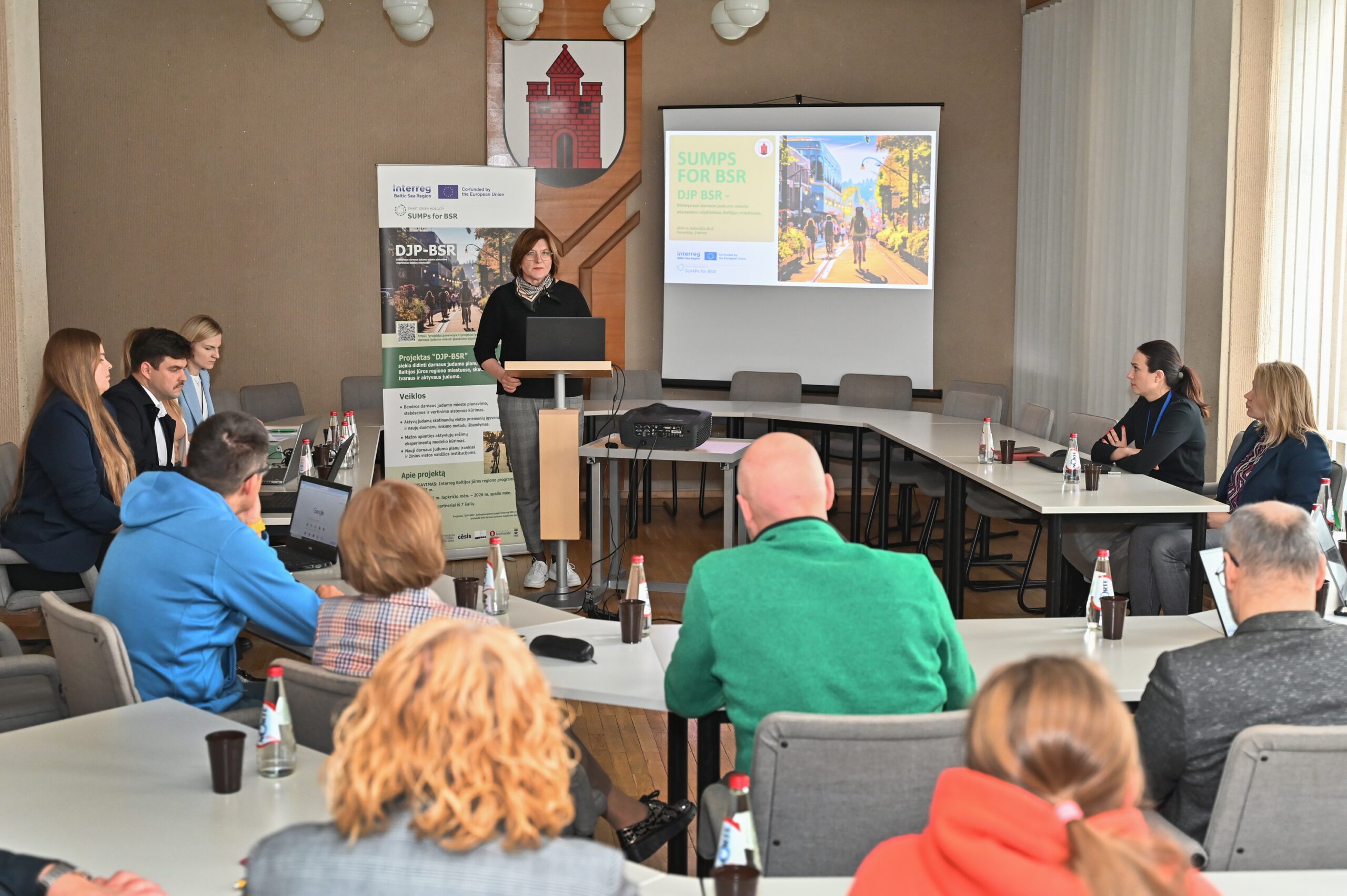
Stakeholder discussion on school mobility challenges and solutions in Panevėžys. Photo: G. Kartanas.
Stakeholders highlighted the need for improved bicycle and scooter infrastructure, while noting that students already show a growing preference for sustainable travel modes. Based on expert analysis of mobility flows, discussions also focused on how students travel to and from school and how these patterns could be influenced by targeted measures, with early results indicating an increase in public transport use. Participants contributed to defining key monitoring indicators and to identifying several practical measures to promote active mobility. These consultations helped ensure that project pilots were aligned with real needs and supported a more evidence-based approach to mobility planning.
Testing and learning from a combined approach to active mobility
Through these pilots, Panevėžys tested how a coordinated approach combining infrastructure, behaviour change and data collection can support active mobility in practice. The city explored whether simple, low-cost infrastructure development can influence everyday travel choices, how school-based campaigns can encourage repeated behaviour change, and how effectively schools can serve as a platform for systematic mobility data collection. The pilot also examined how different data sources, such as surveys, on-site observations and infrastructure usage data, can be integrated into a coherent monitoring system, while testing cooperation models between the municipality, schools and external experts, as well as the use of existing school communication channels to reach students and parents.
The results provided several practical insights for mobility planning. They confirmed that schools are an effective entry point for influencing travel behaviour at a broader community level and that infrastructure measures are most effective when combined with communication and engagement activities. Repeated campaigns helped generate strong participation and visibility, although long-term behaviour change remains gradual and influenced by external factors such as weather conditions. The pilots strengthened cooperation with school communities and improved the city’s ability to collect, analyse and use mobility data for future planning. These experiences will support further development of Panevėžys’ SUMP and contribute to shared learning across cities in the Baltic Sea Region.
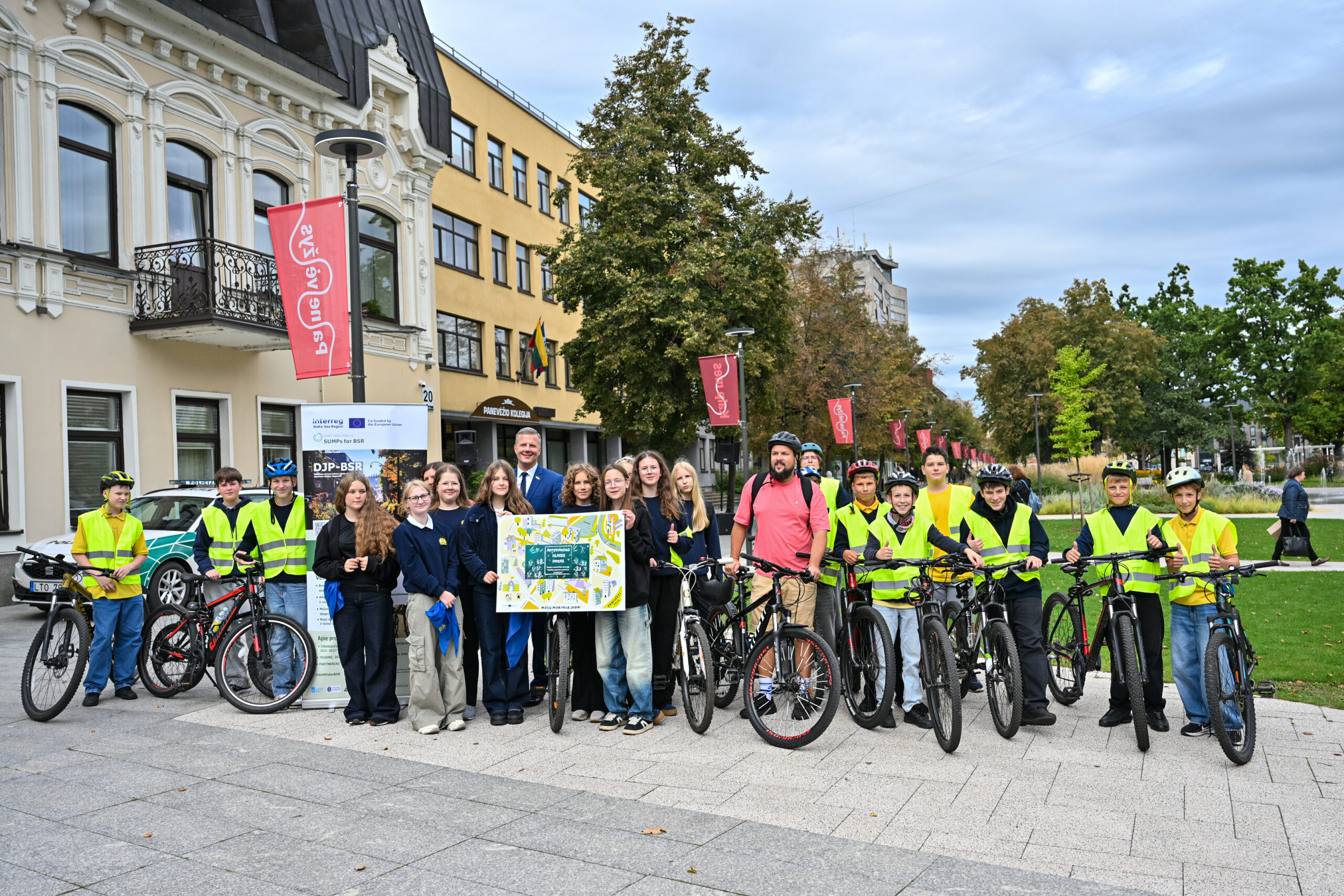
One of the most active classes during the “Our School Moves” initiative closing event. Photo: G. Kartanas

Additional links
details
-
Homepage
-
Project typeCore Project

-
ImplementationNovember 2023 - October 2026
-
StatusOngoing
-
Contribution to EUSBSRPolicy Area Spatial Planning

-
Target groups
- Local public authority
- National public authority
-
Social media
-
Additional links
-
Tags