





Model with practical steps to experiment with active mobility for local public authorities and cities
04 August 2026
Cities have significant untapped potential to use temporary pilots and experiments as part of their planning practices. The model for experimenting with active mobility measures helps local authorities test ideas that promote walking and cycling before making long-term investments. The model provides practical guidance for planning, implementing and evaluating small-scale active mobility pilots.
The model was developed within the SUMPs for BSR project, co-funded by the Interreg BSR programme. To test and refine the approach, project partners carried out small-scale active mobility experiments in their own cities using the model as a guideline.
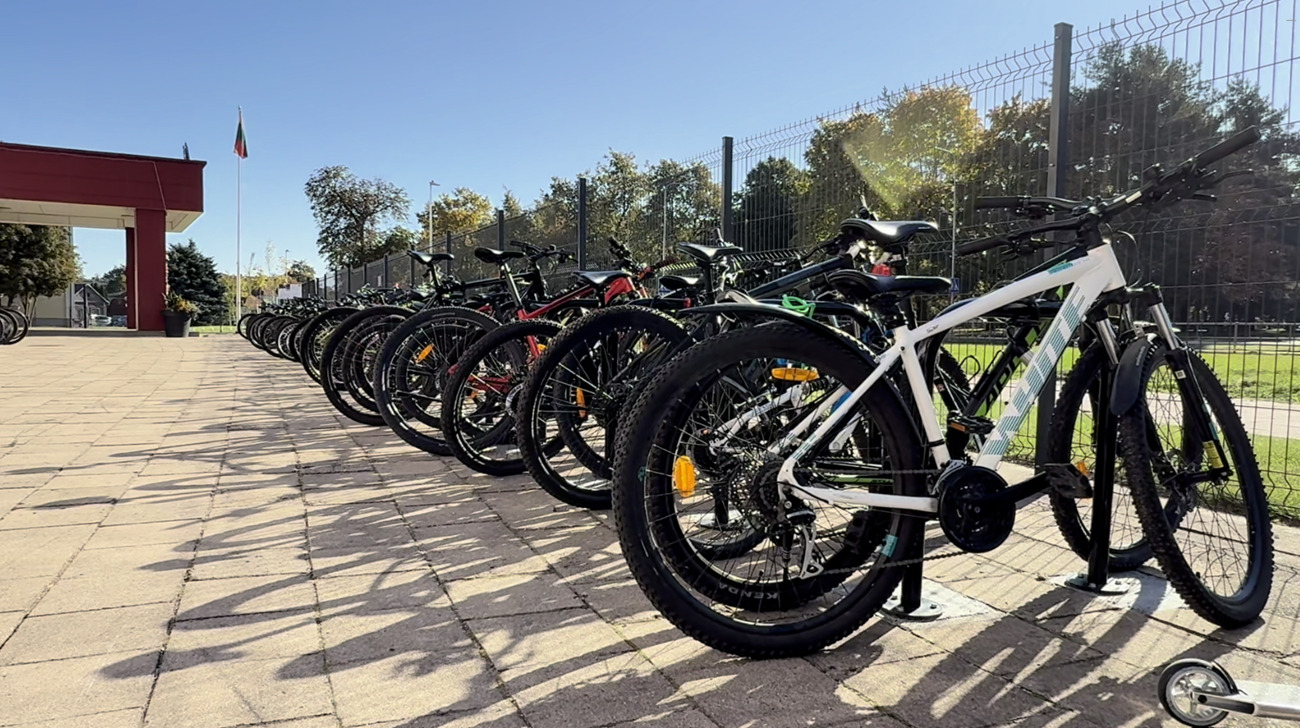
Panevėžys installed bicycle and scooter racks at schools to promote active mobility. Photo: Gintarė Kliučininkienė, Panevėžys city municipality.
Testing before permanent solutions
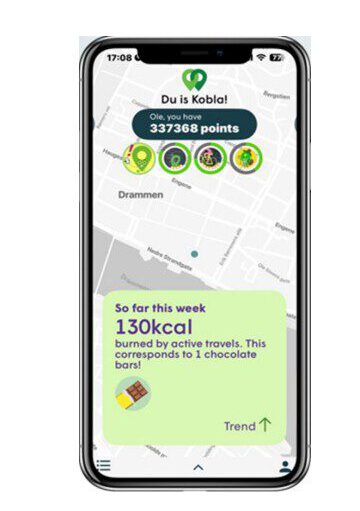
Gävle encouraged employees to replace short car trips with cycling and walking via an app.
Small-scale experiments and pilots provide cities with a practical, low-risk, and cost-efficient way to promote active mobility and improve public space while building evidence for long-term change. By testing solutions in real-life conditions, cities can respond to local needs and gather evidence that supports better decision-making and long-term mobility planning.
The model offers a structured, yet flexible framework that guides cities through the full lifecycle of a pilot. It covers everything from identifying needs and setting objectives, to implementation, evaluation, communication, and decisions on continuation or scaling up. The model also highlights the importance of preparation, cross-departmental coordination, stakeholder engagement, and risk management to avoid common pitfalls and improve the effectiveness and legitimacy of experiments.
Building support for successful pilots
Sustained political support is one of the key factors determining whether a pilot succeeds and leads to long-term change. Even small changes in public spaces can trigger strong reactions from residents or the media. Preparing responses and communication strategies early helps manage risks and criticism.
Political support can be further strengthened through close cooperation between municipal departments and by aligning the pilot with existing policy objectives. Aligning the pilot with existing policy goals strengthens political support and makes the scaling and continuation decision easier.
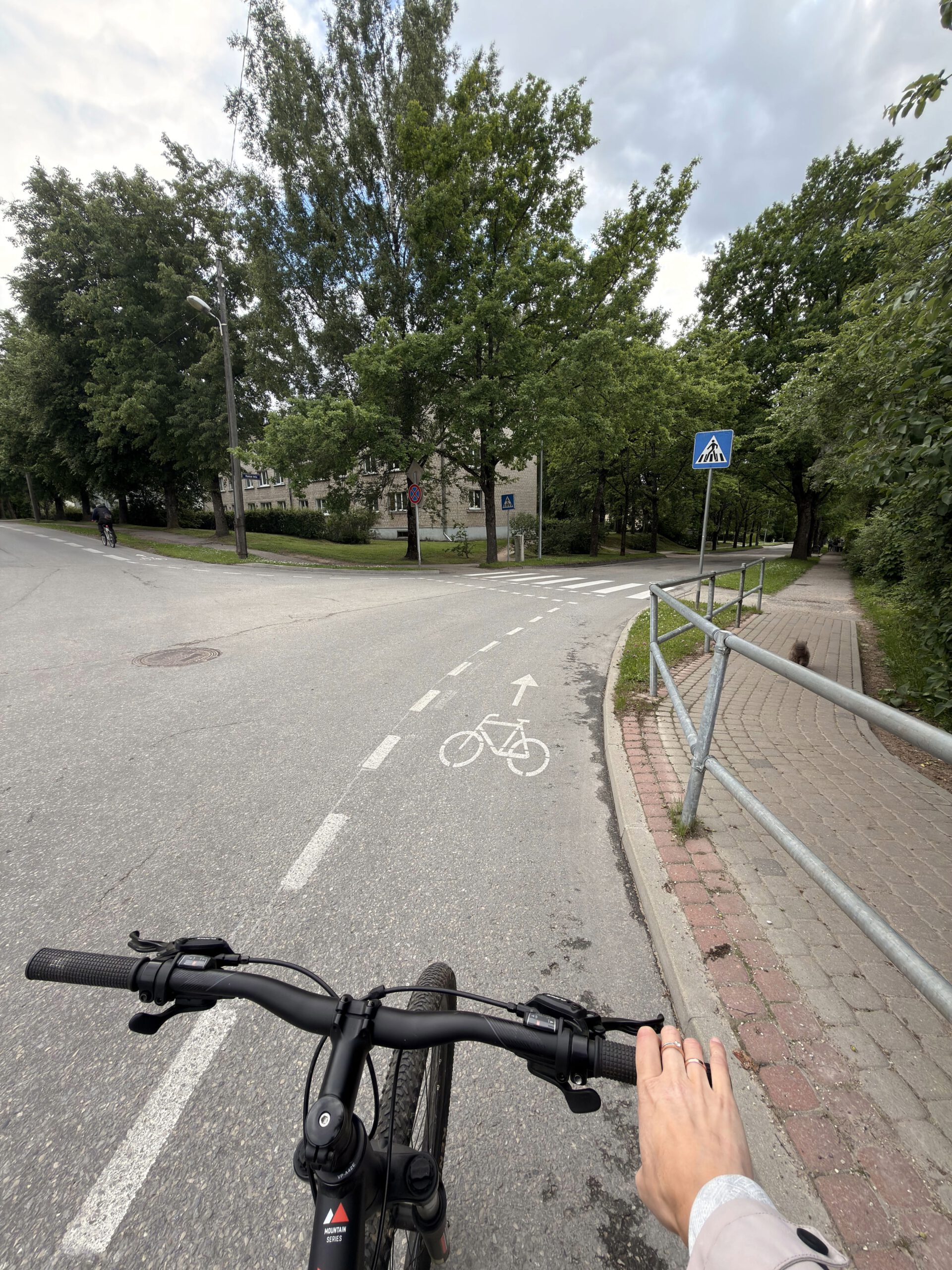
Cēsis tested temporary bicycle lanes before building them permanently. Photo: Cēsis municipality.
Turning pilot results into long-term change
Evaluation results help cities decide what to do next. Depending on the results, cities may decide to implement a permanent solution, repeat the pilot in another location or season, adapt the concept, or discontinue it. Even if the evaluation shows a limited impact or leads to discontinuation, the learnings from the pilot offer valuable insights that could have a significant influence on determining the direction of future actions.
The continuation plan should be linked to long-term goals to support the efficient use of resources and to acknowledge that change in mobility behaviour requires time. The learnings from the pilot should be tailored to suit permanent solutions. Decisions about continuing or scaling a pilot should consider whether the measure proved useful for users, whether it can be easily replicated, and whether the solution can adapt to different locations or needs.
Through small-scale experimentation, cities can reduce risks, learn what works, and make evidence-based decisions that support safer, healthier and more sustainable mobility systems focused on walking and cycling.
Read more about the Model for experimenting with active mobility measures (pdf).
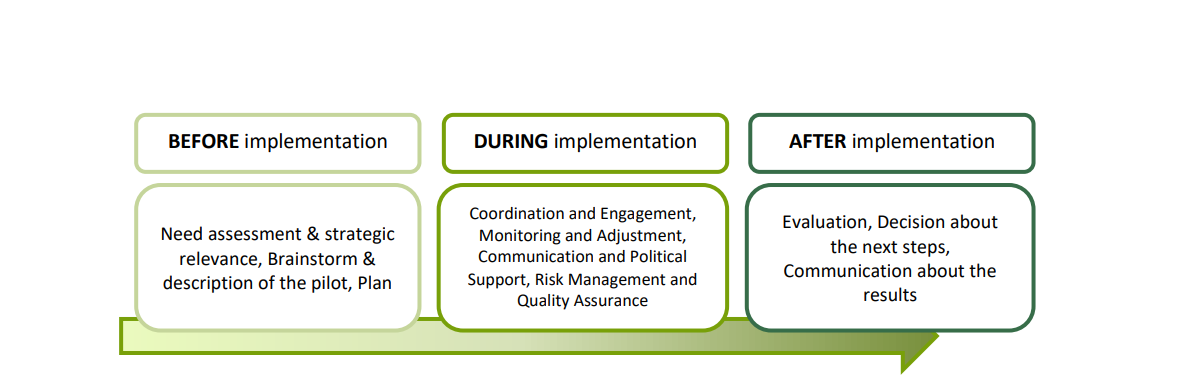
The model is divided into three stages: before, during and after implementation. Modified based on the process steps from experiments to scaling up model (presented in Kokeilusta skaalaan -pelikirja) developed by Motiva (2020).

Additional links
details
-
Homepage
-
Project typeCore Project

-
ImplementationNovember 2023 - October 2026
-
StatusOngoing
-
Contribution to EUSBSRPolicy Area Spatial Planning

-
Target groups
- Local public authority
- National public authority
-
Social media
-
Additional links
-
Tags