




Gdynia tests digital tools to support public space transformation
27 February 2026
How can cities better explain complex spatial changes and build trust around urban transformation? Within the SUMPs for BSR project, as part of an effort to test small-scale measures that support active mobility in Baltic Sea Region cities, the City of Gdynia carried out a small-scale experiment at Constitution Square, testing digital tools to support communication and dialogue around a planned public space transformation and to guide early mobility-related improvements.
The pilot formed part of the ongoing update of Gdynia’s Sustainable Urban Mobility Plan (SUMP) and explored how ICT-based visualisation can strengthen participation and planning processes.
A central location with high mobility pressure
As the city’s main transport hub, Constitution Square is located in the heart of Gdynia and functions as an important transfer point between pedestrian movement, cycling, public transport and car traffic. This makes it an ideal setting for testing tools that support more active and accessible mobility options. Despite its strategic role, the space is currently dominated by road infrastructure and offers limited comfort for pedestrians.
As part of the SUMP update, the city is analysing options to improve pedestrian and cycling conditions, transfer quality and overall spatial organisation. The small-scale experiment focused on testing how digital tools could support understanding of these planned changes before any physical interventions.
Visualising change through digital tools
The core of the experiment was to test new ICT tools designed to support collaborative exploration of mobility and public space transformation for the Constitution Square including:
- a virtual tour of Constitution Square,
- an explanatory video presenting the background and objectives of the transformation.
These tools were developed as part of a testing process to understand how digital tools can strengthen co‑creation and make the discussion of mobility improvements more accessible to a wider audience. The materials illustrated possible adjustments to traffic organisation, pedestrian areas and public space use. The aim was not to present a final design, but to make early-stage planning ideas easier to understand.
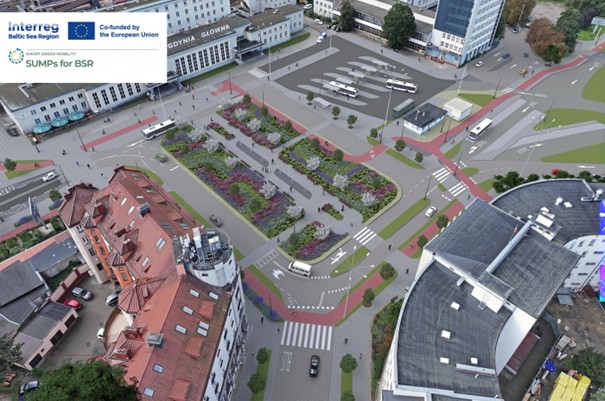
Still frame from the explanatory video presenting the concept for Constitution Square. Source: City of Gdynia, 2024
The video and virtual tour were published through the city’s website and social media channels, enabling residents to explore the concept independently and at their own pace.
Bringing digital tools into everyday urban space
In addition to online dissemination, the materials were presented at on-site consultation points organised at Gdynia Main Railway Station and at Constitution Square. These high-footfall locations allowed the city to reach daily users of the space, including commuters and passers-by, creating an opportunity for residents, planners and municipal decision makers to jointly examine alternative scenarios for the square’s future, encouraging more informed and constructive dialogue.
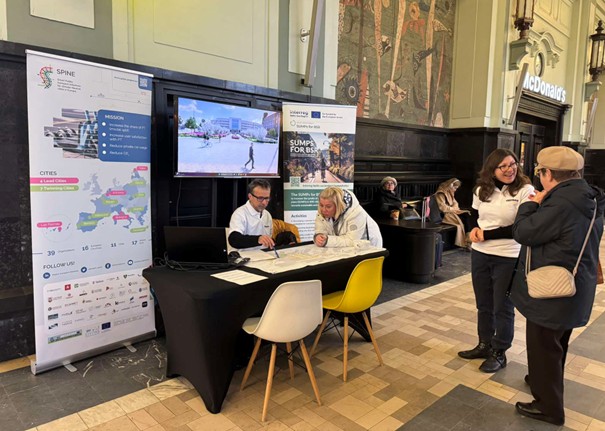
Consultation point at Gdynia Main Railway Station, where digital materials related to Constitution Square were presented and discussed with residents. Photo: City of Gdynia, 2024
Using digital visualisations during face-to-face conversations helped clarify planning intentions and encouraged spontaneous feedback from residents who might not normally attend formal meetings.
Selected materials were also presented during public events, including activities linked to European Mobility Week.
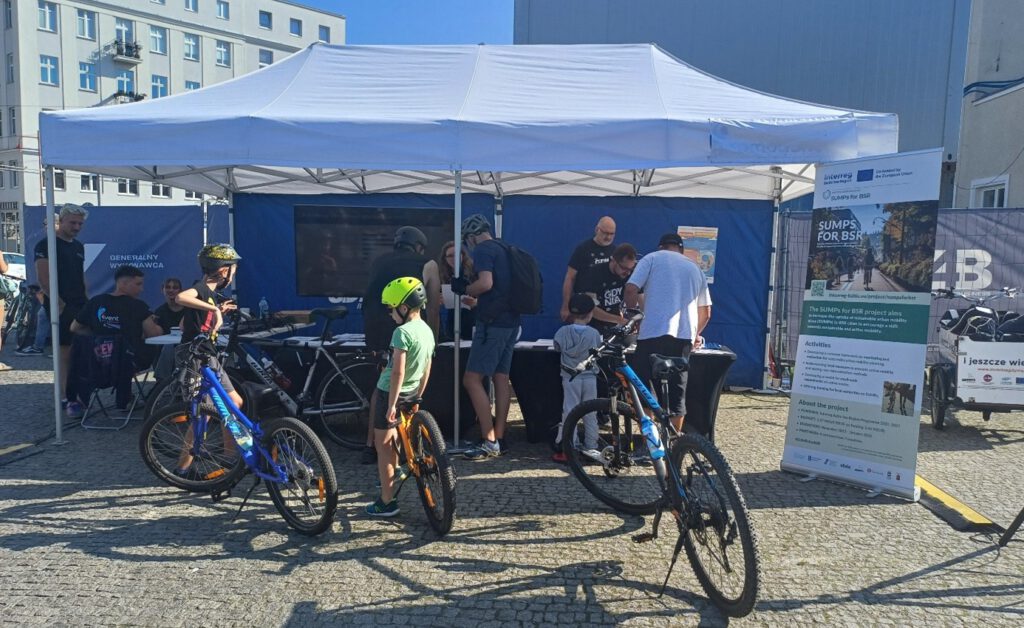
Presentation of digital materials during European Mobility Week activities in Gdynia.
Photo: City of Gdynia, 2024
Learning from the pilot
Feedback was collected through online comments, messages and on-site conversations. The input focused on issues such as pedestrian safety, accessibility, traffic organisation and public space quality.
Evaluation of the pilot concentrated on understanding how effectively digital tools supported communication and internal coordination. Online engagement indicators and qualitative feedback were reviewed by the planning team, together with internal reflection meetings between departments responsible for mobility, planning and communication.
By following a structured approach to experimentation with active mobility, the pilot helped refine practical methods for planning, testing and evaluating small‑scale mobility interventions in a real environment.
The experience confirmed that digital visualisation can translate abstract planning concepts into accessible narratives and help initiate constructive dialogue at an early stage of the process.
From experimentation to implementation
Although no physical changes were implemented during the pilot phase, the experiment contributed to:
- increased visibility of the planned transformation,
- improved public understanding of mobility-related changes,
- structured feedback informing further planning discussions,
- strengthened internal cooperation in the use of digital engagement tools.
The approach can be reused in future mobility and public space projects and demonstrates how small-scale experimentation can support participatory and evidence-based SUMP implementation.
The pilot contributes to the SUMPs for BSR objective of strengthening sustainable urban mobility planning in Baltic Sea Region cities.
For more information, please contact the City of Gdynia:
justyna.suchanek@gdynia.pl | mobilnosc@gdynia.pl

Additional links
- Read about the project
- What will Constitution Square look like? Visualisation supporting public consultation
- Promotional video presenting the proposed transformation of Constitution Square (YouTube)
- European Mobility Week in Gdynia – presentation of digital materials and public engagement activities
details
-
Homepage
-
Project typeCore Project

-
ImplementationNovember 2023 - October 2026
-
StatusOngoing
-
Contribution to EUSBSRPolicy Area Spatial Planning

-
Target groups
- Local public authority
- National public authority
-
Social media
-
Additional links
-
Tags