




Gdynia explores AI monitoring and school engagement to support active mobility
27 February 2026
How do high school students travel to school, and how can cities measure it in practice? Within the SUMPs for BSR project, the City of Gdynia carried out a data collection pilot combining a citywide survey, school workshops, AI-based monitoring and a cycling campaign in upper secondary schools.
The activities support the update of Gdynia’s Sustainable Urban Mobility Plan (SUMP) and strengthen data collection and monitoring of active mobility.
Many European cities face similar challenges in understanding everyday walking and cycling behaviour. With this pilot, Gdynia contributes to developing practical ways to gather reliable data on active mobility among young people.
Understanding how students travel
Car traffic around schools remains a visible challenge in Gdynia, especially during morning peak hours. At the same time, the city lacked detailed information about mobility patterns of upper secondary school students: a group that is about to make independent transport decisions. The pilot helps address these long-standing gaps by introducing new types of data that the city has not previously collected in a systematic way.
In early 2025, Gdynia launched an online mobility survey in all upper secondary schools. Several thousand students responded, creating the first citywide dataset focused specifically on this age group.
The results showed that walking and public transport dominate student mobility. However, cycling remains relatively limited, and many pupils still arrive by car. Students frequently indicated safety concerns, infrastructure gaps and weather conditions as barriers to cycling.
To complement the survey, the city organised workshops in eight selected schools. Students discussed daily journeys, identified local challenges and shared ideas for improving active travel conditions.
Together, the survey and workshops created a strong base for exploring new ways to measure walking and cycling.
Testing AI-based monitoring
As part of the pilot, Gdynia explored how modern vision-based tools could support long-term monitoring of walking and cycling flows — starting with a test installation around school areas.
In spring 2025, an AI camera was installed at the intersection of Aleja Zwycięstwa and Orłowska Street, a location frequently used by students. The system automatically detected and counted road users and provided aggregated data via an online dashboard.
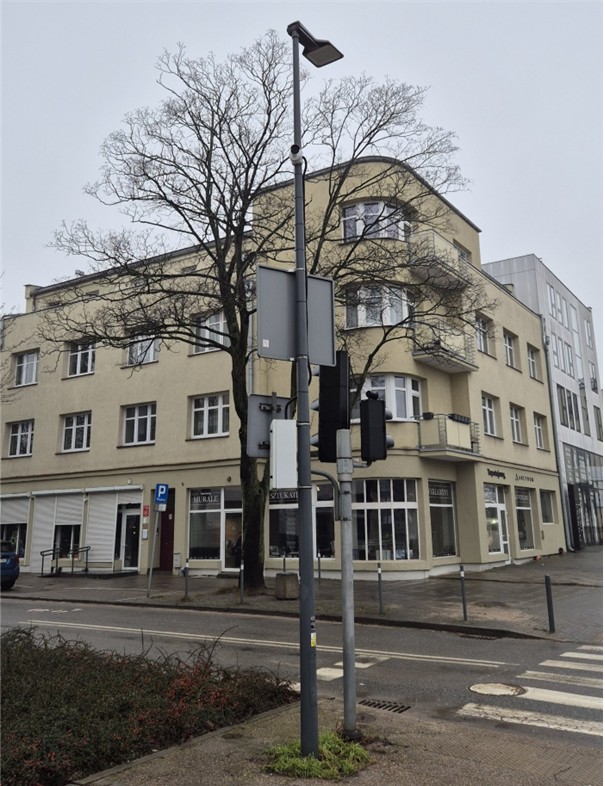
AI-based camera installed near school area (Aleja Zwycięstwa / Orłowska Street), spring 2025.
Photo: City of Gdynia, 2025
The system automatically detects and classifies road users in real time, distinguishing between pedestrians, cyclists and vehicles.
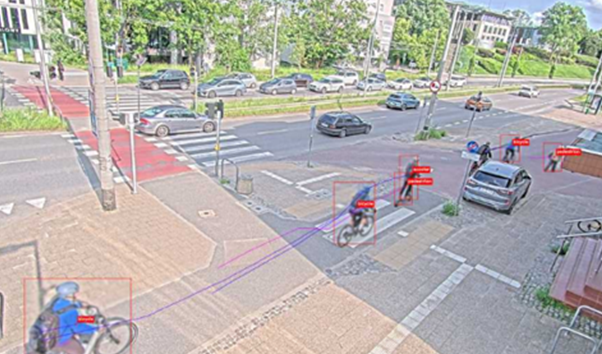
AI system detecting and tracking cyclists in real time (example from pilot location).
Screenshot: City of Gdynia, 2025.
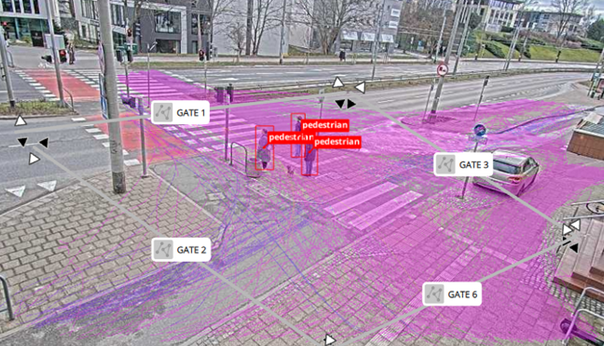
Virtual gates used to analyse pedestrian and cyclist flows (AI-based monitoring dashboard).
Screenshot: City of Gdynia, 2025.
Following the test phase, Gdynia commissioned a five-month monitoring service using four Automatic Traffic Measurement Stations (July-November 2025). The stations delivered 15-minute aggregated counts, enabling analysis of daily and weekly patterns near school areas.
The system enables analysis of movement directions and time-based flow patterns.
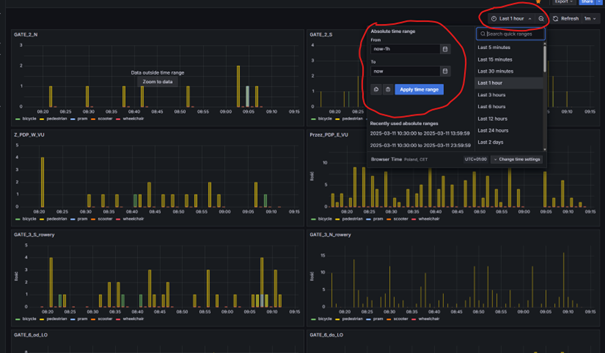
Example of monitoring output (15-minute aggregated counts).
Screenshot: City of Gdynia, 2025
The service model included installation, maintenance and structured data delivery. In practice, longer continuous measurement periods were prioritised to capture stable patterns influenced by school timetables and seasonal variation.
The experience provided practical insight into evaluating changes in active mobility and how automated monitoring can support the monitoring and evaluation dimension of a SUMP update.
“If school, then two wheels”: linking engagement and data
The campaign was built on the earlier insights gathered from students. Focusing on upper secondary school students is important, as young people at this age begin to form lasting mobility habits that can influence their long-term travel choices.
In October 2025, the research and monitoring activities were complemented by a cycling campaign in high schools under the slogan “Jak szkoła, to dwa koła” (“If school, then two wheels”). Eleven schools participated.
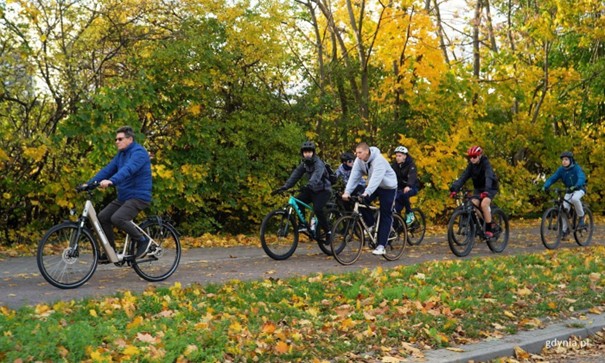
Students participating in a cycling ride organised as part of the “If school, then two wheels” campaign in Gdynia.
Photo: City of Gdynia, 2025.
The campaign combined engagement activities with app-based cycling data:
– 147 registered participants
– 355 recorded cycling trips
– over 27,600 kilometres cycled in October
– around 600 cycling breakfast sets distributed
– approximately 500 participants at the final event
Weekly cycling breakfasts were organised to reward students arriving by bike and to encourage regular participation throughout the campaign period.
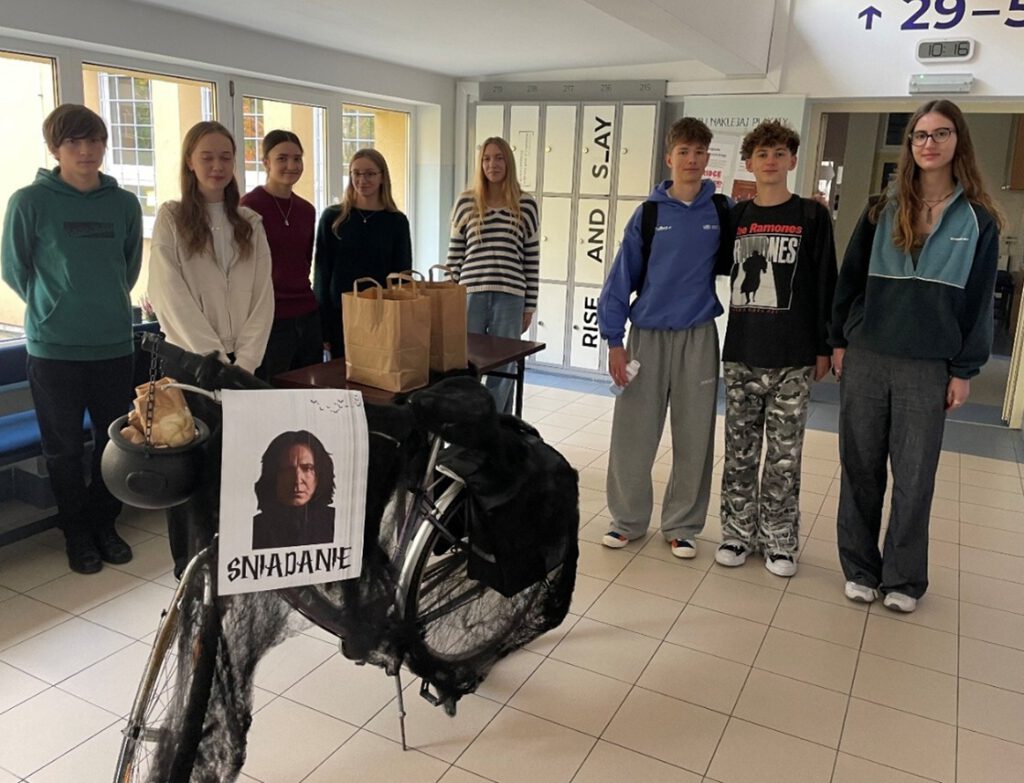
Weekly cycling breakfast for campaign participants.
Photo: City of Gdynia, 2025
Workshops with campaign ambassador AJ (Adam Modzelewski), selected based on student input during earlier school workshops, were indicated by participants as one of the most appreciated elements of the campaign.
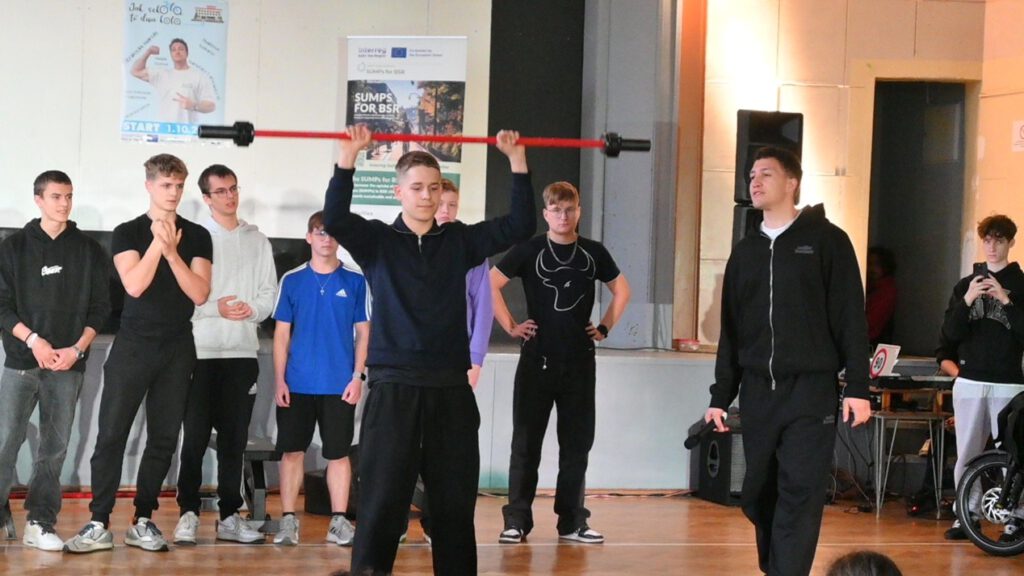
Workshop with campaign ambassador AJ (Adam Modzelewski) in one of Gdynia’s high schools.
Photo: City of Gdynia, 2025
The campaign concluded with a large-scale final event bringing together students from participating schools, local partners and campaign organisers.
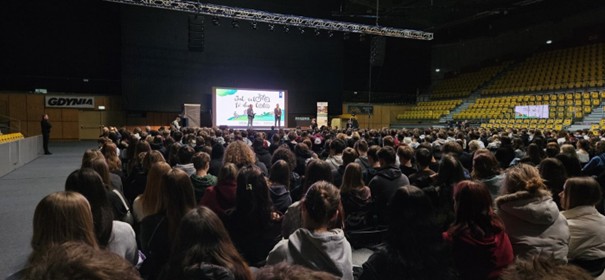
Final event of the campaign bringing together students from participating high schools.
Photo: City of Gdynia, 2025.
The finale included recognition of the most active schools and participants, reinforcing the link between everyday behaviour change and broader sustainable mobility goals.
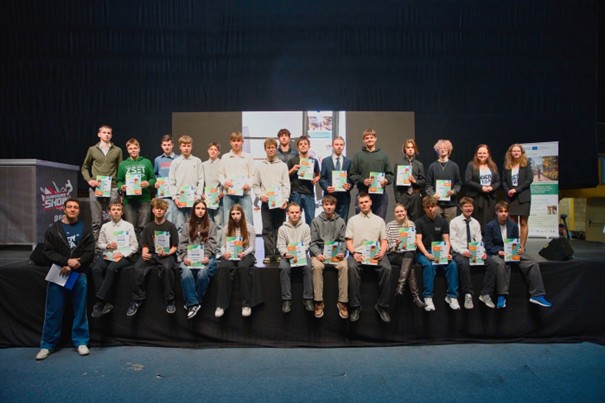
Award ceremony and recognition of participating students at the campaign finale.
Photo: City of Gdynia, 2025.
From pilot to SUMP update
By combining survey results, workshop insights, app-based activity data and automated counts, Gdynia developed a broader evidence base on school mobility and active travel conditions near selected locations. This multi-layered approach helps the city understand both behaviour and perceptions and offers a more complete basis for strengthening active mobility work in the coming years.
The findings inform the ongoing update of Gdynia’s Sustainable Urban Mobility Plan and support further development of monitoring and evaluation of active mobility.
The pilot contributes to the SUMPs for BSR objective of strengthening evidence-based active mobility planning in Baltic Sea Region cities.
For more information, please contact the City of Gdynia:
justyna.suchanek@gdynia.pl | mobilnosc@gdynia.pl

Additional links
- Read about the project
- Gdynia installs AI cameras for mobility monitoring
- Experts discuss urban mobility in Gdynia (SUMP context)
- Campaign launch: “Jak szkoła, to dwa koła” – ride, compete, win
- Competitions, prizes and workshops with AJ (Adam Modzelewski)
- Special cycling ride through the streets of Gdynia
- Campaign finale: Gdynia’s youth embrace “If school, then two wheels”
details
-
Homepage
-
Project typeCore Project

-
ImplementationNovember 2023 - October 2026
-
StatusOngoing
-
Contribution to EUSBSRPolicy Area Spatial Planning

-
Target groups
- Local public authority
- National public authority
-
Social media
-
Additional links
-
Tags