




Gävle explores digital tools to promote and understand active commuting
19 March 2026

The City of Gävle, Sweden, is contributing by testing two pilot activities focused on digital solutions. Through a digital cycling campaign and the use of a mobile application to collect mobility data, the city aims to gain new insights into commuting behavior and explore how digital tools can support the development of a more effective Sustainable Urban Mobility Plan.
Like many medium-sized cities, Gävle has good conditions for cycling and walking and has a well-developed cycling network. The city is relatively compact and has around 104,000 inhabitants. However, many short trips are still made by car. Understanding why people choose certain travel modes and how to encourage more active commuting is therefore an important part of the city’s mobility planning.
A digital cycling campaign to promote cycling for short distance commuting
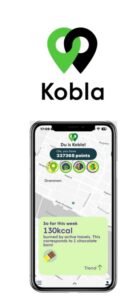
A digital application to track daily commuting. Photo: City of Gävle.
One of the pilot studies in Gävle focused on testing whether a digital campaign could motivate people to cycle or walk instead of driving for short commuting trips. The city collaborated with companies that are part of Gävle’s Climate Contract network and invited employees to participate in a cycling campaign using a mobile application. Participants could track their commuting trips, see how much they cycled or walked, and compare their results with other participants. To further motivate users, some local businesses offered small benefits and discounts through the app. This created additional encouragement for employees to try cycling or walking for their daily commute.
The campaign intentionally relied on a simple and low-cost approach. Apart from initial communication through participating companies and digital reminders during the campaign, no additional events or activities were organized. This allowed the city to test how effective a purely digital initiative could be in encouraging behavior change.
Although participation levels were lower than expected, the pilot provided useful insights. It showed that digital tools can play a role in promoting active mobility but that strong engagement from employers is important for reaching a wider audience.
Collecting mobility data through a mobile application
In addition to encouraging behavior change, Gävle also wanted to explore new ways of collecting data about walking and cycling. Reliable data on active mobility is often limited, especially in medium-sized cities. Traditional traffic counts and surveys provide valuable information but can be costly and do not always capture everyday travel patterns in detail.
Through the second pilot activity, the city tested how a mobile application could be used to collect anonymized mobility data from users, primarily employees from companies that had signed Gävle’s climate contract. The app recorded information such as travel routes, distances, and frequency of trips. This allowed the city to gain a better understanding of how people move around the city during their daily commutes.
The collected data can complement traditional mobility surveys and help planners identify patterns in active travel. For example, it may highlight popular cycling routes, reveal gaps in the commuting network, or show where improvements to cycling infrastructure or pedestrian facilities may be needed, to support more walking and cycling.
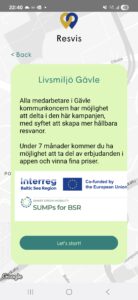
Screenshot of the mobile application. Photo: City of Gävle.
Small experiments supporting better mobility planning
The pilots carried out in Gävle show how small-scale experiments can provide valuable insights for urban mobility planning although they started with a smaller target group than planned. By testing digital tools both for behavior change and data collection, the city gained a better understanding of how technology can support active mobility.
The results will contribute to the broader work of the SUMPs for BSR project, where cities across the Baltic Sea region share experiences and learn from each other to develop more effective strategies for sustainable urban mobility.

Additional links
details
-
Homepage
-
Project typeCore Project

-
ImplementationNovember 2023 - October 2026
-
StatusOngoing
-
Contribution to EUSBSRPolicy Area Spatial Planning

-
Target groups
- Local public authority
- National public authority
-
Social media
-
Additional links
-
Tags