




SmartAging at the EUSBSR Annual Forum 2026
26 May 2026
Read about the SmartAging project’s workshop at the EUSBSR Annual Forum 2026 in Tallin, which explored how ageing can drive resilience, innovation, digital inclusion, affordable living, and age-friendly regional development in the Baltic Sea Region.
How can the Baltic Sea Region become a place where older people live independently, safely and meaningfully by 2040?
This question guided the SmartAging workshop at the EUSBSR Annual Forum 2026 in Tallinn. The session brought together participants from different disciplines, sectors and regions to explore how ageing connects with some of the major transitions shaping the Baltic Sea Region, including climate resilience, energy security, digitalisation, infrastructure, care and social inclusion.
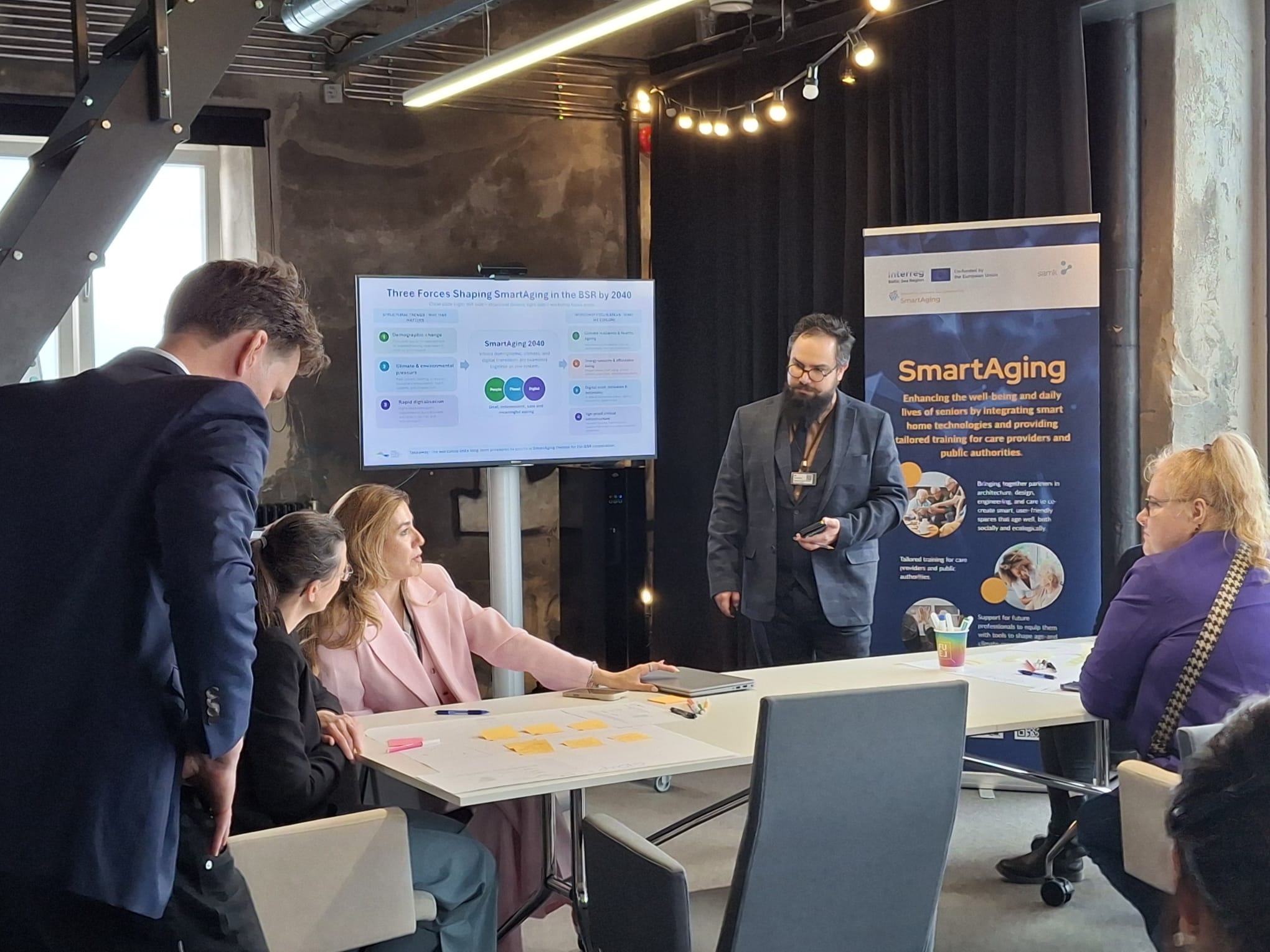
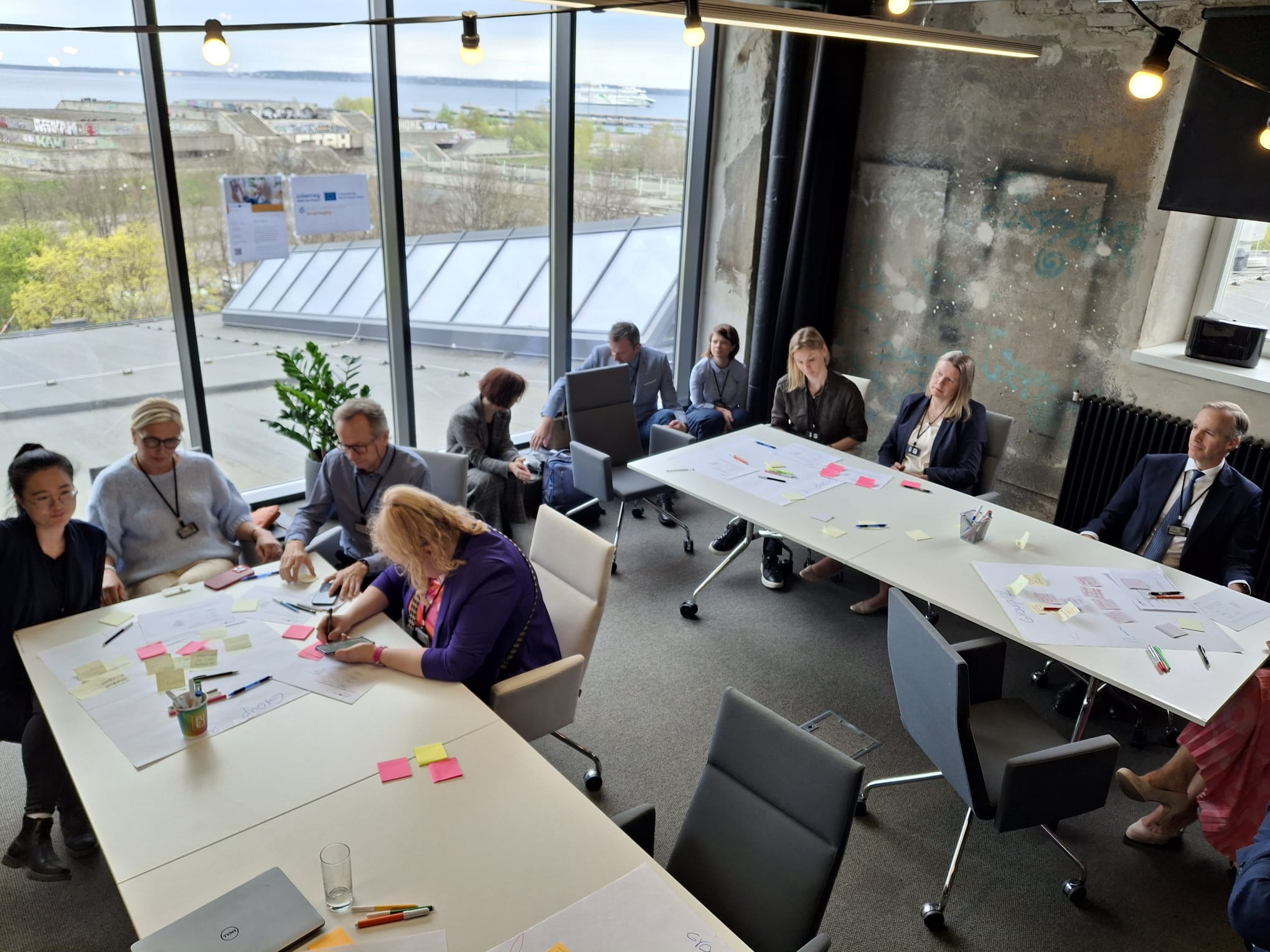
The workshop started from a shared 2040 vision of older people living in communities that are climate-resilient, digitally trusted and environmentally responsible. Participants worked in four thematic groups covering climate resilience and healthy ageing; energy security & affordable living; digital trust, inclusion & autonomy; and age-proof critical infrastructure.
The discussion focused on the barriers that could prevent this future from becoming reality, how these barriers are connected, and what joint actions could help address them at Baltic Sea Region level. This helped participants move from separate challenges toward a more systemic understanding of SmartAging.
Several recurring issues emerged during the group work. Participants discussed the need for accessible and affordable housing, protection from energy poverty, trusted and inclusive digital services, reliable care and support systems, safe mobility, climate-prepared neighbourhoods, and governance models that can respond to demographic change. The discussions also highlighted that older adults should not be seen only as recipients of services, but as citizens, consumers, caregivers, community members and co-creators of future solutions.
One important message from the session was that the future of ageing cannot be separated from the systems that shape everyday life. Housing affects health, energy costs and independence. Digital services affect access to care, information and participation. Mobility affects social connection and the ability to use services. Climate risks affect safety, health and the resilience of local communities. Looking at these issues together made visible how strongly ageing is connected to wider questions of sustainability and preparedness.
The session also showed that many SmartAging challenges cannot be solved by one organisation, municipality or country alone. Participants pointed to the need for stronger cooperation between municipalities, care providers, housing actors, researchers, businesses, civil society and older adults themselves. Possible directions included joint pilots, shared learning between regions, more accessible service design, stronger digital trust, age-friendly housing adaptations and better integration of ageing perspectives into resilience planning.
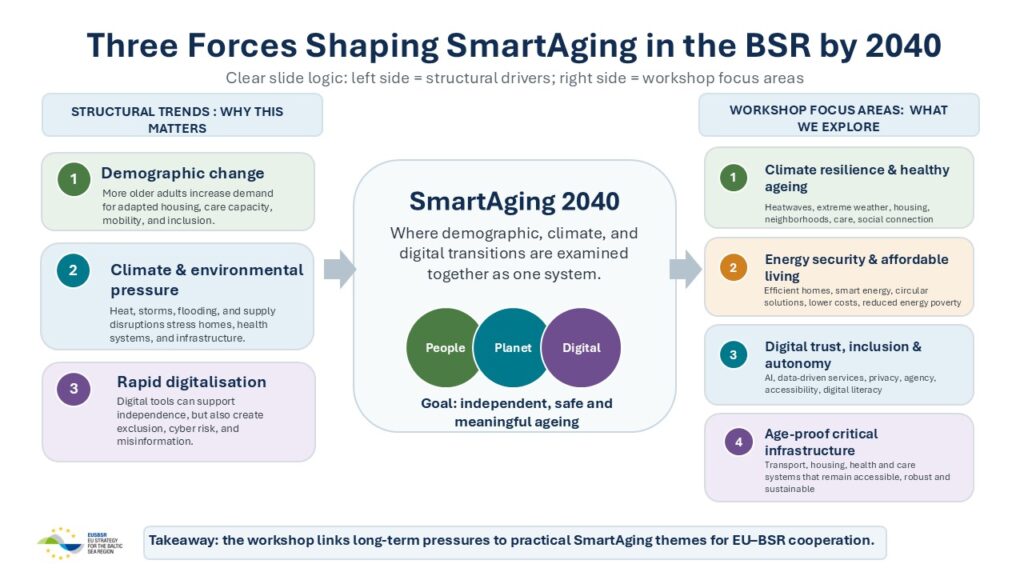
A key outcome of the workshop was the recognition that demographic change can be approached not only as a pressure on public systems, but also as a driver for innovation and cooperation. Solutions designed around the everyday realities of older people can make communities more accessible, efficient, inclusive and resilient for everyone.
The session helped turn a broad future challenge into concrete areas for cooperation. SmartAging 2040 shows how ageing can become a starting point for strengthening climate resilience, digital trust, affordable living and inclusive regional development in the Baltic Sea Region.

details
-
Homepage
-
Project typeCore Project

-
ImplementationMarch 2025 - February 2028
-
StatusOngoing
-
Contribution to EUSBSRPolicy Area Health

-
Target groups
- Higher education and research institution
- Hospital and medical centre
- Infrastructure and public service provider
- Interest group
- NGO
-
Social media
-
Additional links
-
Tags