




Focusing on What Truly Matters in Water Management: Insights from Jūrmala
16 December 2025
While the main focus of the seminar, organised by the ReNutriWater partner Jūrmalas ūdens, was on challenges related to wastewater management and reuse in urban environments, the discussions—inevitably, when true enthusiasts come together—extended far beyond this theme. Challenges in the water sector are many, but so too are the opportunities to address them.
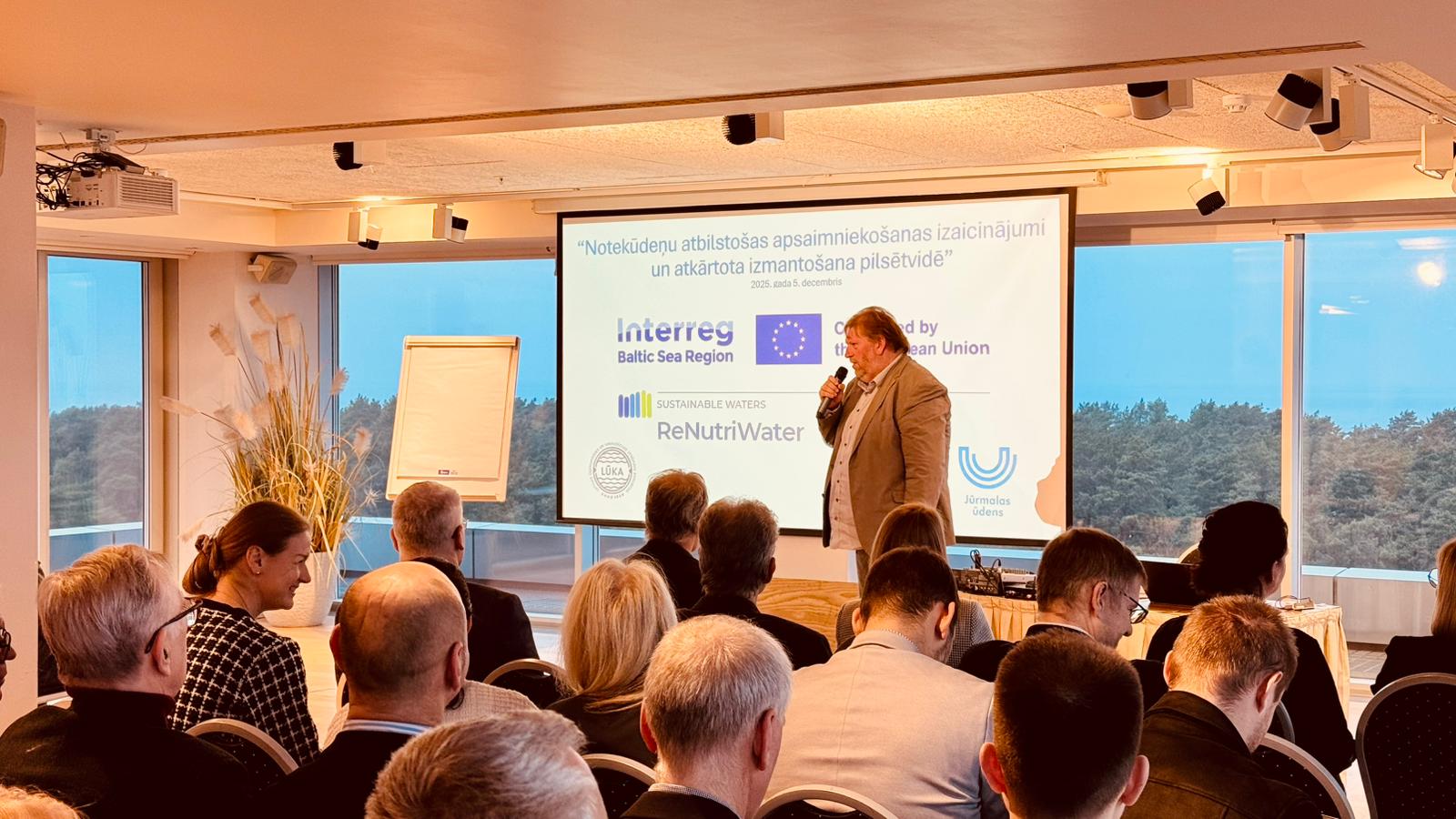
The event was opened by Andis Rencis, Chairman of the Board of SIA “Jūrmalas ūdens”, who outlined the most pressing challenges facing the sector and invited participants to engage in open and constructive dialogue. Aivars Kamarūts, Head of the Project Implementation Unit, provided a brief overview of recent achievements and presented future objectives within EU co-financed projects currently being implemented in Jūrmala.
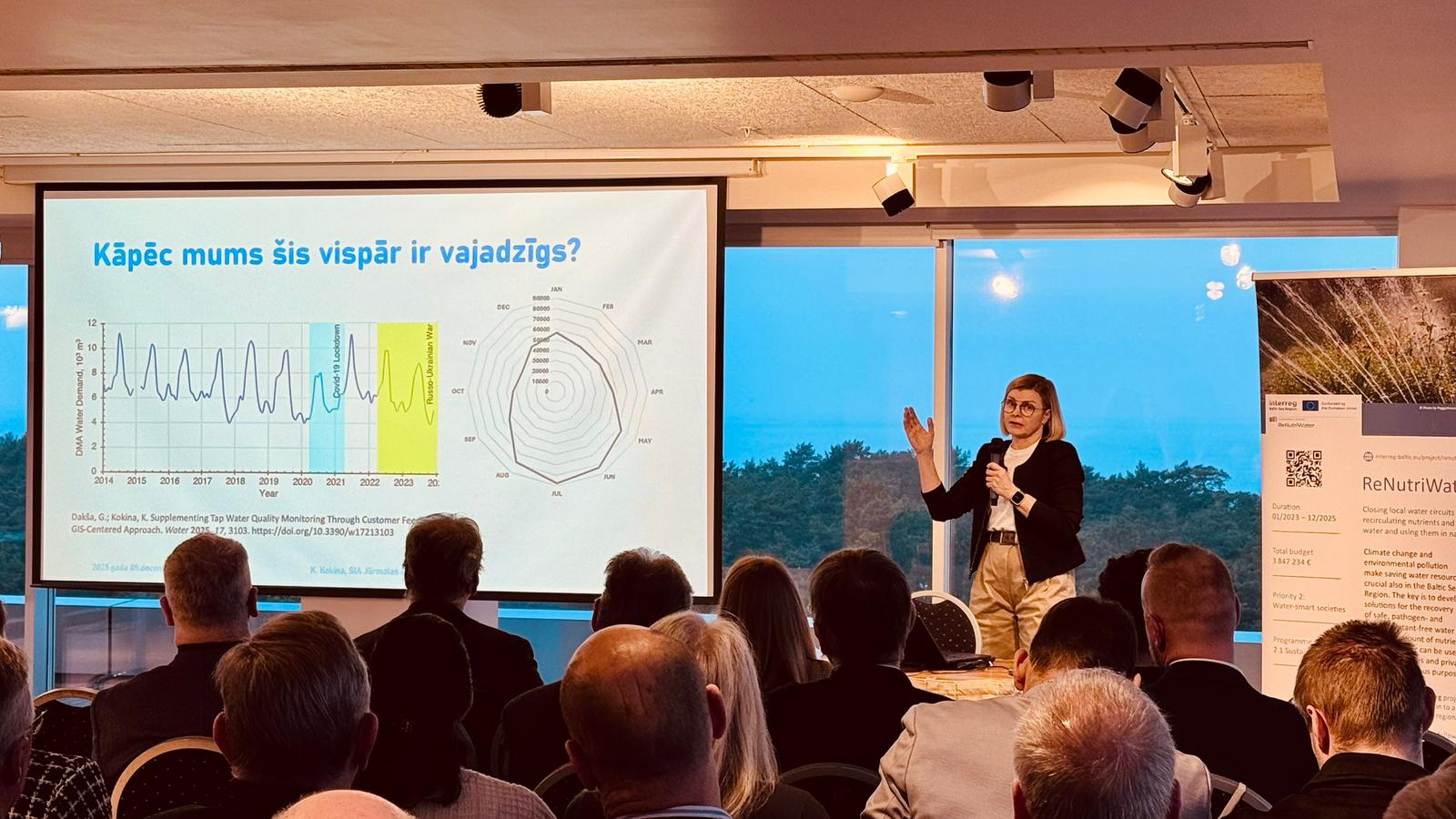
At the core of the seminar were the results of the Interreg Baltic Sea Region project ReNutriWater. Kristīna Kokina, Head of the Water Treatment Technology Department at Jūrmalas ūdens, shared key findings from the pilot project, emphasising that properly treated wastewater is a safe and significantly underutilised resource. Its broader use in urban environments is limited primarily by public perceptions rather than by technical or regulatory constraints. This forward-looking approach has also been recognised internationally: the International Water Association (IWA) awarded Jūrmalas ūdens the prestigious Climate Smart Utility status. Global trends in the sector and Jūrmala’s practical experience were further presented by Gints Dakša, Head of the GIS Department.
Special attention was given to the Sloka wastewater treatment plant, where a unique floating solar power plant installed on pontoons has been in operation since 2024. The system has already led to a notable reduction in electricity costs. Presentations by Mārtiņš Strazds and Uldis Kalniņš highlighted the potential to further enhance such projects by integrating energy storage solutions. Uldis Kalniņš also addressed one of the sector’s most significant challenges, wastewater sludge management, which is becoming increasingly complex in light of forthcoming climate neutrality requirements.
Juris Laicāns delivered an in-depth presentation on energy efficiency, while an especially innovative perspective was offered by Brigita Dejus, who introduced the use of microscopic fungi to remove pharmaceutical residues from wastewater. This approach was presented as a simple, natural, and promising solution. Representatives of Riga Technical University, Jānis Rubulis and Linda Mežule, introduced ongoing research projects focused on pollution risks in wastewater and sludge, as well as related testing methodologies.
The seminar concluded with remarks by Sandis Dejus, Executive Director of the Latvian Association of Water Supply and Sewerage Companies, who drew attention to one of the most critical long-term challenges facing the sector—the generational transition of professionals. He encouraged participants to actively promote the water sector among young people to ensure continuity and expertise in the years to come.
Following the seminar, participants were invited to visit the Sloka wastewater treatment plant, where they were able to observe the technological processes firsthand and view the floating solar park on site.
Sincere thanks are extended to all participants and speakers. The seminar was made valuable and inspiring by the expertise and ideas shared. Even more can be achieved at future events.
The original news story is available in Latvian here.

Additional links
details
-
Homepage
-
Project typeCore Project
-
ImplementationJanuary 2023 - December 2025
-
StatusCompleted
-
Contribution to EUSBSRPolicy Area Nutri, Policy Area Tourism

-
Target groups
- Infrastructure and public service provider
- Interest group
- Local public authority
- Small and medium enterprise
-
Social media
-
Additional links
-
Tags