





Regenerative tourism takes the stage in Pomorskie: RegenT inspires a new vision for destination management
24 June 2026
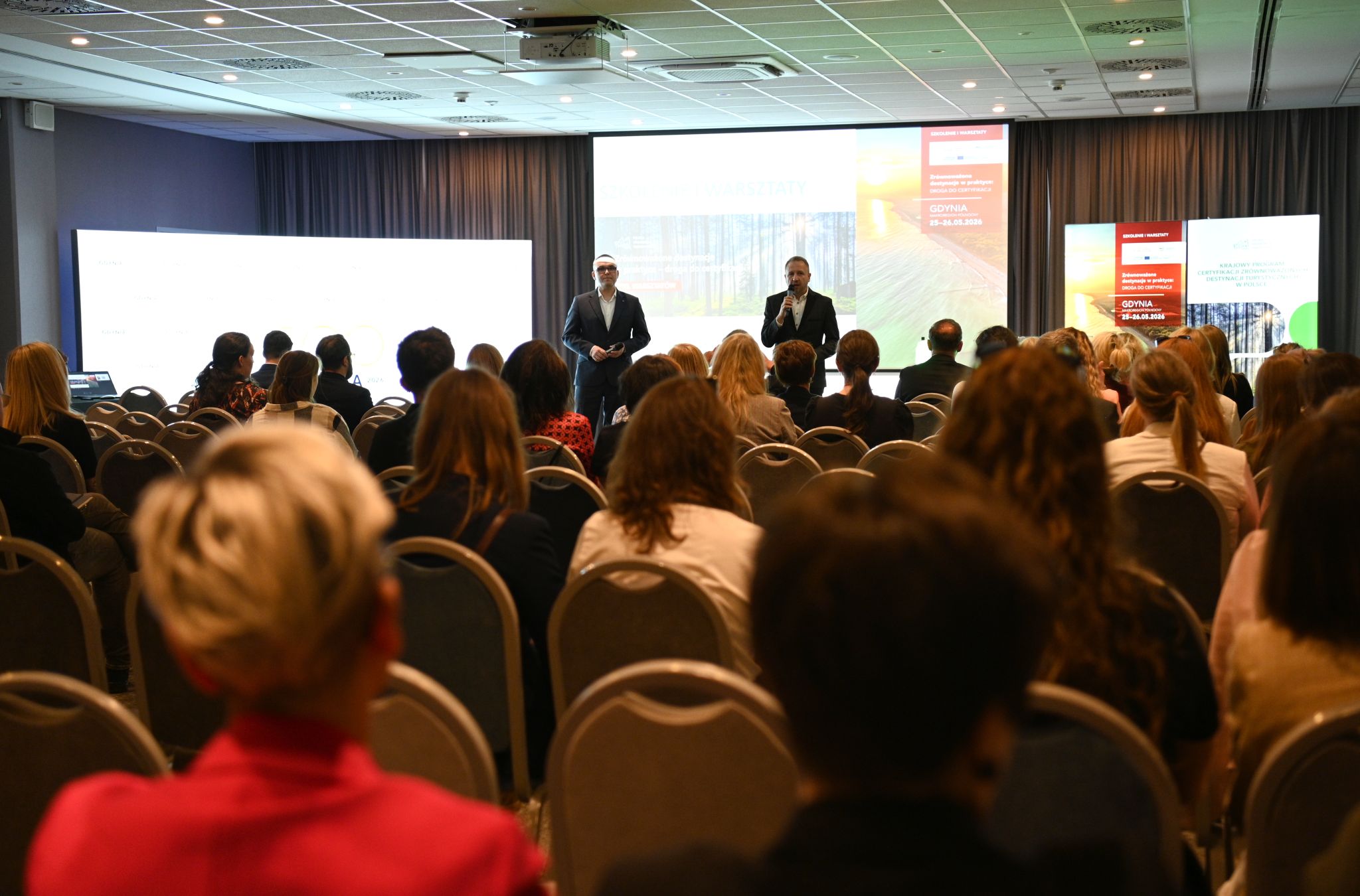
The event brought together destination managers, local authorities, tourism organisations and sustainability practitioners from across Poland to discuss the future of destination management and practical pathways towards more resilient and responsible tourism.
For the Pomorskie Tourist Board (PROT), the meeting was also an opportunity to showcase how sustainability can evolve into something even more ambitious – regenerative tourism from the RegenT Interreg Baltic Sea Region programme project perspective. The keynote was delivered by Magda Leszczyna-Rzucidło, Director of International Cooperation at the Pomorskie Tourist Board and Coordinator of the EU Strategy for the Baltic Sea Region’s Policy Area Tourism, who presented the region’s journey towards regenerative tourism and introduced the RegenT project, in which PROT is a partner. During the presentation, participants were invited to look beyond the traditional sustainability narrative. “The challenge is no longer only how to minimise tourism’s negative impacts. The real question is how tourism can become a force for positive change and leave places better than we found them.”
The presentation highlighted the key principles of regenerative tourism:
- putting place at the centre of decision-making;
- viewing nature and people as one interconnected system;
- empowering local communities to shape tourism development;
- moving from economic growth towards long-term value creation for destinations;
- and focusing on creating measurable positive impacts rather than simply reducing harm.
Participants learned about Pomorskie’s own transformation journey – from engaging in international sustainability initiatives such as ReTour and RegenT projects and joining the Global Sustainable Tourism Council (GSTC), to establishing the PROT Green Team and developing regenerative tourism pilots through international cooperation projects. Practical examples from the region demonstrated how regenerative tourism can already be implemented today:
- visitors helping remove invasive species in protected areas,
- tree-planting initiatives supporting biodiversity,
- river clean-up experiences linked with local heritage,
- pollinator protection projects,
- slow travel and community-based experiences.
These initiatives share one common idea: tourists become contributors to the well-being of places rather than merely consumers of experiences.
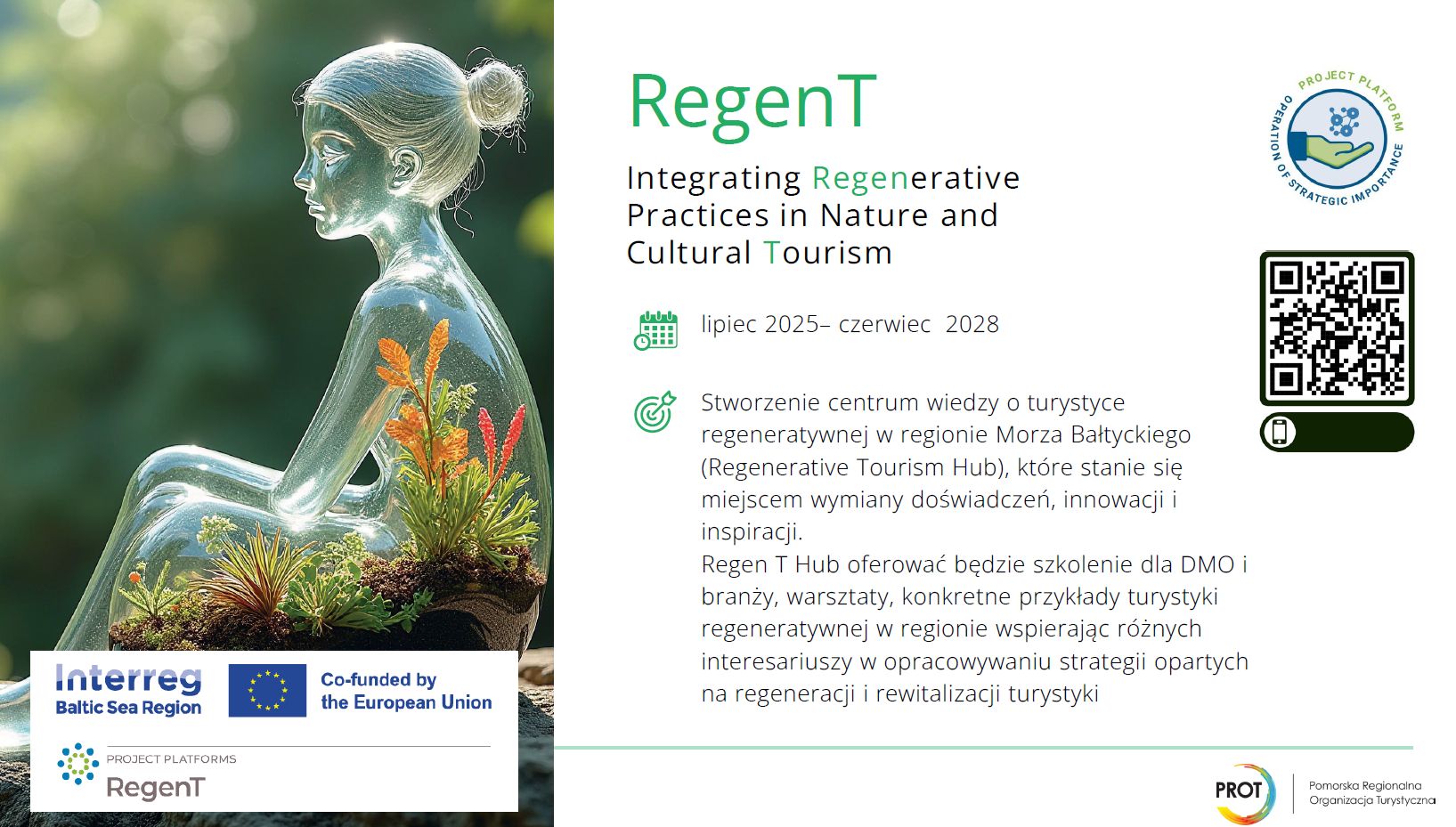
A key element of the presentation was the introduction of the RegenT project – Integrating Regenerative Practices in Nature and Cultural Tourism, co-financed by the Interreg Baltic Sea Region Programme and implemented by a partnership of organisations from across the Baltic Sea Region, including the Pomorskie Tourist Board. RegenT aims to accelerate the transition towards regenerative tourism by creating a Regenerative Tourism Hub – a Baltic Sea Region platform for:
- knowledge exchange,
- training and capacity building,
- sharing practical tools and methodologies,
- collecting inspiring case studies,
- supporting destinations and tourism businesses in implementing regenerative approaches.
For many participants, this was their first introduction to the concept of regenerative tourism and to the opportunities that the RegenT project will provide over the coming years.
The discussions in Gdynia clearly demonstrated that destination management in Poland is entering a new phase. Certification programmes and sustainability standards remain an essential foundation. However, regenerative tourism offers a broader and more ambitious vision – one in which tourism actively contributes to healthier ecosystems, stronger communities, and more resilient destinations.
The event also confirmed that regions such as Pomorskie can play an important role in leading this transformation and sharing experiences with destinations across Poland and the Baltic Sea Region.

Additional links
details
-
Homepage
-
Project typeProject Platform

-
ImplementationJuly 2025 - June 2028
-
StatusOngoing
-
Contribution to EUSBSRPolicy Area Tourism

-
Target groups
- Interest group
- International governmental organisation
- Local public authority
- Regional public authority
- Sectoral agency
-
Social media
-
Additional links
-
Tags