




From concept to practice: REDIRECT tests its tools with stakeholders
18 August 2026
Over the past months, REDIRECT partners have been developing a set of practical resources intended to support different tourism actors in working with regenerative tourism. As the project progresses, attention is increasingly turning to how these approaches function in practice.
Across the partner regions, different elements of the REDIRECT Toolkit are therefore being tested and discussed with relevant stakeholder groups. This provides an opportunity to examine their applicability, accessibility and relevance in different tourism contexts, while identifying questions and challenges that may need to be addressed in the continued development of the tools.
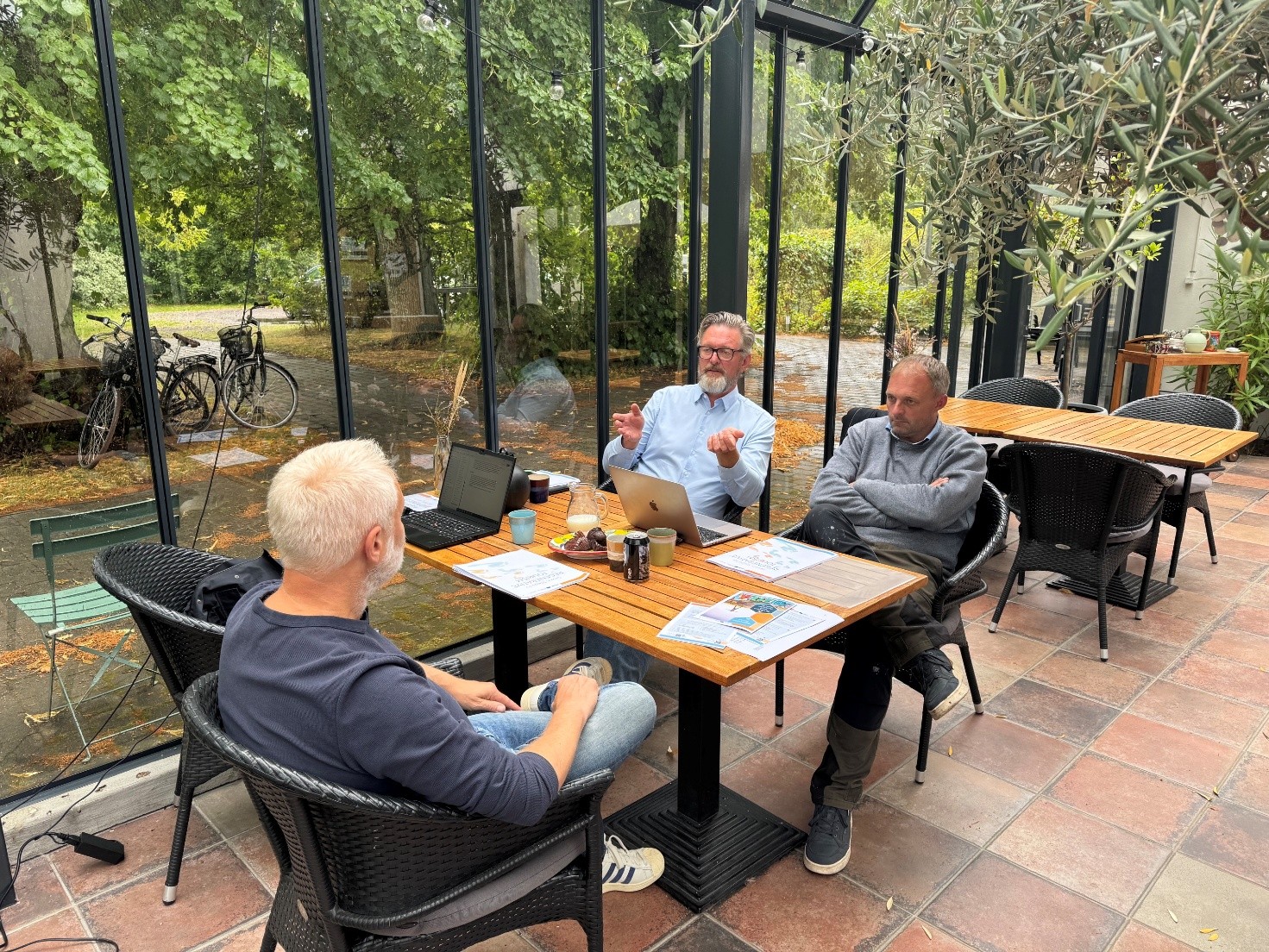
On 18 and 19 August, two workshops on Læsø brought together representatives from destination management organisations, local politics and the municipality to examine and discuss the REDIRECT Toolkit.
Although the participants approached regenerative tourism from different professional perspectives, several related themes emerged from the discussions.
Translating regenerative tourism into practice
A recurring theme was the need to make regenerative tourism operational and relevant to the situations in which tourism actors actually work.
The participants generally recognised the issues and ambitions addressed by REDIRECT, while also pointing to the importance of accessible language, recognisable examples and clear entry points into the more comprehensive tools.
This was particularly evident in discussions about the 7-Step Regenerative Tourism Planning Guide. The overall structure was seen as valuable, including its potential to help tourism actors recognise regenerative elements in activities they may already be undertaking and identify opportunities for further development.
At the same time, participants stressed that a comprehensive planning framework needs to be accompanied by a more accessible route into the material. Suggestions included shorter stakeholder-specific introductions, concrete examples and clearer indications of where an organisation may already be positioned within the process.
The discussions also highlighted that practical applicability is closely linked to organisational capacity. Destination organisations, for example, may have limited resources dedicated specifically to sustainability, while regenerative tourism can involve areas such as community development, culture and destination development that extend beyond traditional sustainability functions.
Building on existing sustainability efforts
The relationship between sustainability and regenerative tourism was discussed in both workshops.
The DMO representatives emphasised that regenerative tourism should build on existing sustainability and climate efforts rather than be presented as a separate or competing agenda. Many tourism businesses are still progressing towards established sustainability objectives, making it important that the regenerative perspective complements rather than displaces this work.
The political and municipal discussion approached the relationship from another perspective, raising the question of whether a certain level of sustainability must be present before an activity can meaningfully be considered regenerative.
The purpose of the workshops was not to establish a definitive distinction between sustainability and regenerative tourism. However, the discussions highlighted the importance of clearly articulating how the regenerative perspective relates to and builds upon existing sustainability efforts when it is introduced to different stakeholder groups.
Regenerative value in a local context
Another recurring theme concerned the meaning of positive impact at destination level.
The DMO discussion emphasised that regenerative tourism cannot necessarily have the same focus in every destination. Ecological regeneration may be particularly relevant in one place, while cultural continuity, social development or other local priorities may be more significant elsewhere. Understanding the existing local system – its resources, challenges, relationships and distinctive characteristics – was therefore considered an important starting point.
The political and municipal workshop added a related perspective concerning the distribution of value. Participants discussed how new initiatives interact with existing businesses, organisations and local interests, and the importance of ensuring that an initiative intended to create positive value is also perceived as such within the local community.
Together, these discussions point to the importance of considering regenerative initiatives within their wider local context rather than applying a uniform understanding of what constitutes regenerative value.
Several practical examples were discussed during the workshops, ranging from nature restoration and visitor participation in local production to activities that help sustain cultural traditions and create closer interaction between visitors and local communities.
The complexity of assessing regenerative impact
The discussions around the REDIRECT Impact Calculator highlighted another important aspect of translating regenerative tourism into practice: how different forms of impact can be assessed in a meaningful and credible way.
Participants recognised the potential value of documenting regenerative impact but also raised questions about comparability, scoring and self-assessment.
The DMO representatives questioned whether diverse ecological, social and economic impacts can meaningfully be represented through a single overall assessment. They also highlighted the limitations inherent in self-reporting: an organisation’s own assessment of its performance may not necessarily correspond with the perspectives of employees, residents or other stakeholders.
The political and municipal workshop raised related questions about the different starting points of large and small initiatives and whether an absolute score can adequately reflect these differences.
At this stage, these are questions emerging through stakeholder testing rather than conclusions about how regenerative impact should ultimately be assessed. They nevertheless provide relevant input for the continued development and refinement of the REDIRECT resources.
Motivation and engagement
The workshops also highlighted that the usability of a tool is not determined by its content alone. Its relevance to the intended user – and the motivation to engage with it – are equally important.
For tourism businesses, simply making a tool available may not be sufficient. The DMO representatives highlighted the potential importance of facilitation and direct dialogue, where a tool becomes the basis for reflection and conversation rather than an isolated exercise. A clear understanding of the value of participating is also important.
A related question emerged in discussions about visitors and the later communication of regenerative tourism.
Visitor participation needs to be connected to experiences that are attractive and meaningful in their own right. The opportunity to contribute may add another dimension by providing closer contact with local communities, culture, production or nature. The discussions therefore suggested that communication should make both the experience and the contribution tangible rather than relying primarily on the terminology of regenerative tourism.
This perspective will also provide input to REDIRECT’s later work with communication and campaigning for regenerative tourism.
Testing continues across the partner regions
The two workshops on Læsø represent one part of a wider testing process taking place across REDIRECT.
Some partners have already completed parts of their testing activities, while others are currently working with stakeholders in their regions. The purpose at this stage is to gather perspectives from the different target groups, examine how the tools function in different contexts and identify areas where further development may be required.
Feedback from the partner regions will be considered as the work progresses. As more testing is completed, it will also become possible to examine whether common themes emerge across stakeholder groups and geographical contexts – and where experiences differ.

Additional links
details
-
Homepage
-
Project typeCore Project

-
ImplementationMarch 2025 - February 2028
-
StatusOngoing
-
Contribution to EUSBSRPolicy Area Tourism

-
Target groups
- Local public authority
- Small and medium enterprise
-
Social media
-
Additional links
-
Tags