




Meet Mikołaj: A Summer Trainee in Bioinformatics at the Institute of Plant Genetics of the Polish Academy of Sciences (IPG PAS)
31 August 2026
We were pleased to receive support from Poznań University of Technology, which sent the trainee Mikołaj Janowski, a student of bioinformatics. His internship lasted one month and included various tasks under the supervision of Professor Małgorzata Jędryczka, the IPG PAS team leader.
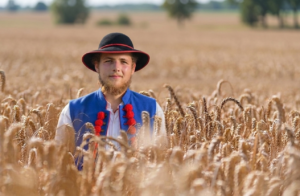
“I’m thrilled to have been part of developing the PestSpace project and to see firsthand how such an innovative tool for farmers comes to life. It’s a fantastic initiative that immediately caught my interest with its practical approach to crop protection.”
Mikołaj has learned why and how to use the PlutoF application to collect and store experiment data. He also learned about the importance of PestSpace Alert and the plan to apply this system in the form of citizen science, including numerous farmers, advisors from plant protection services, and many other end-users. PestSpace Alert may become an important step toward a free application for farmers as a disease recognition tool.
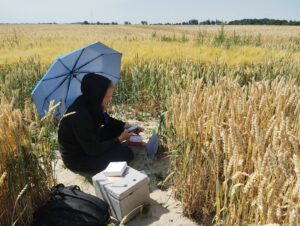
“Armed with a smartphone, a cool box, and a blue umbrella under the scorching sun or heavy rain – that’s how high-tech data collection looks in the field!”
The trainee achieved many new skills, including analyzing bioinformatic data obtained using Oxford Nanopore Technology. The training was done in close cooperation with the University of Warsaw. There were many new pieces of information for Mikołaj to digest and discover. One of his tasks was to create an algorithm helping in the automatic organization of the collected data.


Mikołaj analyzing sequencing results in the office
Bioinformatics is very useful, especially when combined with other disciplines such as plant pathology, entomology, and disease epidemiology. Mikołaj expanded his knowledge of crops used in the project as well as many other issues important in contemporary agriculture.

Additional links
details
-
Homepage
-
Project typeCore Project

-
ImplementationMarch 2025 - February 2028
-
StatusOngoing
-
Contribution to EUSBSRPolicy Area Bioeconomy

-
Target groups
- Business support organisation
- Higher education and research institution
- National public authority
- Sectoral agency
- Small and medium enterprise
-
Social media
-
Additional links
-
Tags