




Passport and visa, please. Neither. We don’t need them. PestSpace at the project midpoint
10 September 2026
PestSpace, an Interreg Baltic Sea Region project, brings together researchers, experts and farmers from Poland, Lithuania, Latvia, Estonia and Finland.
“As climate changes, pathogens are spreading beyond their original distribution ranges, and we want to be ready for this challenge,” says Project Manager Associate Professor Kadri Põldmaa.
It starts in the field
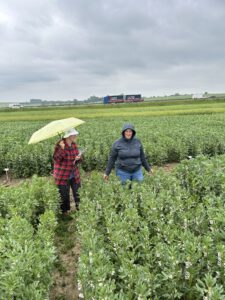 Before there is a dataset, there is a person in a field looking closely at a plant. Across the five countries, PestSpace researchers spent the growing season monitoring crops, observing plants, taking photographs and recording what they found along the way.
No two days in the field were quite the same. Researchers worked in rain and wind (pictured here: our researchers at the experimental field in Wrócikowo, Poland), under bright sunshine and, on some days, in temperatures above 30°C. In Finland, for example, one sampling day brought particularly high temperatures – a good reminder that collecting plant-health data is hands-on work.
Whatever the weather, the researchers moved through the fields, checking the crops and documenting signs of both healthy growth and disease. These everyday observations are the starting point for something much bigger.
 This is where the bigger picture begins: with people in the field, looking closely, asking questions and turning everyday observations into data that can later be connected with thousands of others.
Each observation adds another piece to the bigger picture.
Check the story: Field diary from Finland
Building a shared evidence base
Over the first half of the project, field experiments were carried out at 18 locations across five countries and involved 10 faba bean cultivars. Using harmonised procedures, researchers recorded disease symptoms, field and crop characteristics, photographs and samples at different stages of plant development. During the 2025 field season, 2,374 disease-symptom photographs were added to the PestSpace data module.
2,374 photographs. 18 locations. 5 countries.
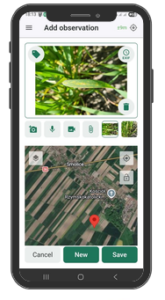
The observations are connected through a common digital workflow. Georeferenced records are collected using the PlutoF GO mobile app, while photographs, metadata and physical samples remain linked to the original field record. QR codes help maintain the connection between what was observed in the field and material later examined in the laboratory.
The result is a shared evidence base that makes observations from different countries easier to compare and analyse.
From what we see to what we can understand
A photograph can show that something is wrong with a plant. But it does not always tell us why. This is why PestSpace combines field observations with laboratory diagnostics and digital technologies. See PestSpace researchers at work in the laboratory. Watch our short film: From the field to the laboratory: PestSpace researchers working with plant-health samples and diagnostics.)
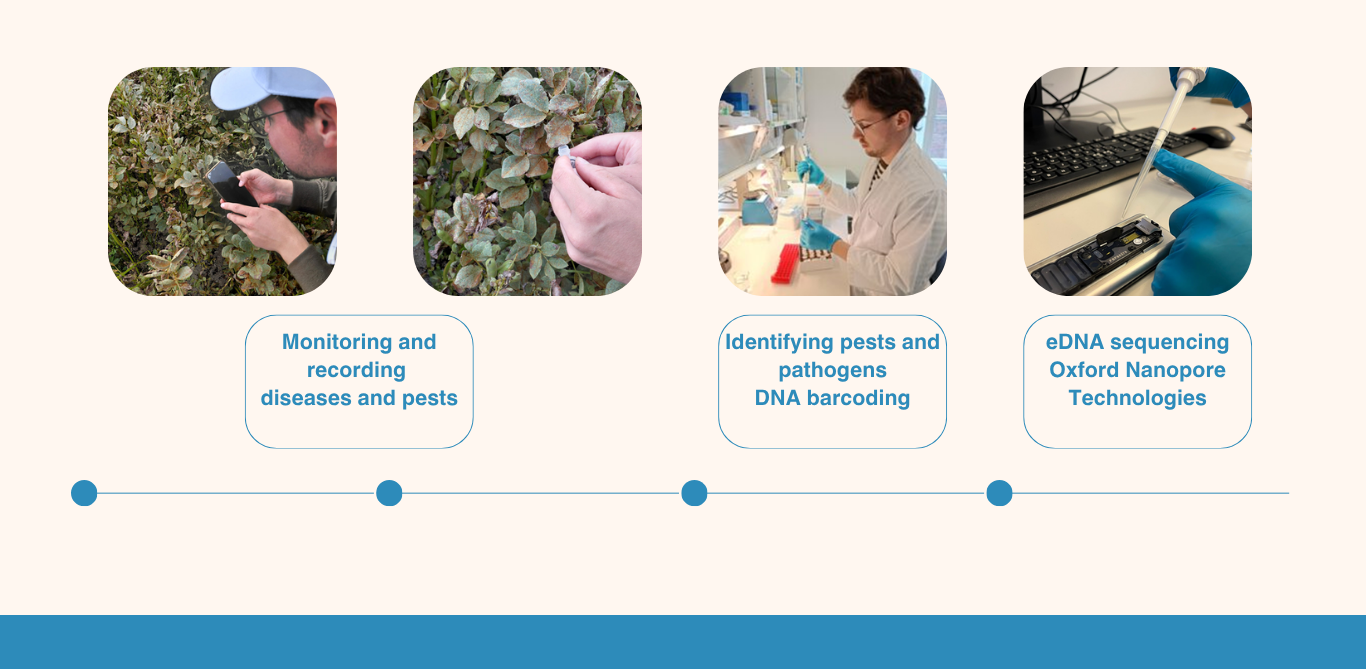
Physical samples can be traced from the field to the laboratory, where researchers use molecular methods to identify pathogens. The workflow connects DNA extraction, PCR, Oxford Nanopore sequencing and bioinformatic analysis with the original field observation.
At the same time, the project is developing AI-based disease recognition from photographs. The preliminary model showed promising results, providing a strong basis for further testing and development.
The aim is to connect different sources of evidence and make plant-health information more reliable and useful.
What the process looks like
From data to decisions
The next question is what to do with all this information. The shared dataset and digital infrastructure are now coming together in the first beta version of the PestSpace Alert System.
The system is designed to make plant-health information more accessible through web and mobile interfaces. Farmers can receive information about emerging pests and diseases, while researchers and agricultural advisors can explore more detailed data.
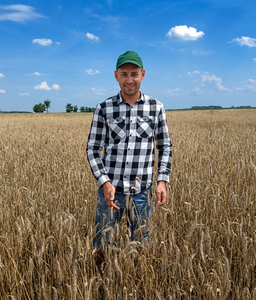
“I am really happy that PestSpace is creating an app that will soon help me make timely, better-informed decisions on crop protection right in my field,” says Polish farmer Patryk Grzempowski.
Workshops and technical training have also brought PestSpace closer to agricultural communities and provided opportunities to hear directly from potential users.
The next step: testing
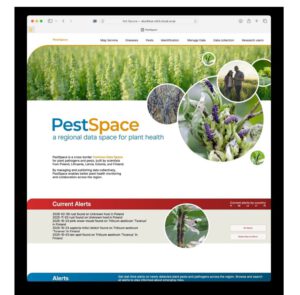
At the project midpoint, the foundations are in place: observations have been collected across countries, a common digital workflow is taking shape, field and laboratory information can be connected, and the first beta version of the Alert System is available.
Now the focus is shifting to testing. Farmers, agricultural advisors and other users across the participating countries will help improve the solutions. Their feedback will inform the interface, alert logic and presentation of information, while the project team continues developing AI-based disease recognition and strengthening the links between field observations and laboratory diagnostics.
PestSpace Alert public homepage, displays plant
diseases and pests recorded with the PlutoF GO app and
confirmed through the PestSpace project in PlutoF
The ambition is simple: to make plant-health information more timely, comparable and useful across borders.
From observations to regional action
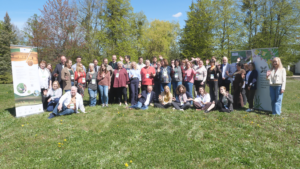
PestSpace is not simply collecting more data. It is connecting observations, countries, disciplines and people – turning individual field observations into knowledge that can help reveal plant-health patterns across the Baltic Sea Region.
As PestSpace moves into the second half of the project, the focus is shifting from building the foundations to testing how these solutions work in practice – and how they can help farmers, researchers and advisors better understand plant-health risks across borders. Follow PestSpace and explore the project: https://interreg-baltic.eu/project/pestspace/
Pictured: PestSpace partners and stakeholders during the 2nd Stakeholder Meeting and Training in Poznań.


Additional links
details
-
Homepage
-
Project typeCore Project

-
ImplementationMarch 2025 - February 2028
-
StatusOngoing
-
Contribution to EUSBSRPolicy Area Bioeconomy

-
Target groups
- Business support organisation
- Higher education and research institution
- National public authority
- Sectoral agency
- Small and medium enterprise
-
Social media
-
Additional links
-
Tags