




First Field Workshop in Lithuania: Smart Plant Protection and AI for Disease and Pest Monitoring
08 July 2026
A total of 21 participants attended the workshop, including researchers from the Lithuanian Research Centre for Agriculture and Forestry and the Agriculture Academy of Vytautas Magnus University. The programme introduced the ongoing field trials carried out within PestSpace, disease and pest monitoring methods, digital data collection, and the development of AI-based tools supporting plant protection.
The aim of the workshop was to present the objectives and activities of PestSpace field trials in Lithuania, introduce participants to disease and pest monitoring approaches, and demonstrate how digital tools and artificial intelligence can support more efficient and sustainable plant protection.
Field bean trial: variety evaluation and practical disease monitoring
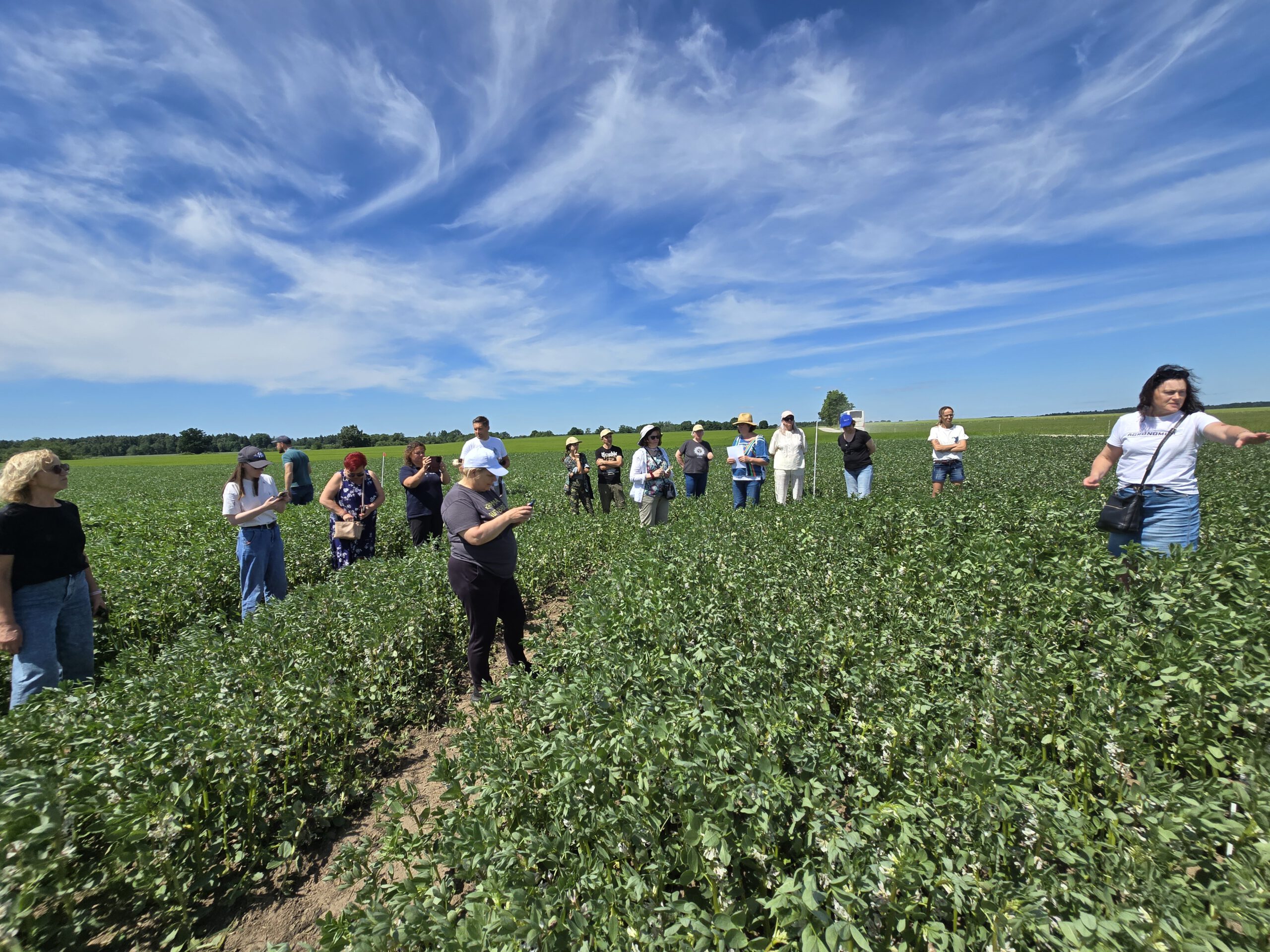
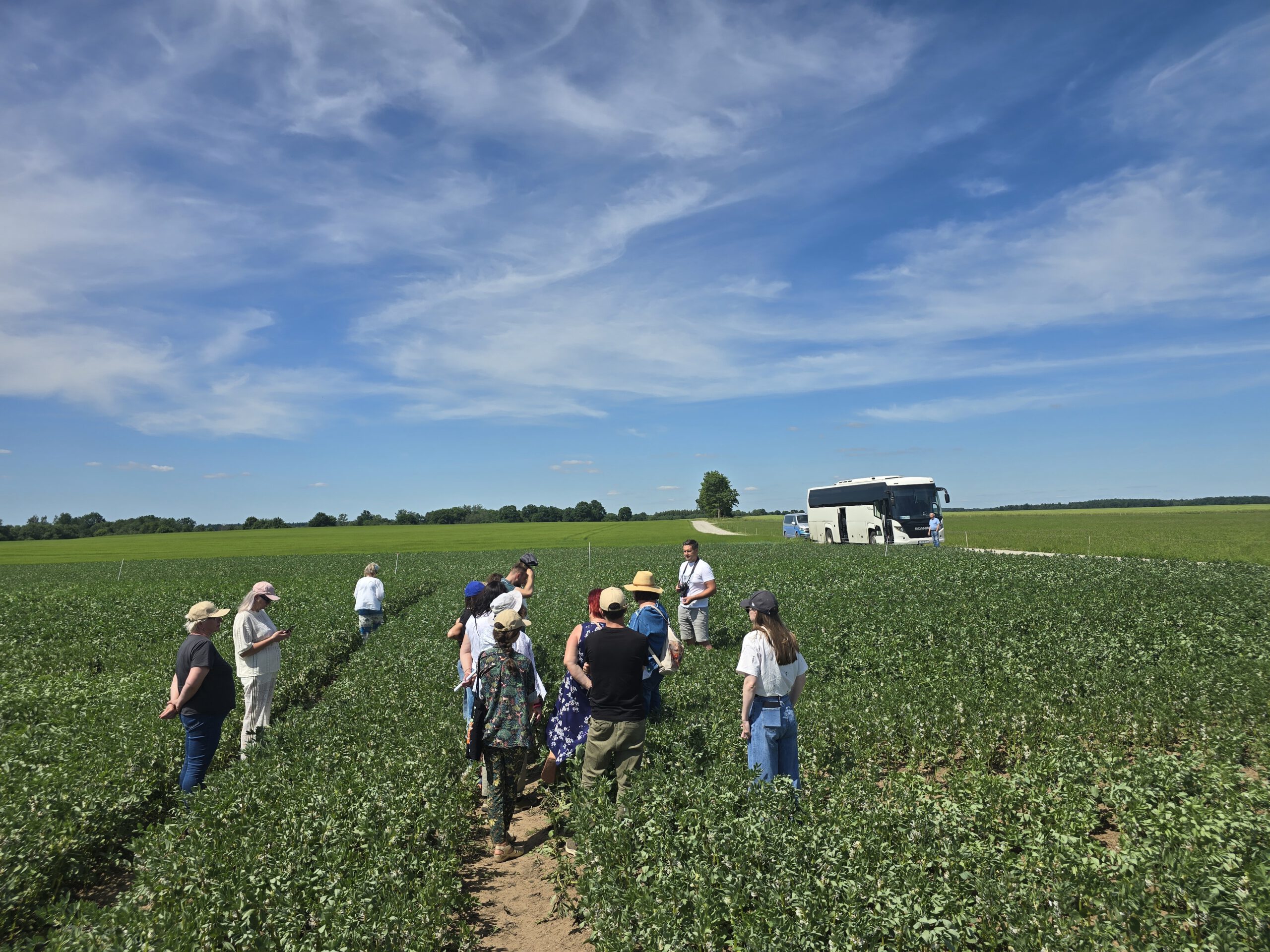
The first stop of the workshop was an experimental field located in Gudai village, Grinkiškis Eldership, Radviliškis District Municipality, where a field bean variety trial has been established.
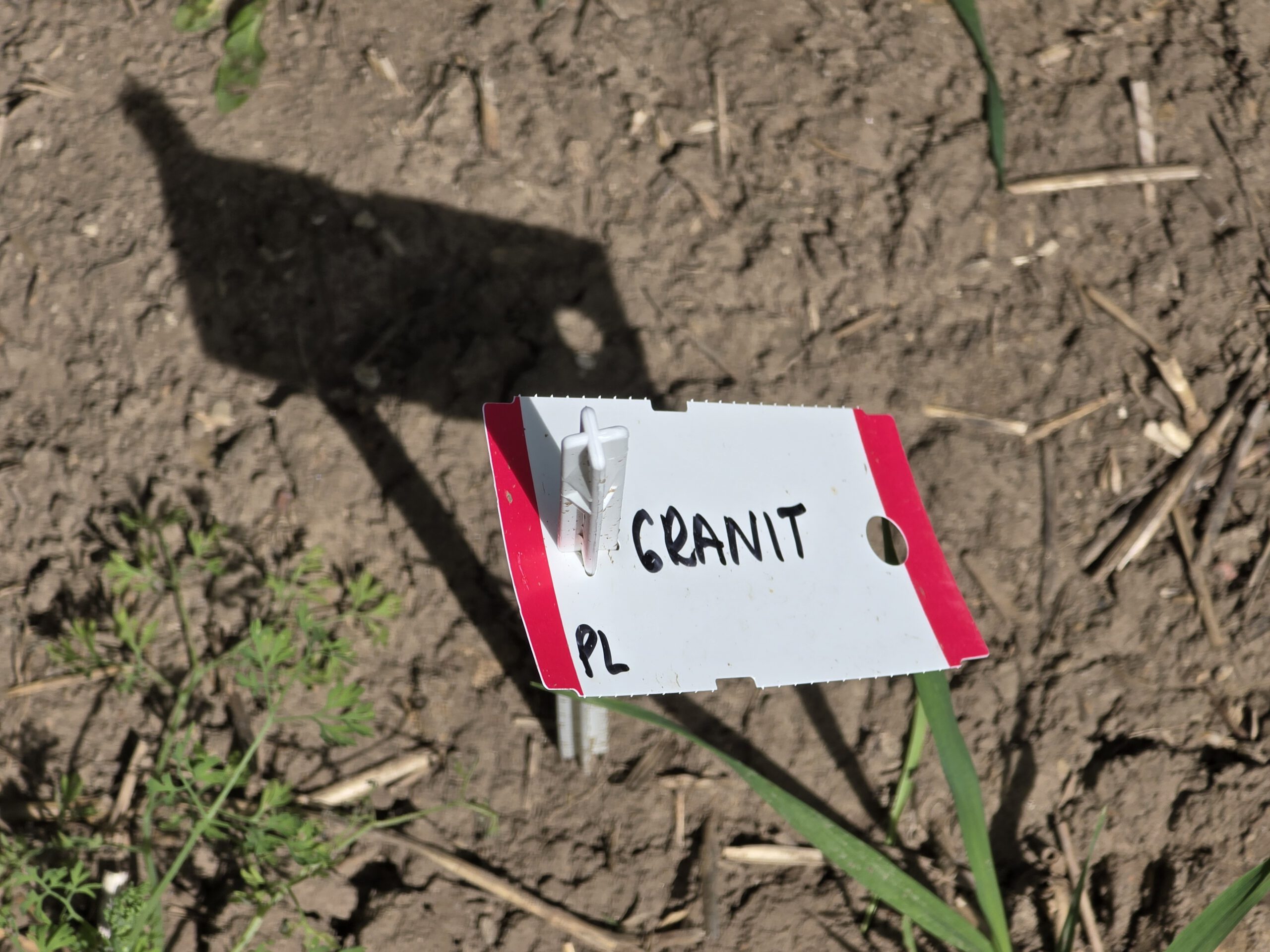
The trial includes ten field bean varieties:
Granit, Bobas, Tiffany, Fuego, Laura, Isabell, Vire, Louhi, Boxer, and Hammer.
The experiment is conducted in four replicates, with each experimental plot covering 20 m². During the field visit, participants were introduced to the objectives of the trial, expected outcomes, and monitoring activities carried out throughout the growing season. Researchers explained how disease and pest incidence is assessed, how field observations are collected, and how these data contribute to the development of a regional Common Data Space for plant diseases and pests.
Participants were also introduced to the Plutof Go mobile application, which is used for standardized field observations and digital data collection.
A practical exercise was one of the highlights of the workshop. Participants worked in teams to identify diseases and insect pests occurring in the bean crop. The activity encouraged knowledge exchange between researchers and agricultural practitioners while improving practical skills in pest and disease recognition. Participants also compared the morphological characteristics, growth performance, and potential differences in disease resistance and adaptation of the tested bean varieties.
Winter wheat trial: linking field observations with AI development
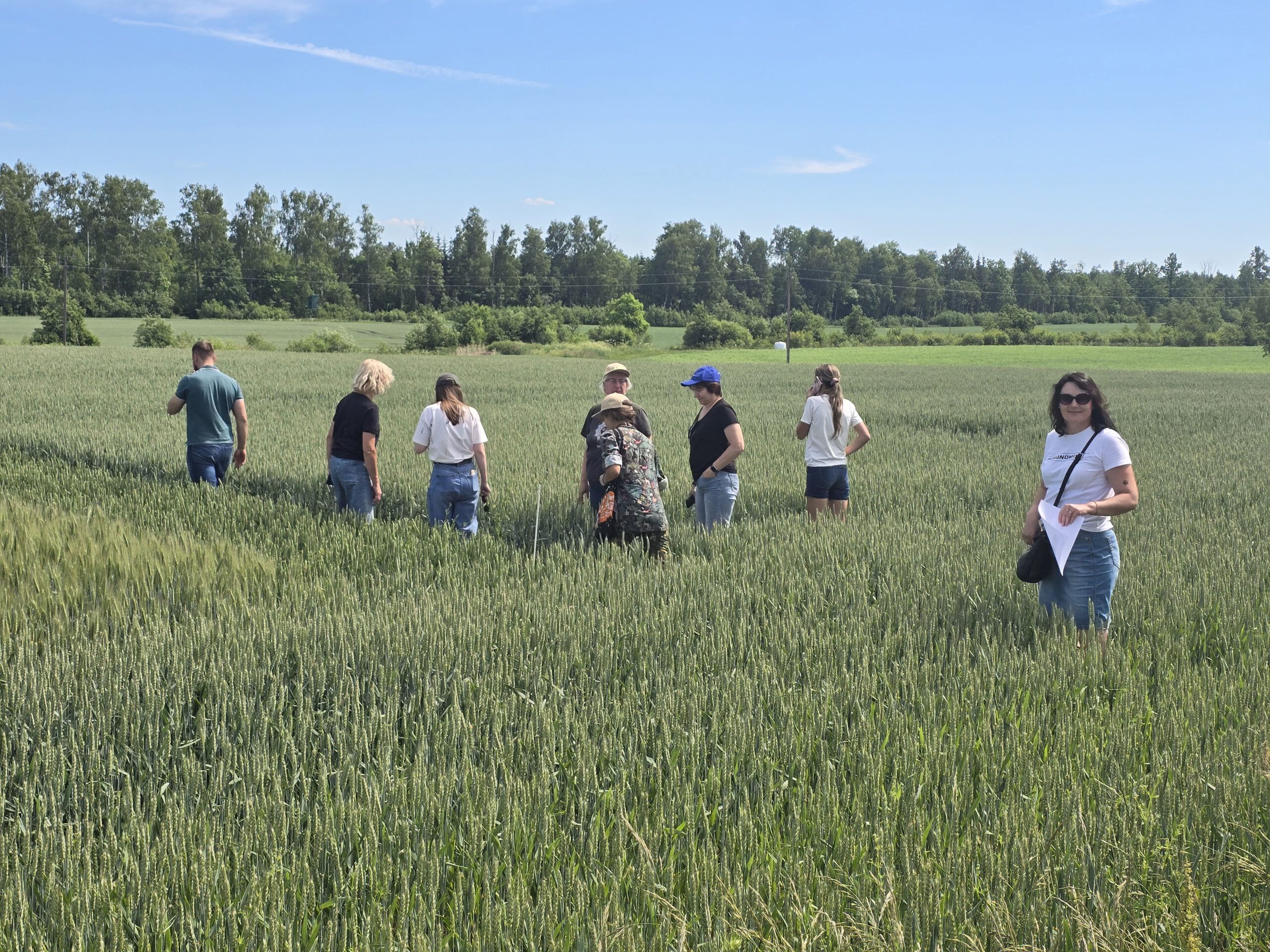
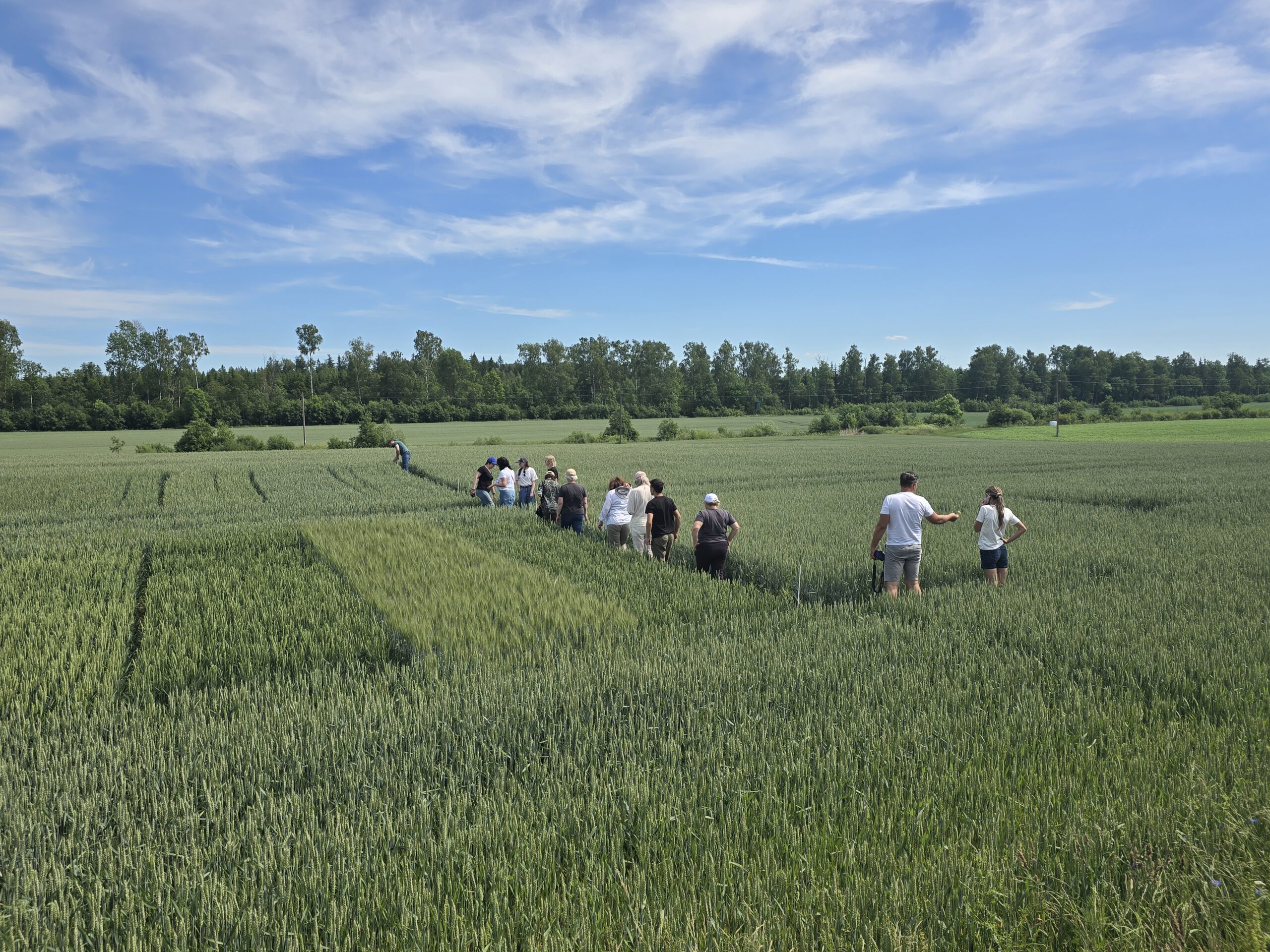
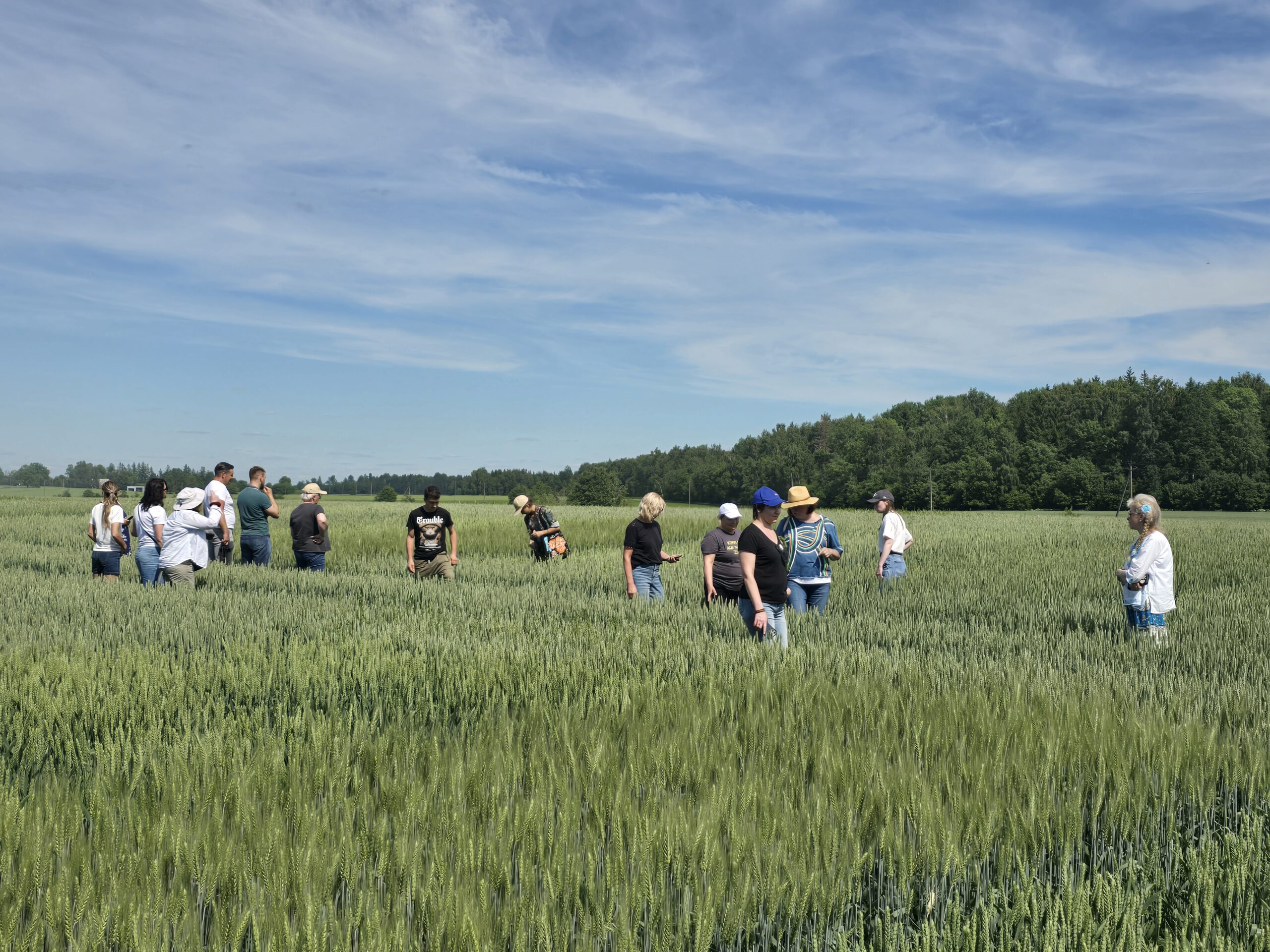
The second part of the workshop took place in Minaičiai village, Grinkiškis Eldership, where a winter wheat variety trial has been established.
The trial includes ten winter wheat varieties:
Ceylon, Turanus, Parlikee, Perenaise, Etana, Wendelin, Symetriꞌ, Personꞌ, Brigens, and Umberto.
As in the field bean trial, the experiment consists of four replicates, with each plot covering 20 m². At this site, participants learned about winter wheat monitoring procedures, disease and pest assessment methods, and digital data collection practices.
Researchers demonstrated how field observations are recorded using the Plutof Go application and explained how systematically collected field data support the development of artificial intelligence-based tools for plant disease and pest recognition.
Participants again took part in a practical identification exercise, working in groups to recognise disease symptoms and insect pests, discuss their observations, and compare the agronomic characteristics and health status of the tested wheat varieties.
Combining research, digital innovation, and agricultural practice
The workshop successfully connected scientific research with practical agricultural experience. Participants gained insight into modern monitoring approaches, learned how digital tools support field data collection, and explored the potential of artificial intelligence for improving early detection of plant diseases and pests.
Events such as this strengthen cooperation between researchers and agricultural practitioners while supporting the development and adoption of innovative, data-driven plant protection solutions across the Baltic Sea Region.
📷Take a look at the photo gallery below to see how the field workshop looked in practice and discover the activities carried out by participants in the experimental fields.

Additional links
details
-
Homepage
-
Project typeCore Project

-
ImplementationMarch 2025 - February 2028
-
StatusOngoing
-
Contribution to EUSBSRPolicy Area Bioeconomy

-
Target groups
- Business support organisation
- Higher education and research institution
- National public authority
- Sectoral agency
- Small and medium enterprise
-
Social media
-
Additional links
-
Tags