




Online workshops advance the uptake of OpenRisk II tools
07 May 2026
During the spring of 2026, OpenRisk II brought together maritime safety experts and authorities in two online workshops to present the R-Mare Matrix and EcoSensitivity tools aimed at improving maritime risk management across the Baltic Sea region. As the project enters its final phase, discussions and the sharing of ideas and experiences on the tools is crucial to increase the awareness of their potential and their concrete uptake.
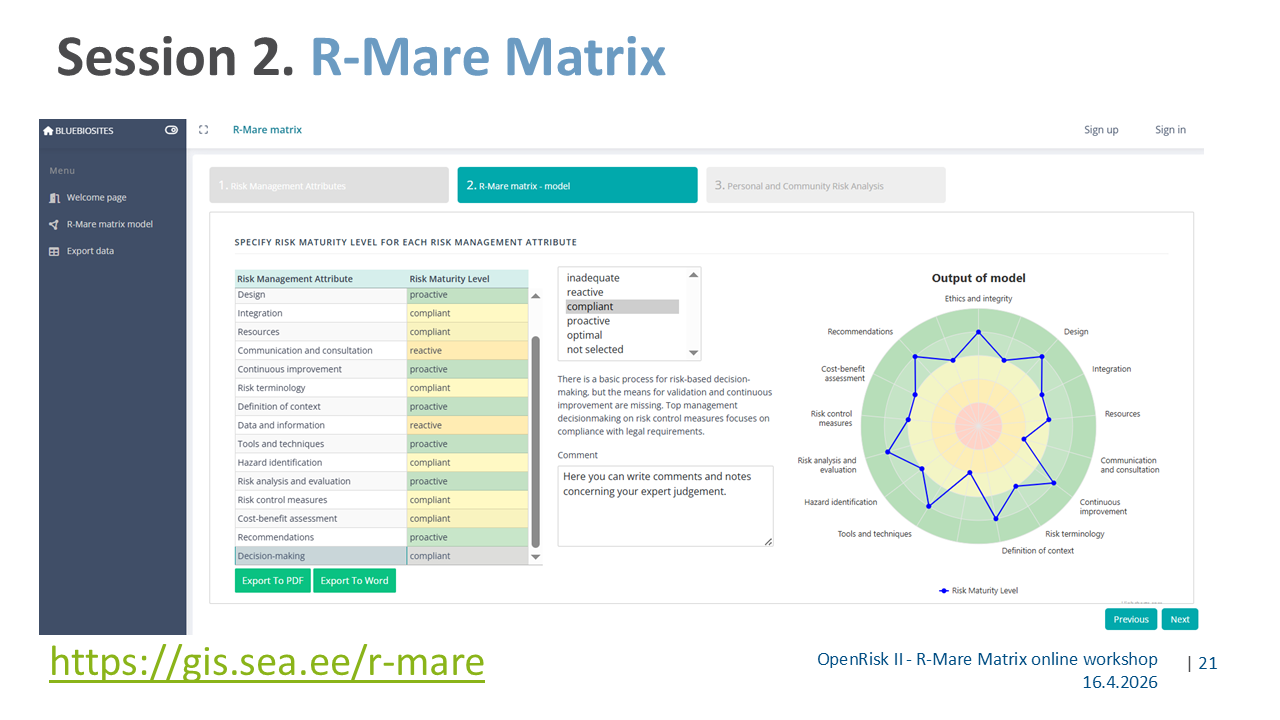
The first workshop focused on the R-Mare Matrix, a tool that helps organizations assess their risk management practices. It enables users to identify strengths, pinpoint gaps, and guide improvements through a structured, five-level maturity model ranging from basic compliance to optimized risk management performance.
The participants expressed interest in adopting the R-Mare Matrix, especially if it could be well aligned with existing practices and risk assessment requirements. The need for continuous and systematic evaluation, rather than a one-time activity, was seen beneficial in improving the organizations´ practices. Additionally, it was noted that assessment alone is insufficient and value is created by concrete measures based on the results.
A key challenge is that limited resources and competing operational priorities often restrict organizations from adopting and consistently applying new approaches. The tool´s simplicity and user-friendliness were seen as something that could lower the threshold and encourage a widespread use. Even for well-designed tools, organization-level commitment to implementation and skills development and a supportive culture are needed to enable the real uptake.
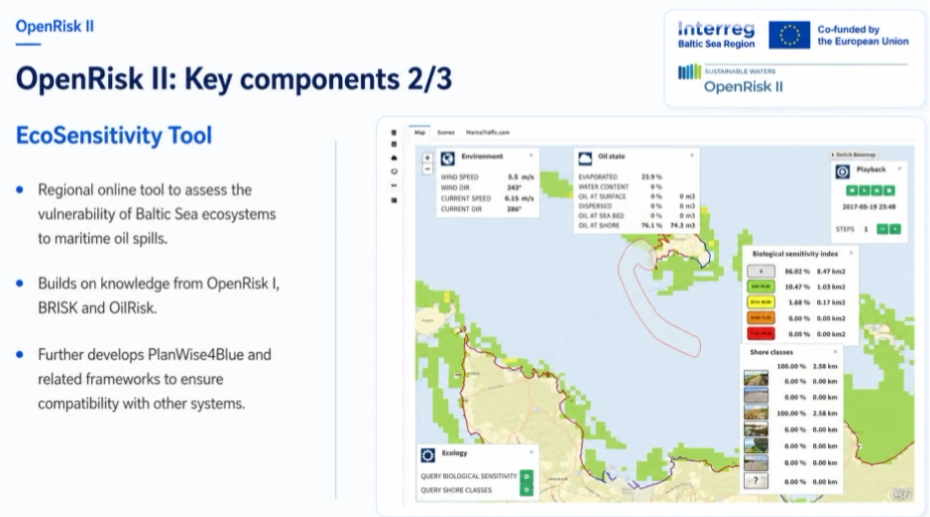
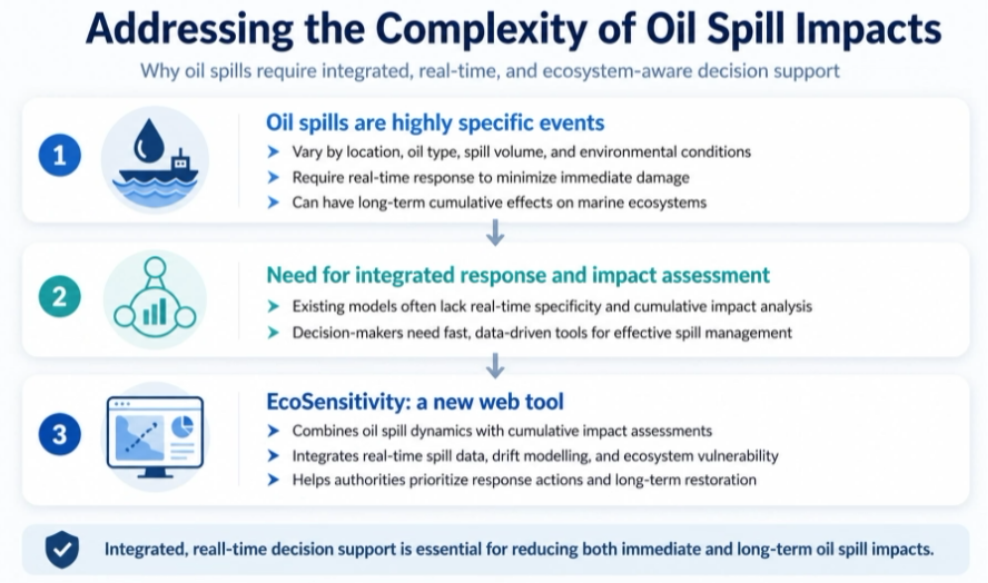
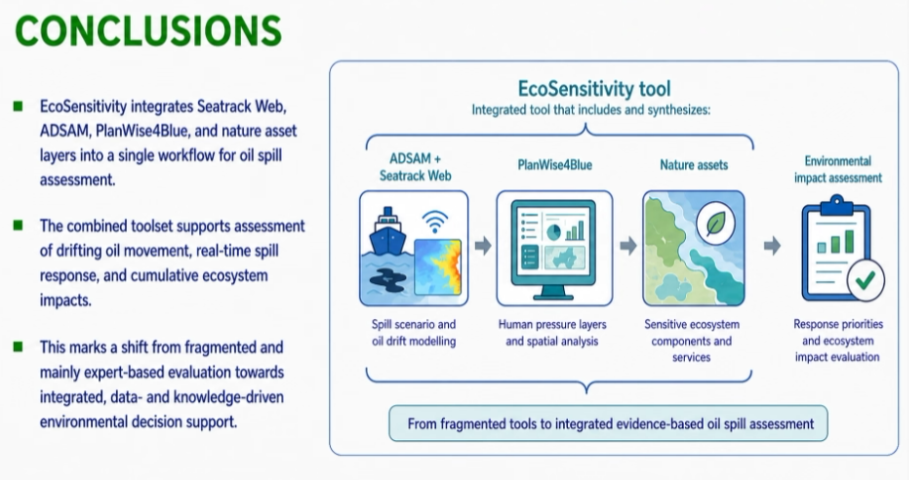
The EcoSensitivity tool workshop focused on presenting how it supports understanding and managing cumulative environmental impacts, including those arising from past, present, and future human activities. A key discussion point was the complexity of oil spills and the importance of integrated, real-time decision support to mitigate both immediate and long-term effects. The project teams from the University of Tartu highlighted how the tool consolidates fragmented scientific data through systematic approaches, improving practical usability.
Participant feedback emphasized opportunities for further development, such as integrating marine protected area (MPA) maps uploading for more precise risk assessments, enhancing biodiversity impact tracking, and incorporating sensor data to validate and refine models. Overall, the workshop provided valuable insights into both the tool’s current strengths and its future potential.
The outreach actions of OpenRisk II continue with the aim of making the project tools stable parts of the maritime risk management toolbox of the Baltic Sea Region. Stay tuned for the next online workshop on the AISyRisk Baltic tool, to be organized in the early autumn of 2026.

Additional links
details
-
Homepage
-
Project typeCore Project
-
ImplementationNovember 2023 - October 2026
-
StatusOngoing
-
Contribution to EUSBSRPolicy Area Safe, Policy Area Ship

-
Target groups
- Higher education and research institution
- International governmental organisation
- National public authority
-
Social media
-
Additional links
-
Tags