




Quiet seasons, shared experiences
06 May 2026
What we learned from Coffee & Connect
As the Light in the Dark project moved out of its piloting phase, a new question started to take shape: how do we share what we’ve learned in a way that actually reaches tourism SMEs?
By this point, experiences had been tested across different regions, visitors interviewed, and clear patterns had started to emerge. But results on their own don’t automatically travel very far. A lot of them unfortunately only live on in reports, presentations, or internal discussions.
At the same time, many of the SMEs we work with have limited time and energy to spare. Sitting down to read project material is not always realistic, especially during busy periods. What is more likely to happen is conversation. Short, informal exchanges with others who understand the same everyday constraints.
Coffee & Connect grew out of that moment in the project.
Rather than asking SMEs to read about our results, we wanted to test a lighter way of opening them up. Something that didn’t demand preparation, didn’t try to cover everything, and didn’t pretend to offer ready‑made answers.
That’s how the idea of a few simple morning sessions took shape.
Trying something deliberately simple
Coffee & Connect was never meant to be a new format or a finished concept. From the beginning, it was treated as a trial.
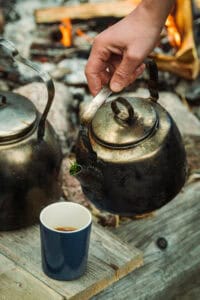
The setup was intentionally modest: one early morning hour, a shared theme, an inspiration story from one SME, and plenty of room for conversation. The sessions weren’t recorded, and there was no expectation for participants to present something polished.
In hindsight, that simplicity turned out to be the point.
What took shape during the conversations
What stood out early on was how much people appreciated hearing ordinary stories. Not success cases in the polished sense, but accounts of what they had tried, what felt awkward, and what hadn’t worked yet.
Calmer experiences came up repeatedly. So did small groups, simple activities, and the value of being clear rather than ambitious. Several participants talked about how reassuring it was to hear that others were wrestling with the same questions around seasonality, pricing, and visibility.
The discussions moved away from themes and into shared realities. In that sense, the topics mattered less than the space that was created.

A word on the themes we explored
Although each Coffee & Connect session had its own focus, the themes were deliberately broad and close to everyday practice.
When we talked about local lifestyle, it was rarely about creating something new. Instead, conversations revolved around everyday knowledge, routines, places and stories that businesses already carry, but often underestimate. Many recognised that visitors often connect most strongly with what feels genuine, rather than carefully staged experiences.
The sessions around nourished by nature brought up calm, recovery and simple rituals again and again. Several businesses noted that what visitors value in quieter seasons is not more activity, but clarity, presence and time. For some, it was eye‑opening to realise that these aspects were already part of their offer.
In the active adventure discussions, the focus shifted away from speed, intensity or pushing limits. Instead, safety, clear structure and a welcoming threshold mattered most. Framing activities in a way that feels accessible (especially outside the main season) appeared to make a real difference.
Across all themes, a similar pattern emerged. The experiences that resonated most were not the most complicated ones, but the ones that felt honest and well thought through.
Things that didn’t unfold as planned
Not everyone who registered showed up. That’s not unusual when working with small businesses, but seeing the gap between interest and participation made it harder to ignore.
We also noticed that breakout rooms didn’t always help. In some sessions they slowed the conversation down rather than opening it up. When the group stayed together and talked about a shared issue, participation tended to be easier.
None of this felt like a failure, but it did underline something important. Engagement can’t be assumed, and formats don’t behave predictably just because they look good on paper.
A few quiet surprises
Perhaps the clearest surprise was how little input was needed to get a meaningful discussion going. A short story from one business was often enough.
There was also a strong pull towards practical matters: marketing, tools, ways of framing experiences more clearly. Not because people were chasing trends, but because they were trying to make sense of everyday decisions.
Underlying many of the conversations was a simple theme: people wanted confirmation that what they were already doing had value even if it didn’t look impressive at first sight.
What we’ll carry forward
Coffee & Connect changed how we think about future sessions and similar activities.
Less structure can be helpful. Silence isn’t a problem. Open conversations sometimes work better than carefully designed exercises.
Most of all, it reminded us that creating something useful doesn’t always mean adding more. Sometimes it’s about stepping back enough for others to bring the content themselves.
That’s something we’ll keep in mind as the work continues.
For those working through similar questions
If parts of this feel familiar, you’re not alone. The Coffee & Connect conversations are one small window into the wider Light in the Dark project, where tourism businesses across the Baltic Sea Region share experiences, questions and lessons from working in calmer seasons.
You can explore the project, tools and shared findings further at
https://lightinthedarkbsr.eu/

Additional links
details
-
Homepage
-
Project typeCore Project

-
ImplementationNovember 2023 - October 2026
-
StatusOngoing
-
Contribution to EUSBSRPolicy Area Tourism

-
Target groups
- Business support organisation
- Local public authority
- Regional public authority
- Small and medium enterprise
-
Social media
-
Additional links
-
Tags