




Erasmus BIP-course at Novia Business in Turku in Collaboration with Light in the Dark: Low-Season Tourism Experiences in the Baltic Sea Region
24 April 2026
Introduction
Erasmus+ Blended Intensive Programme, BIP courses, have during the past few years, become extremely popular for students and teachers across Europe. In spring 2026 Novia Business in Turku arranged a BIP-course in collaboration with the Interreg BSR project Light in the Dark. The project Light in the Dark helps small and medium-sized companies in the tourism sector create low-season nature-based products to attract tourists to rural and coastal areas of the northern Baltic Sea region all year. SMES, tourism development in coastal areas along with further development of low season experiences were at the core of the course.
The Planning Process
The planning process started in the autumn 2025 with online meetings. Klaipeda University, Novia UAS, Åland University of Applied Sciences and Estonian University of Life Sciences were natural partners, since the educational institutions are part of Light in the Dark. However, we needed more participants and, therefore, approached other educational institutions in the Baltic Sea Region that could be interested in the topic for the course.
In the end we had 26 students from Bachelor’s and Master’s tourism programs and five lecturers from Klaipeda University in Lithuania, Vidzemes University of Applied Sciences and Turiba University in Latvia and Estonian University of Life Sciences in Estonia.
The planning continued in spring 2026, by Novia representatives on-site in Turku, and via online meetings with the confirmed participating universities. It was with great excitement that we all awaited March 23, the day that the BIP-course was finally taking place.
The Week in Turku
The course was kicked off by Dean Hanna Guseff, who welcomed the participants to Novia UAS and Novia Business and shared some facts about the university of applied sciences. Some final practical arrangements were taken care of before the participants were divided into three groups and taken on guided tours around the city. After the brisk walk, the participants enjoyed their first meal at one of the student cafeterias close to the Novia campus.
In the afternoon Project Manager Janina Selin presented the project Light in the Dark to both the BIP-participants, as well as to the third year’s Bachelor’s students of Business. As a conclusion to her presentation, Janina arranged a mentimeter competition, where the students were able to showcase their knowledge about the Baltic States. The first day was rounded off for the BIP-participants with a hamburger meal at Gastro Pub Koulu.
The following morning the BIP-participants had an opportunity to get to know the Novia Business students better. The aim of the morning was two-folded: first the 90+ students were divided into teams of five-six persons. The aim was naturally to mix the students as much as possible to have a fruitful combination of competencies for the student hackathon later in the week. Secondly, the BIP-students attended a training session conducted by the student teams Adimpléo, Novactive and Uasis. After the division of the students into small international teams, they were given some time to get to know each another. They were for example asked to come up with a name for their team and mention a funny fact about themselves, to better remember one another.
The Finnish students in charge of the respective training sessions had planned an agenda to integrate the guests, and there were for example tasks related to tourism experiences. The BIP-participants had short presentations about their home university and tourism in their home countries.
After the lunch break, the students met again with their small team and explored some of Turku’s 100 outdoor sculptures, while they continued discussing their individual strengths with regards to the upcoming hackathon. The teams provided picture material of statues visited, culminating in a final picture of every team’s own human sculpture. The aim of the group formation and team-building assignments was to bring the students together ahead of the hackathon and encourage a positive atmosphere and cooperation among the students.
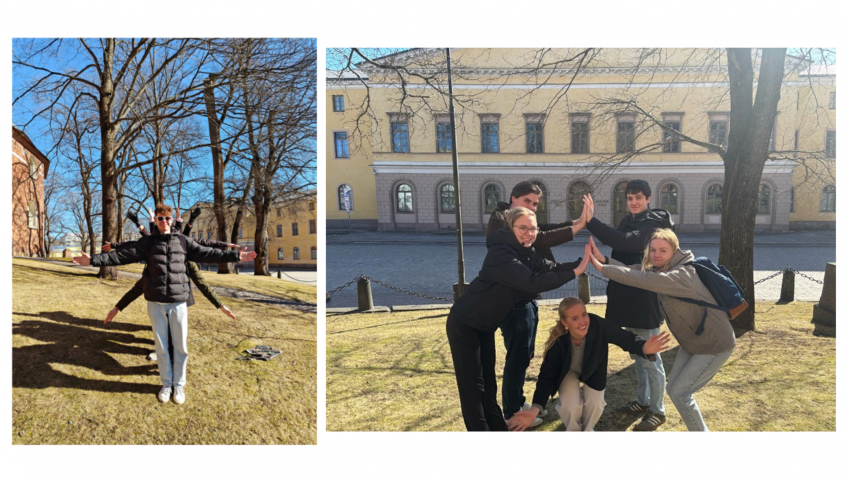
Participants of the course exploring Turku.
The BIP-participants had time in the evening to explore the city on their own. The teachers of the BIP-course met at Restaurant Tintå for a meal and a chat, since we also needed to get to know each other. By the end of the meal, we had the instructions for the hackathon in front of us and discussed the approach and set-up. It was a good way of bonding, since every teacher’s competence and know-how was going to be needed for the supervision of the student teams in the hackathon.
On Wednesday, the BIP-course participants were taken on a whole day tour by bus to the Turku archipelago. Discussions with the participants beforehand showed that visiting the archipelago was one of the highlights of the week and something that the visitors were looking forward to. Despite the heavy rain clouds that hung in the air, we were all convinced to make the best of the day. We had carefully selected three young entrepreneurs and their companies to show the possibilities of nature-focused life in the archipelago all year round.
The bus driver of the day turned out to be experienced with plenty of knowledge, and he kept his passengers entertained with stories and anecdotes, as we headed out along the Archipelago Road.
The first stop was in Nagu, where the company Living Archipelago Brännskär was presented by Linus Söderlund, one of the founders and owners of the company. He told us the story of a former fishing community that had been reinvented into a community-based tourism company, with a marina, cottages, a cafeteria and different nature activities, and we certainly realised from Linus’ presentation that Living Archipelago is a lifestyle company. (more info at https://www.livingarchipelago.fi/ )
Next the bus continued to the island of Korpo and Restaurant Back Pocket, where we were served a delicious three-course lunch. The lunch illustrated the heart of the business. The owner of Hotel Nestor and restaurant Back Pocket, William Hellgren, told us about his passion for food that originates from working as a chef at a Michelin restaurant in Stockholm, and is now being cultivated further in his own restaurant in the Turku Archipelago. (more info at https://hotelnestor.fi/fi/)
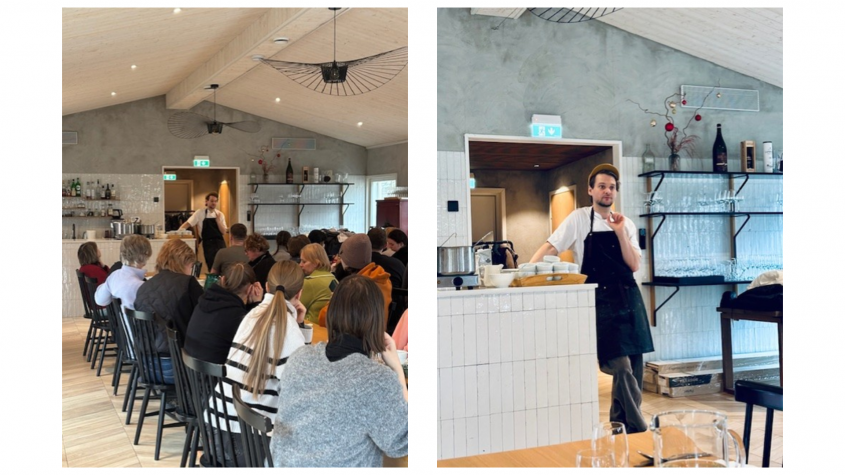
Visit to Hotel Nestor.
The third tourism entrepreneur was Sara Söderlund, who runs the company Naawa Nature Awakening. By the time we arrived at her place, the weather had turned from grey to a steady drizzle of rain. Despite the weather, we threw ourselves into the outdoor experiences that Sara had in stall for us. Half of the group learnt survival skills and how to make a fire, while the other part of the group, visited different stations in the nearby forest, learning about the local flora and fauna, and discovering the unique ecosystem of the archipelago. One of the core ideas of Sara’s business is that Interactive activities and games make learning about nature fun and engaging. Finally, we got to taste some pine needle tea before we entered the bus that took us back to the city. (more info at https://naawanature.com/)
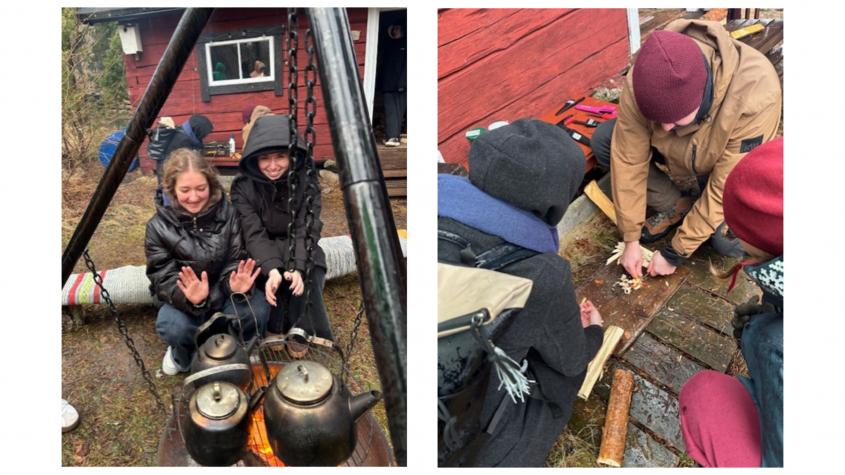
Visit to Naawa Nature Awakening.
The three entrepreneurial stories were different and had their own spin, but it became obvious to us that the three entrepreneurs are extremely passionate and driven. Life as an entrepreneur is certainly not always easy in the archipelago and you need to be patient and have clear long-term goals that you believe in and work towards.
The Hackathon
The hackathon took place on Thursday and Friday under the theme ‘Low-Season Tourism Experiences in the Baltic Sea Region’. The event was kicked off by the Head of Digital & Marketing Execution Olli Ylioja from Visit Turku Archipelago (VTA). The group, consisting of 63 business students and 26 BIP-course participants, was provided with an overview of the current situation with tourism and VTA’s visions about how to enhance tourism growth in the Turku and archipelago area with the help of branding, storytelling and scaling both products and on-line sales.
After the keynote, the participants were given the assignment to design a 7-day tourism package for the whole or part of the Baltic Sea Region, tailored to one specific target market (Poland, Germany, France, the UK, or Spain). The participants were divided into groups based on the three experience categories developed within the project, namely Nourished by Nature, Local Lifestyle and Active Adventure. Five groups were assigned to each category. Students were asked to use at least two products developed within the Light in the Dark project and combine those products with their own ideas. The package had to include at least two countries from BSR region.
The groups started by defining their target market and destination countries, analysing the problem and brainstorming ideas. During the hackathon, they were asked to test, i.e. loop their ideas with at least three people from the target group, as well as with the BIP-course teachers, who were available mentors throughout the hackathon. The students had learnt about Service Design and were consequently expected to use different service design tools in the process.
A hackathon is based on the idea of working intensely for 24/48 hours and it was a pleasure to note that most groups continued working until late on Thursday and picked up on Friday morning to design the presentation and practice their 7-minute pitch. Each experience category had their own jury that consisted of experts such as teachers, project staff and representatives from the tourism industry.
After the five groups had pitched their packages and answered possible questions from the jury, the participants had lunch, while the jurors discussed their impressions of the presentations and agreed on the winner of their category. After lunch, all participants gathered again and the jurors announced the winner from each category. The winning teams were rewarded with an Iittala candle holder, a symbol for Light in the Dark. The winners pitched their packages once more to the whole auditorium.
The Result of the Hackathon
The winners in the category Nourished by Nature were the group named The Vikings. They targeted Spain and presented their package “Nordic Reset: An autumn journey into silence and nature”. They introduced their package by showing a crowded tourist trap in Spain, Sagrada Familia in Barcelona. The journey was planned as a package and would take the traveller from Spain to Estonia, onwards to the Åland Islands and back home via Helsinki. The trip included a wide variety of nature activities such as hiking, bear watching, apple tasting, yoga, mushroom picking and sauna bathing.
According to the jury, the package was practical and coherent from start to finish and included information about pricing in a way that made the concept feel realistic, ready and possible to implement without further development.
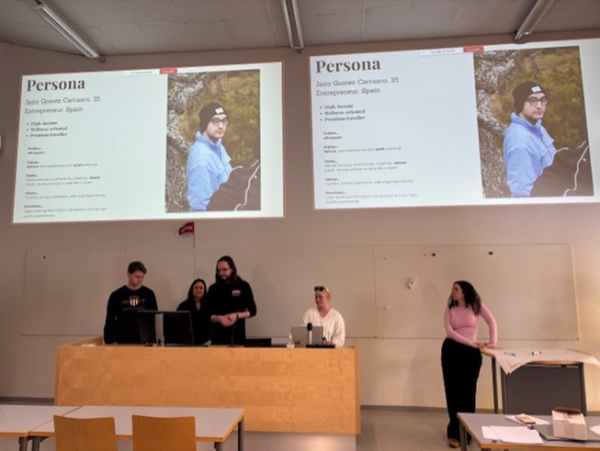
A presentation during the hackathon.
The Local Lifestyle category was won by The Bunnyfish. Their travel package targeted the Polish market, and consisted of “1 sauna, 3 stories”. The package offered premium sauna experiences across Finland, Estonia and Latvia. In addition, the package included visits to old towns, museums, a medieval castle and finally, the opportunity to enjoy local food.
The jurors commented on the authentic and powerful idea of focusing on one theme that beautifully connected to the Baltic Sea region. The group believed in their idea, and it showed in their impressive presentation. The package was realistic and ready to be marketed.
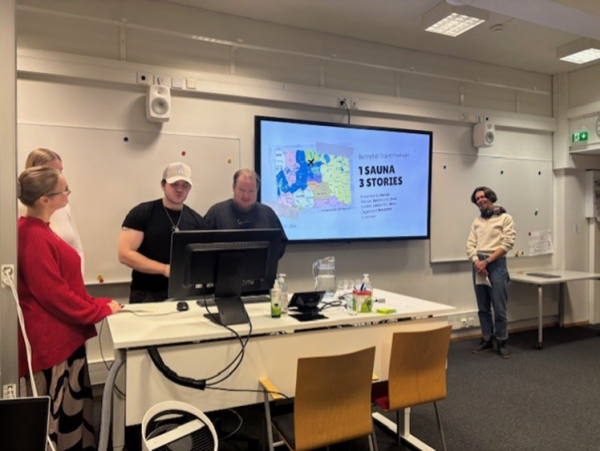
Presentation of the travel package “1 sauna, 3 stories”.
The winner of the third category, Active Adventure, came up with quite an innovative package called “Test your marriage – a 7-day Baltic holiday for couples that will strengthen your love”, including an element of gamification. The group Aurora targeted Polish couples and invited them to go to Finland, Estonia and Latvia, where they could choose between different activities and earn points based on their performance.
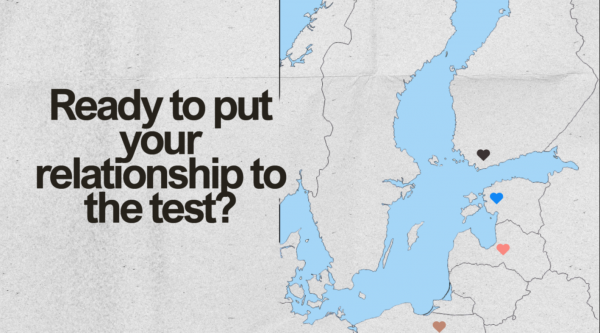
In this category, the jurors commented that the product was innovative, on the verge of being provocative. The group made good use of gamification and the package stood out from the others. Finally, they targeted Poland, a good target group for south Baltic and good potential because of connectivity and image.
The Final Dinner Party
The final dinner was arranged by BrandBloom, one of Novia Business’ second-year student teams. Apart from doing catering, the team also runs the Henrik’s Bistro cafeteria on the Novia Turku campus. The auditorium was miraculously transformed from a lecture hall into a cozy restaurant for the occasion and BrandBloom served a delicious three-course dinner. The dinner party included program that consisted of fun facts about Finland. The participants were also asked to recognise Finnish songs. Finally, the participants sang the songs, and the party culminated in students’ singing different karaoke songs. It was obvious that the Eurovision Song Contest is popular across the Baltic States, as everyone at the party recognised the songs Hard Rock Hallelujah, ChaChaCha and Bara Bada Bastu.
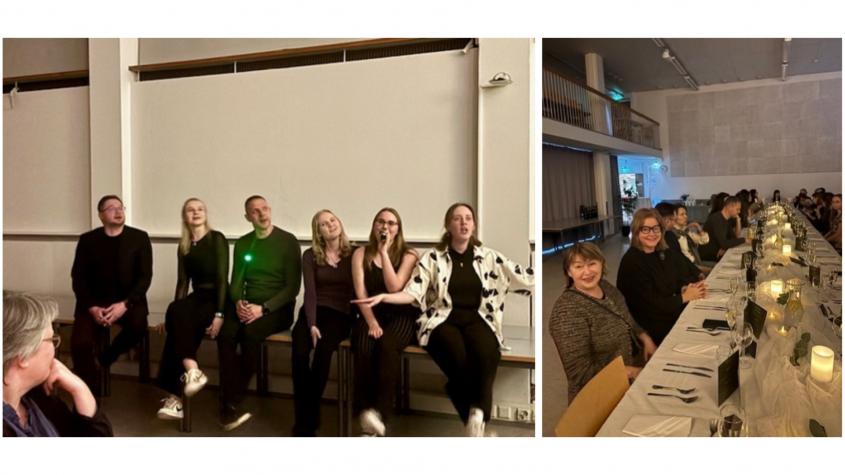
Pictures from the final dinner.
The evening was rounded off with one of the Estonian students singing the song Kaikuluotain in Finnish, which means “sonar”, while the flashlights from the other students’ mobile phones lit up the room. This was a worthy ending to a memorable week under the theme Light in the Dark.
Conclusion
The following week the organisers sent a short survey to the students to evaluate the week. The question “How did the course content help you achieve the intended learning objectives” was rated 4,65/5. (N=23)
Below is a quote from one of the respondents:
“The most valuable part of this intensive week for me was the hackathon and group work. It gave us a chance to apply ideas about off-season tourism in practice, collaborate with international students, and develop creative solutions. The field trip to the archipelago was also very insightful, as it helped me better understand the real context of tourism in low season.”
The organisers want to believe that it was a mix of the trip to the archipelago, the hackathon and the atmosphere and excellent arrangements of the final dinner party that in the end contributed to the high student content average of the course.
We want, finally, to thank everybody involved in the planning and execution of the BIP-course. Success of an intensive course is the sum of small efforts made by everybody involved in one way or the other. This was a good method to bring together young people from the Baltic States.
Authors:
Maria Engberg and Annemari Andrésen
This travel report has been published in Novia University of Applied Sciences’ publication series RS: Travel Reports. The contributions have been approved by Novia’s Editorial Board.
Novia Publication and Production, Series RS: Travel Report, ISSN: 2670-028X.
The publication follows the Creative Commons Attribution 4.0 International (CC BY 4.0) licence unless otherwise stated.
The travel report was approved for publication by Novia’s Editorial Board on 24 April 2026.
ISSN: 2670-028X

details
-
Homepage
-
Project typeCore Project
-
ImplementationNovember 2023 - October 2026
-
StatusOngoing
-
Contribution to EUSBSRPolicy Area Tourism

-
Target groups
- Business support organisation
- Local public authority
- Regional public authority
- Small and medium enterprise
-
Social media
-
Additional links
-
Tags