





From Buildings to the Environment
26 October 2026
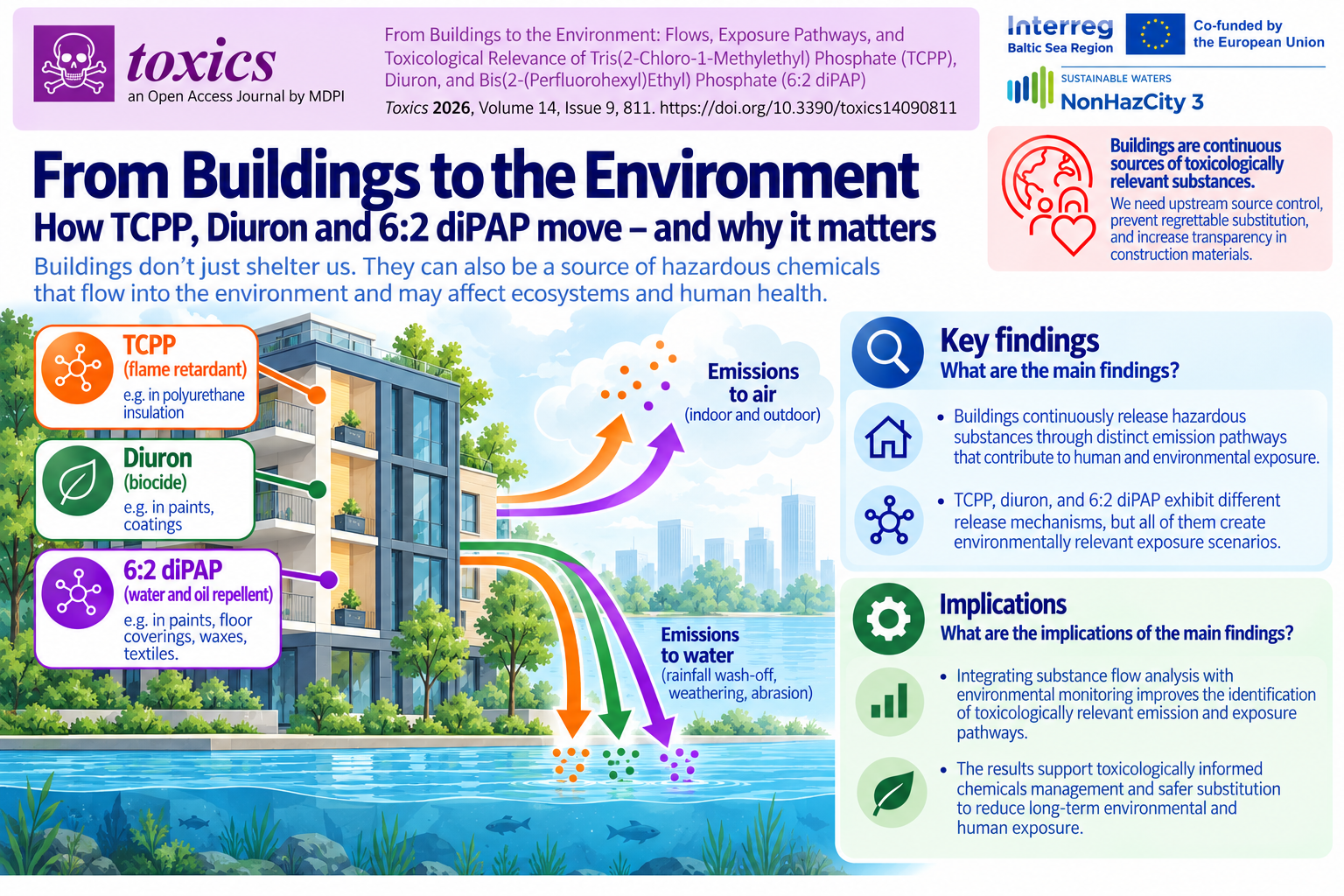
Buildings can be a continuous source of hazardous chemicals entering the environment. A new publication from the Interreg NonHazCity3 project investigates how three substances used in construction materials (TCPP, diuron and 6:2 diPAP) are released into environmental compartments and what this means for ecosystems and human health.
The study combines quantitative substance flow analysis, conceptual flow models and environmental measurements. Its findings show how these substances can accumulate in soils and aquatic systems, enter the environment through rainfall-driven wash-off, or be released indoors and outdoors. The research also highlights the potential transformation of 6:2 diPAP into persistent perfluoroalkyl carboxylic acids.
Field measurements conducted within NonHazCity3 confirmed the presence of organophosphate esters, biocides and PFAS in indoor dust, stormwater and wastewater.
The findings underline the importance of preventing hazardous substances at the source, avoiding regrettable substitution and improving transparency about the chemicals used in construction materials.

Additional links
details
-
Homepage
-
Project typeProject Platform

-
ImplementationJuly 2025 - June 2028
-
StatusOngoing
-
Contribution to EUSBSRPolicy Area Hazards

-
Target groups
- Business support organisation
- Infrastructure and public service provider
- Local public authority
- National public authority
- NGO
-
Social media
-
Additional links
-
Tags