




Unlocking the Potential of Hydrogen Derivatives in the BSR – Interview with the Market Analysis Authors
28 September 2026
The Baltic Sea Region has long been a laboratory for maritime innovation. Today, it finds itself at the forefront of a far more fundamental transformation: the shift toward climate-neutral shipping. At the centre of this transition lies a new class of fuels. Hydrogen derivatives such as electro-methanol, electro-ammonia and renewable hydrogen, widely regarded as indispensable for eliminating emissions from deep-sea and short-sea transport alike.
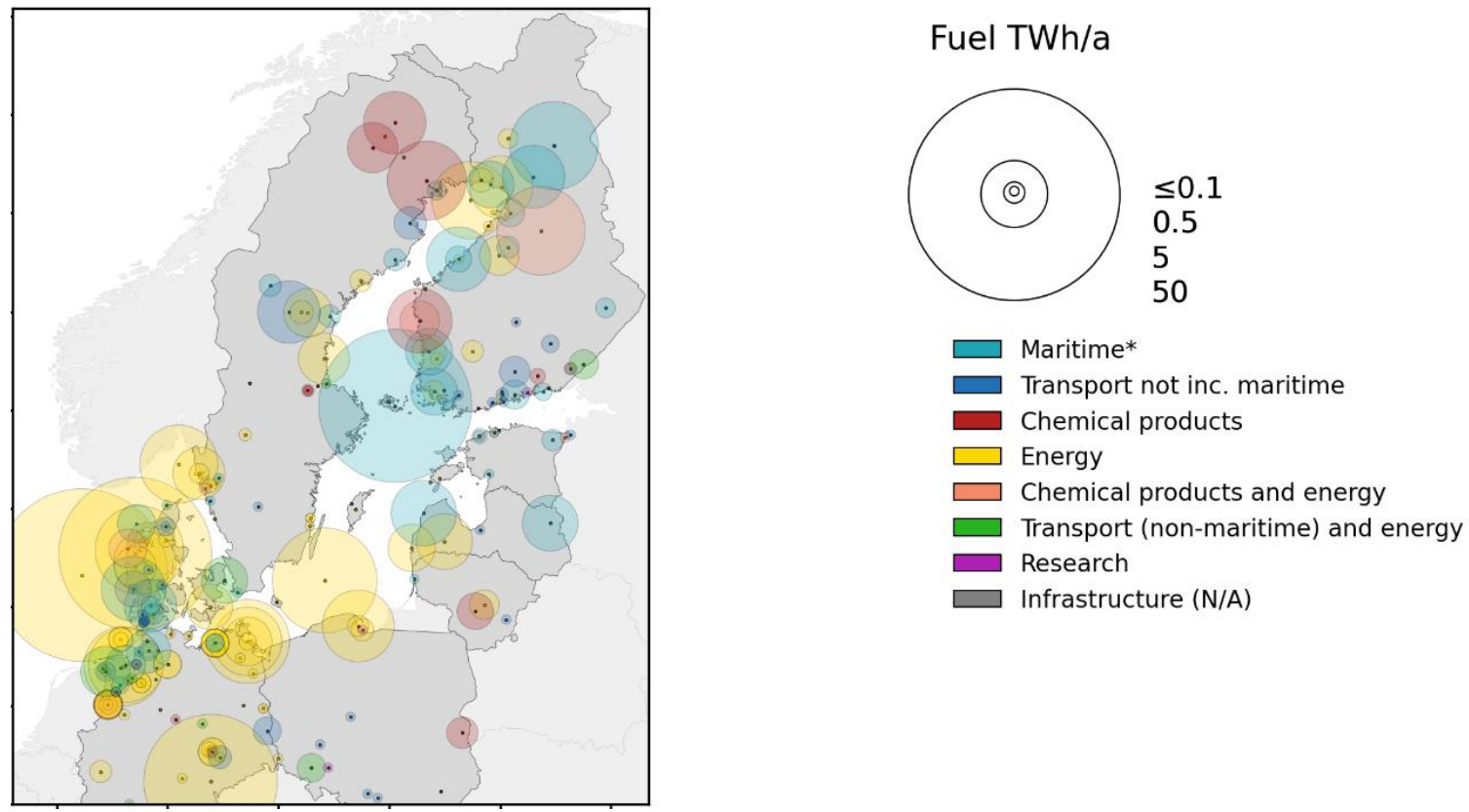
The market analysis from the Interreg BSR project H2Deri@BSP, paints a nuanced picture of where this transition stands. The political will is evident, the project pipeline extensive, and the technological pathways largely defined. Yet the market itself remains in a formative stage. Across the Baltic Sea Region, most hydrogen-related initiatives are still on the drawing board or navigating early development phases. Only a fraction (1.4%) has moved into operation, underscoring a central tension: ambition is accelerating faster than implementation.
The Promise and Limits of Scale
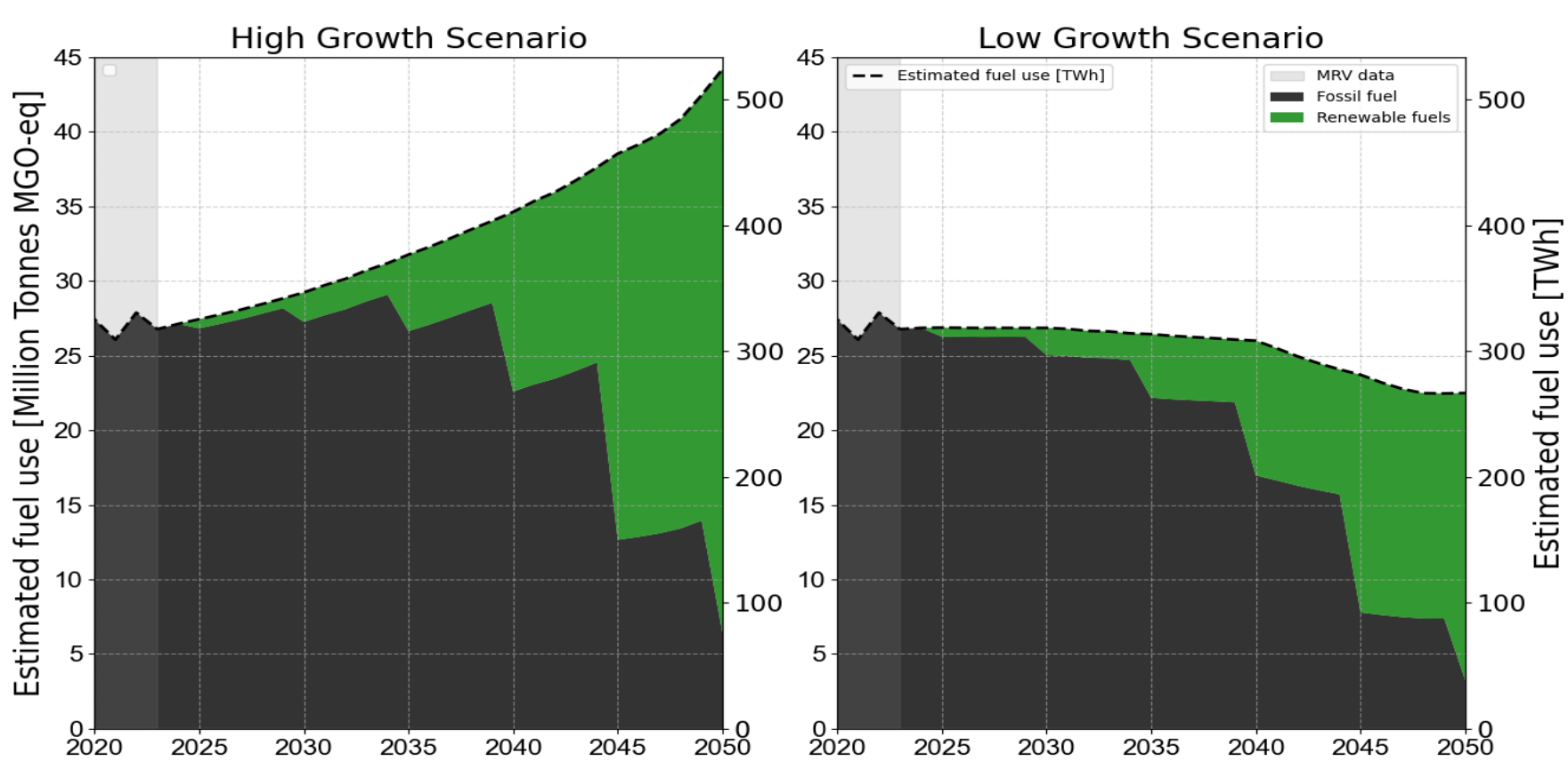
Few figures illustrate this tension more clearly than the projected production volumes. On paper, the Baltic Sea Region could generate well over 300 TWh/year or 31 million tonnes of MGO eq. of hydrogen-derived energy after 2030. In practice, however, the market analysis urges caution. History suggests that only a modest share of announced projects will ultimately materialise (7-25%), bringing expected output down to a fraction of the theoretical total. This gap is not a sign of failure, but of the structural realities shaping the sector. Hydrogen derivatives require significant upfront investment, complex permitting procedures and, above all, confidence in future demand. Without these elements aligning, even the most promising projects risk remaining conceptual.
At the same time, development is uneven across the region. Northern European countries particularly those with strong renewable energy potential are advancing more rapidly, while others are still establishing the necessary policy and industrial frameworks. The result is a landscape that is both dynamic and fragmented, with progress occurring in pockets rather than uniformly.
A Gradual Shift in the Fuel Mix
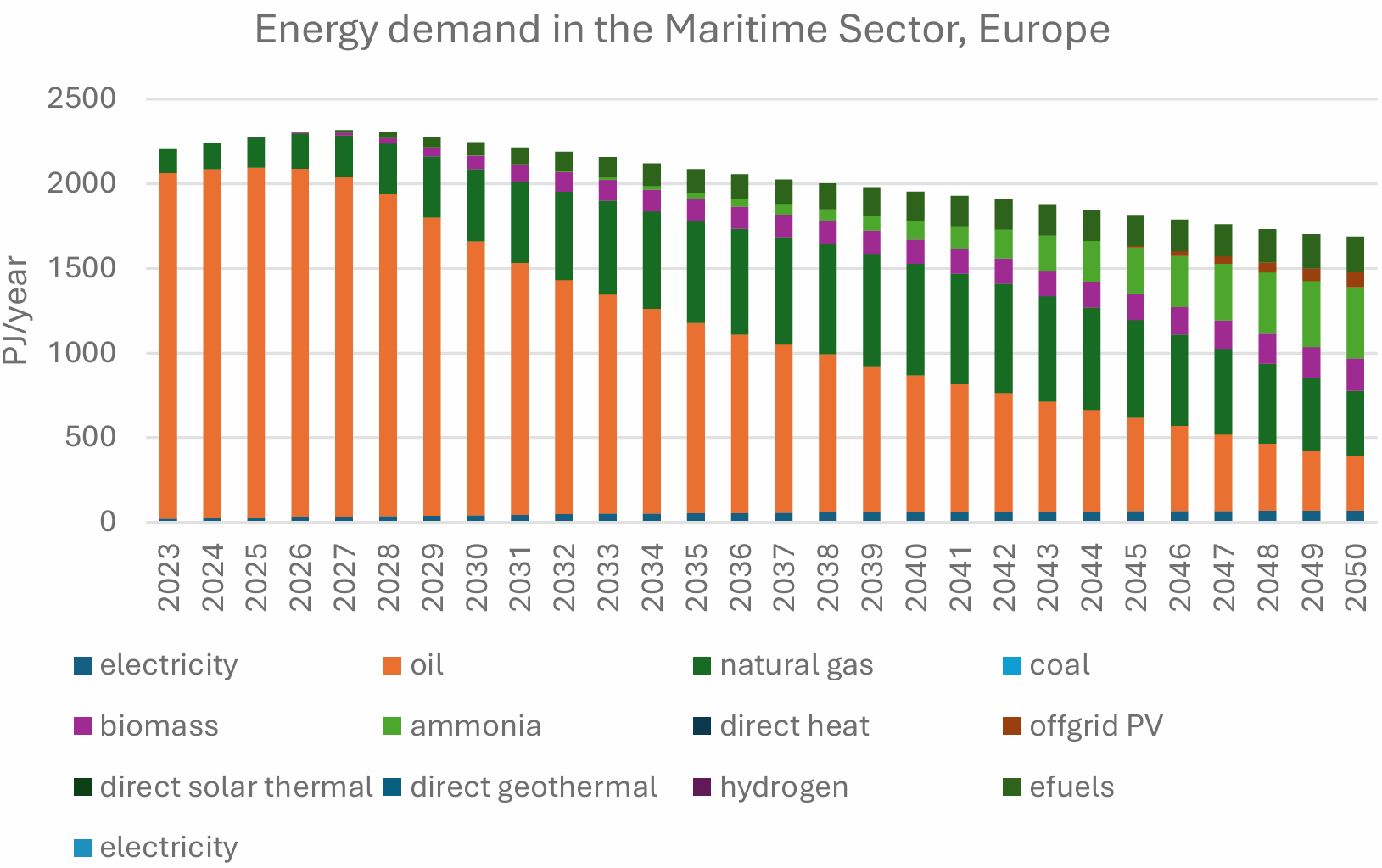
The transition itself is unlikely to be abrupt. Instead, the analysis highlighted a gradual reconfiguration of the maritime fuel mix, shaped as much by practicality as by ambition. In the near term, electro-methanol is expected to take a leading role. Its relative ease of handling, compatibility with existing infrastructure and adaptability for current vessel designs make it an attractive entry point into low-emission shipping. Biofuels, too, are likely to serve as transitional solutions, offering immediate if partial reductions in emissions.
Hydrogen and ammonia, by contrast, belong more firmly to the next phase of the transition. Their long-term potential is widely acknowledged, but their adoption depends on advances in vessel technology, safety standards and dedicated infrastructure. As such, their large-scale deployment is expected to gather momentum only after 2030. This sequencing reflects a pragmatic logic: the maritime sector is not switching fuels overnight but navigating a staged evolution in which different solutions coexist and gradually mature.
Expert Insight: Voices Behind the Analysis
Linda Styhre & Karl Jivén, IVL Swedish Environmental Research Institute
What does your market analysis focus on and why does it matter now?
We are aware that ports are truly interested to understand the volume of renewable fuels that will be handled in future. In this analysis, we have looked at all planned electro fuel production in countries around the Baltic Sea. However, as of today, it is difficult to predict future volumes specific to a port or region.
Markets are shifting fast. How did you keep your analysis relevant under changing conditions?
Instead of making predictions, we developed a tool that allows for example, a port to estimate the future volumes based on the understanding of local factors, their strategic direction and role in the future market.
What is its practical value of the scenario tool for ports and industry?
Apart from generating scenarios to evaluate the infrastructure needs, the tool also helps to predict the volumes of new fuels required based on the FuelEU Maritime requirements in the future. Those interested can try the open access tool using this link or one at the bottom of this page.
Ports Redefined
Perhaps the most profound transformation identified during the analysis concerns the role of ports. They are no longer confined to cargo handling and are emerging as pivotal nodes in a new energy system, wherein production, import, storage and distribution converge. Some ports, particularly those located near abundant renewable energy resources, are positioning themselves as production centres for hydrogen derivatives. Others are preparing for a different role, focusing on the import and redistribution of fuels produced elsewhere. Both models are valid, and both are necessary. What matters is strategic clarity.
In this evolving landscape, early action carries weight. Ports that invest in bunkering infrastructure, develop partnerships across the value chain and align with emerging fuel corridors are likely to secure a competitive edge. Those that hesitate may find themselves adapting to, rather than shaping, the new order.
The Demand Dilemma
If supply is uncertain, demand is even more so. The analysis made it clear that the market for hydrogen derivatives is not yet self-sustaining. Instead, it is being actively constructed through regulation. Shipping companies face a difficult calculus. Committing to new fuels requires confidence that they will be available, affordable and supported by infrastructure. Producers, in turn, require assurance that a market will exist for what they supply. Between these positions lies a familiar impasse, one that can only be resolved through coordination.
Public policy plays a decisive role here. By setting clear targets, reducing investment risks and supporting early projects, policy makers can help bridge the gap between intention and action. Equally important are long-term partnerships between industry actors, capable of anchoring demand and stabilising expectations in an otherwise uncertain market.
A Decade That Will Define the Transition
What emerges from the market analysis is not a vision of rapid disruption, but of careful, coordinated transformation. The technologies exist. The projects are underway. The direction is clear. And yet, the pace of change will depend on decisions made in the coming years. Alignment between policy and industry, synchronisation of infrastructure development and the willingness to invest despite uncertainty will determine whether hydrogen derivatives move from promise to practice.
For the Baltic Sea Region, the stakes are high. It has the potential to position itself as a pioneer of sustainable shipping, setting standards that resonate far beyond its waters. But leadership is not guaranteed. It must be built project by project, port by port, partnership by partnership. The transition has begun. What remains open is how quickly, and how cohesively, it will unfold.

details
-
Homepage
-
Project typeCore Project

-
ImplementationMarch 2025 - February 2028
-
StatusOngoing
-
Contribution to EUSBSRPolicy Area Energy, Policy Area Ship

-
Target groups
- Business support organisation
- Infrastructure and public service provider
- Large enterprise
-
Social media
-
Additional links
-
Tags