




H2Deri@BSP contributes to EUSBSR PA Energy workshop on regional energy transition
25 September 2026
H2Deri@BSP took part in the EUSBSR Policy Area Energy (PA Energy) workshop on 17 September 2026, an online meeting bringing together PA Energy and projects contributing to the implementation of the EU Strategy for the Baltic Sea Region (EUSBSR). The workshop provided an opportunity to exchange information on ongoing activities, discuss the updated EUSBSR Action Plan and explore how projects can contribute to the region’s energy transition and wider strategic objectives.
Focus on renewable energy, energy integration and efficiency
During the workshop, participants were introduced to the updated EUSBSR Action Plan and the current priorities of PA Energy. The discussion highlighted three key areas of action:
- increasing the share of renewable energy;
- strengthening regional energy market integration and interconnectivity; and
- improving energy efficiency.
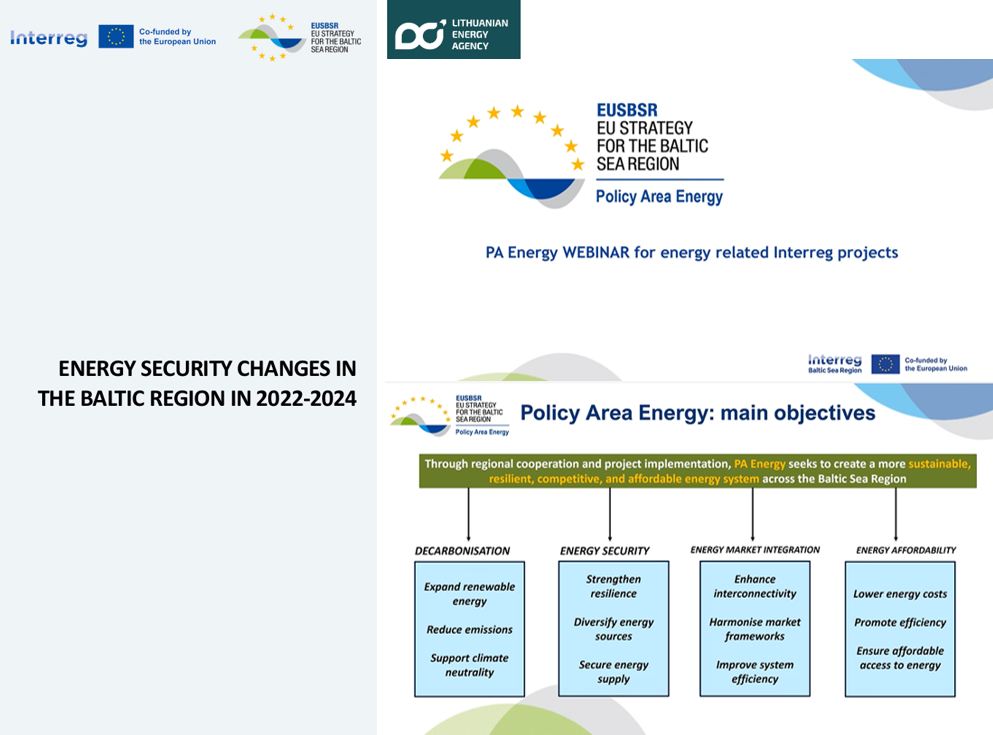
PA Energy also presented its overarching objectives of supporting decarbonisation, energy security, energy market integration and energy affordability across the Baltic Sea Region. These priorities are closely connected to the work of H2Deri@BSP, which focuses on preparing Baltic Sea ports for the safe and efficient handling of hydrogen-based fuels and their derivatives, including methanol and ammonia.
Energy security in a changing Baltic Sea Region
The workshop also introduced the PA Energy study “Energy Security Changes in the Baltic Region in 2022–2024”, prepared by the Lithuanian Energy Agency. The study examines developments in energy security in Lithuania, Latvia, Estonia and Finland, covering issues including energy diversification, renewable energy, electricity-grid integration, infrastructure resilience, affordability, hydrogen and decarbonisation. The study provides a valuable regional perspective on how the Baltic energy landscape has changed in recent years and highlights the importance of resilient infrastructure, regional cooperation and continued energy-system transformation. Click here to download the study.
From ports to green corridors: strengthening cross-sectoral cooperation
A particular highlight for H2Deri@BSP was the recognition of the project’s cross-sectoral cooperation with other EUSBSR Policy Areas. The PA Energy representatives highlighted the “From Ports to Green Corridors” event, co-organised by H2Deri@BSP together with the EUSBSR Baltic Sea Strategy Point / Senate Chancellery Hamburg. The event brought together perspectives from PA Energy, PA Transport, PA Ship and PA Safe to discuss the role of ports in Europe’s energy and transport transition.
Ports are a strategic geopolitical asset for Europe, a crucial pillar of Europe’s supply chain sovereignty and key enablers of the energy transition. Their role extends far beyond transport: ports are important nodes in regional energy systems, gateways for new energy carriers and critical infrastructure for the transition towards more sustainable maritime transport. During the event, participants discussed the multiple roles and importance of ports for the energy transition, explored challenges and needs, and considered ways to strengthen cooperation between the EUSBSR Policy Areas Energy, Transport, Safe and Ship.
Preparing Baltic Sea ports for hydrogen
During the PA Energy workshop, Port of Hamburg Marketing (HHM), lead partner of H2Deri@BSP, presented how the project contributes to the objectives of PA Energy. Together with 15 partners from seven countries, the project prepares Baltic Sea ports to handle hydrogen-based fuels such as methanol and ammonia. Its work covers market analysis, infrastructure planning, bunkering technology and safety standards.
Ports matter because they are key nodes in the energy system as well as in transport. They help secure the supply of fuels and energy for entire regions while providing the infrastructure needed for green fuels to reach the maritime sector. Without suitable port infrastructure for hydrogen derivatives, ships cannot make the transition to new low-carbon fuels. This gives ports a dual role: they are important for energy security and security of supply, while simultaneously enabling the maritime energy transition.
Connecting H2Deri@BSP with PA Energy
H2Deri@BSP directly supports the objectives of EUSBSR Policy Area Energy, which works towards a secure, competitive and sustainable energy market in the Baltic Sea Region. By preparing ports for hydrogen-based fuels and their derivatives, H2Deri@BSP translates these broader energy objectives into practical action in the maritime sector. The project contributes to strengthening security of supply while supporting the development and uptake of green fuels for shipping. The project’s work also connects closely with Policy Area Ship, creating a link between energy transition and maritime transport priorities.
Looking ahead: engaging with project platform EnTRA
As a follow-up to the workshop, H2Deri@BSP will explore opportunities for engagement with EnTRA – Energy Transition for Climate Neutrality in the BSR, an Interreg Baltic Sea Region project platform contributing to PA Energy. EnTRA is developing a Resource Hub to make energy-transition solutions and project results more accessible, alongside a Knowledge Community and the Energy Transition Talks webinar series. This could provide an opportunity to connect H2Deri@BSP’s experience and results on ports, hydrogen derivatives and maritime energy transition with a wider community working on practical energy-transition solutions across the Baltic Sea Region.
For H2Deri@BSP, the PA Energy workshop underlined the importance of connecting energy, ports, shipping, transport and safety perspectives. Continued cross-sectoral cooperation within the EUSBSR will be essential for turning the Baltic Sea Region’s energy-transition objectives into practical solutions for ports and maritime transport.

Additional links
details
-
Homepage
-
Project typeCore Project

-
ImplementationMarch 2025 - February 2028
-
StatusOngoing
-
Contribution to EUSBSRPolicy Area Energy, Policy Area Ship

-
Target groups
- Business support organisation
- Infrastructure and public service provider
- Large enterprise
-
Social media
-
Additional links
-
Tags