




e-Methanol and transport system integration advanced at Almedalen Week
17 July 2026
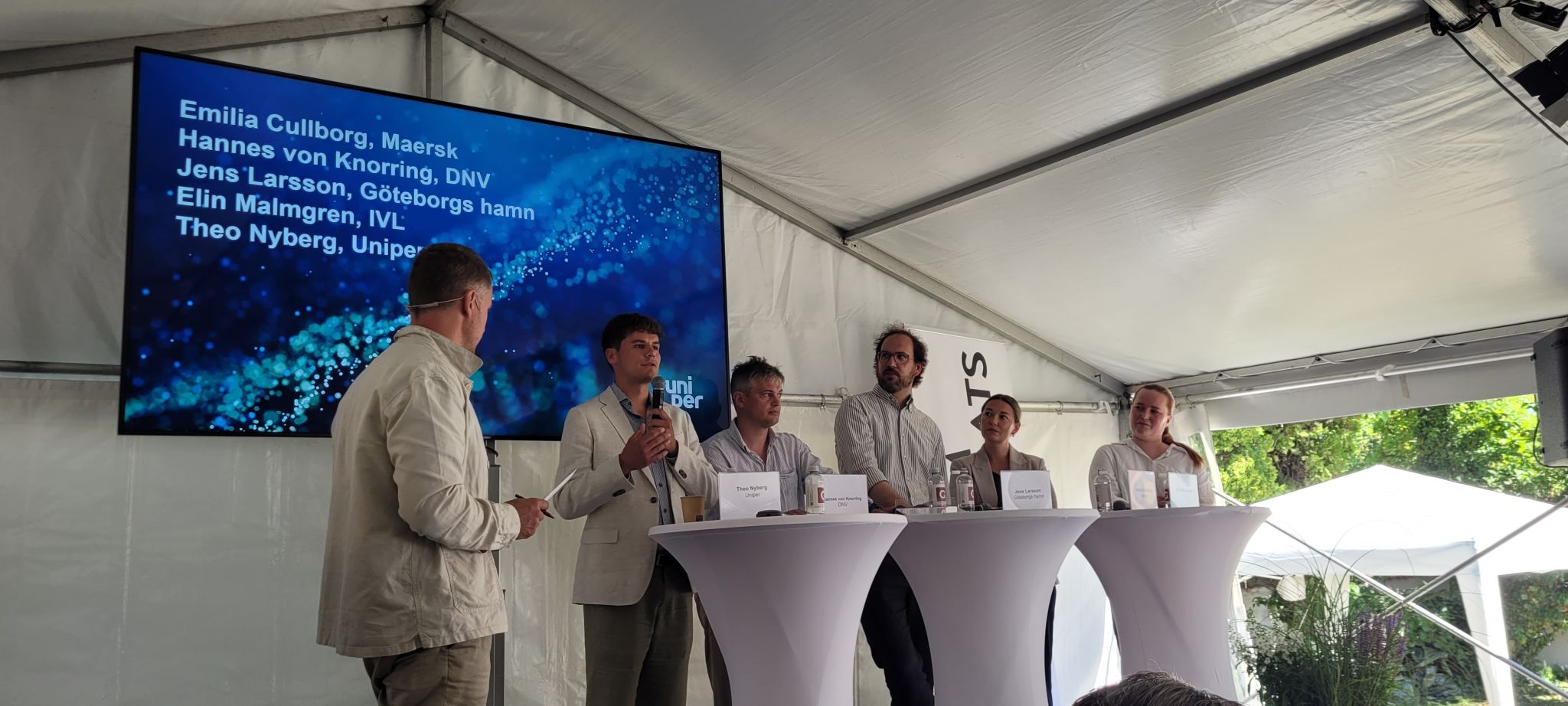
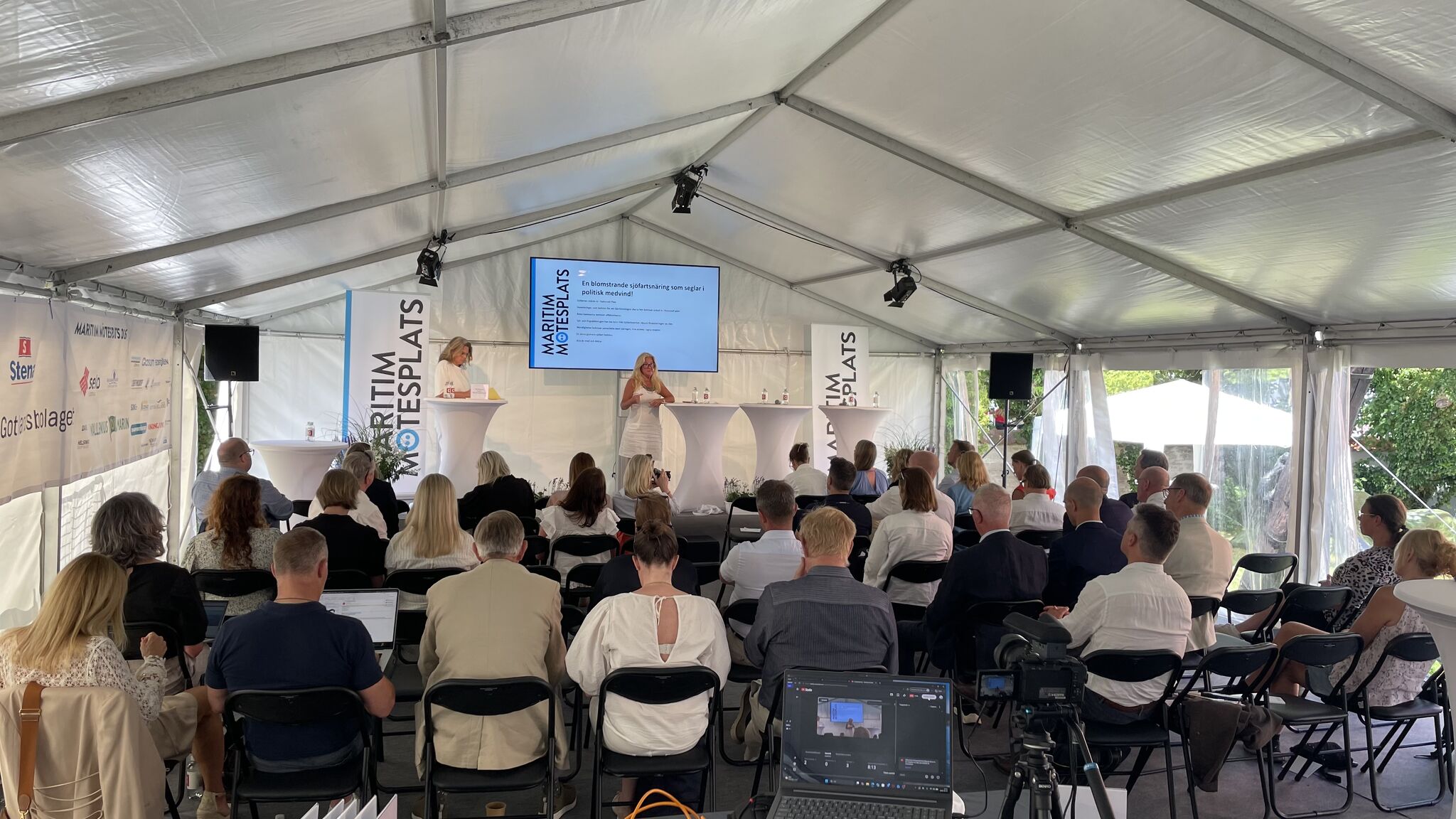
During Almedalen Week 2026, project partner CLOSER participated in discussions on the future of sustainable transport and the role of shipping in enabling a low-emission freight system. The discussions focused strongly on the role of e-methanol as a key fuel for the maritime transition, with broad agreement among industry representatives that achieving net-zero shipping by 2050 requires accelerated deployment of alternative fuels and coordinated system-level action.
Representatives from Maersk, the Port of Gothenburg, DNV, and IVL Swedish Environmental Research Institute contributed to the dialogue, highlighting both technological progress and structural challenges in scaling sustainable fuel systems.
E-methanol as a strategic fuel for shipping
A key message from the discussions was that e-methanol is increasingly viewed as a central fuel option for maritime decarbonisation. Other key arguments included:
- e-methanol is already being adopted in early shipping applications
- it is considered easier and safer to handle compared to ammonia in early deployment phases
- domestic electrofuel production can strengthen energy security and reduce import dependency
- it has strong potential to support industrial transition and resilience in Northern Europe
Within this context, findings from the H2Deri@BSP project were referenced, highlighting that regions such as Norrbotten show significant potential for renewable electrofuel production, provided that commercial infrastructure and enabling regulatory frameworks are developed. Participation in these discussions also supports H2Deri@BSP activities by ensuring that project analyses and tools remain closely aligned with emerging policy priorities, industry perspectives, and real-world implementation conditions across the Baltic Sea Region.
System integration and freight transport challenges
The discussions also emphasised that the maritime sector must be considered as part of a wider transport system rather than in isolation. While shipping offers available capacity for increased freight volumes, stakeholders highlighted that its full potential is currently limited by fragmented policy and logistics integration. Key points raised included:
- the need to connect first- and last-mile logistics in a coherent system approach
- the importance of accelerating maritime decarbonisation to maintain competitiveness vis-à-vis road transport
- the necessity of stronger coordination between authorities, ports, and industry actors to build resilient value chains
These perspectives align with the broader objectives of H2Deri@BSP, which focuses on enabling ports and stakeholders to prepare for hydrogen-derived fuel systems through coordinated planning, technical frameworks, and market analysis.
Outlook for integrated fuel and logistics systems
The Almedalen discussions reinforced that the transition to sustainable shipping depends not only on fuel availability, but also on system integration across transport modes, infrastructure planning, and policy frameworks. As e-methanol and other electrofuels move closer to commercial scaling, coordinated efforts across regions and sectors will be essential to ensure that maritime transport can play its role in a fully decarbonised logistics system.
What is Almedalen? Almedalen is Sweden’s premier annual political and business forum, bringing together government officials, industry leaders and civil society for a concentrated week of high-level networking, policy debates and strategic discussions. Click here to know more.

Additional links
details
-
Homepage
-
Project typeCore Project

-
ImplementationMarch 2025 - February 2028
-
StatusOngoing
-
Contribution to EUSBSRPolicy Area Energy, Policy Area Ship

-
Target groups
- Business support organisation
- Infrastructure and public service provider
- Large enterprise
-
Social media
-
Additional links
-
Tags