




Flip-EC story — changing energy habits in public buildings
22 July 2026
At mid-term, the Flip-EC partners moved from exploring the challenge of energy efficiency in public buildings to developing practical frameworks, tools and pilot approaches for municipalities across the Baltic Sea Region. In this interview with the Flip-EC project lead Alvine Datchoua-Tirvaudey representing the Hanseatic City of Lübeck (Department Planning and Building, Unit Building Management – Fachbereich Planen und Bauen, Bereich Gebäudemanagement), we look at why shared responsibility matters, what the project has achieved so far, and how its partners are preparing to turn everyday behaviour into lasting energy savings.
Editor: Flip-EC has a very active title: “Flipped Energy Concept to Flip Climate Change.” What is the project about in one sentence?
Alvine: Flip-EC is about helping local public authorities and people who use public buildings every day to work together to save energy, create more transparency on energy use and make climate-conscious behaviour part of daily routines.
Why did the project choose public buildings as its focus?
Public buildings matter because they very often are significant energy guzzlers. According to the EU DG Energy, “85% of buildings in the EU were built before 2000 and 75% have poor energy performance.“ The building sector in Europe amounts to “33% share of energy-related GHG emissions”, as highlighted by the European Environment Agency. Public buildings are part of this reality. However, public authorities often lack the financial resources, guidance, expertise, personnel, structures and frameworks to address this. Flip-EC helps to change the game by implementing low-cost behavioural measures tested in real-life local settings and replicable across Europe. Indeed, the potential of behaviour-based actions to reduce energy use is well documented in the scientific literature and European Comission’s initiatives. For building users, saving energy does not solely happen at home. It happens in workplaces, learning spaces, leisure spaces, and meeting places. Schools, administration buildings, sport centres and similar facilities are not just technical assets. They are ideal locations to combine technical, organisational, and behavioural changes. Working with public authorities is essential, because we can create the conditions for participation, decision-making, and long-term implementation.
What is the main challenge Flip-EC is trying to solve?
Many public buildings have energy-saving potential, but progress is slowed down by unclear responsibilities, limited awareness, fragmented routines and lack of engagement and participation frameworks. Building managers, public authorities, teachers, students, municipal staff, and citizens may all influence energy use, however they often do not have an official shared process for acting together. Flip-EC addresses this “diffusion of responsibility” by clarifying roles and cooperation pathways, setting up participation platforms and furthering structural change.
Why is behaviour such an important part of the energy transition?
Energy efficiency is often associated with renovation, technology, or significant financial investment. These are essential, but they are not enough on their own. Everyday decisions about heating, ventilation, lighting, and the use of rooms also shape energy consumption and building management. Flip-EC focuses on low-cost lasting changes in behaviour, which can be more easily replicated in most municipalities around Europe. These changes can support technical measures and enhance their durability.
Who are the people at the centre of the Flip-EC project story?
Building users and administrators/managers (public authorities) are both the heroes of our project story. This includes (although not exhaustively) decision-makers, employees and users in public administration buildings, schools, libraries, theatres, music halls, community /cultural centres, art galleries and kindergardens. In other words: janitors, cleaning staff, administration employees, technical staff, energy and climate mitigation managers, students, teachers, school administration and heads, childcare assistants, librarians, event managers as well as further experts and employees.
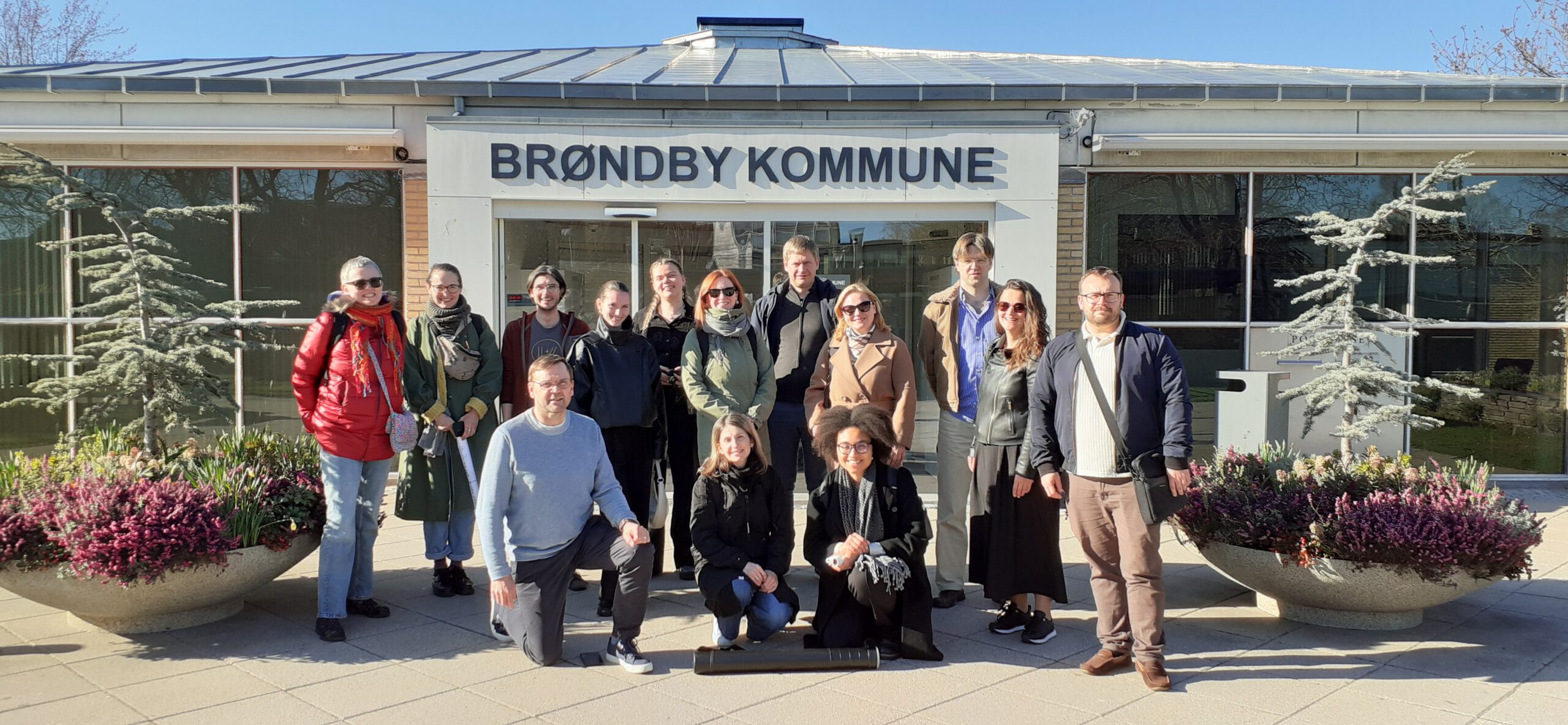
Our 14 pilot sites enable fruitful engagement across six countries of the Baltic Sea Region (Denmark, Germany, Poland, Lithuania, Latvia and Estonia). This transnational work also gives Flip-EC the opportunity to create collaboration blueprints, which are transferable to further municipalities in Europe and applicable to more contexts, such as sport centres or courthouses for instance.
What does Flip-EC mean by “flipping” the energy concept?
For us, “flipping” means switching from a top-down to a bottom-up approach. Instead of seeing building users only as consumers of energy or passive occupants, Flip-EC treats them as active contributors to the energy transition. The users and managers co-design the implemented measures by addressing specificities of their building and the people in it: ensuring that their needs are met and challenges navigated realistically. The project aims to turn awareness into commitment, and commitment into daily practices that help reduce energy use, energy costs and greenhouse gas emissions.
What has happened in the project so far?
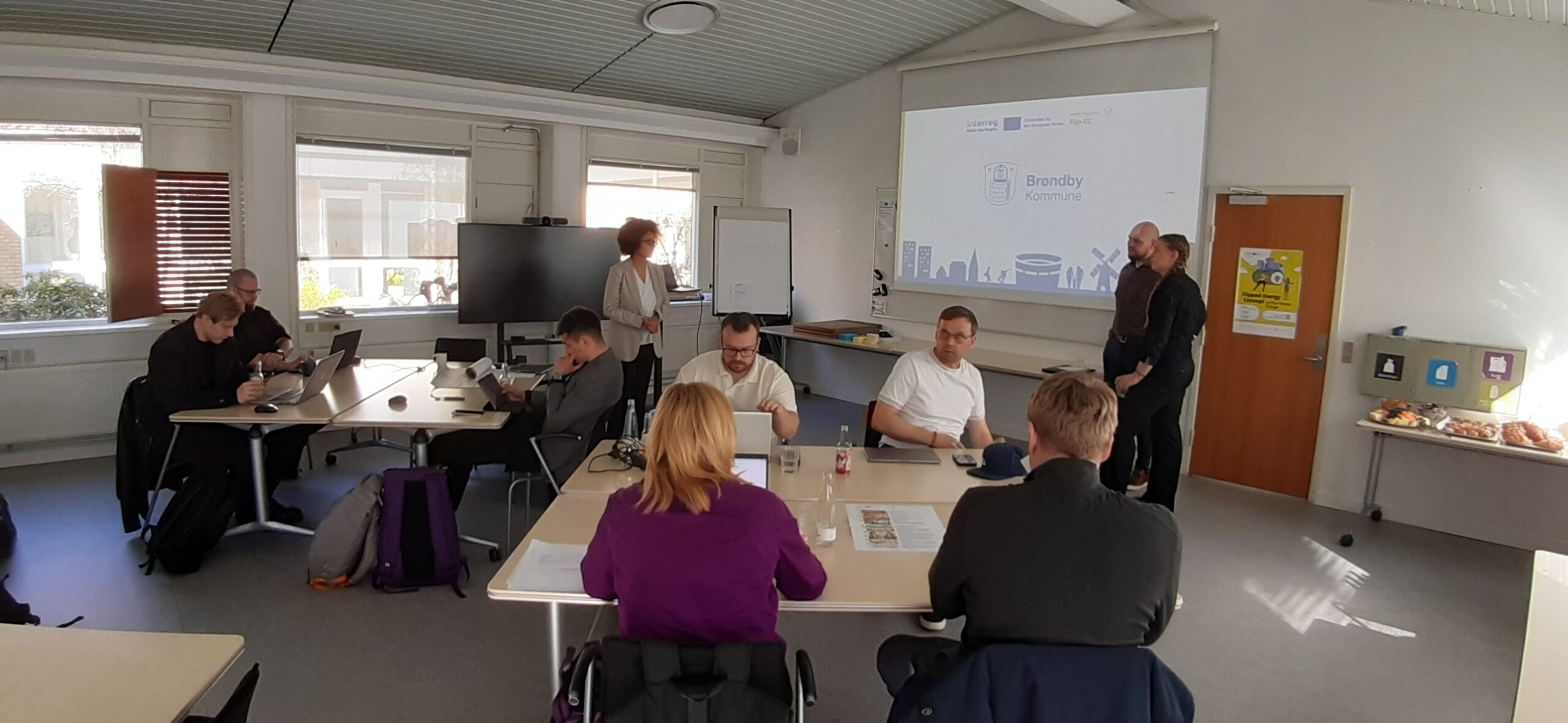
The project has moved from the initial set-up and analysis phase into a much more concrete stage. We have not only held partner meetings, focus groups, user journey and co-creation workshops. We also translated these insights into first practical project outputs.
One important result is the draft Municipal Synergy and Participation Blueprint. It consists in a practice-oriented guide for municipalities with steps, checklists and templates to address fragmented responsibilities and unclear guidelines on collaborative energy efficiency work. It helps with implementing and sustainably anchoring effective cross-departmental and inter-institutional teamwork on this topic. In this sense, the Blueprint gives local authorities a shared basis for moving from isolated measures towards more systematic municipal cooperation.
We also prepared a draft version of the Joint Responsibility Framework, which focuses on the daily reality of energy saving habits and task sharing in a context of high workload and limited time capacity. It asks very practical questions: Who switches off equipment? Who reports problems? Who can adjust settings? Who needs training, access or feedback? The framework helps turn energy efficiency from a general appeal to “everyone” into a clear and shared operating model.
In addition, we are working on the Flip-Library, a growing collection of practical materials and toolkits for active engagement, motivation, shared action, awareness training and empowerment : including formats such as energy newsletters, peer programmes, school competitions, information boards, energy detectives, energy theatre, and other communication campaign tools.
Finally, our Catalogue of Monitoring Tools with our training component “Train-the-trainer” is designed to help municipalities collect, understand and act on their energy data. The Train-the-Trainer module helps navigating the Catalogue of Monitoring Tools so that building managers, technical staff and building users can select suitable solutions, improve energy monitoring along with data reliability, and make informed decisions tailored to their local needs.
These preliminary results consist in the ground work of the first project phase and will continue to be tested in our pilots until 2027 before an updated version of our final output is transferred to further locations in the last stage of the project.
What makes Flip-EC a transnational project rather than a local energy-saving campaign?
The challenge is shared across the Baltic Sea Region: public authorities want to reduce emissions and improve energy efficiency. By working across countries, partners can compare approaches, learn from different municipal and educational contexts, and develop methods that are flexible enough for wider use, as they face similar structural and behavioural barriers.
What role does Interreg Baltic Sea Region funding play in this process?
The Interreg Baltic Sea Region 2021-2027 programme makes it possible to work across borders on a challenge that no single municipality or organisation can solve alone. It gives the partnership time and structure to jointly develop, share expertise, test, and improve solutions, instead of creating isolated local measures. This cooperation is what can turn local experiments into approaches that others in the Baltic Sea Region can use.
What should be different for a school, municipality, or public building user after Flip-EC?
The goal is that energy-saving behaviour becomes easier, clearer, and more shared. A local public building should have better ways to involve and motivate users, clearly communicate between teams, clarify responsibilities, give access to required training, enhance collaboration, access and understand energy consumption data, monitor progress, and maintain commitment. For building users, the change should feel practical: they understand how their actions matter and have a real role in improving the building’s energy performance.
Looking ahead to the second half of the project, what will be the most important milestone?
The next major step is moving from preparation and piloting into transfer. The project is now testing solutions in public buildings, refining them with the people who use and manage those buildings, and preparing resources for wider replication. In the final phase, Flip-EC plans to establish a free digital platform for learning and resources (a Flip-Hub) hosted on our partner organisation’s website Fundacja Instytut na rzecz Ekorozwoju (Institute for Sustainable Development), so that the approach can reach beyond the original partnership and be used by all.

Additional links
details
-
Homepage
-
Project typeCore Project
-
ImplementationMarch 2025 - February 2028
-
StatusOngoing
-
Contribution to EUSBSRPolicy Area Energy

-
Target groups
- Interest group
- Local public authority
-
Social media
-
Additional links
-
Tags