




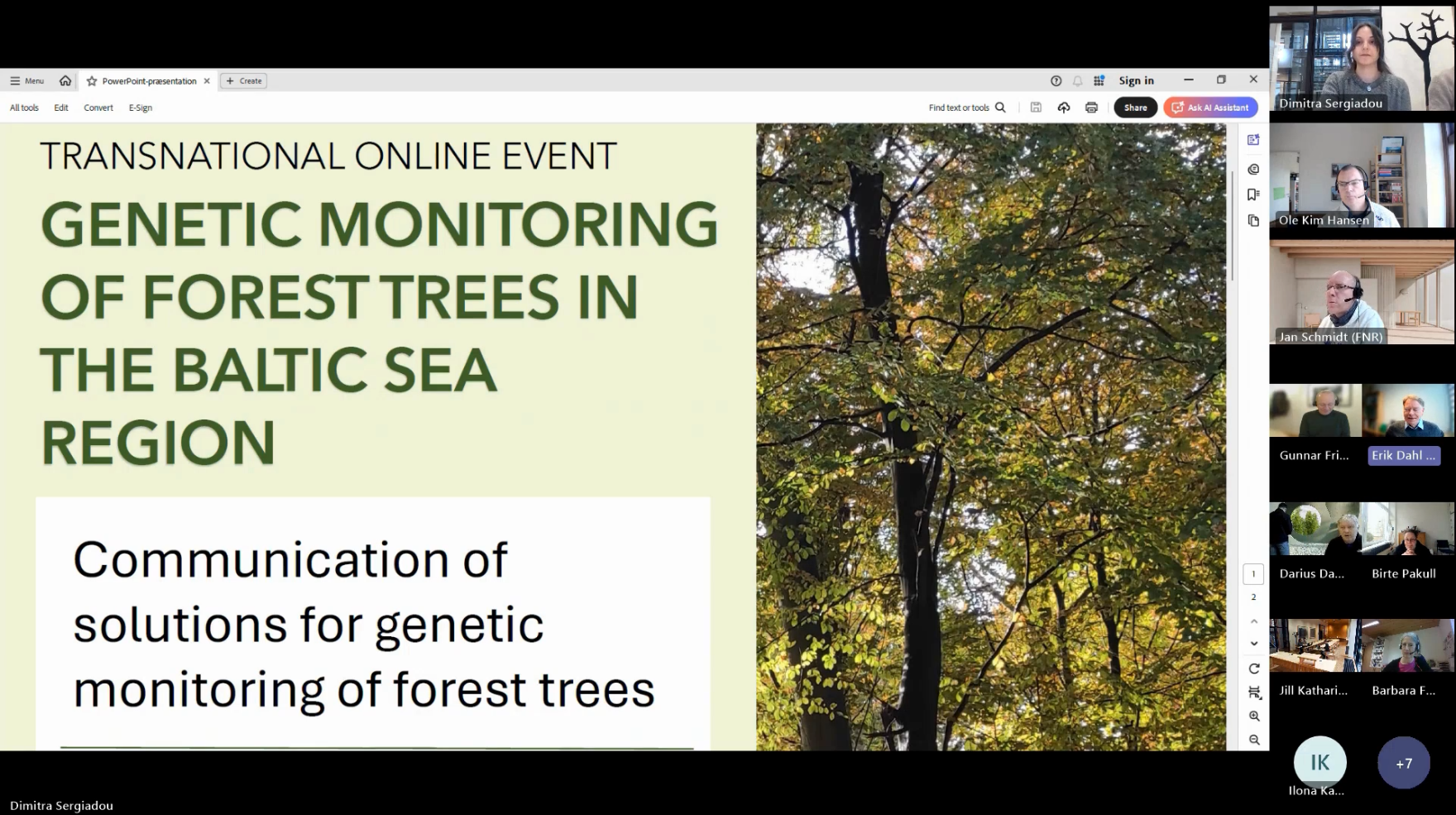
Transnational Online Event: Communication of Solutions for Genetic Monitoring of Forest Trees
27 November 2025
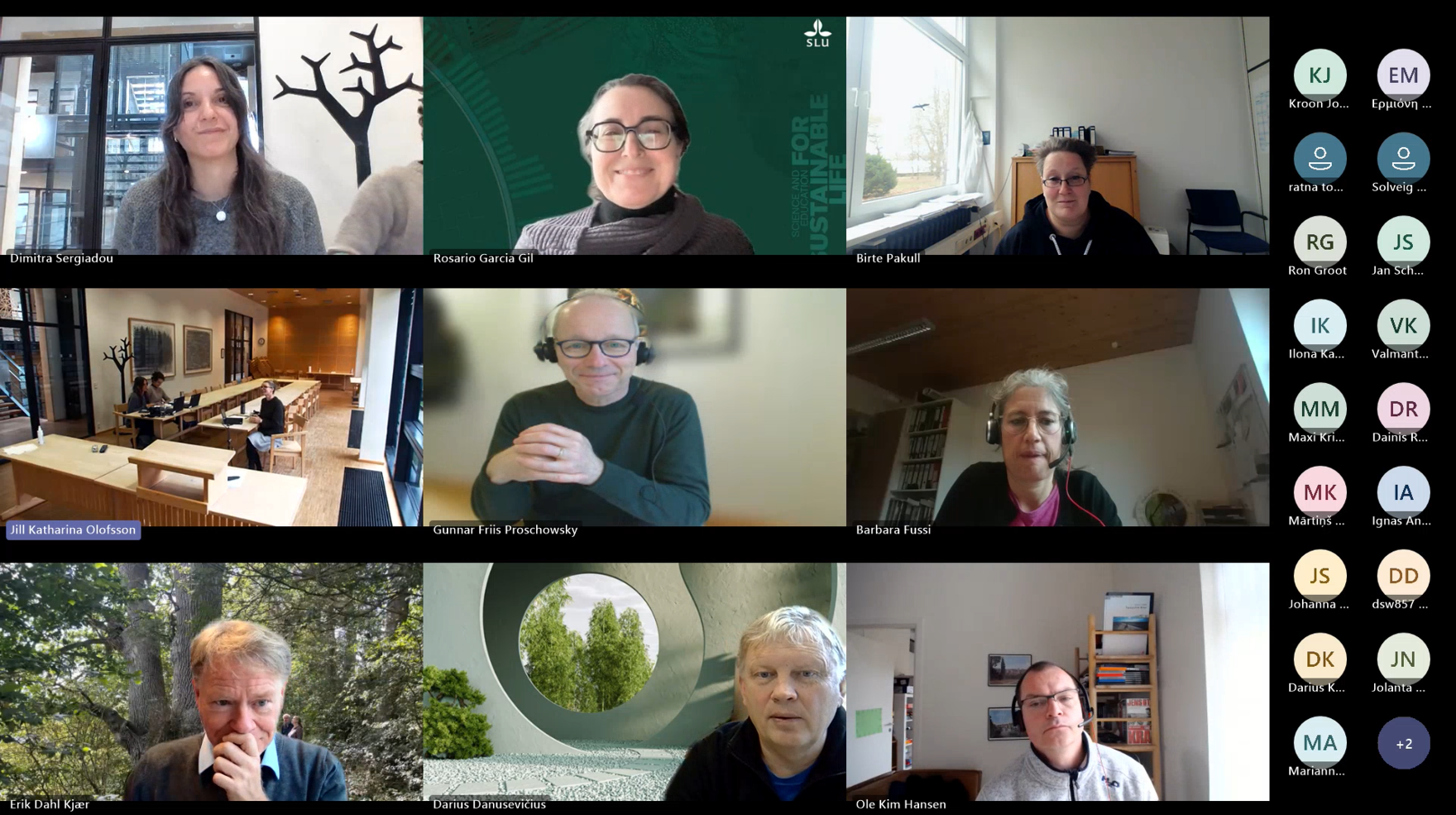
On 27 November 2025, the University of Copenhagen hosted a transnational online event under the Interreg Baltic Sea Region project DIVERSE_GENE_WATCH, focusing on solutions for genetic monitoring of forest trees across the Baltic Sea Region. The event was opened by Erik Dahl Kjær (University of Copenhagen) and moderated through its sessions by Dimitra Sergiadou (University of Copenhagen).
Genetic diversity is a critical component of forest health
During the event, speakers highlighted the need for practical and scalable genetic monitoring approaches capable of detecting early warning signals of genetic erosion and supporting evidence-based decision-making, as well as emphasising that monitoring should go beyond preserving existing diversity to capture key evolutionary processes such as regeneration, selection, and gene flow that enable long-term adaptation.
Speakers from countries across the Baltic Sea Region presented how this is already being addressed in practice, with Denmark, Gunnar Friis Proschowsky (Danish Nature Agency) presenting its long-standing gene conservation strategy integrated into state forest management, and Sweden, M Rosario García Gil (Swedish University of Agricultural Sciences) sharing research on genetic and adaptive variation in Scots pine and Norway Spruce relevant to climate resilience, and Germany, Barbara Fussi (Bavarian Office for Forest Genetics) contributing experiences from Bavaria where forest genetic monitoring has been embedded into long-term observation plots and linked to forest inventory systems.
Advances in monitoring tools and genetic markers
The event also addressed the selection of genetic markers suitable for long‑term monitoring. Jill Olofsson (University of Copenhagen) discussed the strengths and limitations of microsatellites and SNP‑based marker panels, underlining the importance of choosing methods that are both scientifically robust and feasible for repeated application by forest authorities. Combining molecular data with phenological observations and remote sensing was highlighted as a promising way to strengthen monitoring while keeping costs and workloads manageable.
Panel discussion session
A panel discussion brought together speakers and participants to reflect on lessons learned, discuss challenges, and explore opportunities for strengthening transnational genetic monitoring networks. A recurring message throughout the event was the added value of international cooperation for forest genetic monitoring. A collaborative monitoring enables broader interpretation of trends, shared methodological standards, and harmonised data that can inform regional and European policies in fostering resilient forest landscapes and supporting biodiversity goals.

details
-
Homepage
-
Project typeCore Project

-
ImplementationMarch 2025 - February 2028
-
StatusOngoing
-
Contribution to EUSBSRPolicy Area Bioeconomy

-
Target groups
- Higher education and research institution
- Infrastructure and public service provider
- Interest group
- National public authority
- Sectoral agency
-
Social media
-
Additional links
-
Tags