




After Forest DNA Sampling, What Comes Next?
18 November 2026
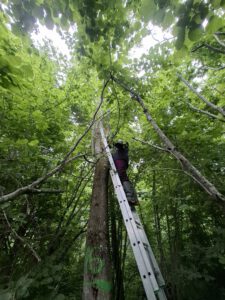
The DNA samples have been collected as part of the DIVERSE_GENE_WATCH project’s efforts to develop and test a durable Forest Genetic Monitoring (FGM) system across the Baltic Sea Region. Throughout the sampling activities, researchers collected genetic material from four forest tree species: pedunculate oak (Quercus robur), Norway spruce (Picea abies), European ash (Fraxinus excelsior) and small-leaved lime (Tilia cordata).
For oak, ash and spruce, the project uses single nucleotide polymorphisms (SNPs), which identify variations at specific positions in DNA. For small-leaved lime, the analysis uses microsatellites (SSRs), which examine variation in short, repeated DNA sequences. Both approaches provide information that can be used to assess genetic diversity and population structure.
Importantly, the project compares genetic information from two generations: mature trees and their younger offspring. By comparing the two, researchers aim to answer questions:
- Is genetic diversity being maintained? Comparing generations can reveal whether genetic variation is being passed on or whether some diversity may be lost.
- Are trees becoming more closely related? DNA analysis can identify patterns of inbreeding that may threaten genetic diversity over time.
- Which trees contribute to the next generation? Genetic relationships can help reveal whether reproduction is dominated by only a few mature trees, potentially limiting diversity in future generations.
Genetic diversity is a fundamental component of biodiversity. It provides the variation that allows tree populations to evolve and adapt over generations, helping them respond to changing climate conditions, pests and diseases.
However, changes in genetic diversity are not always visible through conventional forest monitoring. A forest may appear healthy even as underlying genetic processes affect its future resilience.
This is where DIVERSE_GENE_WATCH aims to make a difference. The project aims to monitor forest biodiversity towards understanding how genetic diversity is maintained, where it may be at risk, and what can be done to protect it.
Further reading: DIVERSE_GENE_WATCH, D1.3 Genetic Monitoring Guidelines to Be Tested.

Additional links
details
-
Homepage
-
Project typeCore Project

-
ImplementationMarch 2025 - February 2028
-
StatusOngoing
-
Contribution to EUSBSRPolicy Area Bioeconomy

-
Target groups
- Higher education and research institution
- Infrastructure and public service provider
- Interest group
- National public authority
- Sectoral agency
-
Social media
-
Additional links
-
Tags