




Presenting our partners: Lithuanian Energy Agency
10 April 2026
LEA sees CompositeCircle project as a step towards a better future
Lithuanian Energy Agency (LEA) is a public institution under the Ministry of Energy of Lithuania. LEA covers all aspects of energy in Lithuania – starting with analysis and data monitoring, covering strategic oil reserve monitoring, administration of EU funds, energy security, energy efficiency monitoring etc. LEA also holds well-developed contacts with relevant players and organizations in the energy field.
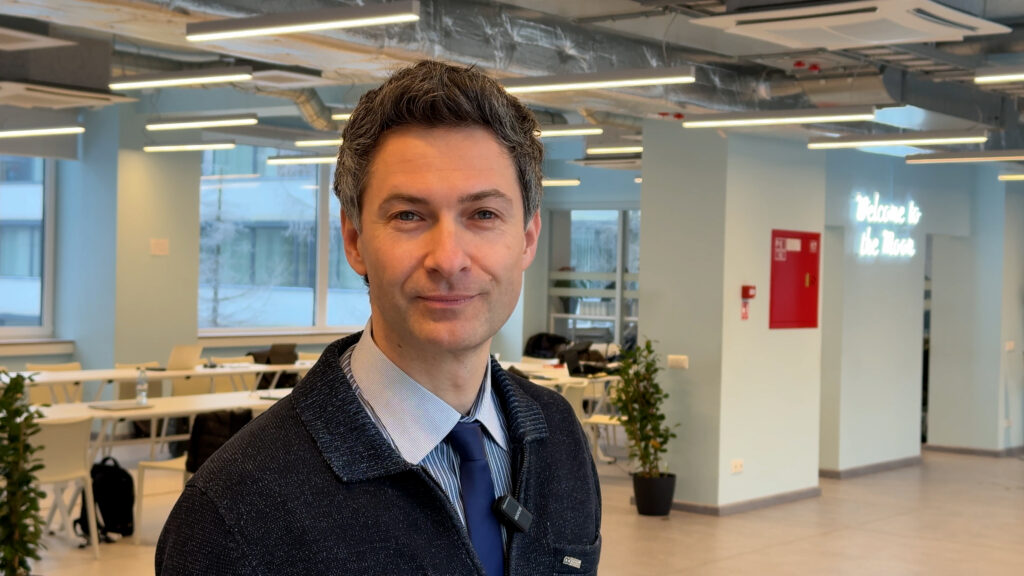
Roman Bykov is the head of the department of offshore wind energy development in the Baltic Sea region. Lithuania is relatively new to wind energy; they have been developing offshore wind parks for only five years, and onshore from the mid 2000’s. When an industry is so new to a country, some end-of-life prospects haven’t been really set yet. Before becoming the head of the department, Roman went to many conferences and events regarding wind energy, to different countries in Europe, where they were already speaking about the WindEurope’s 2025 landfill ban. So, when coordinator Egidija Rainosalo from Centria contacted LEA, Roman knew that Lithuania really needs that project.
LEA’s role in CompositeCircle project is to provide information on Lithuania’s wind turbine location and count, and possible guidance on regulations. “LEA will ensure Lithuania’s needs in blade recycling are reflected in the project guidebook,” describes Bykov LEA’s role in the project. The organisation sees itself as a link between state authorities and business sector. Their goal is to find the best solution for reusing and recycling the wind turbine blades. Due to Lithuania’s lack of experience in the wind energy sector, the legislations aren’t quite clear on recycling the blades.
“People are very eager,” says Roman about his team. “So far this is the beginning,
but we are burning with the idea to create a better future because the project is very promising.”
With every project, there could be challenges. Bykov thinks that the potential challenges for this project could be that businesses and governments think that it is easier and cheaper to just throw old blades to landfill, instead of reusing or recycling them. To address this, the project focuses on demonstrating the long-term economic and environmental benefits of circular solutions, supported by scalable processes, and strategic partnerships that make recycling both viable and attractive for all stakeholders.
The CompositeCircle isn’t just a project; it’s a blueprint for a more sustainable and collaborative future. For LEA, it represents exactly the kind of challenge the institution was built to meet – one that combines innovation with long-term impact, and community needs with environmental responsibility.

Additional links
details
-
Homepage
-
Project typeCore Project

-
ImplementationMarch 2025 - February 2028
-
StatusOngoing
-
Contribution to EUSBSRPolicy Area Innovation

-
Target groups
- Large enterprise
- Small and medium enterprise
-
Social media
-
Additional links
-
Tags