




Closing the loop on composites: Recycling, life cycle assessment, and cross‑border collaboration
17 April 2026
Authors: Eemeli Seppänen, Rathish Rajan, Michail Beliatis, Christina Tsitsiva
Recycling methods for wind turbine blades
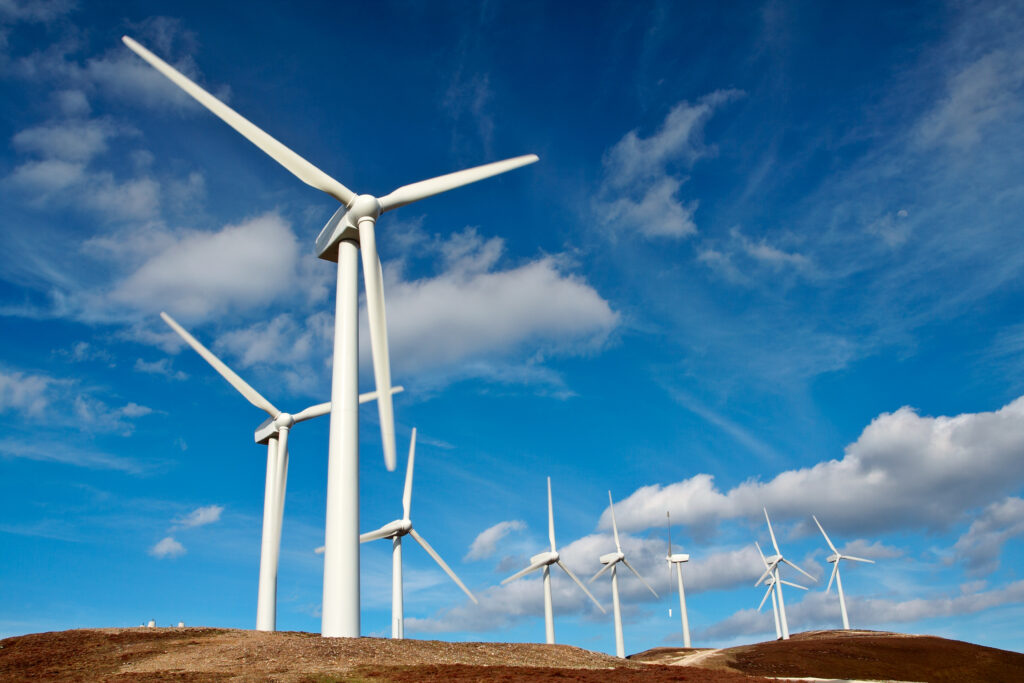
The CompositeCircle project addresses sustainability challenges related to composite materials through international collaboration, with a specific
focus on recycling wind turbine blades. As the number of wind turbines reaching the end of their service life increases, composite blades form a rapidly growing waste stream. Due to their complex material structure, these composites pose significant recycling challenges. The project’s overarching objective is to extend the lifecycle of these materials and reduce waste by developing viable circular economy–based solutions.
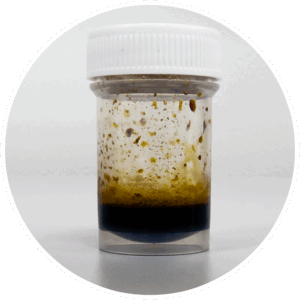
Within the project, two complementary recycling routes for wind turbine composite blades are examined. The first approach focuses on using composite material in the cement industry through co-processing. In this context, the material substitutes both fossil energy and virgin raw materials in cement production. The second approach investigates chemical recycling via solvolysis, a process that enables the recovery of fibres and depolymerized resins for use in new products. Together, these approaches aim to demonstrate alternative pathways for keeping composite materials in productive use.
Value chains and sustainability rationale
A key objective of CompositeCircle is the development of scalable and economically viable value chains for composite recycling. Moving from pilot-scale solutions to broader implementation requires sufficient material volumes, efficient logistics, and cross-border coordination. Collaboration between partners in neighboring countries plays a critical role in aggregating material flows and enabling realistic assessments of industrial-scale operations.
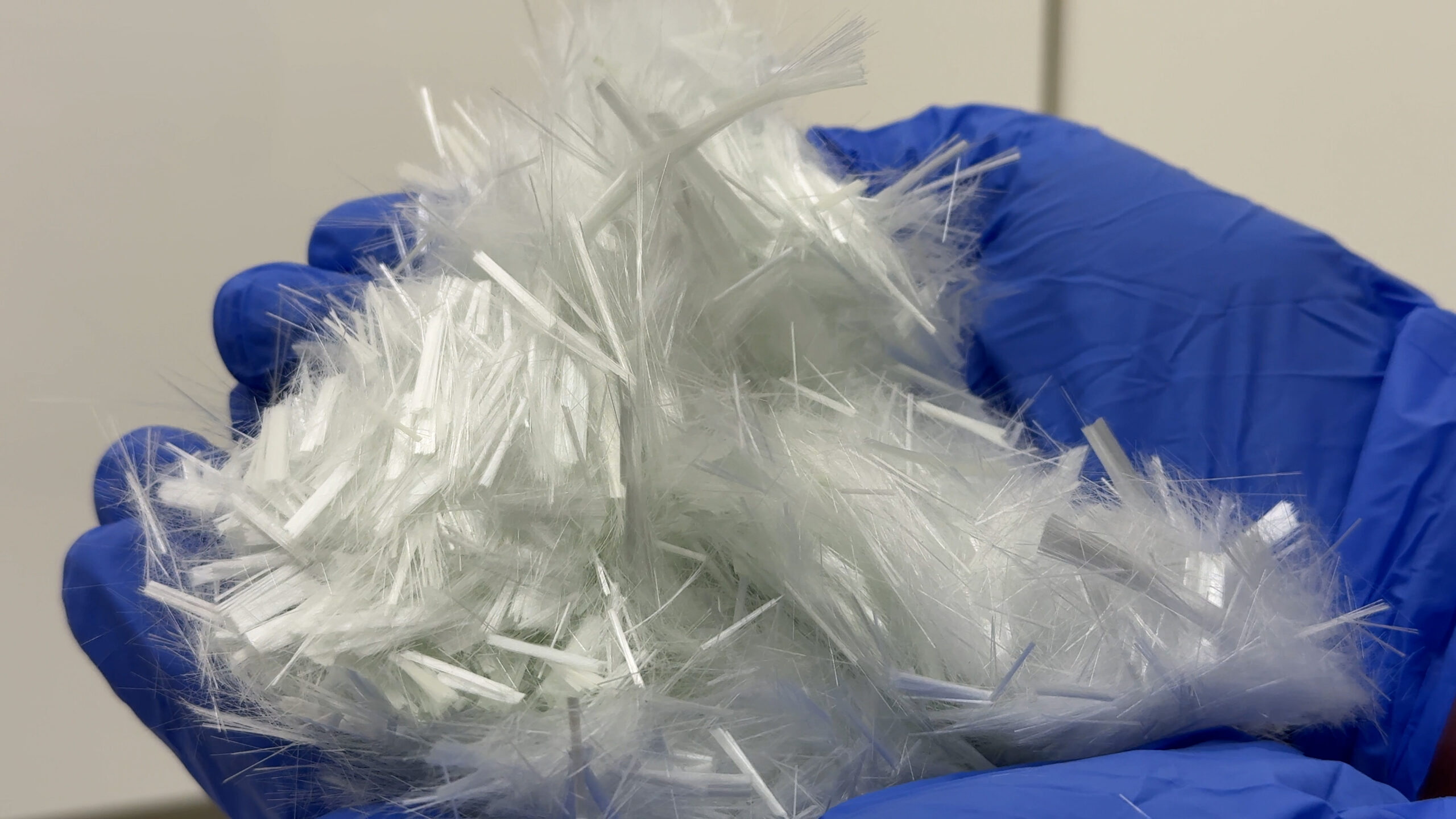
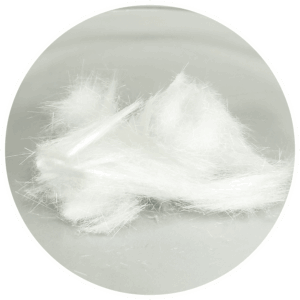
Glass fibres extracted from waste composite
While both recycling routes offer clear technical potential, their overall sustainability must be evaluated holistically. Technical feasibility alone is not sufficient; environmental performance and trade-offs across the entire lifecycle need to be understood to ensure that the proposed solutions deliver genuine long-term benefits. For this reason, Life Cycle Assessment (LCA) is used in the project as a systematic decision-support tool.
Life cycle assessment in CompositeCircle
Life Cycle Assessment is applied to evaluate the environmental impacts of different recycling value chains across their full lifecycle, from material collection and processing to recovered outputs and end use. The assessment examines factors such as energy use, transport requirements, and emissions, enabling comparisons between co-processing and chemical recycling routes and between alternative logistical scenarios.
The LCA work is conducted by Centria University of Applied Sciences (Centria UAS) in close collaboration with Aarhus University (AU) in Denmark. The process is iterative: assumptions, datasets, and system configurations are refined step by step as more accurate information becomes available from project activities. This iterative approach allows the analysis to evolve alongside technological development and ensures that results remain relevant for decision-making.
International collaboration and data governance
International collaboration is central to the success of the CompositeCircle project. Centria UAS and Aarhus University have established a coordinated and transparent data-sharing framework to support a methodologically consistent LCA across national boundaries. This collaboration combines complementary expertise and ensures alignment in analytical choices.
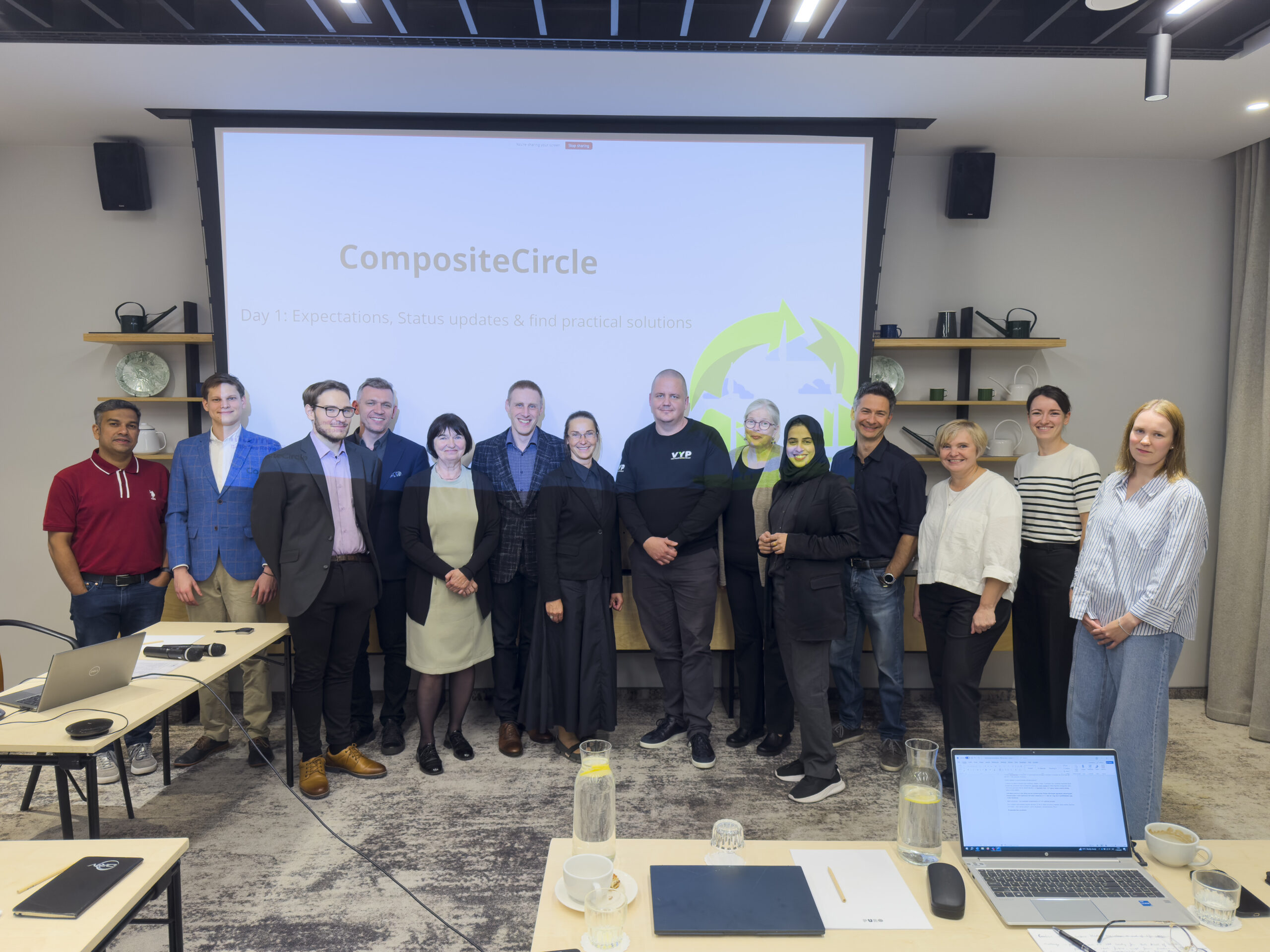
Happy partners at the end of meeting in Krakow, Poland in September 2025.
The work is structured around clearly defined data domains. Aarhus University leads the collection of operational data related to logistics, dismantling, material flows, energy consumption, and mechanical processing stages. Centria UAS contributes detailed technical data from its research facilities, including material characteristics, process performance, and efficiencies associated with solvolysis, as well as expertise in LCA modelling and software tools.
To ensure scientific robustness and comparability, both institutions have harmonized key methodological choices, including system boundaries and environmental impact categories. Regular technical alignment meetings are used to address data quality, methodological updates, and regional parameters such as energy mixes and transport distances. Standardized reporting practices further enhance transparency and ensure that results can be interpreted consistently across scenarios.
Future outlook
As the project progresses, the emphasis shifts from data generation toward integrated interpretation and analysis of results from the pilot phase. The next step involves identifying environmental hotspots along the composite value chain and assessing where improvements or alternative configurations could yield the greatest benefits.
The shared long-term goal is to develop optimized circular pathways that support industry stakeholders and policymakers in transforming composite material management. In parallel, the project aims to stimulate new business models and value creation opportunities linked to composite recycling. The collaboration between Aarhus University and Centria UAS demonstrates how regional partnerships in the Baltic Sea area can accelerate the transition toward more sustainable composite systems.
Enabling circularity
The CompositeCircle project brings together technical innovation, environmental assessment, and international cooperation to address the growing challenge of wind turbine composite waste. By combining mechanical and chemical recycling approaches with robust life cycle assessment and cross-border collaboration, the project creates a foundation for scalable and sustainable composite recycling solutions. The results provide practical insights for industry and policymakers and offer a basis for further development, replication, and potential continuation beyond the current project scope.

Additional links
details
-
Homepage
-
Project typeCore Project

-
ImplementationMarch 2025 - February 2028
-
StatusOngoing
-
Contribution to EUSBSRPolicy Area Innovation

-
Target groups
- Large enterprise
- Small and medium enterprise
-
Social media
-
Additional links
-
Tags