




Putting the CADS Tool to the Test: Lessons from Six Baltic Sea Region Cities
22 July 2026
The practical value of the CADS Tool is demonstrated through pilot implementations in six Baltic Sea Region cities participating in the Climate-4-CAST project: Tampere (FI), Aarhus (DK), Riga (LV), Östersund (SE), Norderstedt (DE), and Bytom (PL).
The pilot implementations show that there is no one-size-fits-all approach to climate budgeting and climate governance. Each city adapts the tool to its own climate strategy, administrative structures, data availability, and political context. At the same time, several common steps prove essential for successful implementation. These lessons from the pilot phase include defining clear objectives, ensuring technical setup, clarifying roles and responsibilities, integrating the tool into decision-making processes, and establishing routines for continuous use and improvement.
Start with a Clear Purpose
One of the most important lessons from the pilot phase is the need to clearly define the role of the CADS Tool from the outset. In most pilot cities, the tool’s primary purpose emerged as supporting discussions on climate policy updates, climate target monitoring, and long-term investment planning, rather than serving as a direct annual budgeting tool.
This underlines the importance of clearly defining the intended role of the tool at an early stage. Without an agreed purpose, the tool risks becoming a technical exercise rather than a strategic asset supporting climate governance, cross-departmental collaboration, or financial planning.
“The CADS Tool is supporting our journey towards climate neutrality. By clearly demonstrating the climate impact of proposed measures, the tool helps us identify and prioritise actions that deliver the highest emission reductions relative to their cost and thus supports budget negotiations. In the long term, it will contribute to the more effective implementation of climate strategies and help the city track progress towards its climate neutrality targets for 2030 and 2050.”
(Riga Climate-4-CAST project team)
Riga’s CADS Tool: https://riga-c4c.paths-next.kausal.tech/
Build on Existing Data and Local Capacity
Data availability and reporting practices differ substantially between countries and cities. Some cities already have established territorial emission reporting systems, while others lack consistent historical datasets and have only recently started their data collection efforts.
The experiences of the Climate-4-CAST pilot cities illustrate this diversity, with some cities importing existing official inventories and others building their datasets progressively, starting with one or two sectors. Importantly, the pilot phase demonstrates that successful implementation of the CADS Tool does not require perfect data from day one. Cities can start small and progressively improve their datasets and modelling approaches over time.
“The CADS Tool enables us to create a level playing field in terms of access to climate related knowledge. What would otherwise be gathered through different means, can now be obtainable for all participants through the CADS Tool, empowering a more data driven climate discussion.”
(Aarhus Climate-4-CAST project team)
Aarhus’s CADS Tool: https://aarhus-c4c.paths-next.kausal.tech/
“The CADS Tool provides an underlying analysis, which helps us to structure discussions and preparatory work with municipal companies. These analytical foundations are beneficial in supporting public debate on emission-reduction targets.”
(Bytom Climate-4-CAST project team)
Bytom’s CADS Tool: https://bytom-c4c.paths-next.kausal.tech/
The pilot cities also use a mix of forecasting methods depending on local capacity and existing modelling practices. Some develop detailed sector-specific forecasts (e.g., energy and transport), while others focus on simpler Business-As-Usual (BAU) pathways or selective trend inputs.
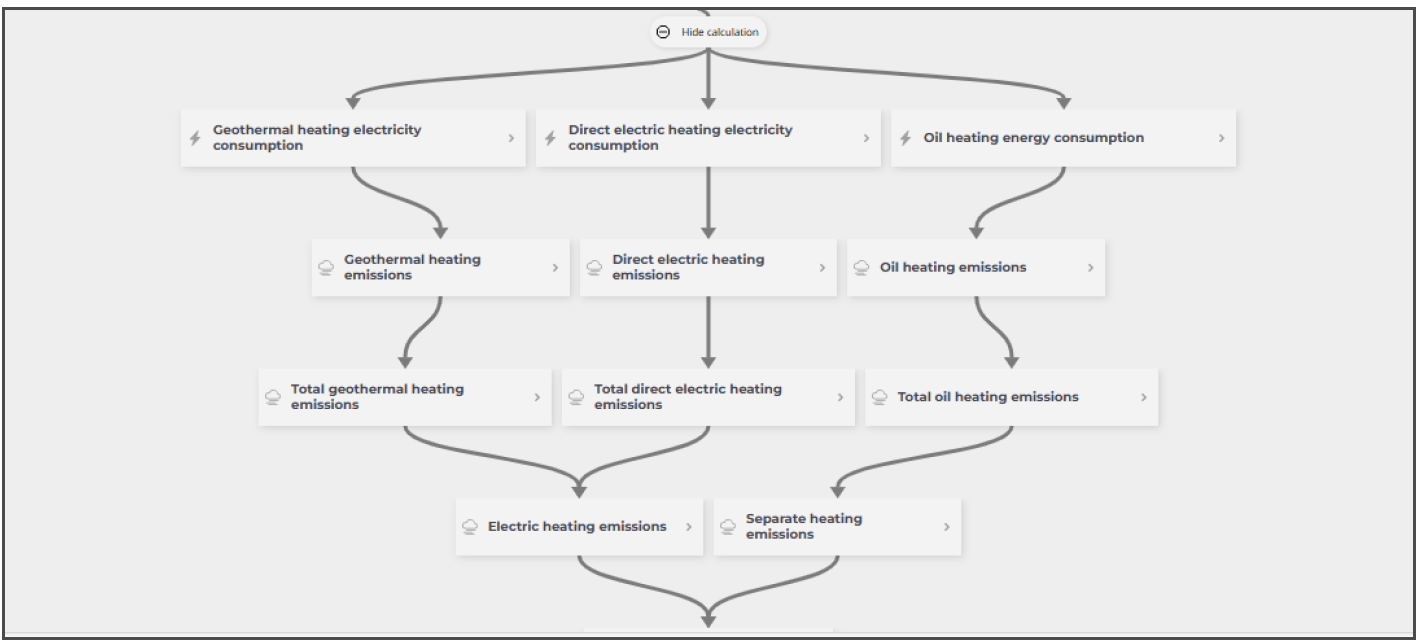
“The CADS Tool helps us in visualizing and analyzing paths towards our climate and energy objectives. For example, the tailored scenario function of the CADS Tool enables us to envision different development paths and scenarios for emissions development in the transportation sector. By combining baseline variables with electrification scenarios of the transport sector, we can identify three distinct pathways of emissions development.”
(Östersund Climate-4-CAST project team)
Östersund’s CADS Tool: https://ostersund-c4c.paths-next.kausal.tech/
Make Climate Decisions More Transparent
Pilot city experiences showed that cities benefit most when the CADS tool is used to support concrete, recurring decisions. This includes updates to climate strategies, climate target monitoring, investment planning, preparation of annual budgets or climate budgets, prioritisation of climate actions, and the preparation of political decision proposals. To achieve this, cities need to clearly define specific use cases where the tool provides timely, relevant, and actionable information.
“We had the opportunity to explore the CADS tool’s potential in terms of monitoring the local authority’s climate targets. The CADS Tool provides us a clear overview of the monitoring results in relation to the budgetary targets.”
(Norderstedt Climate-4-CAST project team)
Norderstedt’s CADS Tool: https://norderstedt-c4c.paths-next.kausal.tech/
Use case definition helps cities translate the tool’s capabilities into operational practice. Each use case becomes a “mini-integration plan” that describes who uses the tool, what information they need, at what moment in the process it is needed, and what outputs are delivered. Through iterative testing of these use cases, cities can refine workflows, identify missing data, improve cross-departmental collaboration, and increase the legitimacy of tool outputs among directors and politicians.
“The CADS tool enables us to compare different scenarios, making the remaining emissions gap transparent and highlighting which additional actions and changes are still needed. The model allows us to quickly adjust key parameters and immediately see how these changes affect the results, making it easy to explore different development pathways. The aim is to support decision-makers by presenting alternative options and their implications in a transparent and data-driven way.”
(Tampere Climate-4-CAST project team)
Tampere’s CADS Tool: https://tampere-c4c.paths-next.kausal.tech/oikopolut
By integrating the CADS Tool into existing organisational routines, cities can transform it into a tool that supports organisational routines, strengthens transparency, and anchors climate considerations into everyday governance.
Looking Ahead
The Climate-4-CAST pilots have shown that the CADS Tool can accommodate different climate targets, governance approaches, and decision-making processes across cities. Whether used for climate target monitoring, scenario development, investment prioritisation, or climate budgeting, the tool supports municipalities in making climate-related decisions in a more transparent, data-driven, and collaborative way.
By integrating the CADS Tool into everyday governance processes, cities can strengthen their capacity to plan and implement their transition towards climate neutrality.
Read more about the CADS Tool here.

details
-
Homepage
-
Project typeCore Project

-
ImplementationNovember 2023 - October 2026
-
StatusOngoing
-
Contribution to EUSBSRPolicy Area Energy

-
Target groups
- Local public authority
- National public authority
- Regional public authority
-
Social media
-
Additional links
-
Tags