




Cities turning climate ambition into action: Climate Budget Summit in Brussels
21 October 2026
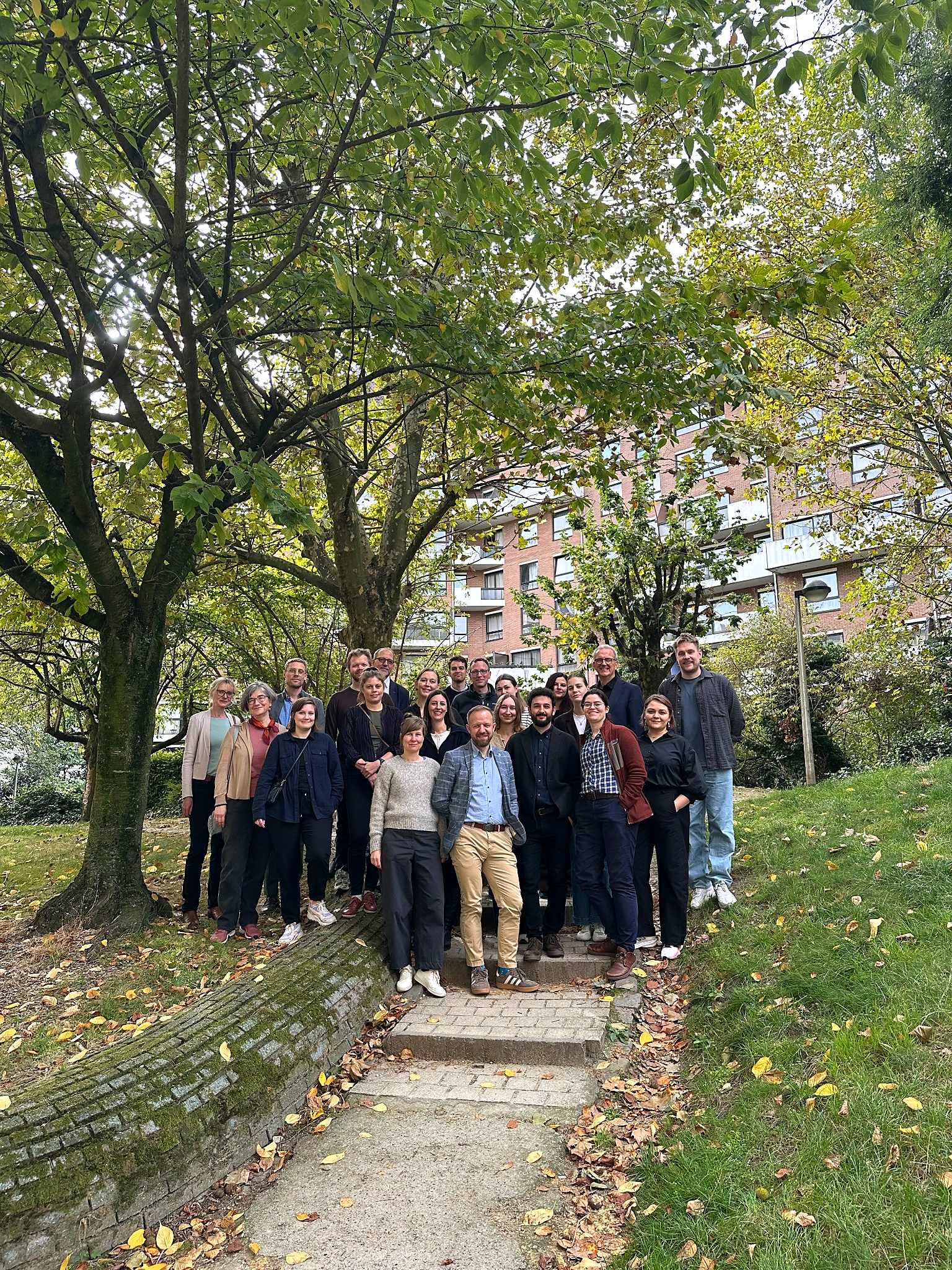
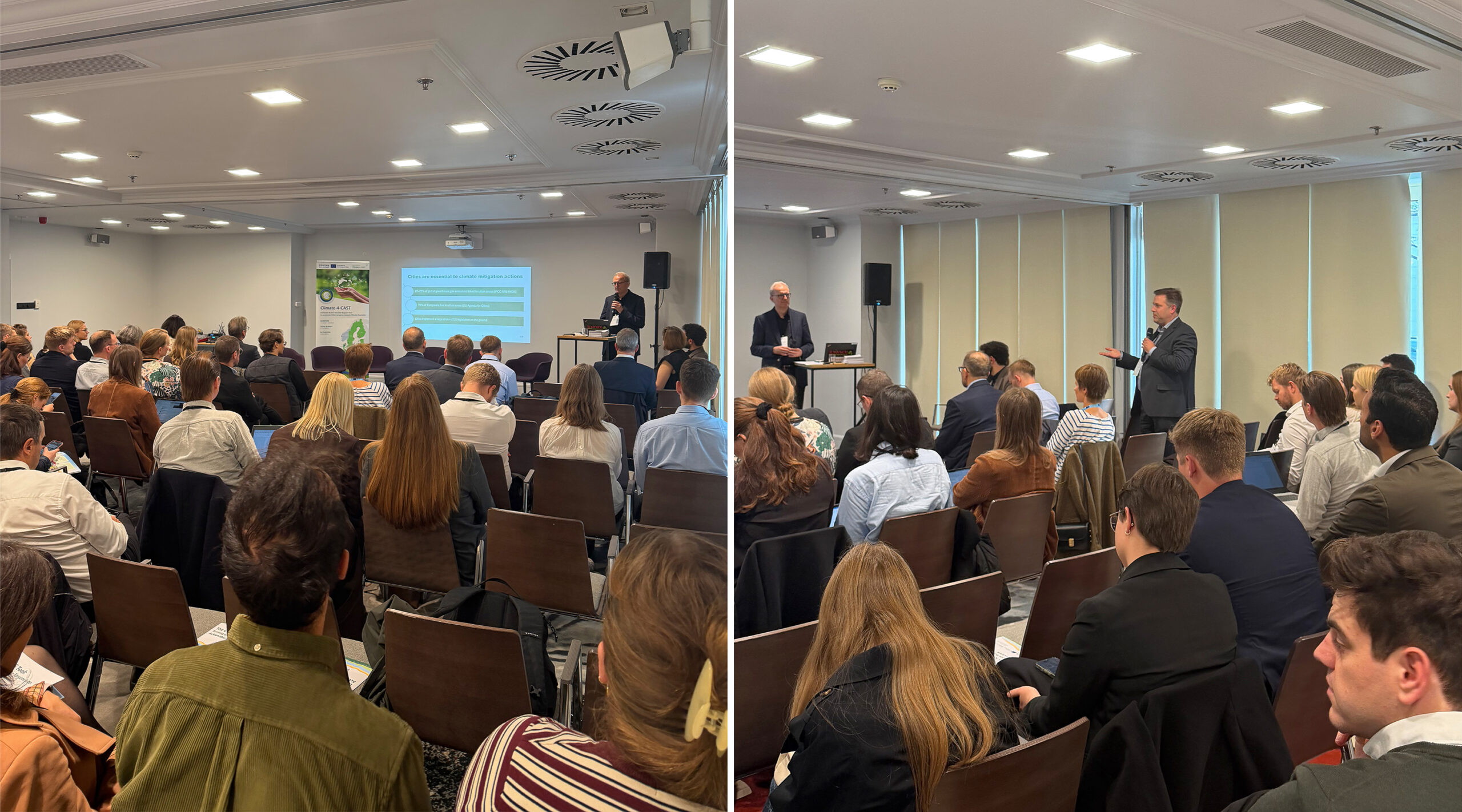
How can cities turn climate ambitions into concrete investments and measurable action? This question brought around 50 city leaders, climate experts, researchers and local practitioners together at the Climate Budget Summit in Brussels on 14 October 2026, to exchange experiences and explore how climate budgeting can help municipalities align financial decisions with their climate neutrality goals.
Held as a partner event of the EU Week of Regions and Cities, the Summit was organised as part of the Climate-4-CAST project, co-funded by the Interreg Baltic Sea Region Programme.
Participants discussed common challenges in putting climate action into practice, including competing priorities, limited resources and political realities. Most participants represented European local and regional authorities, alongside representatives of the European Commission’s DG REGIO, the Interreg Baltic Sea Region Programme, and city networks including Eurocities, ICLEI and UBC.
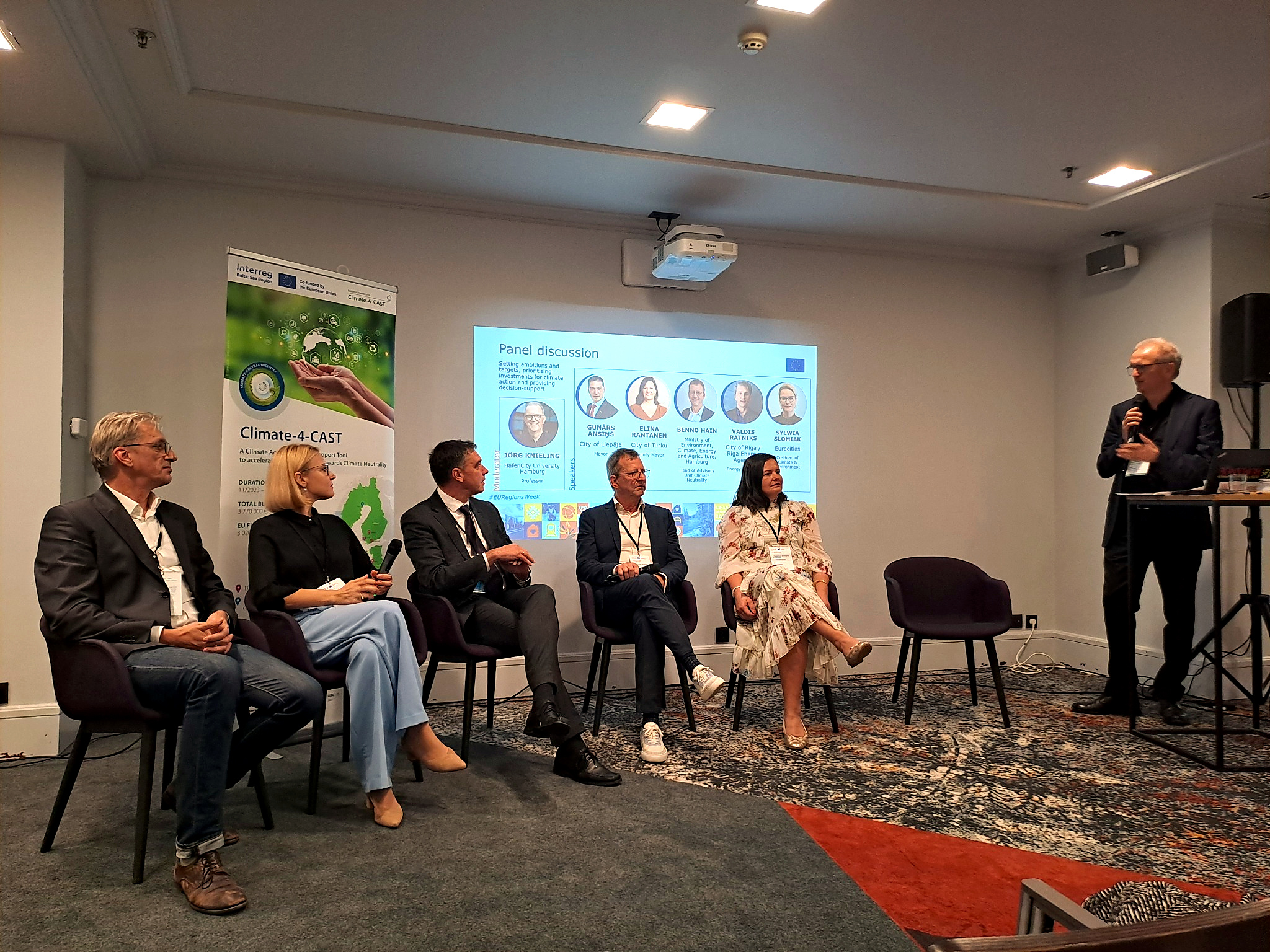
A key highlight was a high-level panel discussion addressing questions faced by local decision-makers: How can cities invest in ambitious climate action when some measures may increase costs for residents? How can climate investments be justified alongside urgent social needs? And how should municipalities prioritise limited resources to achieve the greatest impact?
The panel brought together:
-
Gunārs Ansiņš, Mayor of Liepāja, Latvia
-
Elina Rantanen, Deputy Mayor of Turku, Finland, and Vice-President of UBC
-
Sylwia Słomiak, Co-Head of Climate & Environment at the Eurocities networkEurocities
-
Benno Hain, Head of Advisory Unit Climate Neutrality at the Hamburg Ministry of Environment, Climate, Energy and Agriculture, Germany
-
Valdis Ratniks, Energy Manager fromat the Riga Energy Agency, Latvia
The discussion was moderated by Jörg Knieling, Professor at HafenCity University Hamburg.
The discussion connected climate goals and figures with the realities of everyday life. Speakers discussed ways to secure funding for climate action and highlighted that significant investments can sometimes be made without explicitly labelling them as climate-related. Framing climate investments around tangible benefits — such as greener, more walkable cities, affordable energy and a just transition — can help make their value clearer to residents. Cooperation at different levels was another key theme. Citizen engagement and collaboration between cities can support progress, while healthy competition between cities can also encourage new ideas and accelerate climate action.
The Summit also showcased the Climate Action Decision Support (CADS) Tool, developed through Climate-4-CAST to support climate-informed decision-making.
Participants explored how tools such as CADS can help cities connect climate objectives with financial planning, assess options and communicate priorities to political leaders and residents. The discussions also addressed effective climate governance and how European climate policies can be translated transparently into local action. Integrating climate considerations into budgeting and decision-making can help municipalities make climate priorities more visible and connect long-term ambitions with practical implementation.
The Summit marked an important milestone in Climate-4-CAST’s work to strengthen climate budgeting capacity across the Baltic Sea Region and beyond. Over the past year, the project has supported learning and knowledge exchange through its climate budget training course and related transfer activities.Through these activities, led by UBC SCC as part of its role in the project, representatives of more than 200 local and regional authorities and other stakeholders learned about different steps in the climate budgeting process. The aim is to equip cities and regions with the knowledge and skills to make more climate-informed decisions and translate climate ambitions into action. The Summit provided an opportunity to bring these experiences together, share practical approaches and reflect on how cities can continue strengthening climate budgeting in their own contexts.
Originally written by Mariia Andreeva for the Union of the Baltic Cities Sustainable Cities Commission (UBC SCC). Adapted for the Climate-4-CAST project website.

Additional links
details
-
Homepage
-
Project typeCore Project

-
ImplementationNovember 2023 - October 2026
-
StatusOngoing
-
Contribution to EUSBSRPolicy Area Energy

-
Target groups
- Local public authority
- National public authority
- Regional public authority
-
Social media
-
Additional links
-
Tags