




Crushed stone reduces the risk of landslides and slope failures along the Gävle River
04 June 2026
This article was originally published on the website of the Municipality of Gävle, Sweden, and has been translated from Swedish using AI.
To reduce the risk of landslides and slope failures during high water flows and heavy rainfall, stabilisation measures are being carried out along the Gävle River. The initiative forms part of the Municipality of Gävle’s climate adaptation efforts and will also contribute to a more accessible and attractive riverside environment.
The Municipality of Gävle is continuing work to improve the stability of the riverbank upstream from the Gävle Concert Hall towards Strömvallen and further on to Strömdalsbron. The aim is to reduce the risk of landslides and slope failures caused by high water levels and intense rainfall. The measures are part of the municipality’s broader climate adaptation programme, which seeks to prevent risks associated with a changing climate while creating added value for residents, visitors and businesses.
“Stabilisation measures make the area safer during periods of high water flow and heavy rainfall. We prioritise particularly vulnerable areas, but it remains challenging to determine exactly where future needs will arise in a changing climate. The risk profile is influenced by several factors, including ground conditions, water flows and how the surrounding environment develops over time,” said Erik Glaas, Climate Adaptation Strategist at the Municipality of Gävle.
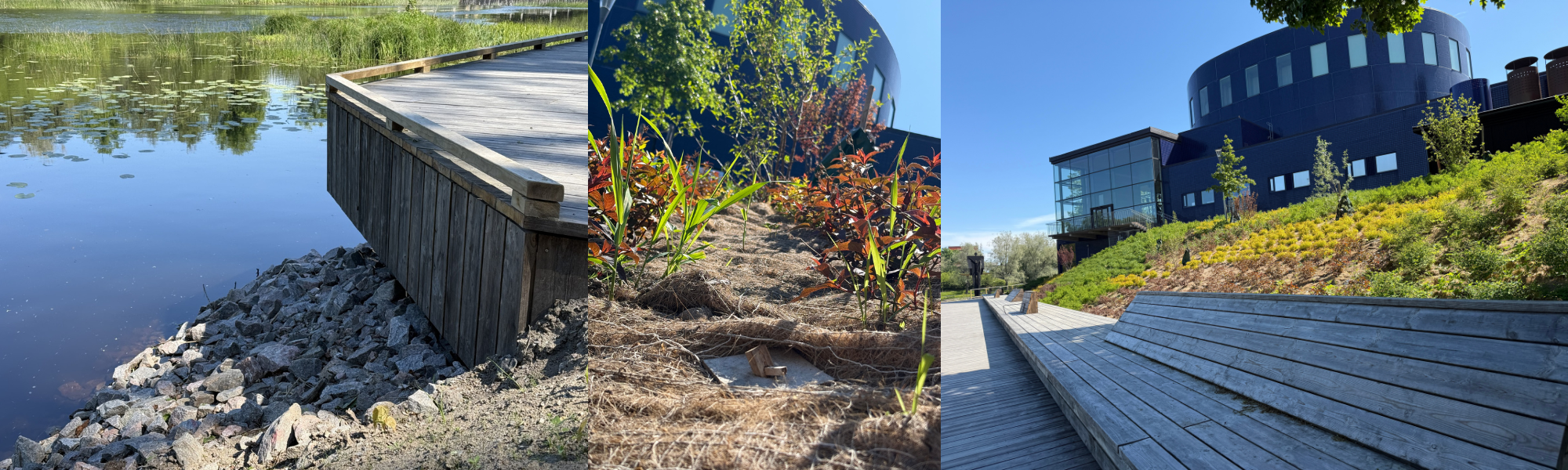
One of the methods being used is the construction of a so-called toe berm along the riverbank. The berm consists of crushed stone and acts as support for the slope, increasing its stability. At the same time, pressure on the top of the slope is reduced through excavation works. These measures are being coordinated with the continuation of a new riverside walkway featuring a timber boardwalk, seating and planting areas to improve public access to the river.
“We must build a resilient municipality that can withstand increasingly severe weather events. This is a very real consequence of the climate changes we are witnessing,” said Anders Ekman (Centre Party), Chair of the Municipal Committee for Community Development.
The municipality’s work to identify climate-related risks, assess adaptation needs and develop methods for analysing potential measures is currently being carried out in cooperation with other municipalities, authorities and universities around the Baltic Sea through the international ClimaResponse project. The aim is to strengthen the capacity of local and regional actors to plan and implement climate adaptation and disaster risk reduction measures across the Baltic Sea Region.

Additional links
details
-
Homepage
-
Project typeCore Project

-
ImplementationMarch 2025 - February 2028
-
StatusOngoing
-
Contribution to EUSBSRPolicy Area Secure

-
Target groups
- Infrastructure and public service provider
- Interest group
- Local public authority
- National public authority
- NGO
-
Social media
-
Additional links
-
Tags