




Building a safer and more attractive city: Q&A with Erik Glaas from Gävle
02 October 2026
Gävle is located by the Baltic Sea on the east coast of Sweden, approximately 170km north of Stockholm. The municipality is home to approximately 100 000 inhabitants. As climate risks, such as heatwaves, landslides, and storms are becoming more frequent, there is a growing focus on improving climate resilience within the municipality. With its recent history of flooding, climate risks related to water are considered a top priority.
In addition to reducing flood risk in the long term, Gävle is strengthening its preparedness for extreme weather events through the ClimaResponse project. In this Q&A, we sit down with Erik Glaas, Climate Adaptation Strategist at the Municipality of Gävle, to look at how the city is working to prevent flooding, prepare for extreme weather events and reduce the impacts when flooding occurs.
Q: Stormwater flooding is becoming an increasing issue in cities, and Gävle experienced a major flood a few years ago. What solutions have you put in place to prevent or be better prepared for future flooding?
Erik: Several measures are focused on steering and temporarily delay of stormwater, improving our crisis preparedness and building a greener city. Because there are many paved surfaces in the city, the work includes thinking about multifunctional structures: whether parking areas, playgrounds, roads, and other infrastructure can be built in another way and used for temporary retention or water infiltration when needed.
This includes getting a geographical and practical overview of where the problems are and what generates them, then looking at rain mappings to see where there are possibilities in the landscape to store and infiltrate water. Gävle is currently developing a new holistic plan to help locate and identify areas where measures are needed from a long-term perspective and make sure that the city does not exploit them for other purposes.
Looking back, what would you say was the key factor behind your success with implementing climate change adaptation measures?
Erik: One key factor was the clear financial case. The damage costs from the 2021 flood were around 200 million euros, which made it possible to argue for significant investments in prevention. Politicians set aside 10 million euros for development, and quite many projects have followed since then.
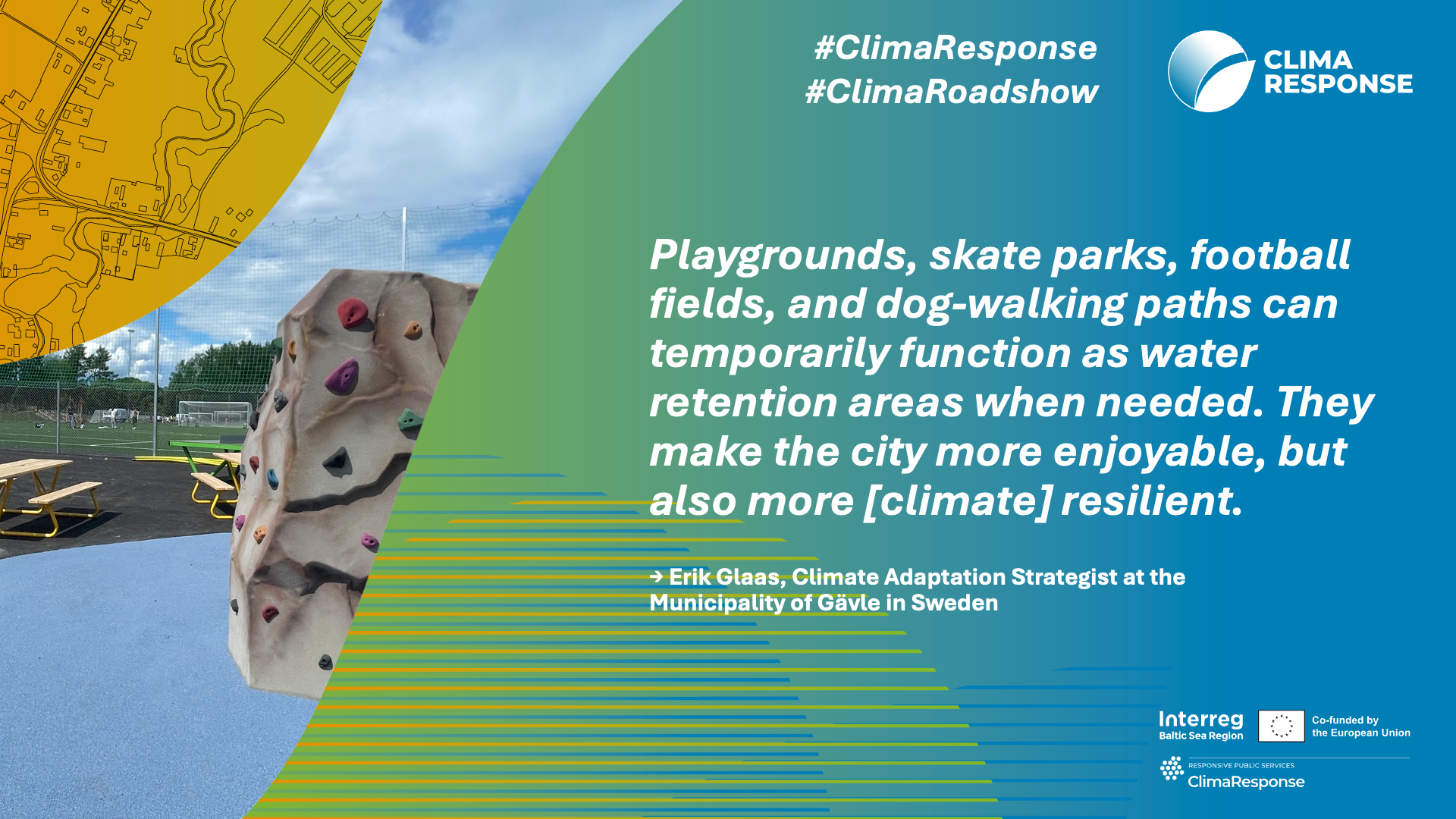
In those projects, we are prioritizing investments in facilities that create added value, so called multifunctional solutions, aimed at decreasing risks while at the same time building a more attractive city for our citizens. For example, new playgrounds, skate parks, football fields, and dog-walking paths that can temporarily function as water retention areas when needed. They make the city more enjoyable, but also more resilient.
While cities can take significant steps to reduce flood risks, it is not always possible to prevent flooding entirely. In ClimaResponse project, Gävle is setting up a weather sensor network to gain real-time data on extreme weather events, helping to give a more accurate picture of an emerging flood. In addition, they are establishing an extreme weather bank, containing a stockpile of equipment that can be rapidly deployed during an extreme weather event. Once developed, guidelines for establishing and running the extreme weather banks will be developed and shared with other cities. By testing these solutions in practice and sharing what works, Gävle hopes to provide an example that other cities facing similar climate risks.
Some cities are aware that flooding could happen to them but have not taken it seriously yet. What would you say to them?
Erik: It will happen in all cities sooner or later. It is better to prepare and put these efforts in place when you are already working on other things; adding climate adaptation measures does not cost much extra when they are integrated into other developments such as replacing a worn-out football pitch, resurfacing, renovating a park or building new housing blocks.
If you had one piece of advice for a city just starting their adaptation journey, what would it be?
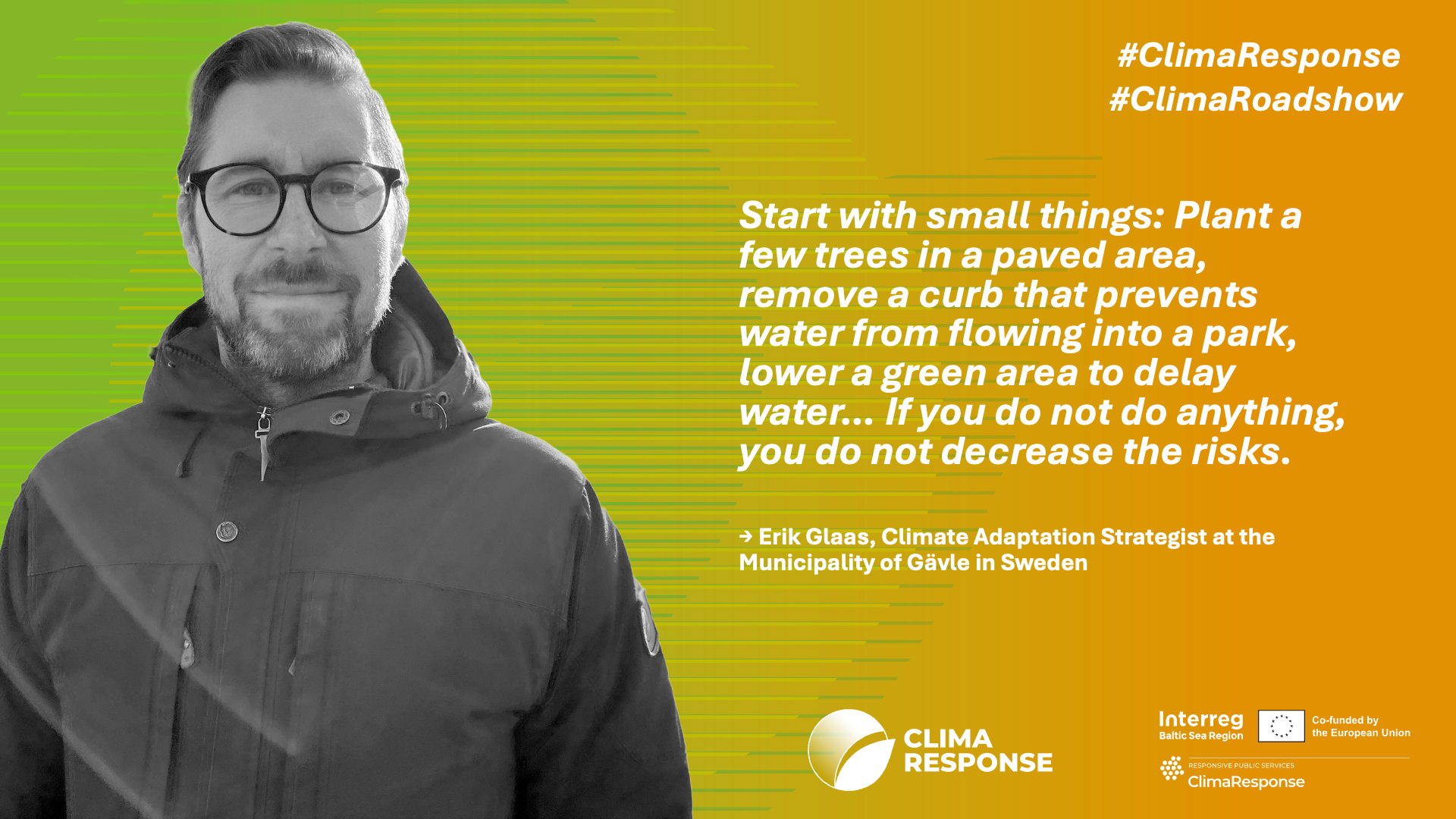
Erik: Start with small things and do not only go for big measures. Start integrating preparedness into the small things you do and communicate about it. If enough positive messages are shared about how the city is changing, this can help build political support. I would say doing is the key word when it comes to adaptation; not just planning and measuring. Plant a few trees in a paved area, remove curb that prevents water from flowing into a park, lower a green area to delay water, install a submersible pump or a check valve in an exposed basement, purchase flood barriers or move something sensitive from the basement to a higher floor. If you do not do anything, you do not decrease the risks.
ClimaResponse helps local authorities reduce climate and disaster risks, improve their response to extreme weather events, and build long-term regional climate resilience through targeted strategies, training and cooperation. It is funded by the Interreg Baltic Sea Region programme.

Additional links
details
-
Homepage
-
Project typeCore Project

-
ImplementationMarch 2025 - February 2028
-
StatusOngoing
-
Contribution to EUSBSRPolicy Area Secure

-
Target groups
- Infrastructure and public service provider
- Interest group
- Local public authority
- National public authority
- NGO
-
Social media
-
Additional links
-
Tags