




Circ@Home contributes to circular economy discussions at the HELCOM Ministerial Meeting in Warsaw
16 November 2026
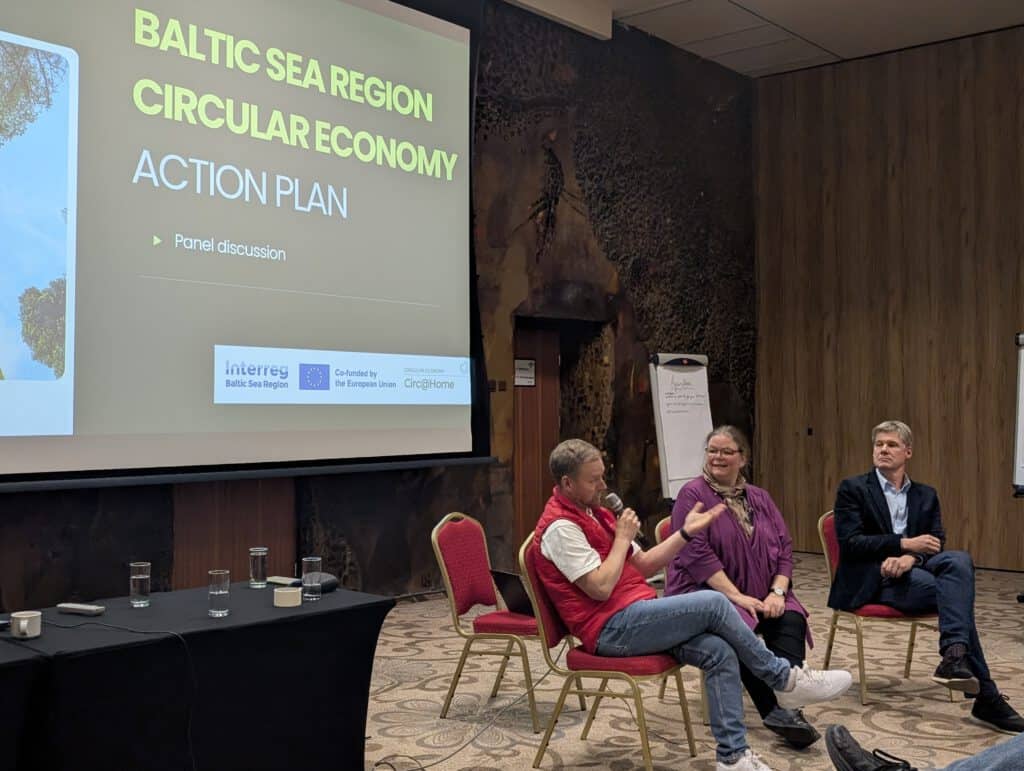
On 3–4 November 2026, Circ@Home took part in discussions on the future of circular economy in the Baltic Sea Region in Warsaw, Poland. The activities took place alongside the 2026 HELCOM Ministerial Meeting, where countries around the Baltic Sea discussed progress in protecting the marine environment and future regional priorities.
On 3 November, Circ@Home representatives hosted the event Baltic Sea Region Circular Economy Action Plan, organised by Coalition Clean Baltic, BEF Germany and the Stockholm Environment Institute Tallinn Centre. The event brought together 20 representatives of environmental NGOs from 7 Baltic Sea Region countries.
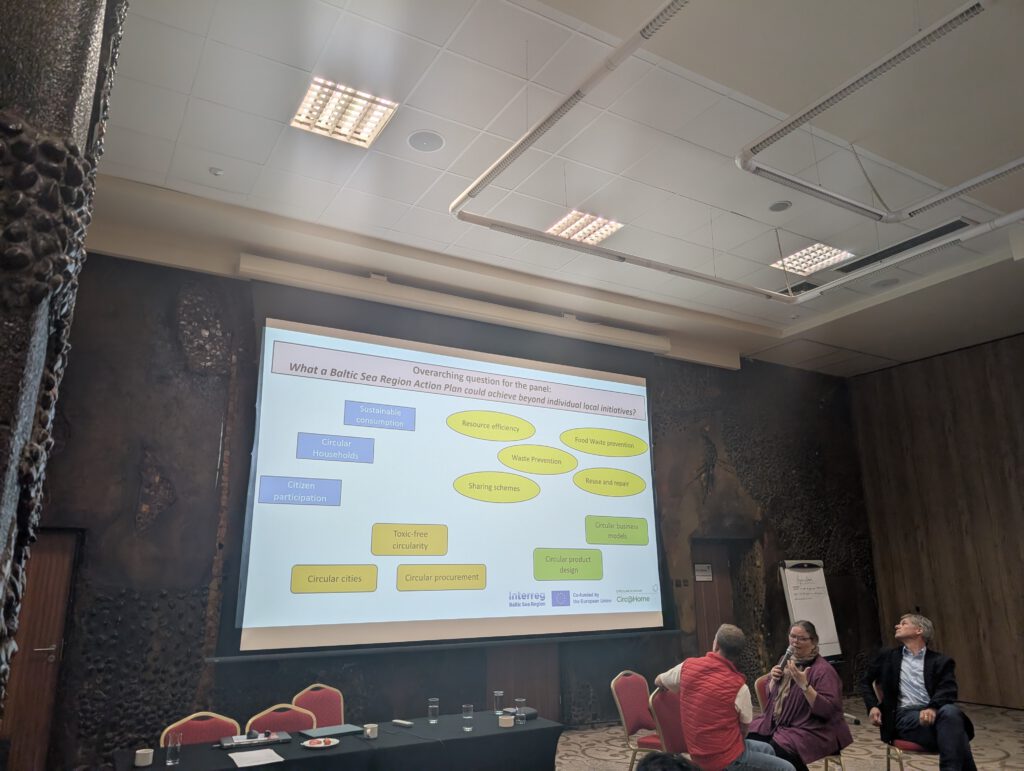
The discussion focused on how a regional Circular Economy Action Plan could help reduce pressure on the Baltic Sea. Participants highlighted the need to prevent waste, reduce resource consumption, promote reuse and repair, support circular households and municipalities, and encourage more sustainable production and business models.
Circ@Home presented its project results and practical experience, showing how local circular economy initiatives can contribute to wider regional goals. The discussions also provided valuable input for the further development of the proposed Action Plan.
The topic was also brought to the political level at the HELCOM Ministerial Meeting on 4 November. In its statement to the ministers, CCB called for stronger regional cooperation and a shared framework for resource efficiency, waste prevention, recycling and more circular production and consumption.
The discussion identified 5 proposed priorities for further development:
- Waste prevention and sustainable consumption.
- Circular households, neighbourhoods and cities.
- Circular production, industry and business models.
- Circular material flows and priority sectors, such as food, nutrients, plastics, packaging and textiles.
- Regional cooperation, governance and implementation.

Additional links
details
-
Homepage
-
Project typeCore Project

-
ImplementationMarch 2025 - February 2028
-
StatusOngoing
-
Contribution to EUSBSRPolicy Area Innovation

-
Target groups
- Interest group
- Local public authority
- NGO
- Small and medium enterprise
-
Social media
-
Additional links
-
Tags