




Farmers' Parliament, Latvian NGO, Holds Field Days on Soil Improvement Material Spreading
28 August 2026
Beyond the demonstrations themselves, the events served a broader purpose: raising farmers’ awareness of the value recovered nutrients can bring to their fields, and building bridges between the different industries whose cooperation is needed to close the nutrient cycle loop.
Both field days followed a similar format, opening with a theoretical session before moving into hands-on demonstrations in the field. Adrija Dorbe, a lecturer at the Latvia University of Life Sciences and Technologies (LBTU), spoke about the principles of fertilization and the processes that shape soil health. Ieva Kamerāde-Sniedze, a crop production specialist from the Latvia Agriculture Advisory and Training Centre, drew on practical experience to explain how spreading sewage sludge, sludge compost and lime can boost soil fertility and raise phosphorus content. At the “Vilciņi-1” event, farm owner Arnis Burmistris also shared insights from trials currently under way on his farm to improve soil microbiological activity. Both sessions closed with contributions from Zemnieku Saeima expert Iveta Grudovska — joined in August by deputy board chairwoman Maira Dzelzkalēja-Burmistre — who spoke about the organization’s experience with recoverable nutrients and what it means for Latvian agriculture going forward.
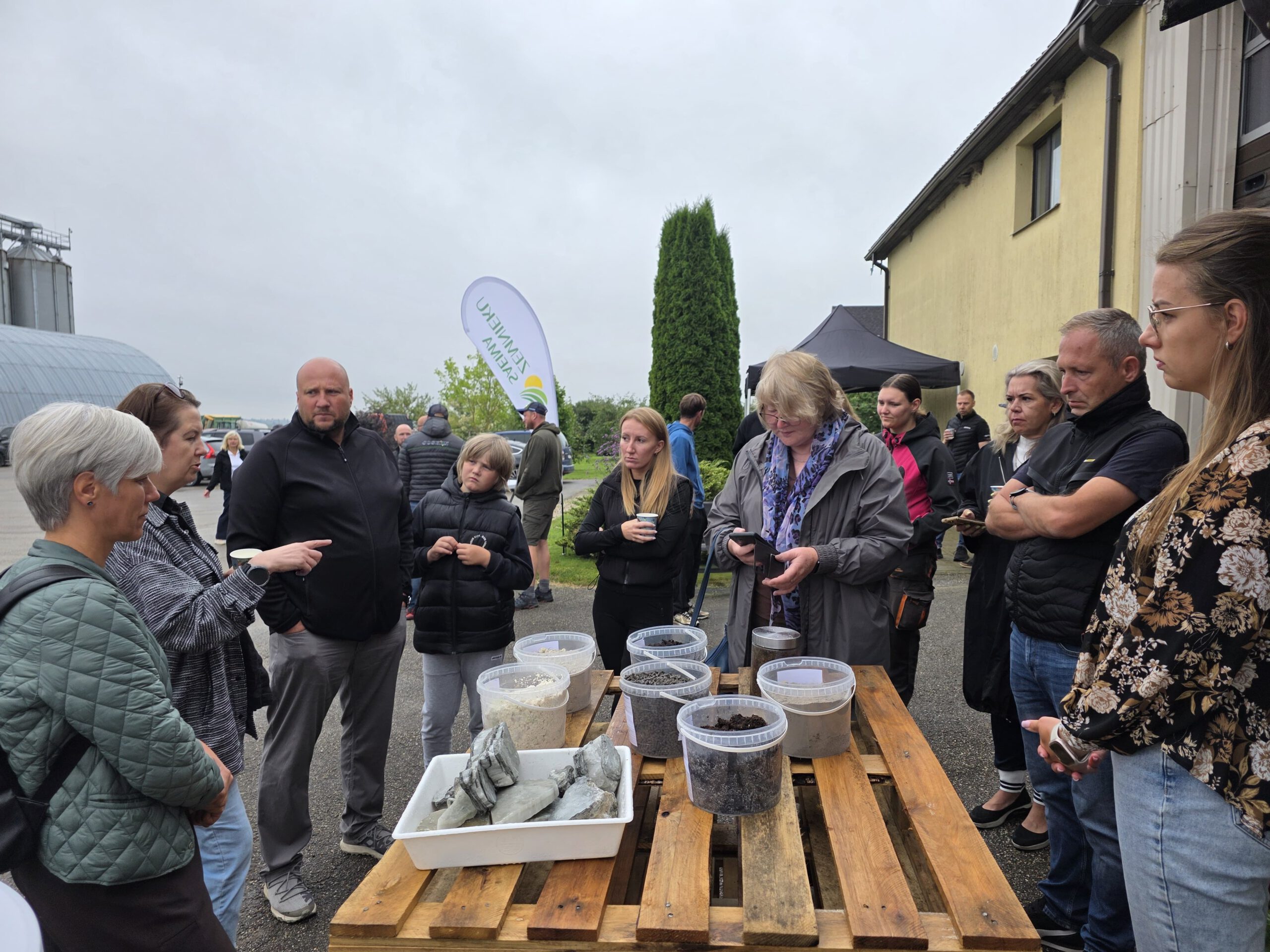
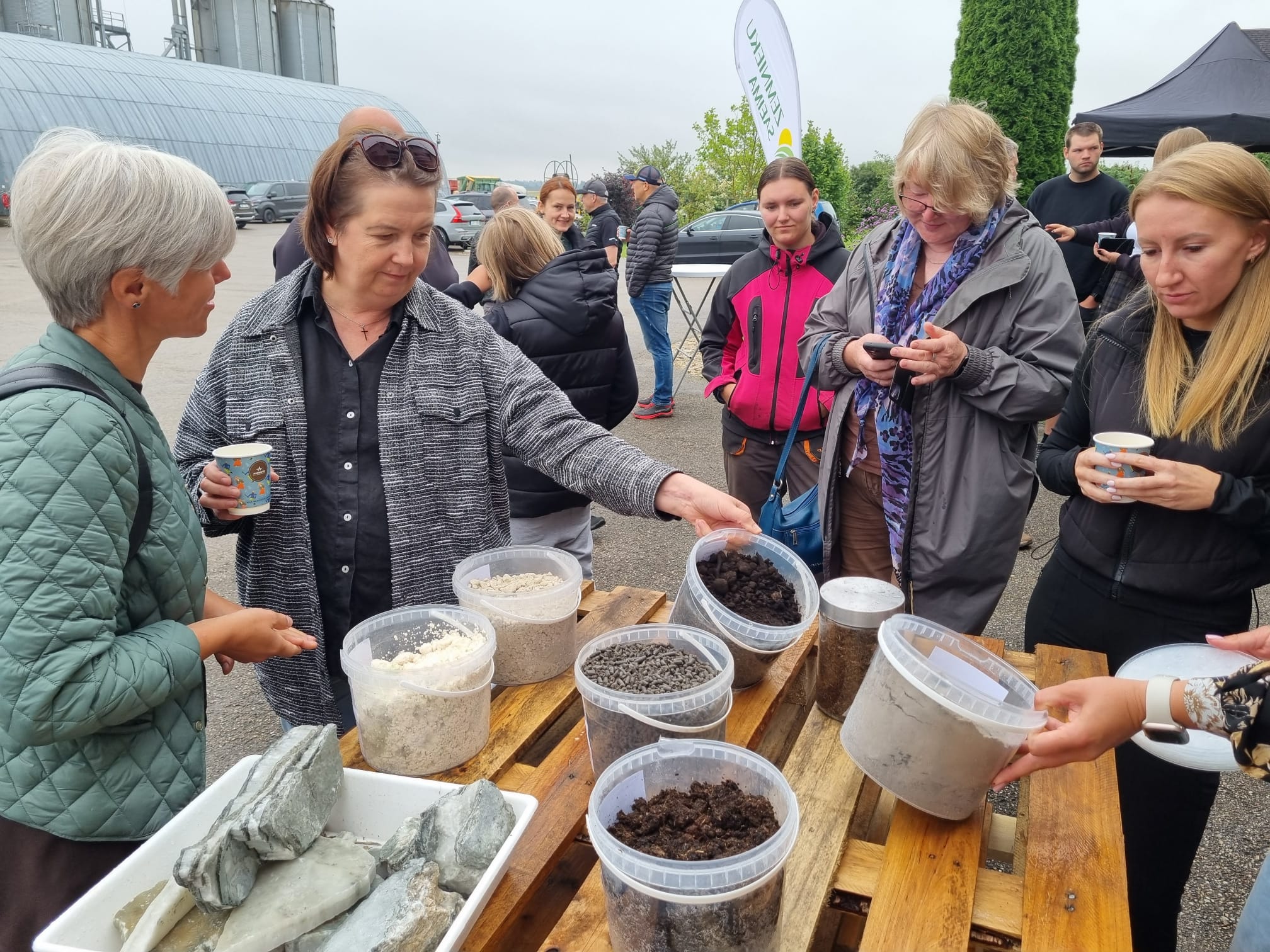
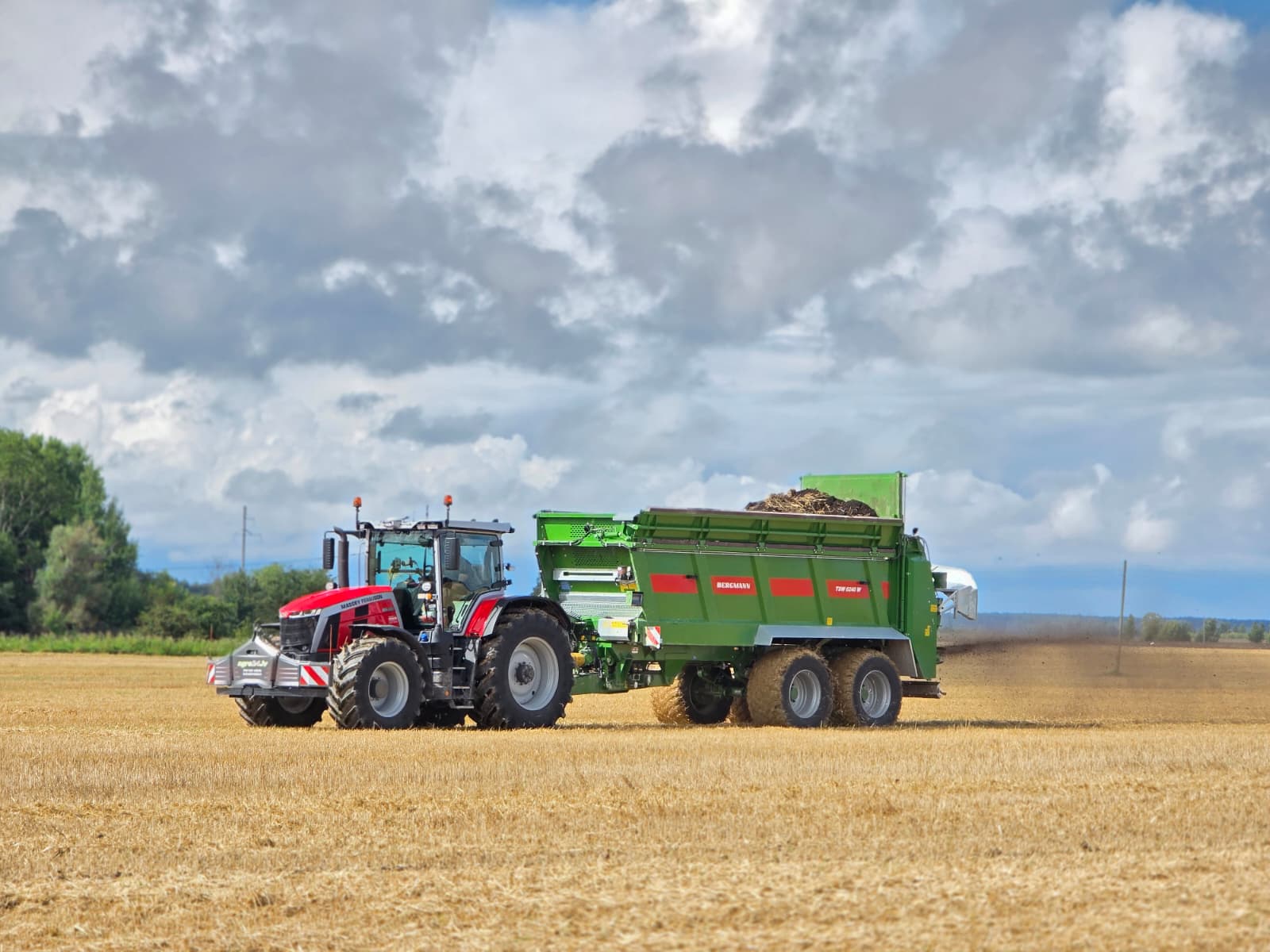
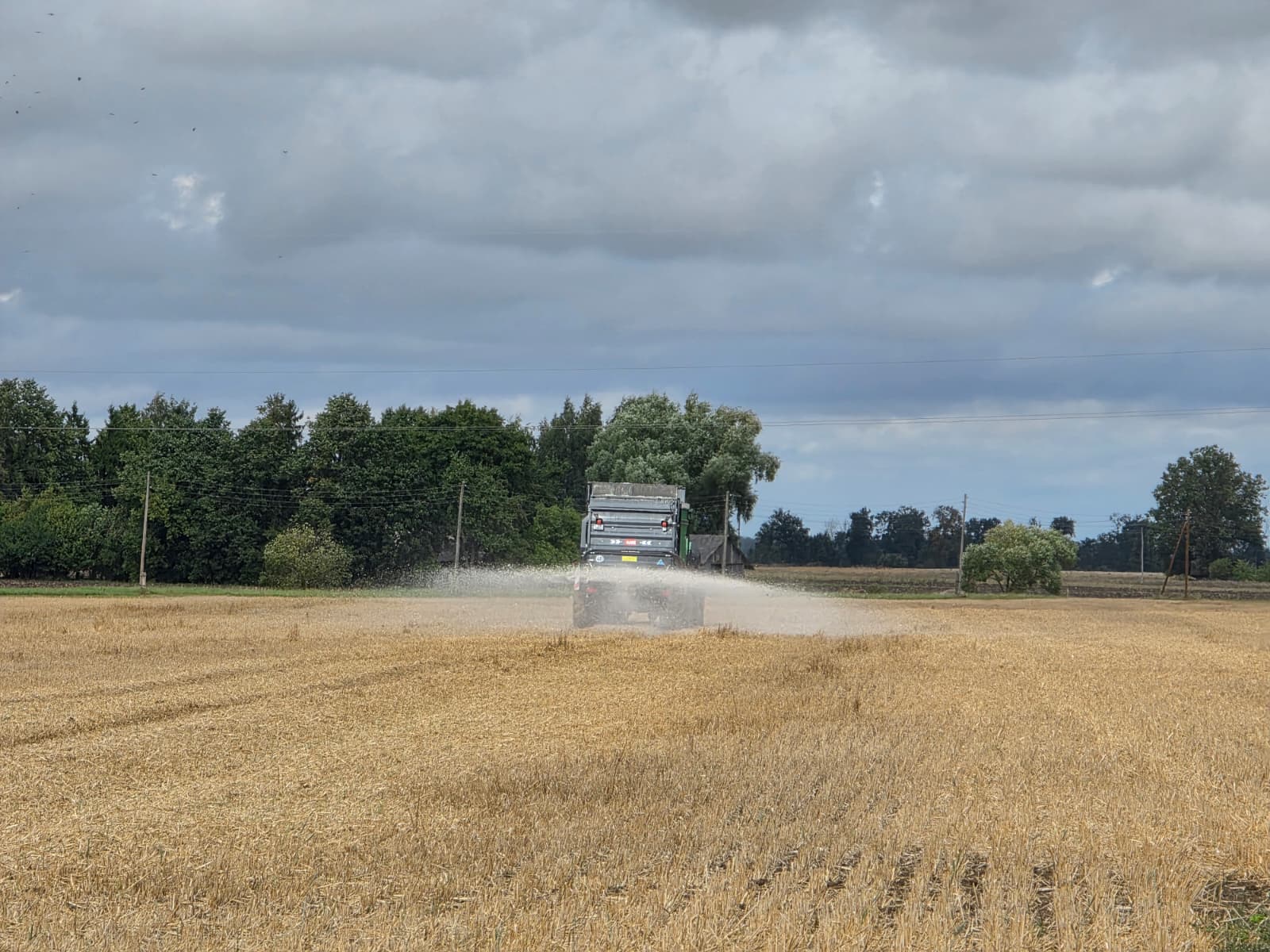
In the field, participants watched a wide range of recovered materials go to work: liquid and solid digestate, sewage sludge compost, gypsum, wood ash, charcoal pellets and poultry manure pellets. Various types of spreading machinery were on display, giving farmers a first-hand look at the equipment needed to apply these materials evenly and effectively.
Recovered nutrients are gaining particular importance at a time when the mineral fertilizer market remains under strain, marked by high prices and other ongoing challenges. Turning to recovered materials not only offers farmers alternative, but also helps conserve the world’s finite natural resources — making this an area where progress benefits both individual farms and the wider environment.
Taken together, the two field days gave farmers a rare opportunity to compare, side by side, different recovered nutrient materials and the machinery used to spread them — practical knowledge that supports both soil fertility and the wider push toward sustainable nutrient cycling in the Baltic Sea region. As pressure grows to reduce reliance on mineral fertilizers and cut nutrient losses to the environment, continuing this work — connecting industries, sharing know-how, and building farmers’ confidence in recovered materials — remains essential to closing the nutrient loop for good.
Presentations and photo galleries from both events are available on the Zemnieku Saeima website.

Additional links
details
-
Homepage
-
Project typeCore Project
-
ImplementationNovember 2023 - October 2026
-
StatusOngoing
-
Contribution to EUSBSRPolicy Area Nutri

-
Target groups
- Interest group
- National public authority
- Small and medium enterprise
-
Social media
-
Additional links
-
Tags