




Arts on Prescription Enters the Estonian Public Debate
10 August 2026
Two months after the national transfer webinar in June, Arts on Prescription reached a wider Estonian audience. At the Arvamusfestival opinion festival in Paide in August, the Estonian Coalition for Mental Health and Well-being VATEK hosted a discussion on the approach, with Ülla-Karin Nurm of the NDPHS Secretariat taking part on behalf of the BSR Mental Health Platform.
Arts on Prescription connects people experiencing loneliness or mild to moderate mental health difficulties with community-based creative and cultural activities, alongside existing care rather than in place of it. The premise is that health is not only a matter of treating illness, but also of connection, belonging, purpose and participation.
The approach has been adapted and tested in several countries around the Baltic Sea Region, including Denmark, Germany, Latvia, Norway, Poland and Sweden. What those experiences have in common is a working relationship between health services, cultural institutions and communities, organised around keeping people connected and engaged.
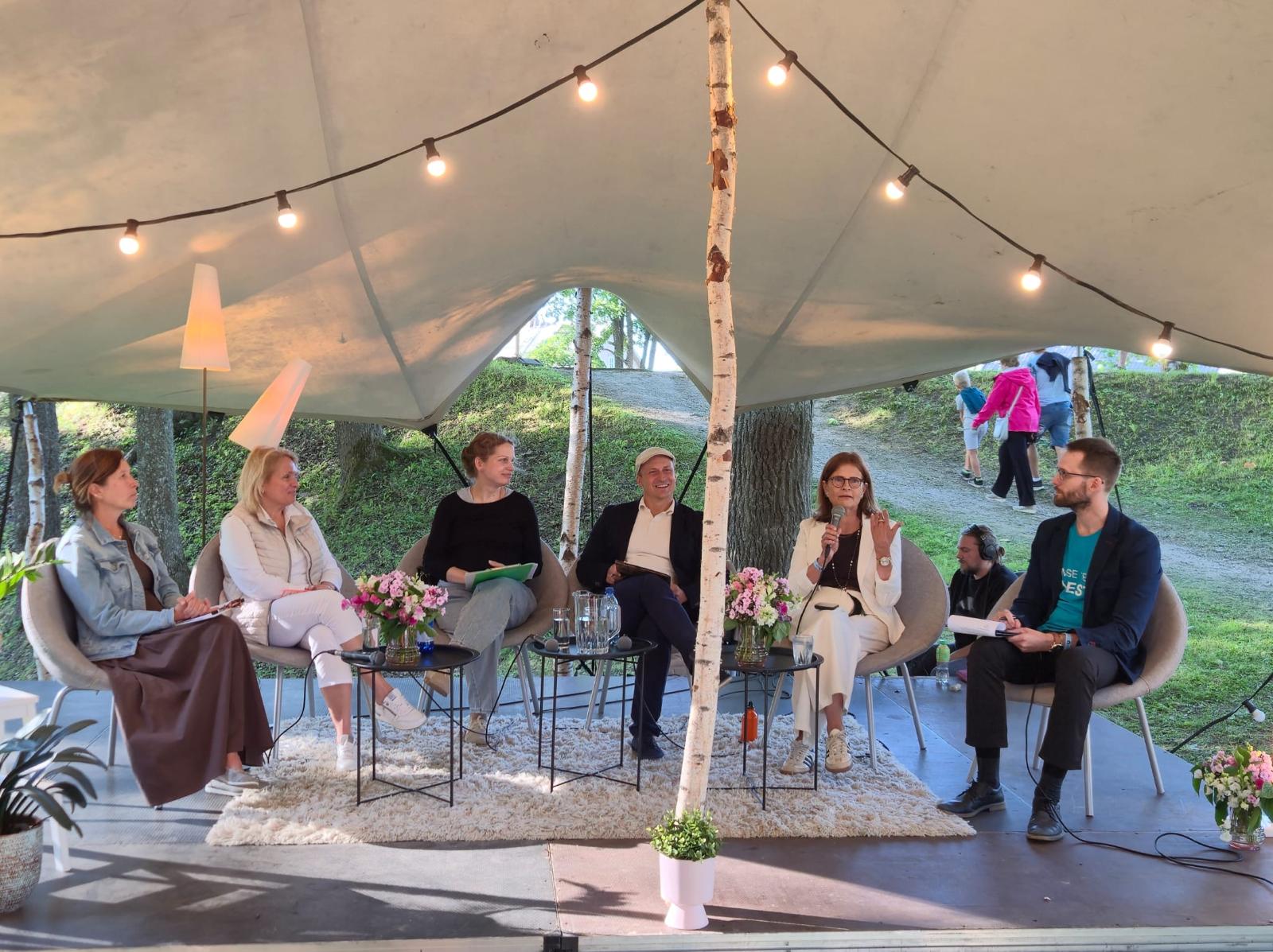
Panel discussion between (from left to right): Tiina Tõemets (public health adviser at the Association of Local Authorities of Harju County), Vanda Kristjan (general practitioner, board member of the Estonian Society of Family Doctors and head of its mental health working group), Liina Lepik (curator of education programmes at Kumu Art Museum), Mihkel Lees (Member of the Riigikogu and of Tartu City Council), Ülla-Karin Nurm (EUSBSR PA Health Coordinator and BSR Mental Health Platform Lead Partner), Martin Junna (moderator, Ruutu10)
Ülla-Karin Nurm put the case for treating creativity as a health behaviour in its own right. Research shows that creative activity improves brain function as well as mental and physical health, and that it can serve as a protective habit for mind and body. Her question to the audience was what would follow if making creativity part of a routine were regarded in the same way as exercising or eating well.
An opinion festival is a different setting from a policy webinar, and the value of Paide was the mix of people in the room. Interest came from healthcare, culture, local government and policymaking alike, and with it a willingness to consider what Arts on Prescription might look like in Estonia. The country already has a rich cultural infrastructure. The open question is whether it can be connected more deliberately to health and social care, and who takes the first step.

Additional links
details
-
Homepage
-
Project typeProject Platform
-
ImplementationJuly 2025 - June 2028
-
StatusOngoing
-
Contribution to EUSBSRPolicy Area Health

-
Target groups
- International governmental organisation
- National public authority
- NGO
- Regional public authority
-
Social media
-
Additional links
-
Tags