




From Waste to Wisdom: BALTIPLAST Final Conference Showcases Paths to Plastic Reduction in the Baltic Sea Region
18 December 2025
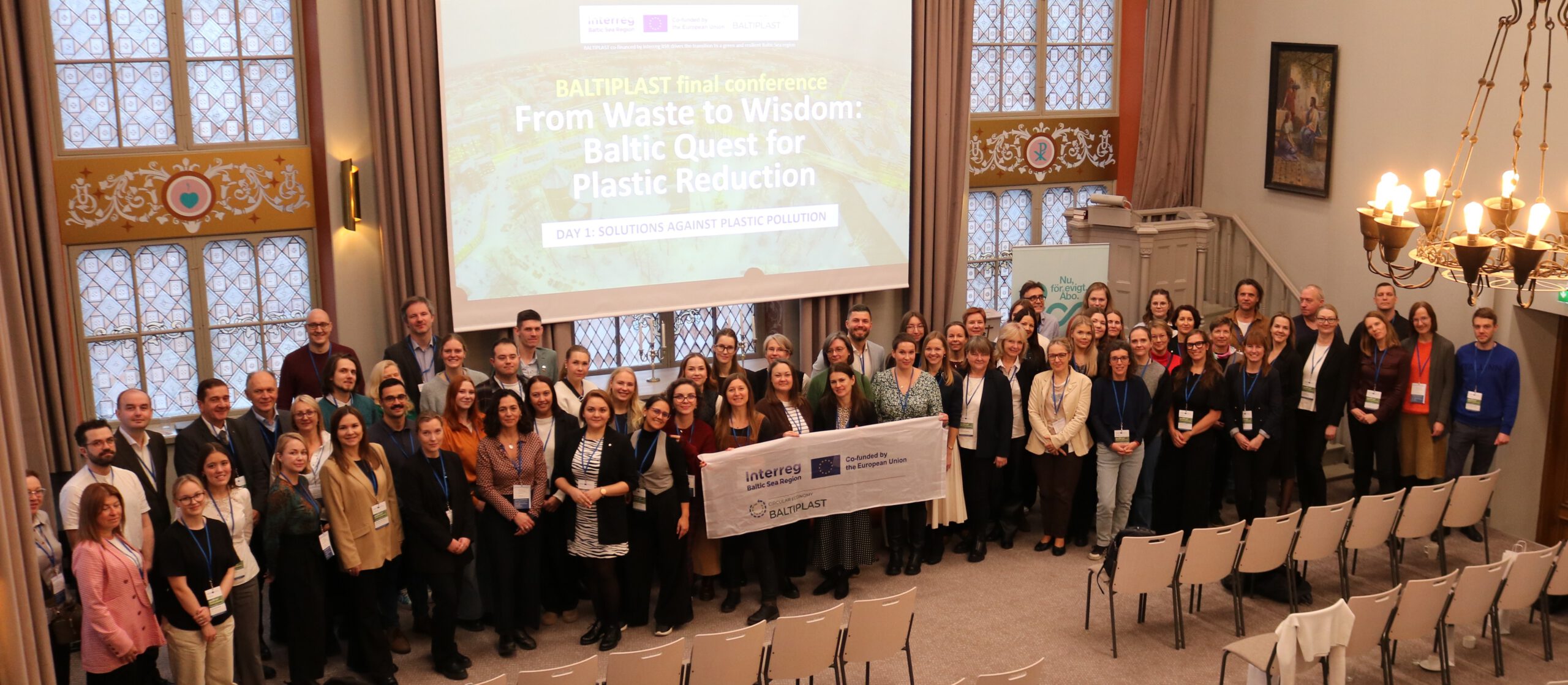
On 10–11 December 2025, the BALTIPLAST project concluded with its final conference in Turku, Finland, gathering a total of 76 participants from across the Baltic Sea Region. Participation was strongly interdisciplinary and cross-sectoral, comprising 23 representatives from universities and research institutions, 20 from local authorities, 12 from non-governmental organisations, 8 from international organisations, 6 from national and regional environmental centres, 5 from companies, and 2 from regional (country-level) authorities. Held under the title “From Waste to Wisdom: Baltic Quest for Plastic Reduction”, the conference marked a transition from project-level results toward their long-term uptake, sustained cooperation, and wider societal and policy impact.
From local action to regional ambition
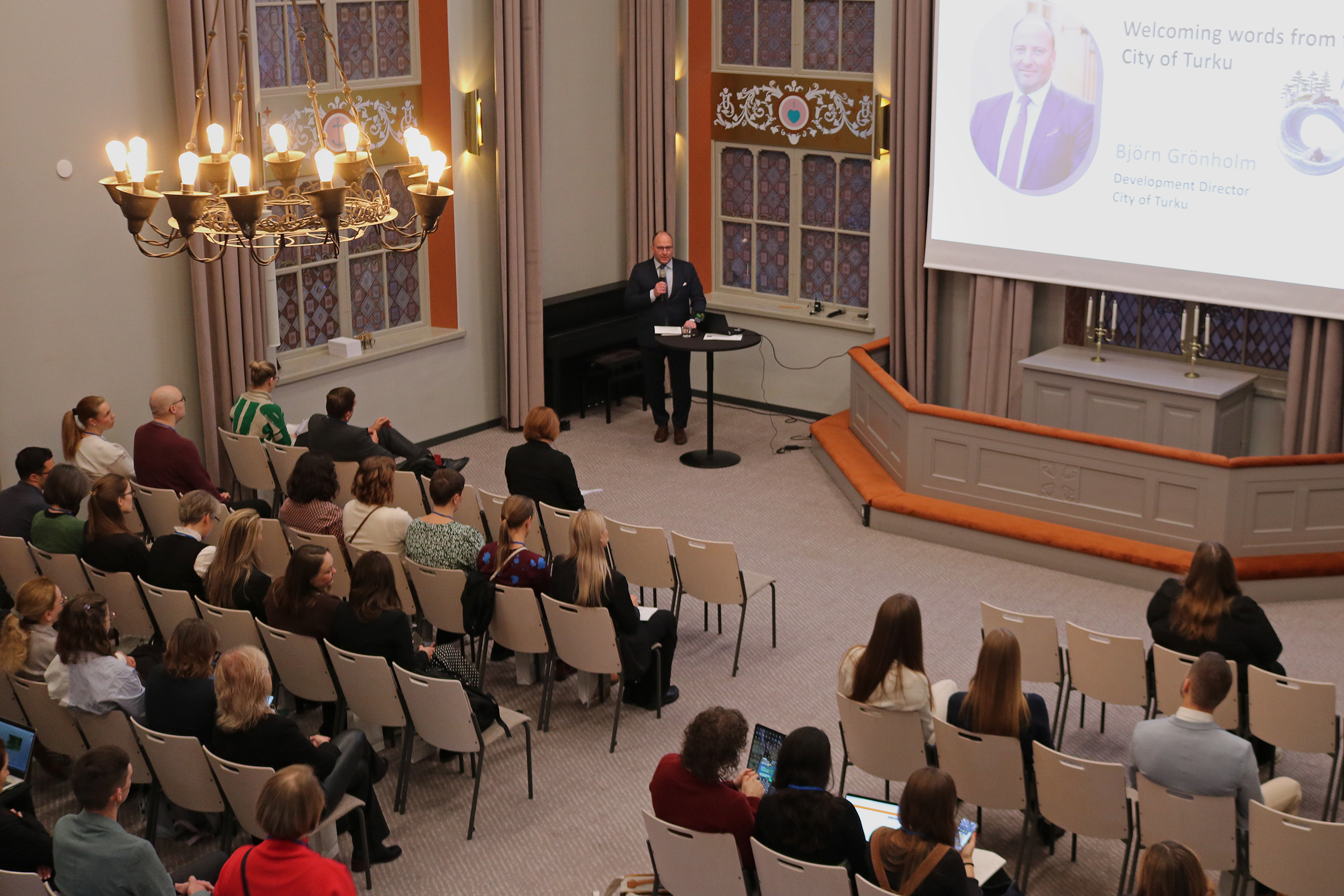
The conference opened with welcoming remarks from the City of Turku, highlighting the city’s ambition to achieve carbon neutrality by 2029 and the role of EU projects—BALTIPLAST among them—in accelerating this transition. Turku Science Park area was presented as a living laboratory for circular economy solutions, illustrating how cities can integrate plastic reduction into broader urban transformation agendas.
The BALTIPLAST coordination team outlined how the project translated circular economy principles into practical tools and strategies for municipalities, addressing plastic pollution not only as a waste issue, but as a systemic challenge spanning consumption, governance, and behaviour.
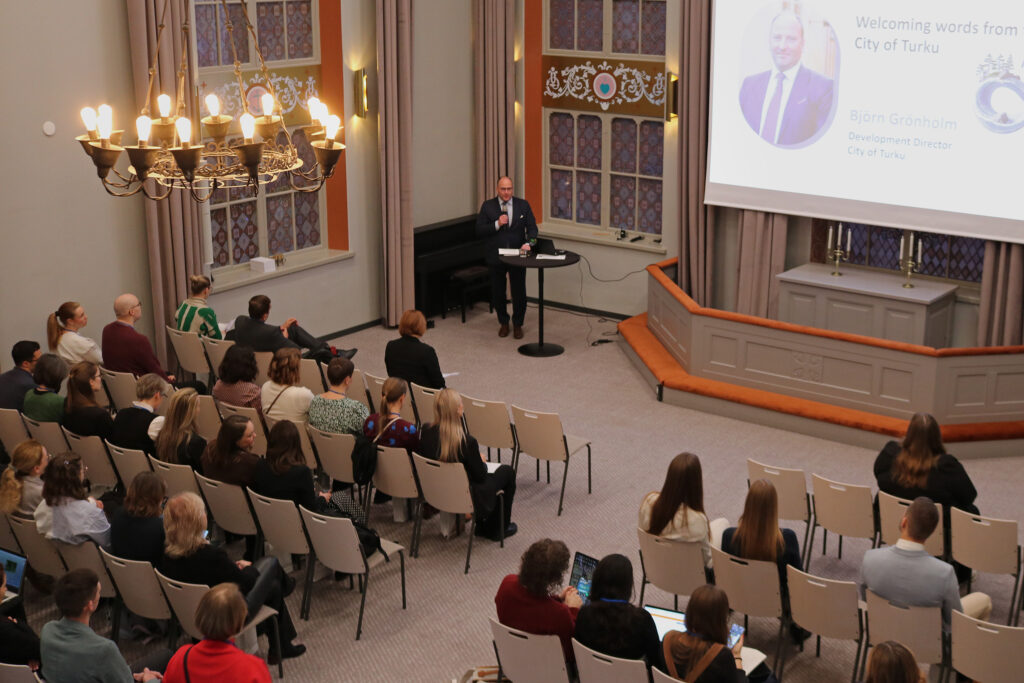
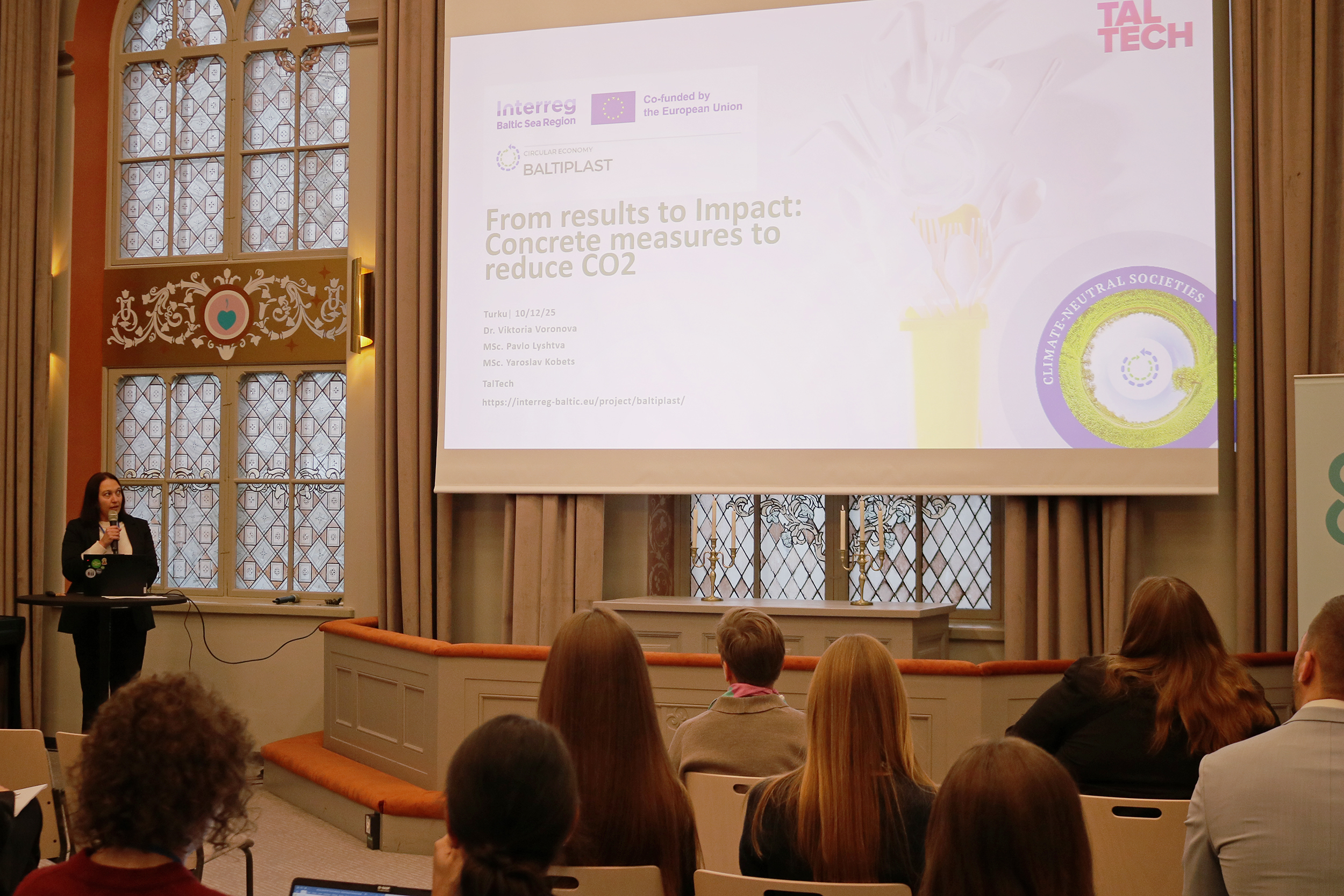
Björn Grönholm, Development Director, City of Turku delivering the presentation. Photo by Union of the Baltic Cities Sustainable Cities Commission.
Science, policy, and a shared vision
Scientific perspectives underscored the urgency of action. Experts highlighted the growing risks of plastic and microplastic pollution to ecosystems, biodiversity, and human health, stressing that technological solutions must be accompanied by policy pressure and accessible knowledge. At the same time, speakers called for a positive and forward-looking vision, emphasising that change accelerates when people can imagine a plastic-free future built on practical, achievable steps.
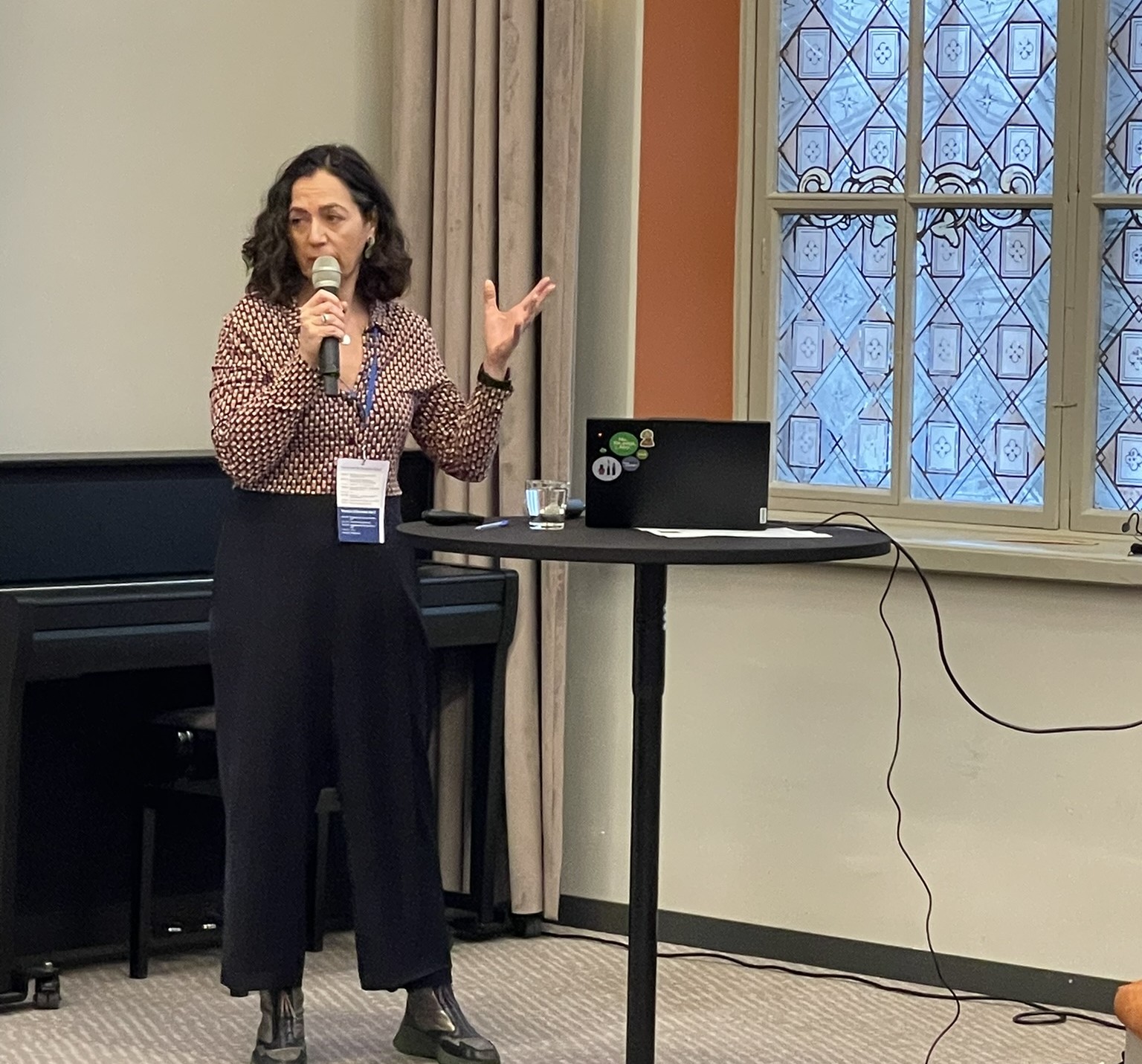
From a regional policy perspective, the representative from HELCOM Secretariat Marta Ruiz demonstrated how project-based experimentation feeds into regional frameworks, including the Baltic Sea Action Plan and marine litter action plans. BALTIPLAST was presented as a concrete example of how EU projects help test measures, close knowledge gaps, and support policy development.
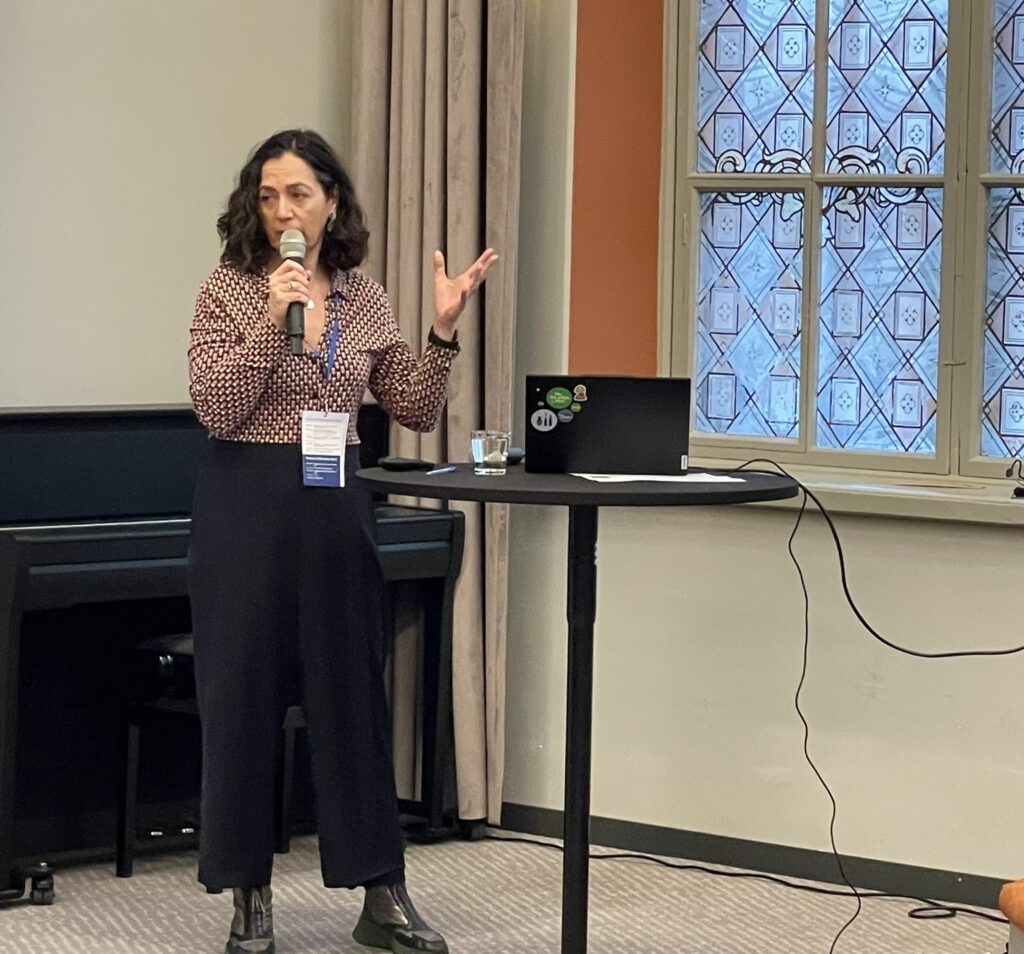
Marta Ruiz, Associate Professional Secretary, HELCOM Secretariat. Photo by Hamburg University of Applied Sciences.
Microplastics: science as a compass for action
Microplastics featured prominently in the conference discussions, grounding policy and municipal action in scientific evidence. Researchers from the Alfred Wegener Institute explained how microplastics interact with marine organisms, from adhering to algae surfaces to accumulating in digestive systems, causing cellular stress and posing risks to ecosystems and human health. The smallest particles were identified as particularly harmful due to their ability to penetrate biological barriers.
Science was also brought closer to practice through STEAM Turku’s microplastic research, where high school students presented findings from on-site investigations showing widespread plastic presence in marine organisms. This hands-on research not only reinforced the urgency of preventive action but also demonstrated how involving young people can strengthen environmental awareness and inspire future engagement in environmental protection.
Cities in the spotlight: strategies ready for take-up
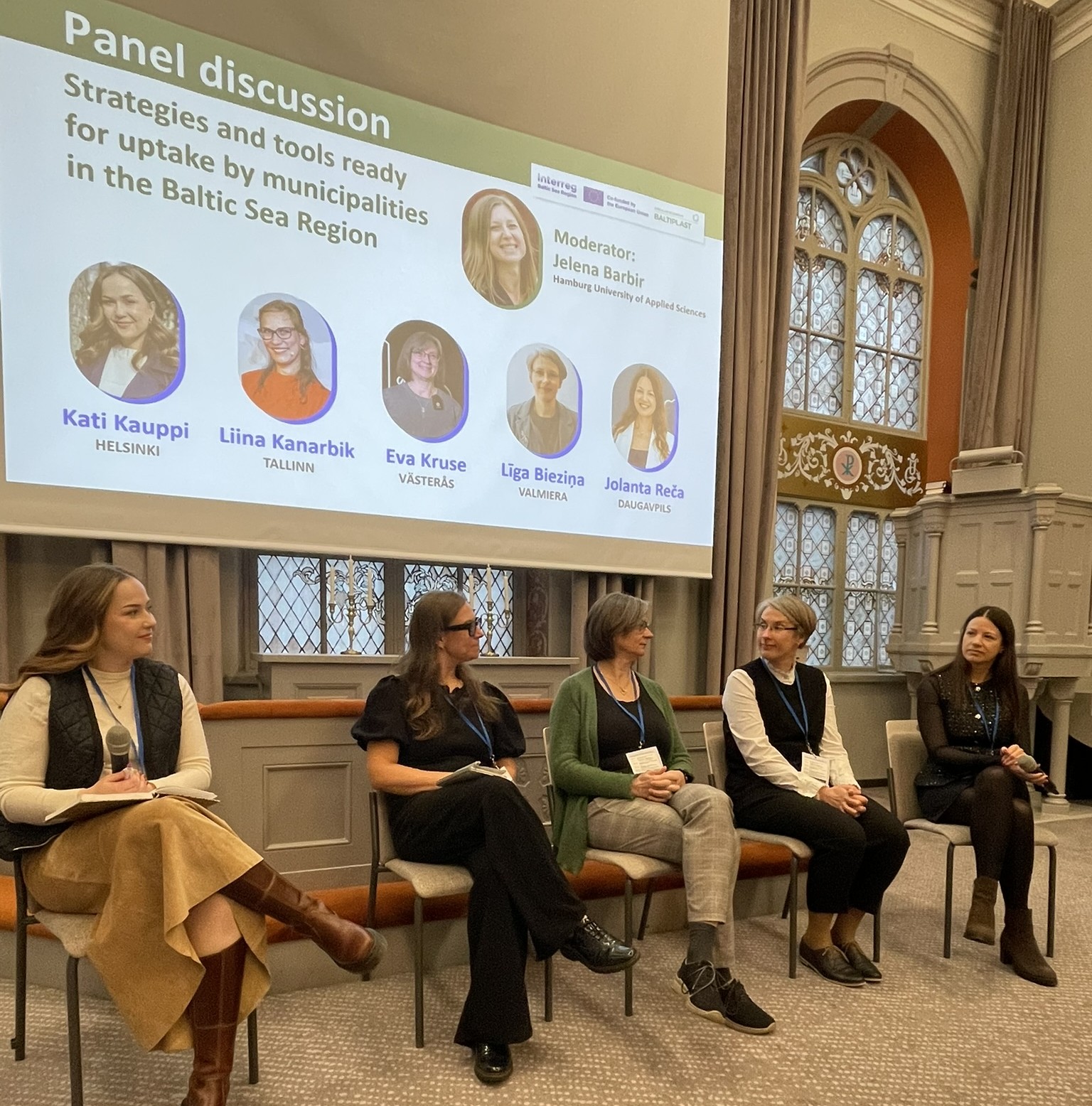
A central session of the first day focused on municipal experiences from Helsinki, Tallinn, Västerås, Valmiera and Daugavpils, with partner cities sharing how BALTIPLAST solutions were piloted and embedded locally. From sustainable event organisation and bans on single-use plastics to bottom-up governance approaches and measurable targets, the cities showed that plastic reduction is feasible without compromising service quality.
Key lessons emerged clearly: responsibilities must be clearly defined, communication with citizens matters, and peer-to-peer learning between cities accelerates progress. Several speakers emphasised that municipalities can act as frontrunners even when national regulations lag behind.
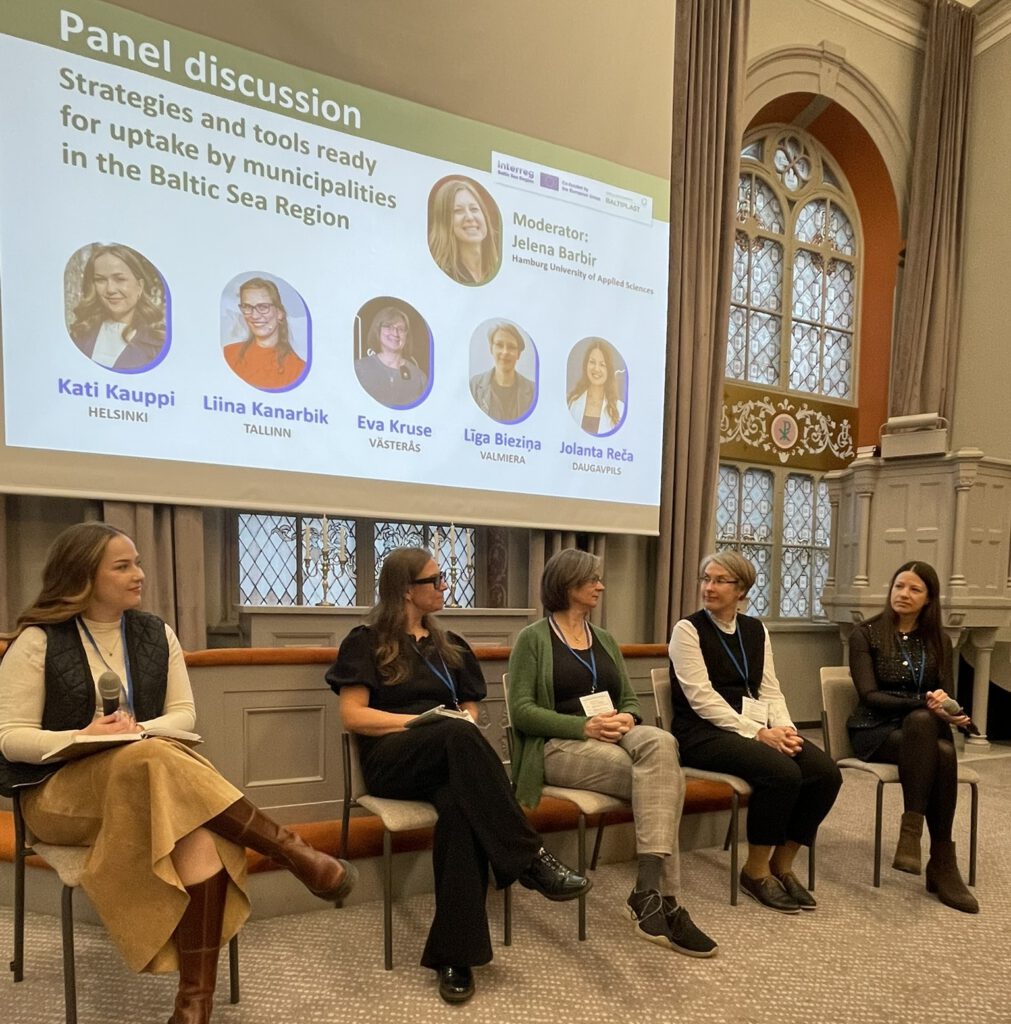
Partner Power: Panel discussion on results and lessons learned. Photo by Hamburg University of Applied Sciences.
Measuring impact and mobilising communities
The conference also demonstrated that plastic reduction delivers climate benefits. Results from CO₂ footprint calculations showed substantial emission reductions across municipal, business, school, and household pilots, reinforcing the link between plastic prevention and climate action.
Equally important was community engagement. Awareness-raising campaigns reached over 1.5 million people across seven countries, combining social media, local action days, and ready-to-use communication materials. These efforts highlighted that behavioural change requires both information and empowerment.
Acting together: EU projects and partnerships for a plastic-free Baltic Sea
A dedicated session highlighted how EU-funded projects reinforce each other’s impact by working as part of a wider ecosystem rather than isolated initiatives. Several projects—PlastLIFE, ChemClimCircle-2, REMEDIES, and CLEAN Beach—presented complementary approaches ranging from litter prevention and circularity to sustainable procurement, monitoring, and co-created prevention pathways. Together, they demonstrated how shared learning, aligned objectives, and coordinated experimentation accelerate progress towards a plastic-free Baltic Sea.
This message was further reinforced by Agnieszka Ilola from the Union of the Baltic Cities Sustainable Cities Commission, who highlighted the strategic role of transnational partnerships in unlocking innovation across the region. Drawing on three decades of the city network’s experience, she underlined how cities—supported by networks and EU cooperation—can drive systemic change through tools such as green public procurement, peer learning, and long-term collaboration.
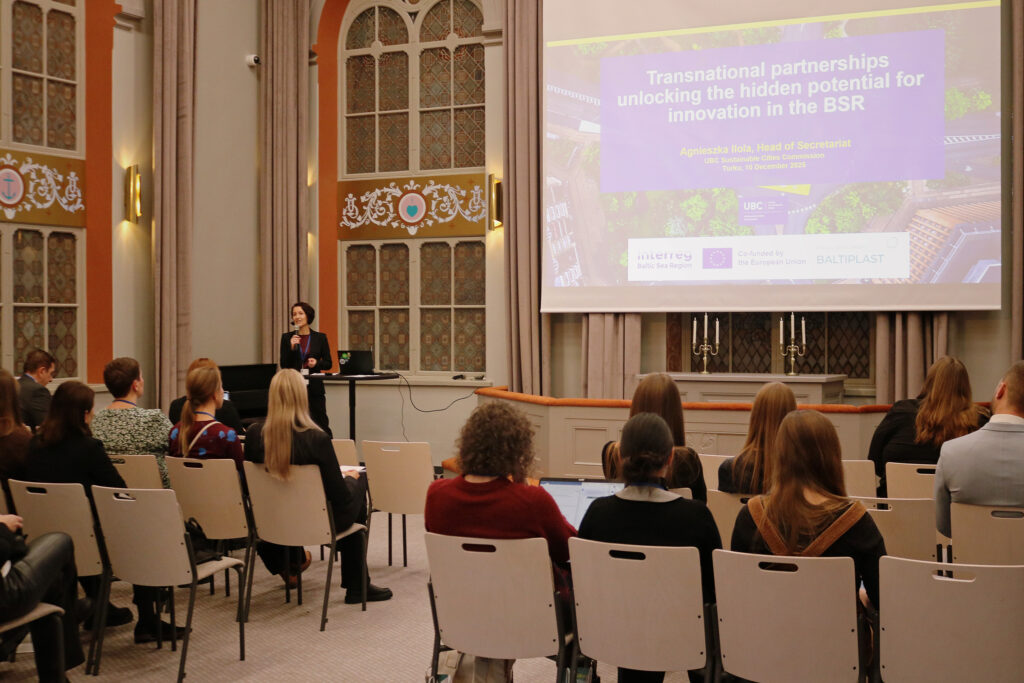
Transnational partnerships unlocking the hidden potential for innovation in the Baltic Sea Region, presented by Agnieszka Ilola, Head of Secretariat. Photo by Union of the Baltic Cities Sustainable Cities Commission.
The session confirmed that tackling plastic pollution at scale requires more than individual project success: it depends on strong connections between projects, cities, and networks, working together towards shared regional goals.
Overcoming barriers and strengthening capacities
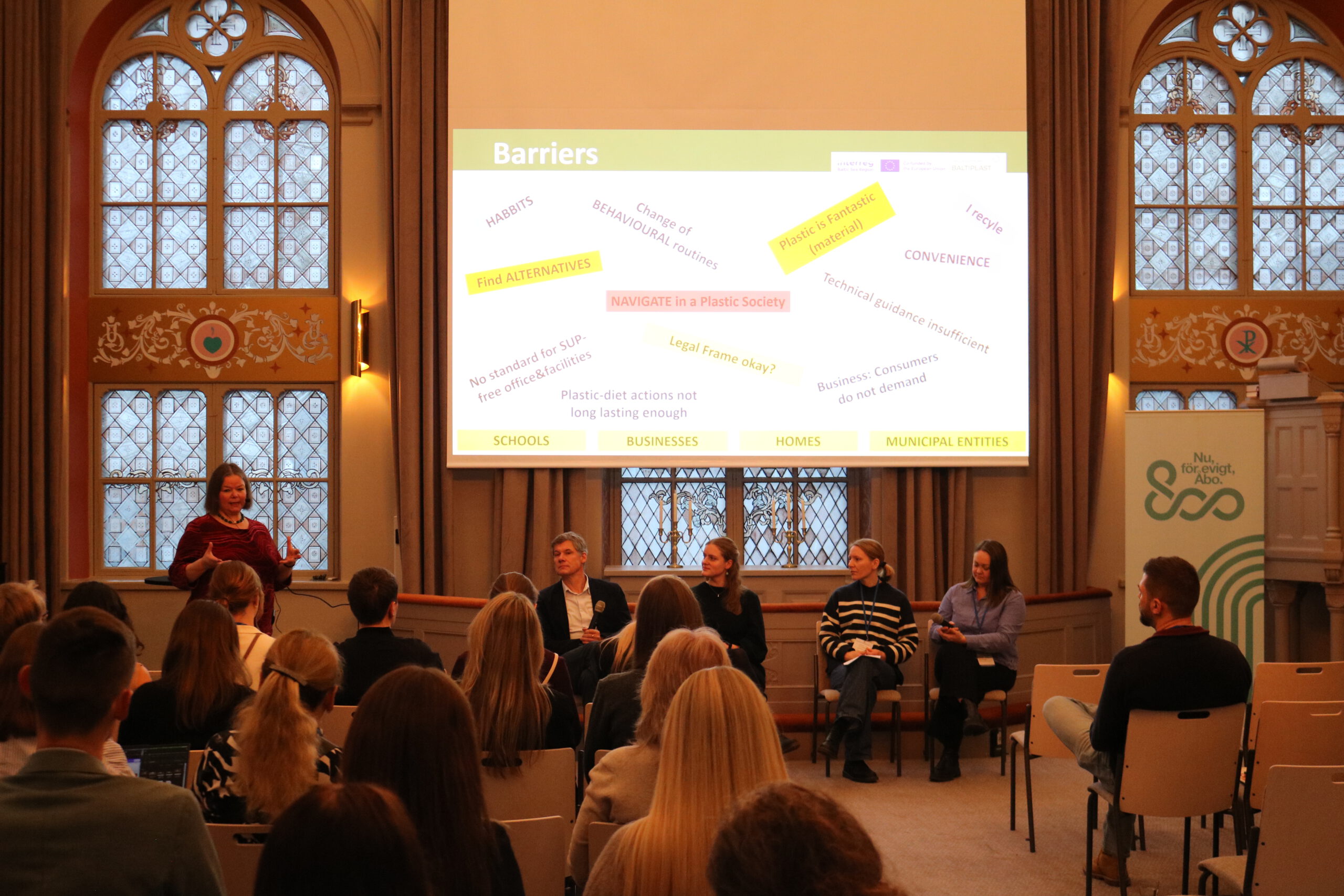
Day two shifted the focus from results to reflection. Panel discussions addressed the challenges of soft measures, noting that behavioural change is not purely rational but deeply emotional. Speakers stressed the importance of default sustainable choices, clearer responsibility for producers, and stronger application of the polluter-pays principle.
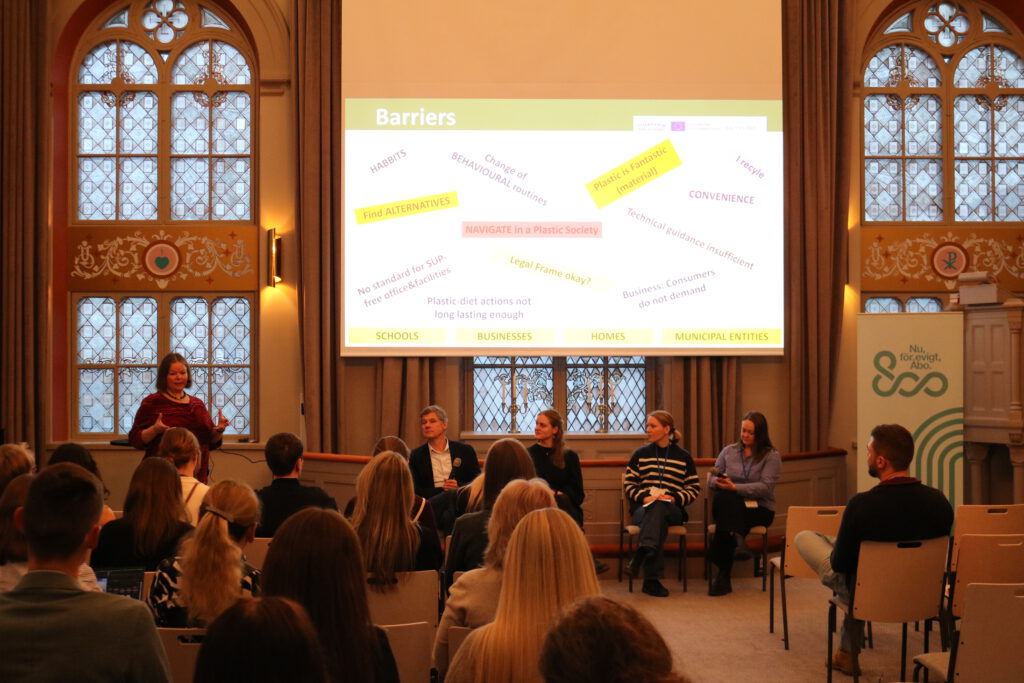
Panel discussion on soft measures for the reduction of single-use plastic. Photo by Union of the Baltic Cities Sustainable Cities Commission.
Practical guidance developed within BALTIPLAST, such as guidelines for sustainable events, was presented as “living documents” that evolve through testing and real-world use. Digital platforms and training materials further supported capacity building and long-term uptake beyond the project lifetime.
From project results to lasting cooperation
The conference concluded with site visits around Turku, offering participants the opportunity to experience circular economy solutions first-hand and continue discussions in a more informal setting.
The main highlight of the site visits was a guided tour of the Topinoja Waste Management Centre, a major waste management facility in the Turku region, showcasing Finland’s approach to the circular economy and recycling. The visit began with an environmental educator’s presentation on how waste—and particularly plastic—is recycled in Finland. A striking fact shared was that Finland pays €90 million annually in EU penalties for non-recycled plastic, emphasising the urgency of reducing plastic waste. The lecture sparked lively discussion among participants and highlighted how waste management centers also engage in environmental education for children and school groups, teaching proper sorting and recycling practices from an early age. Following the presentation, participants boarded a bus for a guided tour of the Topinoja sorting station, where they observed operations firsthand.
Another group went for a visit to the Ruissalo botanical garden, which operates as part of the University of Turku, offering a testbed for research and practice in increasing biodiversity and adapting to climate change, while also ensuring a high-quality water treatment performance, required by the plants under the garden’s care. The botanical garden spearheads activities on raising citizen awareness of possible threats to the ecosystem: often, man-made solutions can exacerbate the climate change risks, with tree-cutting leading to coastal erosion, or drying wetlands resulting in increasing forest fires. Environmental education in Finland starts early: the nature school is a core part of the education system, and pupils from grades 8-10 visit the garden several times a year to learn how to care for nature, properly recycle, and how to avoid producing plastic waste.
The university also runs a versatile laboratory on site, where different solutions are tested throughout the year, for example, microalgae research for treating nutrient-rich wastewater, which later allows reusing nutrients and solids as fertilising materials, the whole process neatly demonstrating circular economy in action.
Building on the discussions from the first day—particularly on pollution levels and the urgency of action—participants were also encouraged to spend time along Turku’s coastline and the Baltic Sea. This moment of reflection aimed to strengthen the personal connection to the marine environment and reinforce why preventive and systemic measures against plastic pollution are essential.
The final reflections emphasised that BALTIPLAST’s real legacy lies not only in tools and pilots, but in transnational partnerships, shared learning, and scalable solutions. As regulatory pressure increases and public awareness grows, BALTIPLAST leaves the Baltic Sea Region better equipped to move from isolated actions to systemic, cooperative plastic reduction—turning waste into wisdom for the future.



Additional links
details
-
Homepage
-
Project typeCore Project

-
ImplementationJanuary 2023 - December 2025
-
StatusCompleted
-
Contribution to EUSBSRPolicy Area Innovation

-
Target groups
- Interest group
- Large enterprise
- Local public authority
- NGO
- Small and medium enterprise
-
Social media
-
Additional links
-
Tags