




Knowledge Transfer Session Highlights Potential for Social Prescribing in Lithuania
05 January 2026
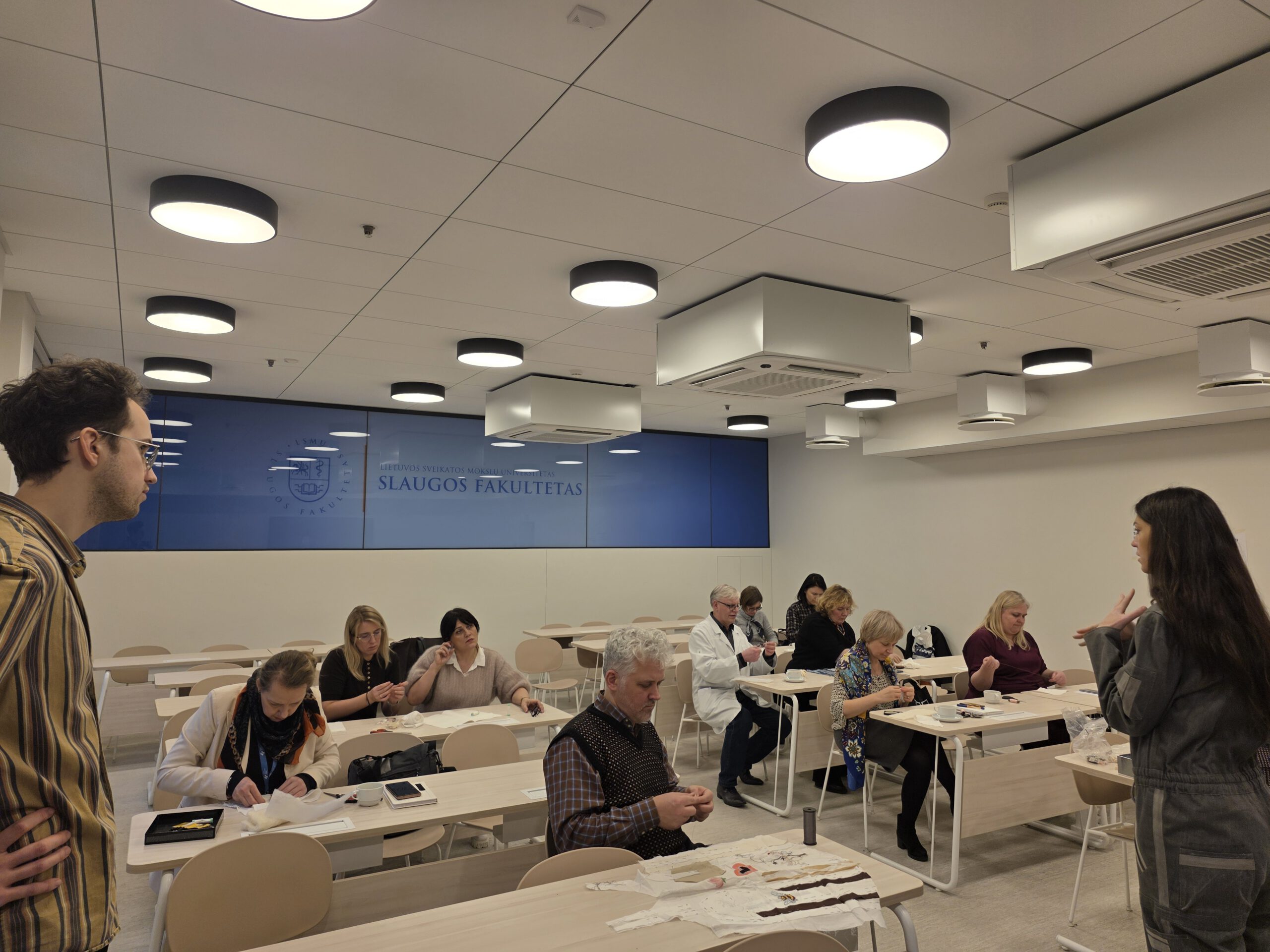
On 12 December, an #ArtsOnPrescription (AoP) knowledge transfer workshop organised by the Lithuanian University of Health Sciences (LSMU) brought together around 20 to 30 participants, primarily from the Department of Family Medicine at LSMU Kauno Klinikos and Kaunas Hospital of the LSMU. The session formed part of the Interreg BSR project Arts on Prescription in the Baltic Sea Region, in which LSMU is an active project partner.
The workshop aimed to familiarise participants with the AoP programme concept and methodology, explore effective opportunities for its implementation in Lithuania, and contribute to the development of a strategic framework for integrating social prescribing approaches into the country’s health and social care systems. For more information on the AoP concept, please visit the online Arts on Prescription Guide.
Following an informal welcome and opening introduction, the session provided an overview of the AoP project, its objectives, and its relevance within the broader context of health promotion and preventive care. Particular emphasis was placed on clarifying the distinction between the #ArtsOnPrescription approach and art therapy, underlining its non-clinical, community-oriented character.
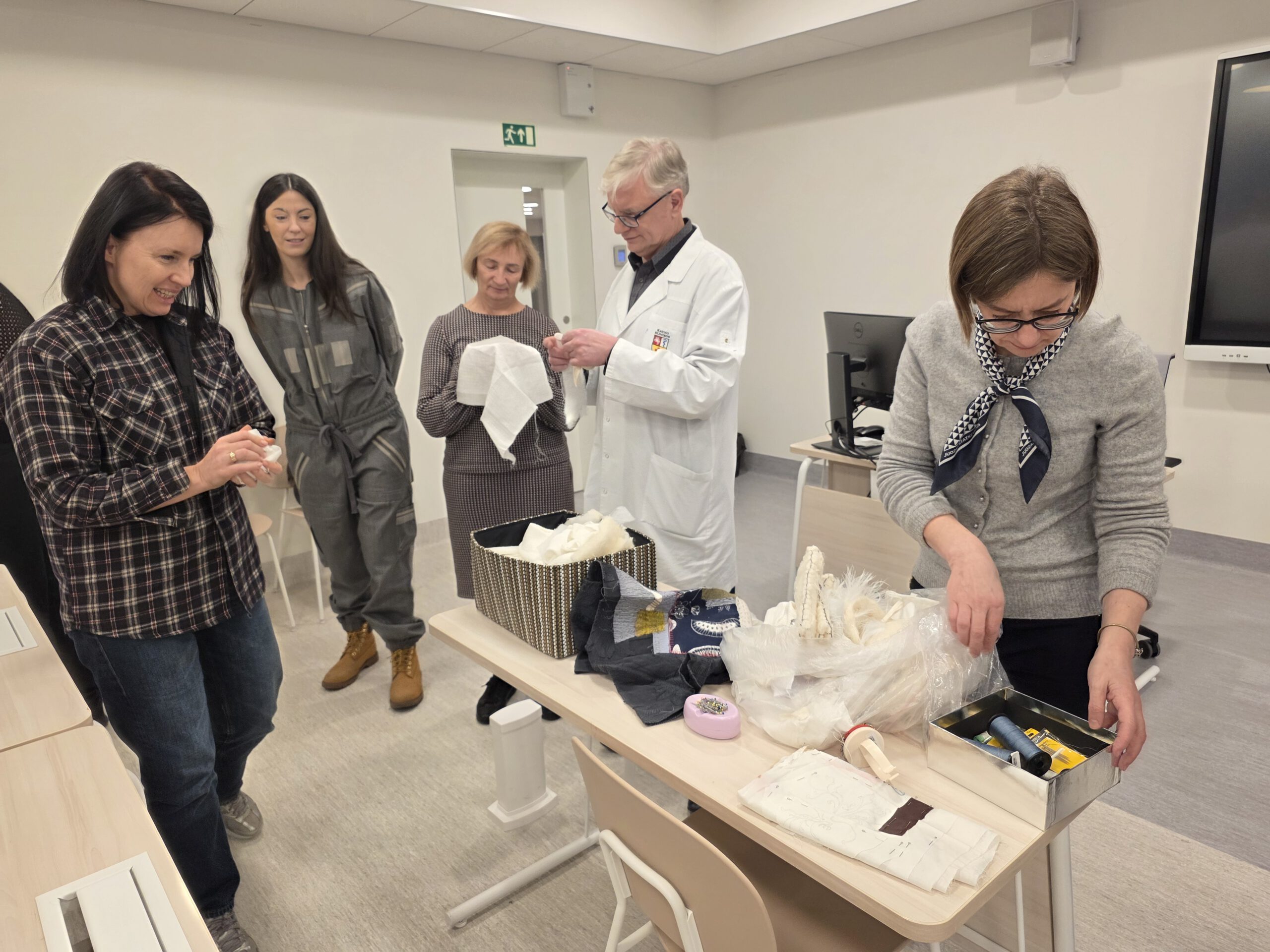
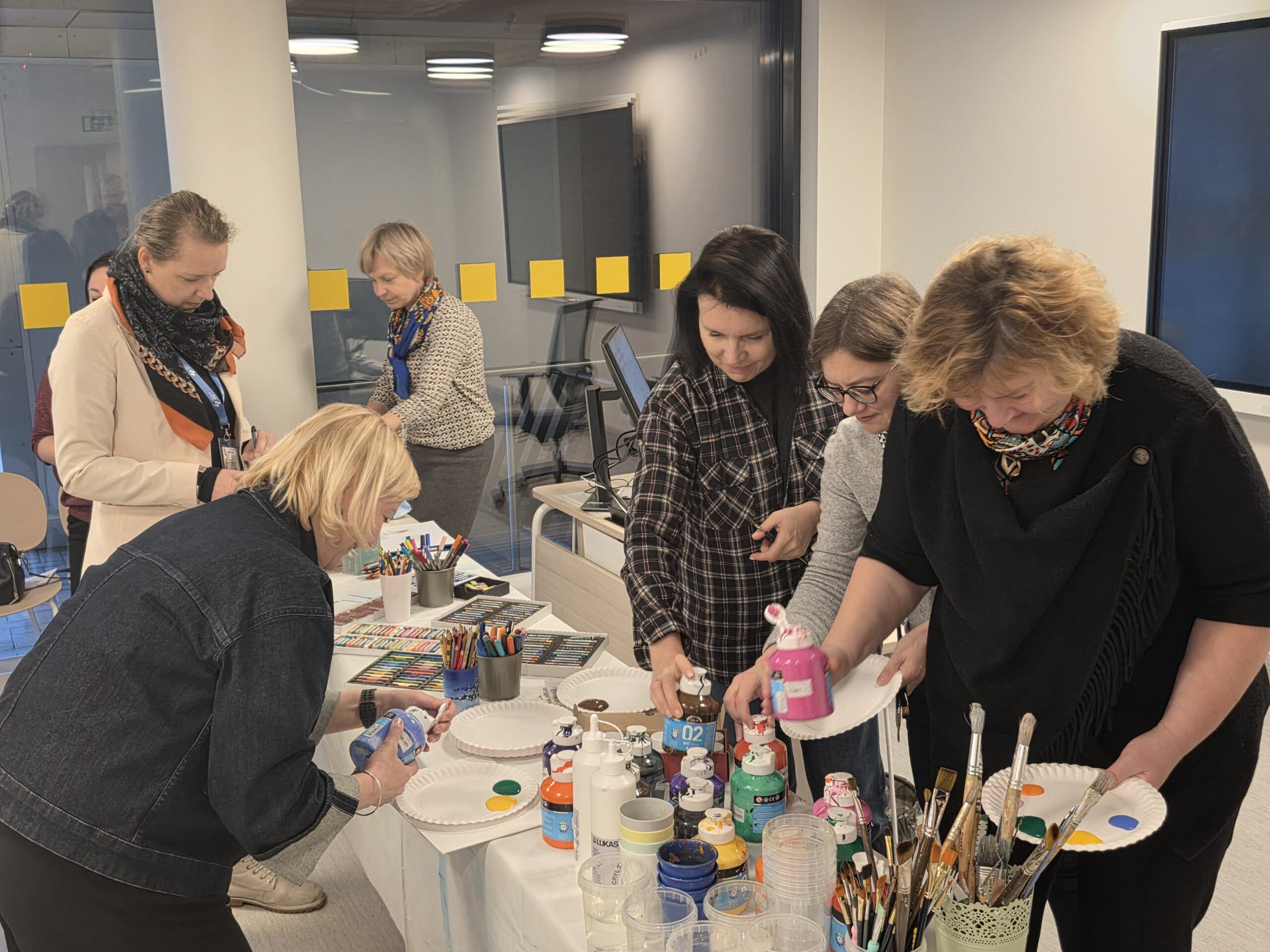
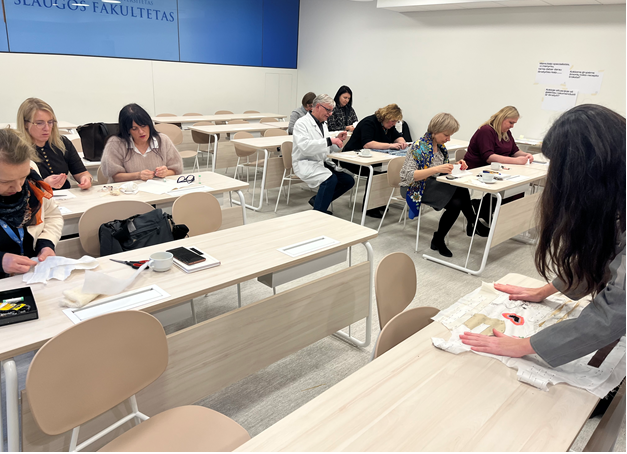
The first main session focused on experiencing artistic practice firsthand. Participants took part in practical workshops led by professional artists. Art therapist Aušra Sebeikaitė facilitated Draw Your Dream City, a creative exercise in which participants developed cityscapes reflecting their inner worlds and emotional states. Artist Olesė Kekienė led embroidery workshops designed to foster empathy and connection, either by continuing embroidery works started by mothers of seriously ill children or by creating original pieces.
Insights from the AoP project piloted by project partners in Denmark, Poland, Latvia, Germany and Sweden were subsequently presented, followed by a structured reflection on the outcomes of the artistic practice. In interdisciplinary discussions involving artists, doctors, occupational therapists, psychologists and social workers, participants reflected on methodological aspects, emotional impact and potential applications within healthcare and community settings. Many participants reported that the artistic activities enabled them to rest, reconnect with memories and experience a strong sense of immersion, noting that time passed quickly during the process. The activities were perceived as accessible and suitable for people with diverse personalities and life situations.
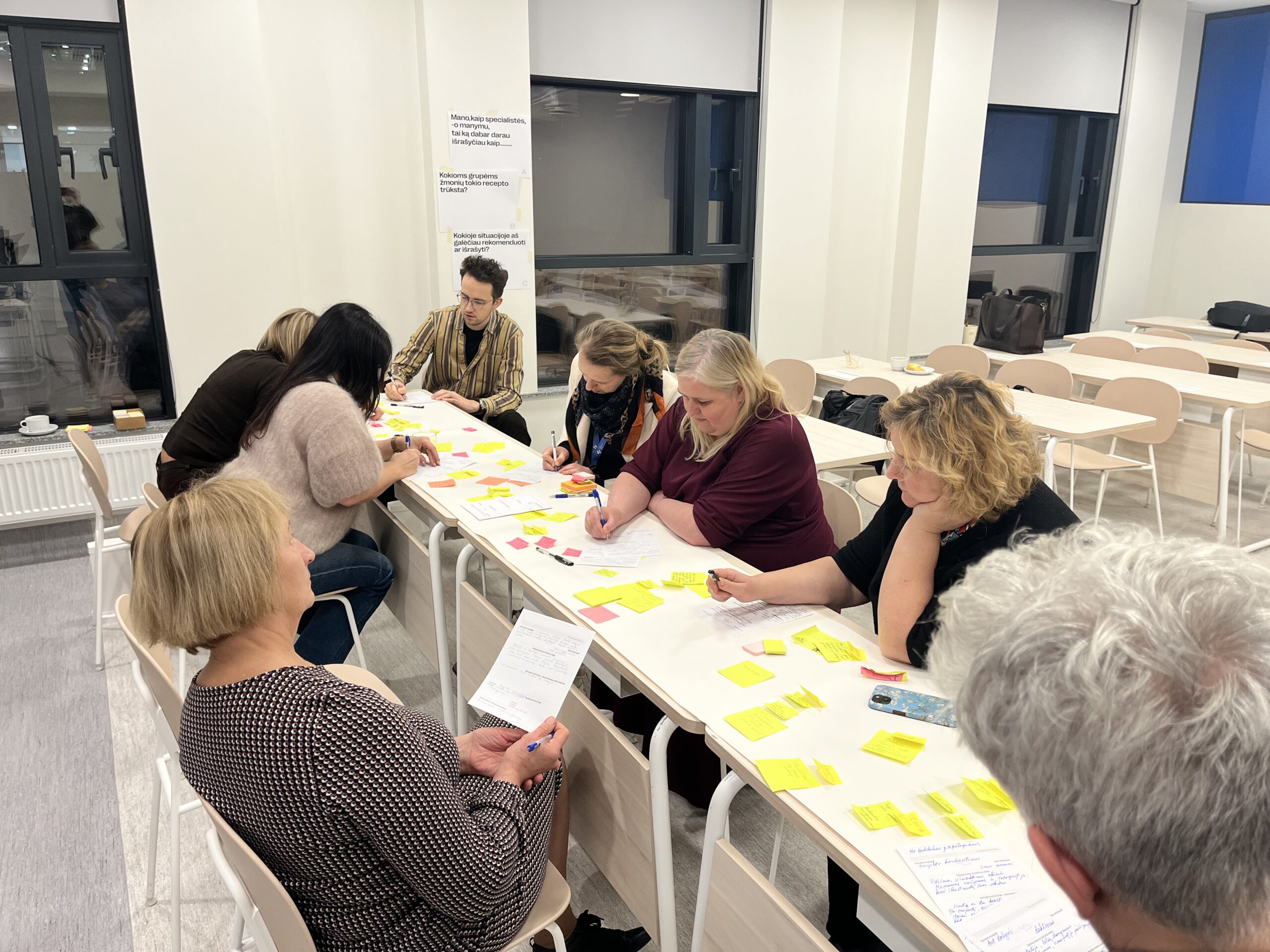
The second part of the workshop focused on co-creation. In a collaborative session, doctors and social workers explored the practical process of writing prescriptions, discussing who should act as prescribers, how referrals could be framed, and how AoP can be communicated without reinforcing stigma. Participants stressed the importance of avoiding therapy imagery and terminology, suggesting that invitations to participate should ideally come from trusted professionals or familiar community actors rather than being perceived as diagnosis or treatment.
The workshop confirmed the significant potential of #ArtsOnPrescription to help reduce emotional health burdens within the healthcare system. Artistic activities were described as creating safe spaces for individual and group experiences, supporting people of all ages in pausing, resting and transforming negative emotional states.
Key discussion outcomes identified several critical success factors for future implementation in Lithuania:
- Balancing quality and reach, ensuring meaningful impact for groups who would benefit most while maintaining accessibility;
- Funding sustainability, including the exploration of partnerships with businesses and NGOs through social responsibility and prestige-based models alongside public funding;
- Expanding the circle of prescribers, involving not only healthcare professionals but also social workers, community leaders and non-governmental organisations.
The session concluded with reflections and closing remarks, reinforcing the value of cross-sector collaboration and positioning #ArtsOnPrescription as a promising social prescribing approach at the intersection of health, culture and community well-being in Lithuania and the wider Baltic Sea Region.

Additional links
details
-
Homepage
-
Project typeCore Project
-
ImplementationJanuary 2023 - December 2025
-
StatusCompleted
-
Contribution to EUSBSRPolicy Area Health, Policy Area Culture

-
Target groups
- Local public authority
- National public authority
- NGO
- Regional public authority
-
Social media
-
Additional links
-
Tags