




CIRC-2-ZERO Project I Design Thinking Camp: Three Days of Insights and Innovation
25 February 2026
CIRC-2-ZERO Project I Design Thinking Camp: Three Days of Insights and Innovation
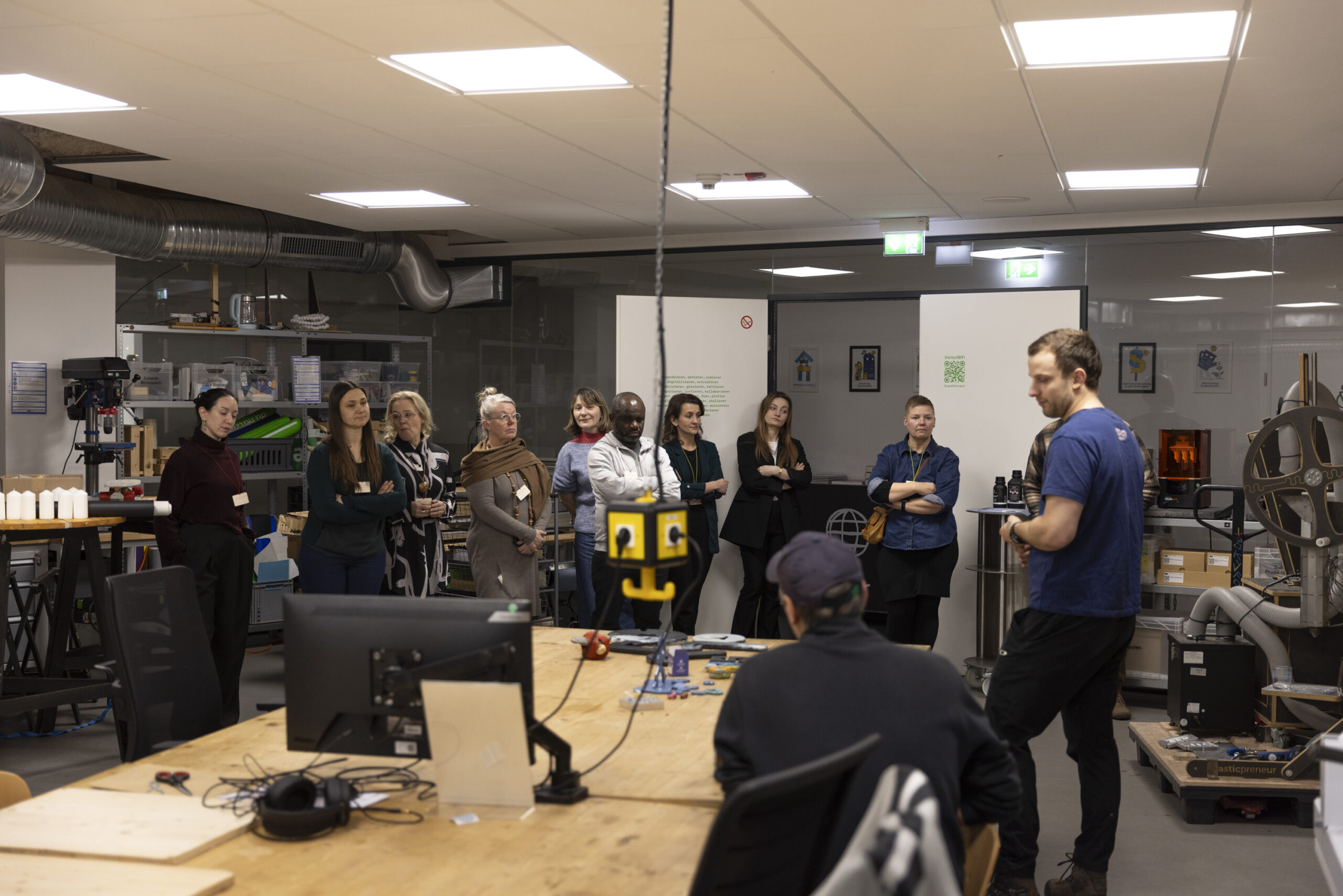
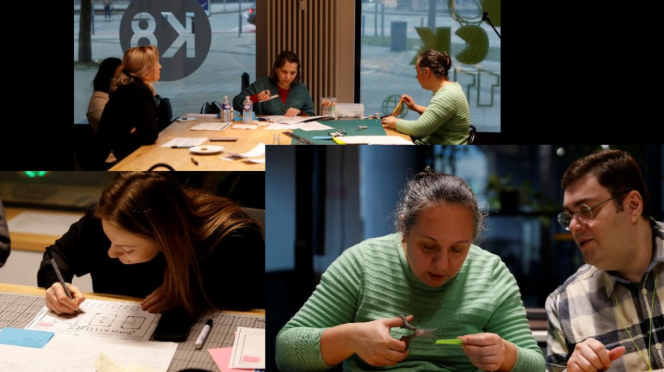
The first two CIRC-2-ZERO Design Thinking Camps (27.-29. January 2026), organized by the project partners K8 and HBKsaar, brought partners together in Saarbrücken, Germany. These intensive three-day camps focused on shaping the Digital Twin Demo Platform (DTDP) and building a shared foundation for the project’s next development steps. Across the camps, participants collaborated on persona development, indicators, user stories, and early prototypes gradually narrowing the uncertainties and moving toward a clearer project vision.
The objective of the two camps where:
I Desing Thinking Camp – DTDP Module 1: Circular Product Design
- to co-create decision-support requirements
- to translate sustainability indicators into implementable platform logic and scenarios
I Design Thinking Camp – DTDP Module 1: Platform Requirements
- collaboratively design the platform’s requirements
- develop a common understanding of DTDP functionality and how users are interacting with it
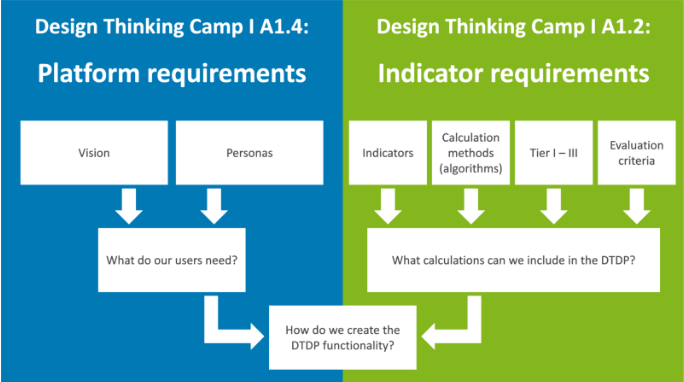
Through all three days, participants were working to answer the two key questions: What do user’s needs does the Digital Twin Demo Platform fulfil? What indicator calculations can we include in the Digital Twin Demo Platform? Below is a recap of what happened and what the consortium achieved.
Day 1 – Laying the Foundations
The workshop began by clarifying its goals and structure, introducing the Cone of Uncertainty to show how the team will narrow unknowns throughout the process. Participants reviewed agile development principles, guided by a four-step cycle – Discover, Decide, Deliver, Demo – which was used throughout both Design Thinking Camps.
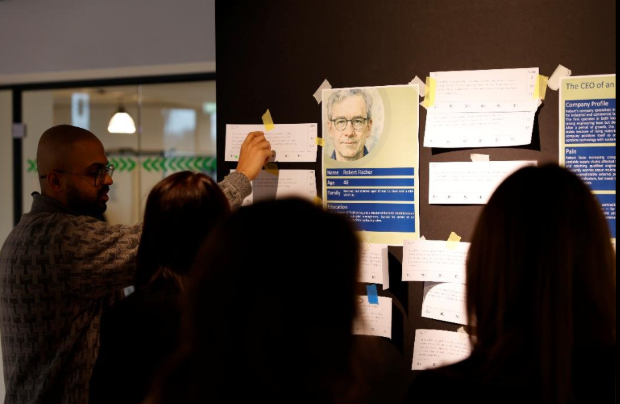
The group revisited and refined the project vision, noting that some topics may need further discussion. All five personas were updated with new insights. One persona was changed quite significantly, as the existing one represented our target companies, but would not likely be part of a user group. Instead, a tiny-company-persona was introduced which represents companies from freelancers to a low number of employees. The day ended with an in-depth session on energy indicators, covering concept tiers, identifying key indicators for the DTDP, and discussing how to translate them into value for companies.
Day 2 – Indicators, Personas and User Stories
The second day began with energising improv and storytelling exercises to boost creativity before jumping into the technical sessions. Participants then explored economic indicators, discussing data availability and cybersecurity challenges especially when connecting the DTDP to ERP (Enterprise Resource Planning) systems. A later session focused on circularity indicators and how to explain them effectively. Throughout these sessions, the team used the Nominal Group Technique, combining individual reflection, group discussion, and voting, which became increasingly efficient as the day progressed.
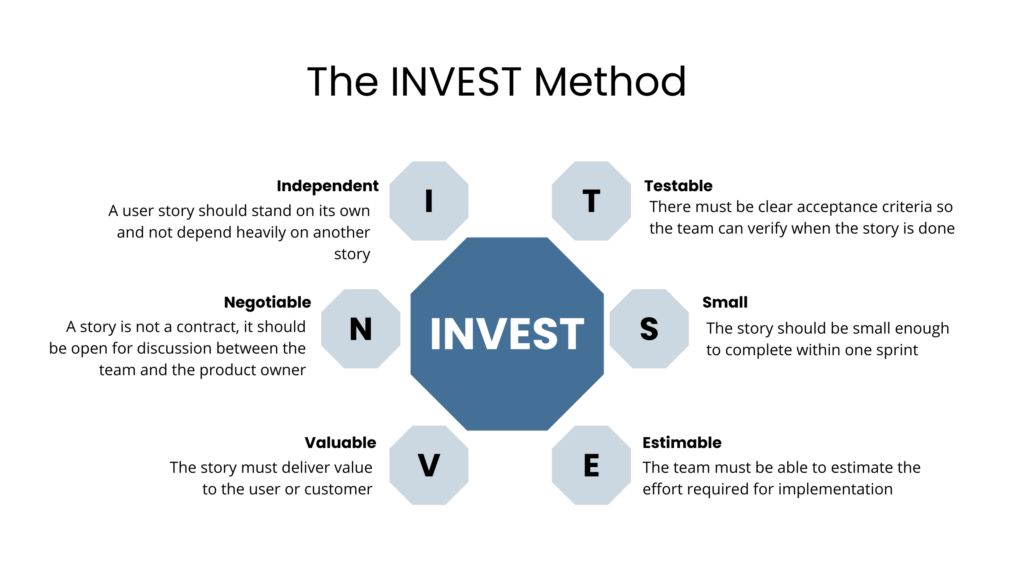
Personas were refined again, and a sixth persona was added. Using the INVEST method, the group consolidated and improved user stories, ending with a focused set of around 20 stories to guide development. With the help of INVEST methods user stories can be written clearer and more actionable. Also, it helps to reduce misunderstandings, improve sprint predictability and deliver real user value in small, validated increments.
Day 3 – From Concept to Prototype
Third day focused entirely on turning concepts into paper prototypes. Working in their groups from the previous day, participants created sketches, mock-ups, visual materials, and even a short film to bring their ideas to life. A journalist from Saarländischer Rundfunk documented parts of the process for an upcoming feature. Due to scheduling constraints, four out of five groups were able to present their prototypes, with the fifth presentation planned for a later consortium meeting.
In the afternoon, six external experts joined the session, representing fields such as circular construction research, transnational education, vocational training, government innovation, and circularity journalism. After a brief introduction to the project, groups presented prototypes covering:
- Value creation
- Technical workflow
- User experience
- Business and sales pitch
The guest experts provided insightful feedback, particularly on value creation, data interpretation, and how the prototypes could translate into real-world applications.
The Camps Key Takeaways
The Design Thinking Camps were intense and very productive. Despite the demanding schedule, participants felt the progress exceeded expectations. Key outcomes included:
- Successful paper prototypes, which now need to be combined into one concept.
- Indicators could be narrowed down efficiently.
- Value creation and data interpretation will be central in the next phase.
- Further clarity is needed on the platform’s value proposition, IT architecture, UI design, and user engagement.
With clear next steps, consortium partners look forward to continuing the work in Tallinn in the next Design Thinking Camps in the beginning of March.

Additional links
details
-
Homepage
-
Project typeCore Project
-
ImplementationMarch 2025 - February 2028
-
StatusOngoing
-
Contribution to EUSBSRPolicy Area Innovation

-
Target groups
- Business support organisation
- Higher education and research institution
- Large enterprise
- Small and medium enterprise
-
Social media
-
Additional links
-
Tags