




Słowiński National Park Wetlands (Poland)
07 September 2026
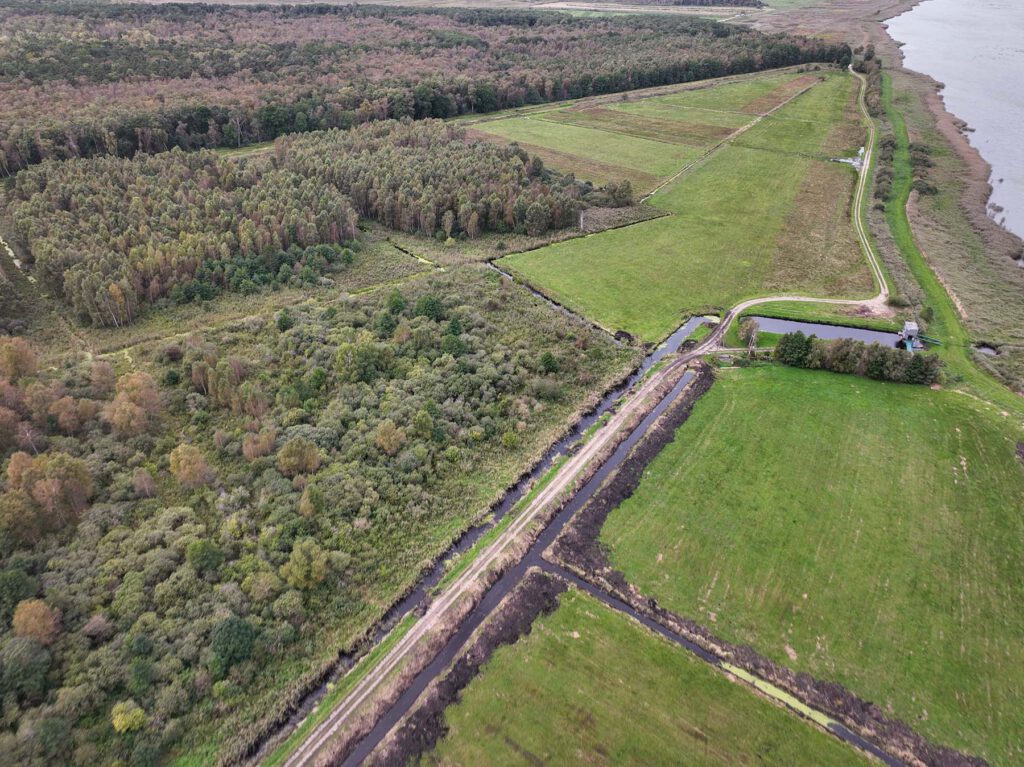
Polders are low-lying area surrounded by embankments that can temporarily store water during periods of high flows. Photo: Słowiński Biopshere Reserve
Key Focus
Water retention, flood protection, biodiversity enhancement, and nutrient capture through multifunctional wetlands.
Description
The Słowiński National Park Wetlands learning site is located within the Słowiński Biosphere Reserve on Poland’s Baltic coast. The site demonstrates how wetlands, floodplains, polders and nature-based water management measures can work together to improve climate resilience, reduce flood risks, enhance biodiversity and improve water quality. The learning site includes areas along the Łupawa River and the Gardno Lake floodplain in the Smołdzino Municipality.
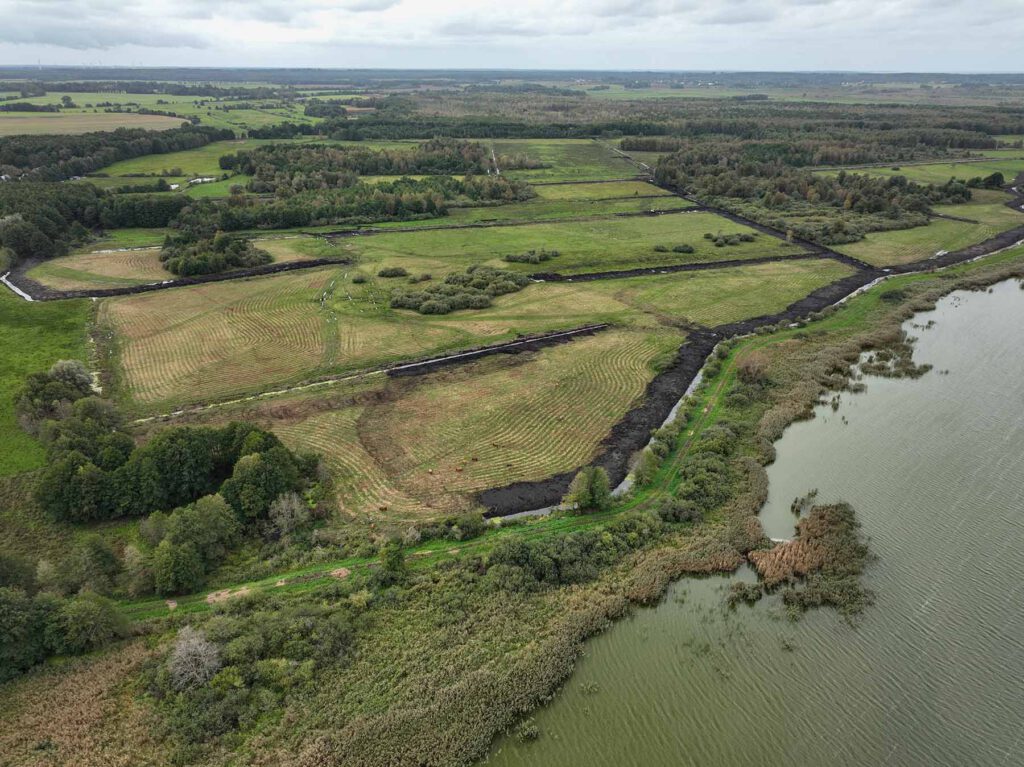
Polders in Słowiński National Park. Photo: Słowiński Biopshere Reserve
Restoring Natural Water Dynamics
For decades, many wetland areas around the Baltic Sea were modified through drainage systems, embankments and regulated waterways. At Słowiński National Park, efforts are focused on restoring more natural hydrological processes by slowing water flows, reconnecting floodplains and increasing the landscape’s capacity to retain water.
By holding water in the landscape for longer periods, wetlands help reduce peak flood flows during heavy rainfall while maintaining moisture during periods of drought. This strengthens both ecosystem health and climate resilience.
Polders as Natural Water Storage Areas
An important feature of the learning site is the use and management of polders. A polder is a low-lying area surrounded by embankments that can temporarily store water during periods of high flows.
Traditionally, polders have been used for agricultural purposes, but they can also function as nature-based flood management systems. During periods of intense rainfall or elevated water levels, water can be retained within the polder area rather than rapidly flowing downstream. This reduces flood risks while creating valuable habitats for wetland plants, birds, amphibians and aquatic species.
Around Gardno Lake, the project explores how polders can contribute to both water management and biodiversity conservation by creating dynamic wetland environments that support a wide variety of species.
Re-naturalising Rivers and Wetlands
The learning site highlights ongoing efforts to improve ecological connectivity in and around the Łupawa River valley. Restoration measures include supporting natural river processes, improving floodplain functions and promoting habitats for fish and other aquatic organisms.
Field visits and educational activities allow visitors to explore examples of river re-naturalisation and observe how healthy wetlands contribute to cleaner water, richer biodiversity and greater resilience to climate change.
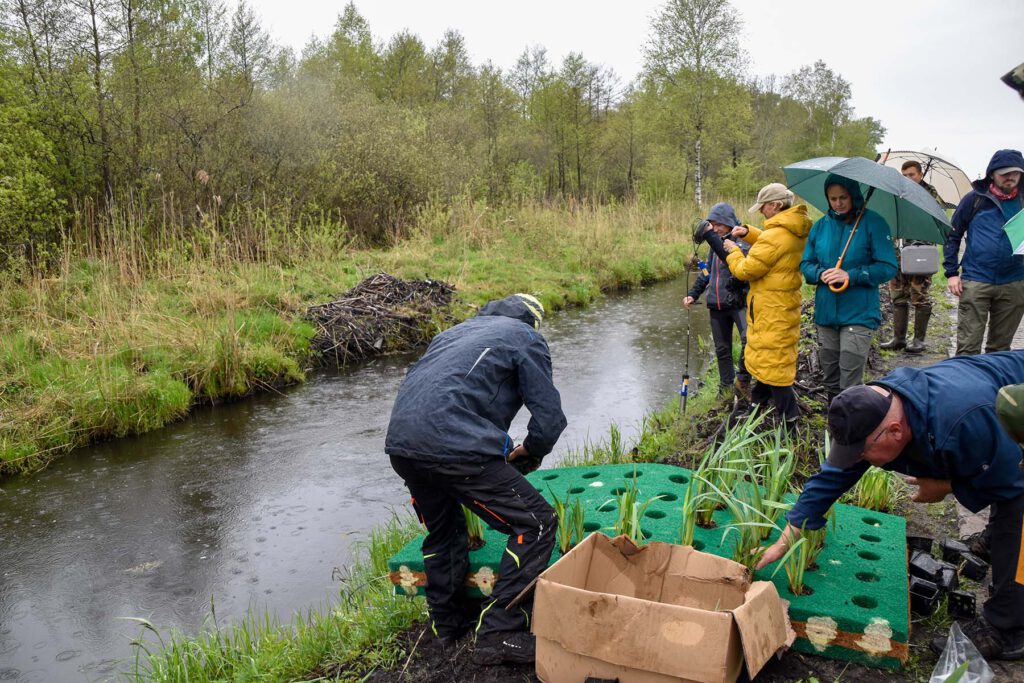 Preparation of floating Islands. Photo: Maja Zamęcka
Floating Islands for Water Quality Improvement
A new element of the learning site is the installation of floating islands in drainage channels and wetland waters. These floating structures support wetland vegetation while floating on the water surface.
The plant roots extend into the water, where they absorb excess nutrients such as nitrogen and phosphorus. This helps improve water quality and reduces nutrient leakage to downstream ecosystems and ultimately the Baltic Sea. The root systems also create habitat for aquatic invertebrates, fish and microorganisms, increasing biodiversity within the wetland.
The floating islands serve as a practical demonstration of how nature-based solutions can combine nutrient capture, habitat creation and water purification in a single intervention. They also provide a valuable educational tool for visitors, students and local stakeholders.
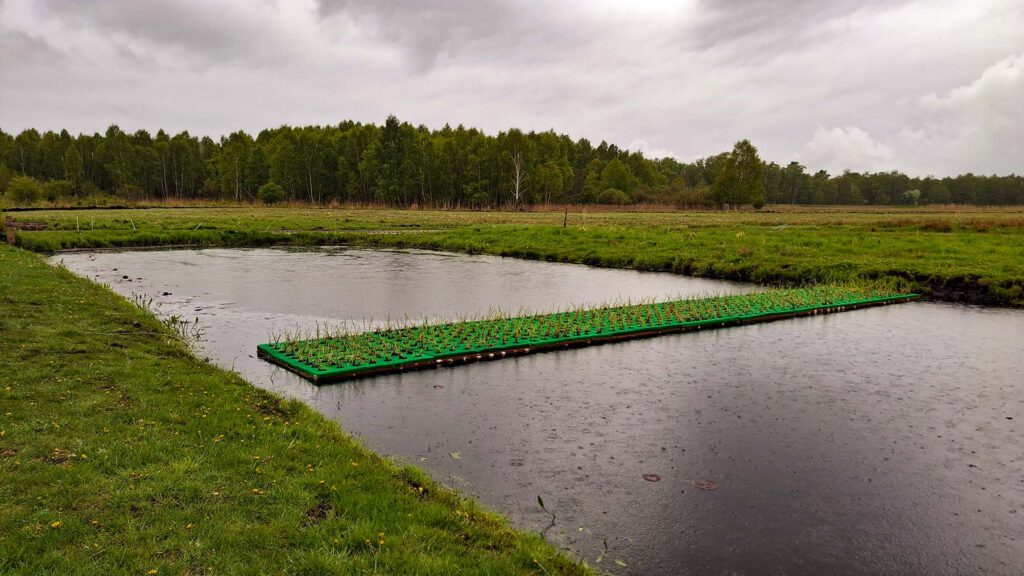
Installed floating ilands in Słowiński National Park. Photo:Małgorzata Lange
A Living Laboratory for Learning and Research
The learning site serves as a platform for collaboration between municipalities, universities, environmental authorities and local communities.
Through workshops, field excursions and monitoring activities, participants gain hands-on experience with wetland restoration, water management and ecosystem protection. Collaboration with the Pomeranian University in Słupsk and the University of Gdańsk supports research, environmental monitoring and student involvement in restoration activities.
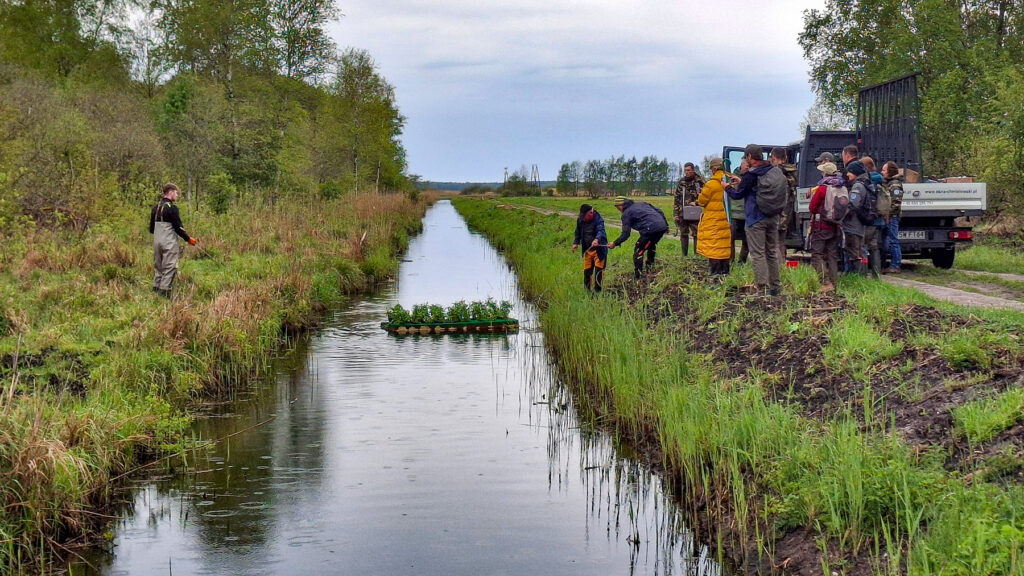
The installation was carried out as part of a field-based learning activity, bringing together participants for an educational experience in the landscape. Photo: Małgorzata Lange
Location
The learning site consists of three wetland areas within Słowiński National Park and the Słowiński Biosphere Reserve.
Łupawa River, Smołdzino Municipality (existing NBS)
54.660372, 17.215675
Gardno Lake floodplain, Smołdzino Municipality (existing NBS)
54.662724, 17.156013
Gardno Lake floodplain, Retowo, Smołdzino Municipality (new NBS)
54.629930, 17.110104
Partner
Słowiński National Park / Słowiński Biosphere Reserve
Learn More
https://spn.gov.pl/
https://en.unesco.org/biosphere/eu-na/slowinski

Interactive map showing pilot locations. Use the arrow keys to move the map view and the zoom controls to zoom in or out. Press the Tab key to navigate between markers. Press Enter or click a marker to view pilot project details.
Additional links
details
-
Homepage
-
Project typeCore Project

-
ImplementationNovember 2023 - October 2026
-
StatusOngoing
-
Contribution to EUSBSRPolicy Area Nutri

-
Target groups
- Higher education and research institution
- Interest group
- Local public authority
-
Social media
-
Additional links
-
Tags