




Pilot 4: Skovgaard Gods, Denmark
01 September 2026
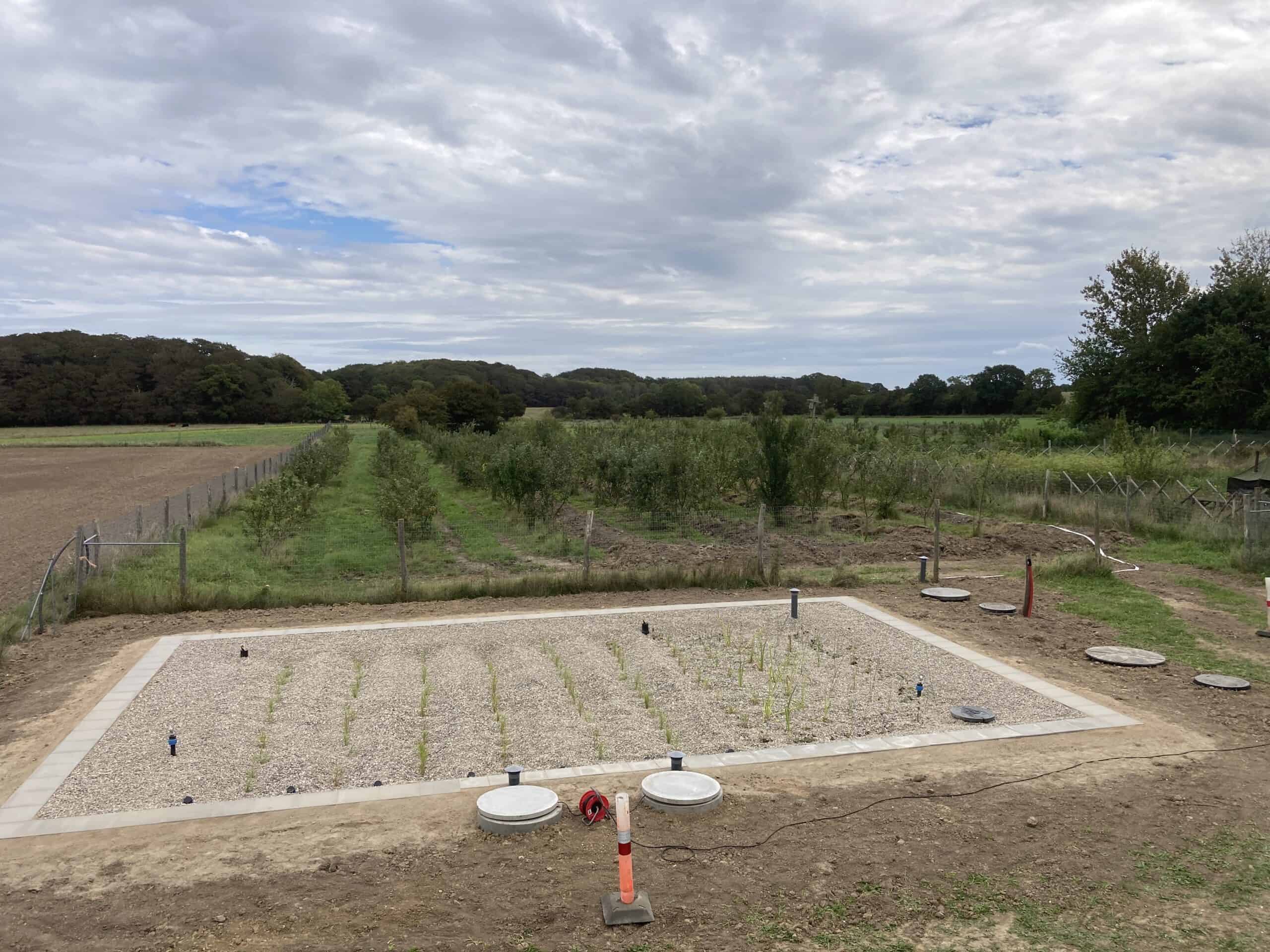
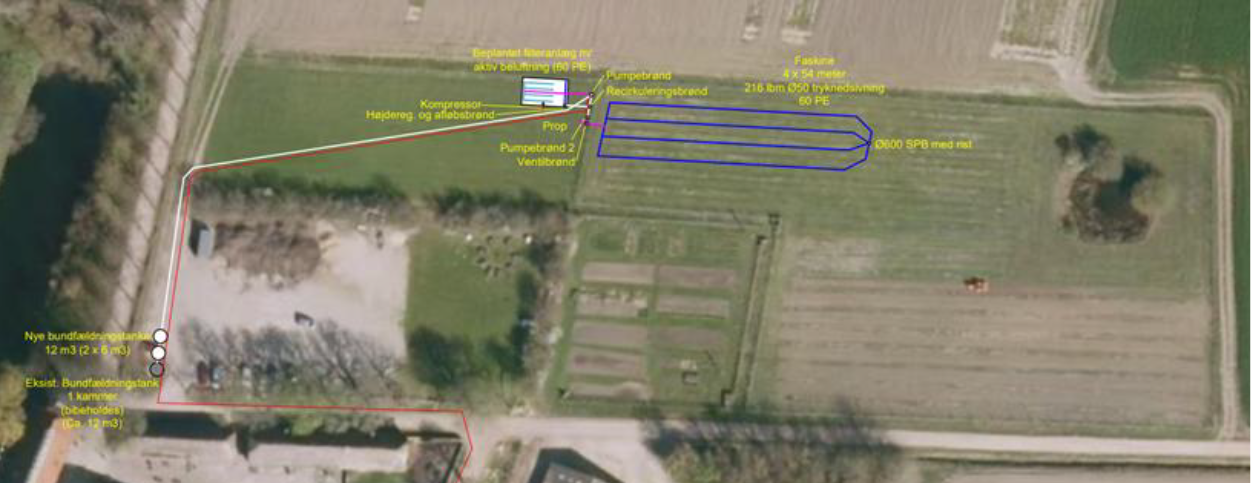
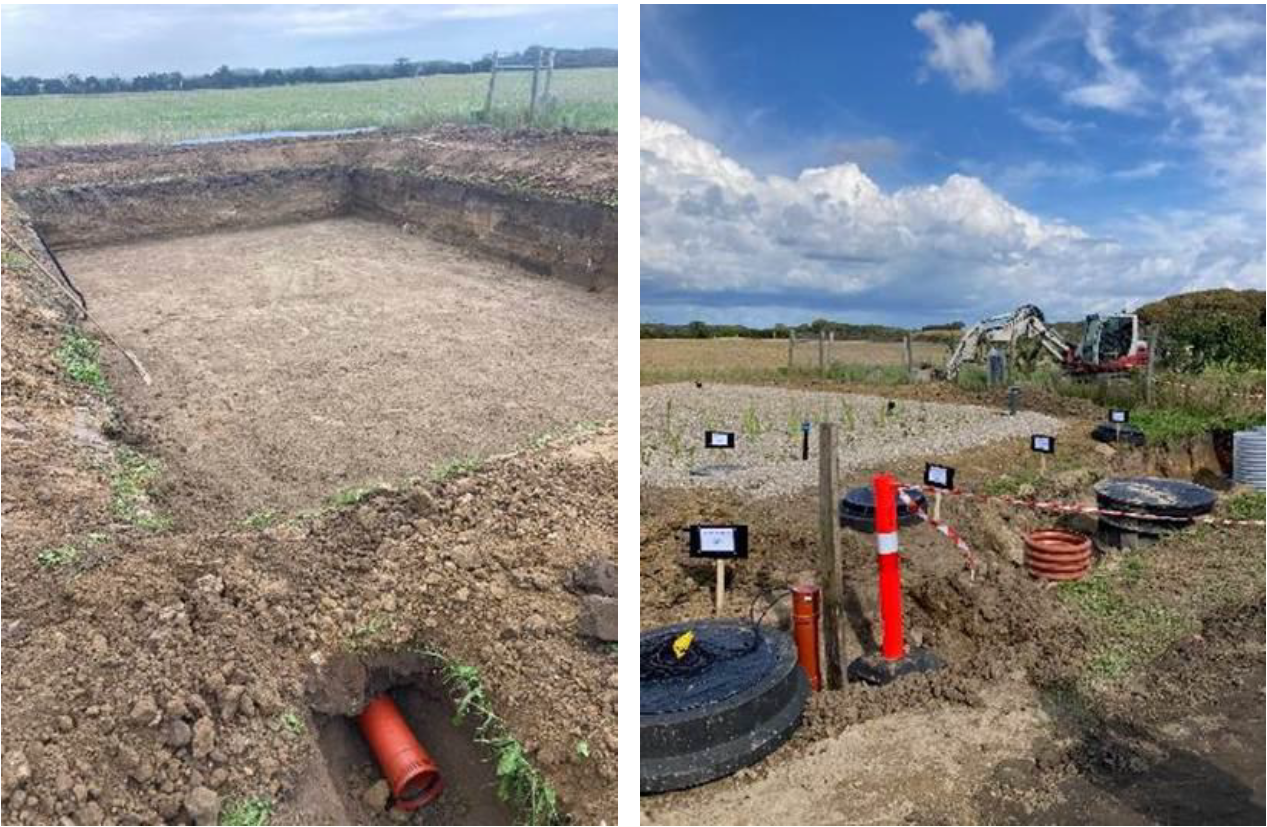
A constructed wetland has been designed and installed at Skovgaard Gods, Denmark. It’s designed to accommodate up to 60 population equivalent (PE) during the summer and 1-2 PE during the winter. This fit well with the constructed wetland where grow is most active during the summer period.
Pilot focus:
Constructed wetland to treat wastewater and produce water for irrigation.
Type of pilot measure:
Intensified constructed wetland
Location:
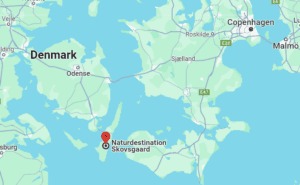
Skovgaard Gods, Langeland, Denmark
Site:
Skovsgaard Gods
Applied solution:
Intensified constructed wetland with aeration and effluent recirculation.
Treatment capacity:
Up to 60 PE in summer / 1–2 PE in winter
Utilisation:
On-site wastewater treatment and potential reuse of treated wastewater for irrigation.
Responsible:
Danmarks Naturfond
About the pilot:
Skovsgaard Gods is located on the Danish island of Langeland and receives most visitors between April and September. The amount and composition of wastewater vary considerably depending on visitor numbers and activities. Previously, raw wastewater was collected in a septic tank and transported to Rudkøbing WWTP, but increasing activities created a need for a local treatment solution.
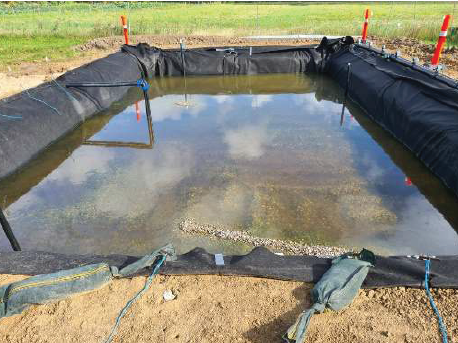
An intensified constructed wetland was installed at the site, designed for up to 60 PE in summer and 1–2 PE in winter. The 60 m² system uses controlled aeration and recirculation of treated effluent. The pilot also investigated wastewater quality, irrigation requirements and methods for further phosphorus removal, including membrane filtration and adsorption.
Monitoring showed around 70% phosphorus removal, while COD concentrations in the treated wastewater remained around 25 mg/L, well below the national limit of 75 mg/L for municipal WWTPs. Reducing aeration from 12 to 6 hours per day halved compressor energy consumption without significantly affecting treatment quality. The effluent met Class C requirements for reclaimed water for irrigation, although its use for irrigation was not permitted in Denmark. For further phosphorus removal, adsorption using Polonite, Filtralite or LDH was identified as the most promising approach
More information:
Morten Lykkegaard Christensen
Associate Professor, Head of Section
Section of Bioresources and Process Engineering
Aalborg University
E-mail: [email protected]
Find the pilot sheet here (PDF).
Read more about the project from the report “Technical preparation for wastewater treatment investments at BSR tourist destinations”.

Interactive map showing pilot locations. Use the arrow keys to move the map view and the zoom controls to zoom in or out. Press the Tab key to navigate between markers. Press Enter or click a marker to view pilot project details.
Additional links
details
-
Homepage
-
Project typeCore Project

-
ImplementationJanuary 2023 - September 2026
-
StatusCompleted
-
Contribution to EUSBSRPolicy Area Nutri, Policy Area Tourism

-
Target groups
- Infrastructure and public service provider
- Local public authority
- Regional public authority
-
Social media
-
Additional links
-
Tags