




Pilot 6: Blāzma, Latvia
01 September 2026
The wastewater treatment plant in Blāzma is one of the oldest small biological wastewater treatment plants in the Ventspils region. During the active tourist season, pollution loads can fluctuate significantly.
Pilot focus:
Constructed wetlands for wastewater treatment
Type of pilot measure:
Constructed wetlands
Location:
Blāzma, Latvia
Site:
Blāzma Wastewater Treatment Plant
Applied solution:
Combined system of vertical and horizontal subsurface-flow constructed wetlands
Designed treatment capacity:
250 m³/day on average
Utilisation:
Domestic wastewater treatment
Responsible:
VNK Serviss
About the pilot:
The wastewater treatment plant in Blāzma is one of the oldest small biological wastewater treatment plants in the Ventspils region and has not undergone significant improvements since its construction. It treats only domestic wastewater, but the volume and pollution load vary throughout the year. During the active tourist season, pollution loads can fluctuate significantly, while the infiltration of rainwater and groundwater into the centralised wastewater collection system can cause periodic hydraulic overloads.
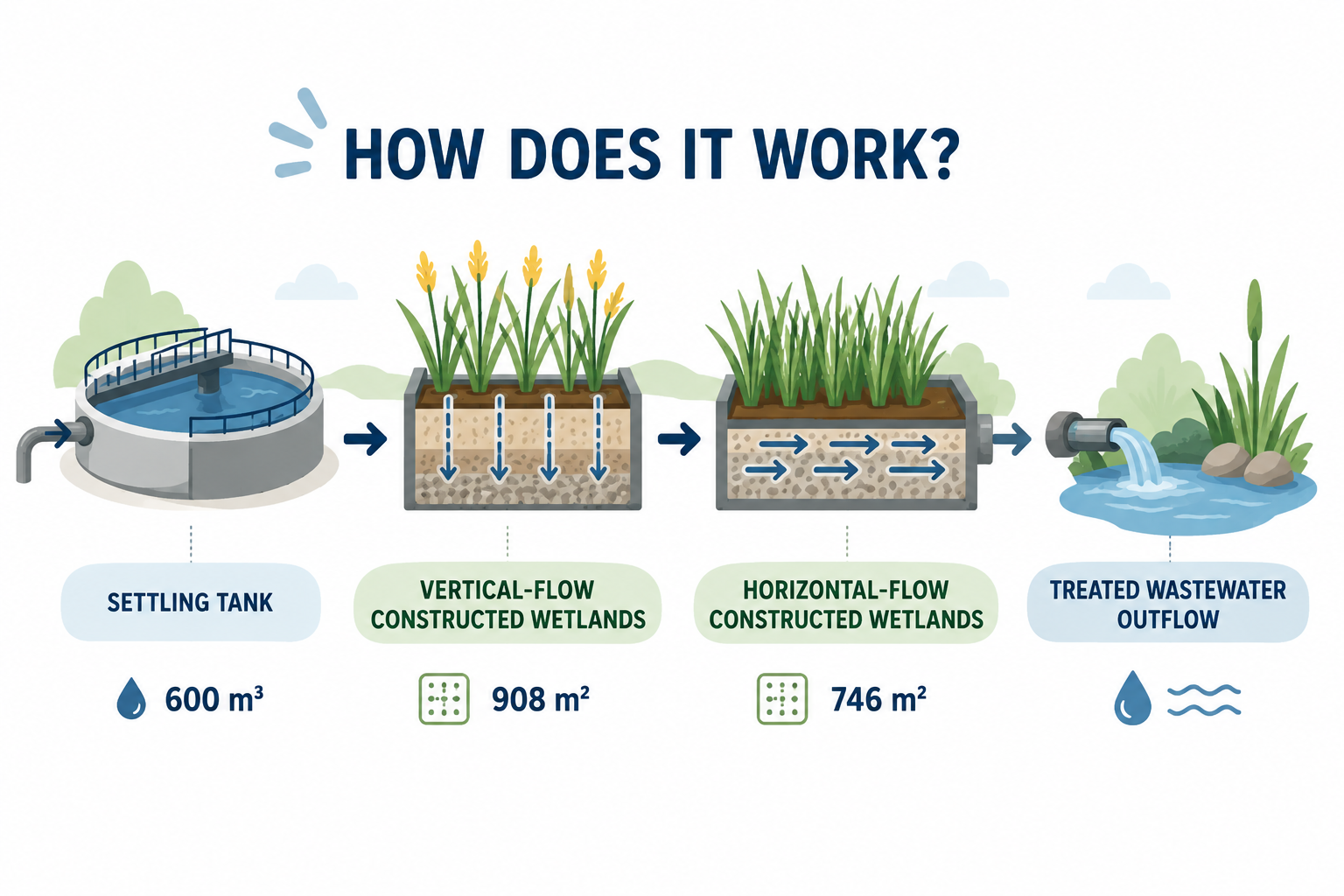
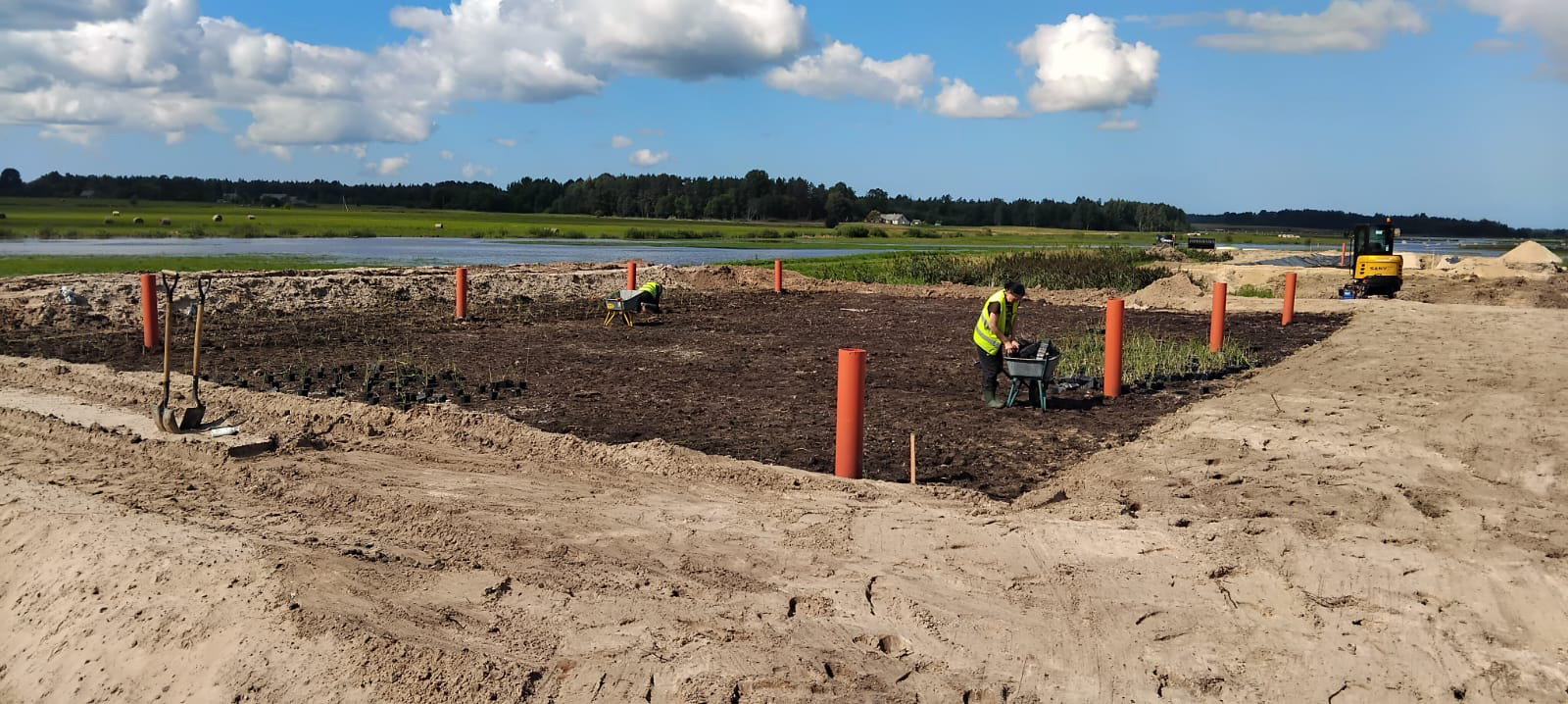
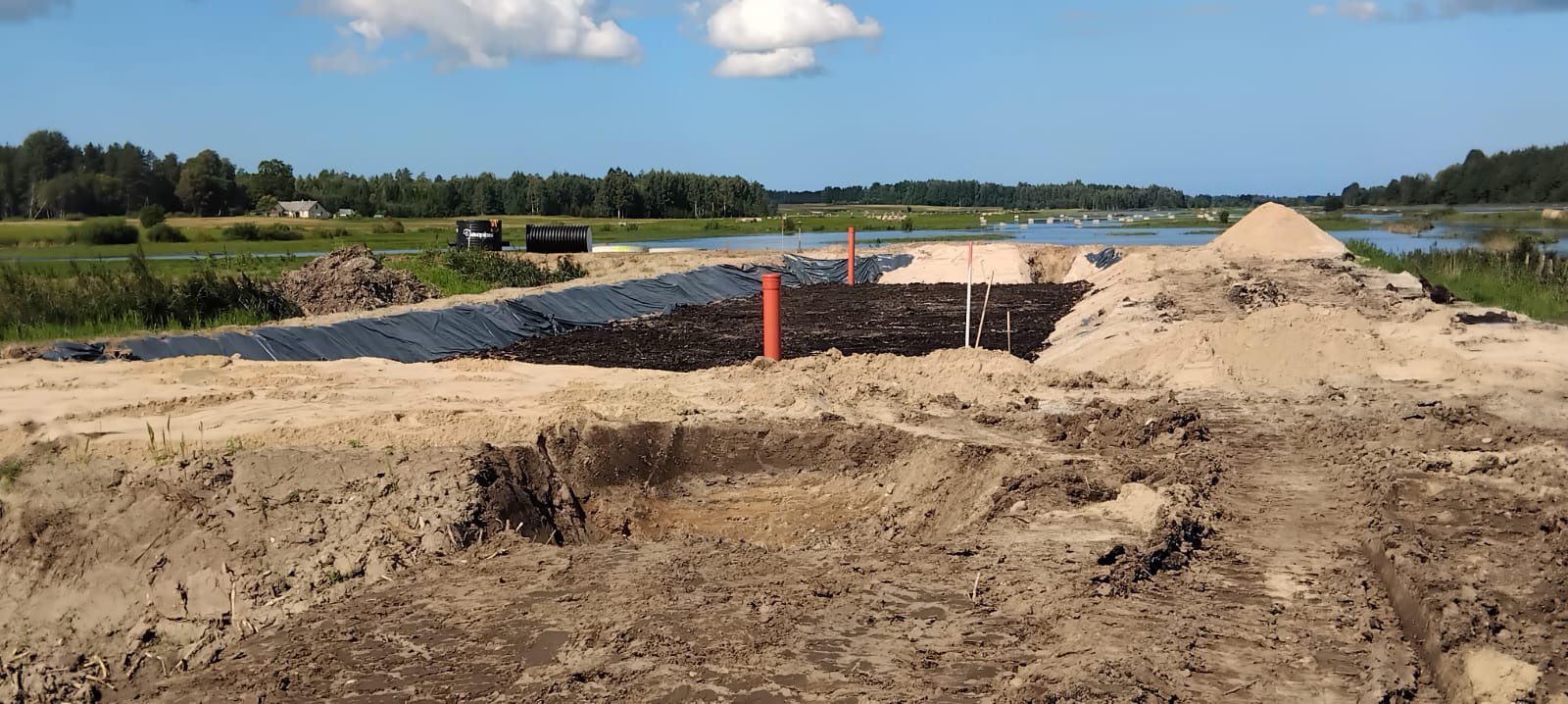
In the past, biological ponds were used in Blāzma as a post-treatment method, but their use was later discontinued. In their place, a constructed wetland system combining vertical and horizontal subsurface flow has been designed to handle hydraulic and pollution peaks during periods of increased wastewater loads. The designed system has an average treatment capacity of 250 m³/day. After pre-treatment in a sedimentation basin, wastewater passes through two parallel vertical-flow constructed wetlands, followed by two parallel horizontal-flow constructed wetlands.
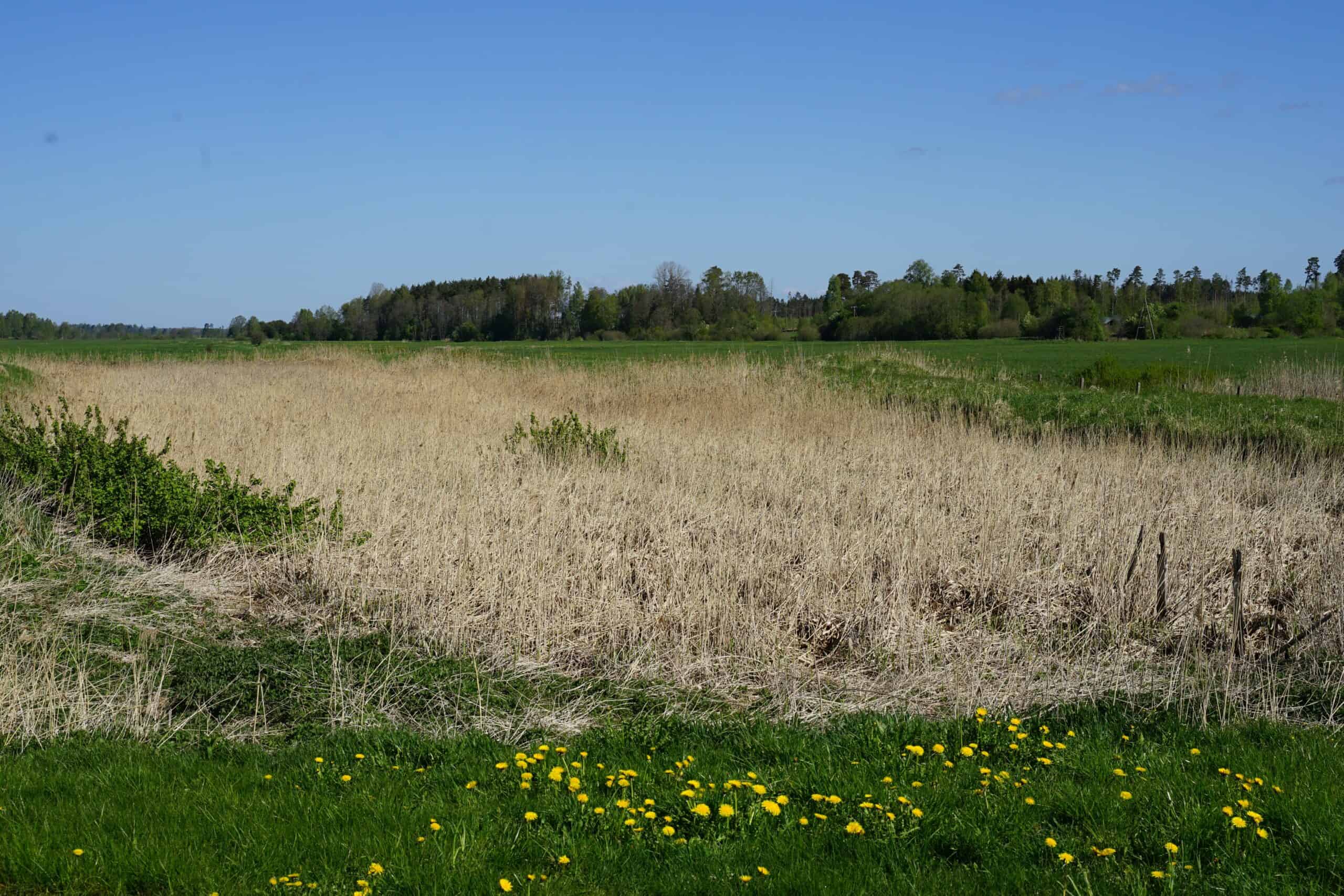
The vertical-flow stage provides better aeration conditions, supporting the removal of organic matter and nitrification, while the horizontal-flow stage creates anoxic conditions for final denitrification and nitrate-nitrogen removal. The system has also been adapted to Latvia’s climatic conditions. Because air temperatures fall below 0°C seasonally, both wetland stages are designed with subsurface flow, and the infiltration pipes are covered with soil to reduce the risk of freezing. The wetland surface will be planted with common reed.
More information:
Gatis Grāvītis
VNK Serviss SIA
e-mail: [email protected]
Find the pilot sheet here (PDF).

Interactive map showing pilot locations. Use the arrow keys to move the map view and the zoom controls to zoom in or out. Press the Tab key to navigate between markers. Press Enter or click a marker to view pilot project details.
Additional links
details
-
Homepage
-
Project typeCore Project

-
ImplementationJanuary 2023 - September 2026
-
StatusCompleted
-
Contribution to EUSBSRPolicy Area Nutri, Policy Area Tourism

-
Target groups
- Infrastructure and public service provider
- Local public authority
- Regional public authority
-
Social media
-
Additional links
-
Tags