




H2-Derivatives market analysis for Baltic Sea Ports
06 May 2025
Hydrogen Derivatives: Powering the Green Transition in Baltic Sea Shipping
The global shipping industry faces an urgent challenge: decarbonise to meet the IMO’s net-zero greenhouse gas target by 2050 and the EU Green Deal goal of climate neutrality. Hydrogen derivatives or electrofuels such as electroammonia, electromethanol, and renewable hydrogen—offer a sustainable alternative to conventional marine fuels. However, production, distribution, and port infrastructure readiness vary across fuel types and countries.
The H2Deri@BSP project has conducted a comprehensive market analysis across the Baltic Sea Region, covering eight countries and eight partner ports. The study examines current and future demand, production capacities, infrastructure readiness, regulatory frameworks, and import-export potential. Combining extensive literature research with surveys, interviews, and workshops, the project mapped nearly 300 hydrogen-related initiatives, though most remain in planning or feasibility stages.
Findings show that the Baltic Sea Region is gaining momentum in renewable maritime fuels, but hydrogen derivatives are still in their early stages. EU regulations like FuelEU Maritime, AFIR, and ETS are beginning to shape the market, but fragmented policies and slow national implementation limit large-scale deployment.
If planned projects are realised, hydrogen-derived energy production could reach 338 TWh, equivalent to 31 million tonnes of Marine Gasoil, by 2030 and beyond. Today, only 2% of this capacity is operational, with Denmark, Germany, Finland, and Sweden leading production. Denmark and Finland aim to become major exporters, Germany is developing import corridors and port conversions, and Sweden focuses on industrial and maritime hydrogen use. The Baltic States and Poland are still in early development but show promising hydrogen valley initiatives.
Ports are central to this transition. Some are already planning or implementing bunkering and storage infrastructure for renewable fuels. Existing hubs leverage their expertise and networks, while ports near new production facilities can gain cost advantages, broadening the range of key bunkering locations.
Stakeholders recognise hydrogen derivatives as vital for long-term decarbonisation but cite high production costs, uncertain markets, and weak regulatory support as barriers. Near-term bunkering focuses on methanol and biodiesel, with hydrogen and ammonia expected to follow after 2030. Public co-financing, long-term contracts, and EU support are seen as crucial to accelerate investment.
Initially, the region will likely be a net importer of hydrogen derivatives. Cross-border collaboration, shared port infrastructure, and hydrogen corridors will be key to cost-efficient scaling. Finland and Denmark are positioned to become leading exporters, while Germany and Lithuania could emerge as import and distribution hubs.
Hydrogen derivatives are essential to the maritime sector’s climate transition. With coordinated policies, risk-sharing mechanisms, and cross-border cooperation, the Baltic Sea Region could become a European leader in green shipping fuels, achieving meaningful deployment by 2030 and paving the way for full adoption by 2050.
Click here to download the full market anaylsis report. Please access an overview presentation using the link below the map.
Should you require any further information, please contact the lead partner or the communications manager.
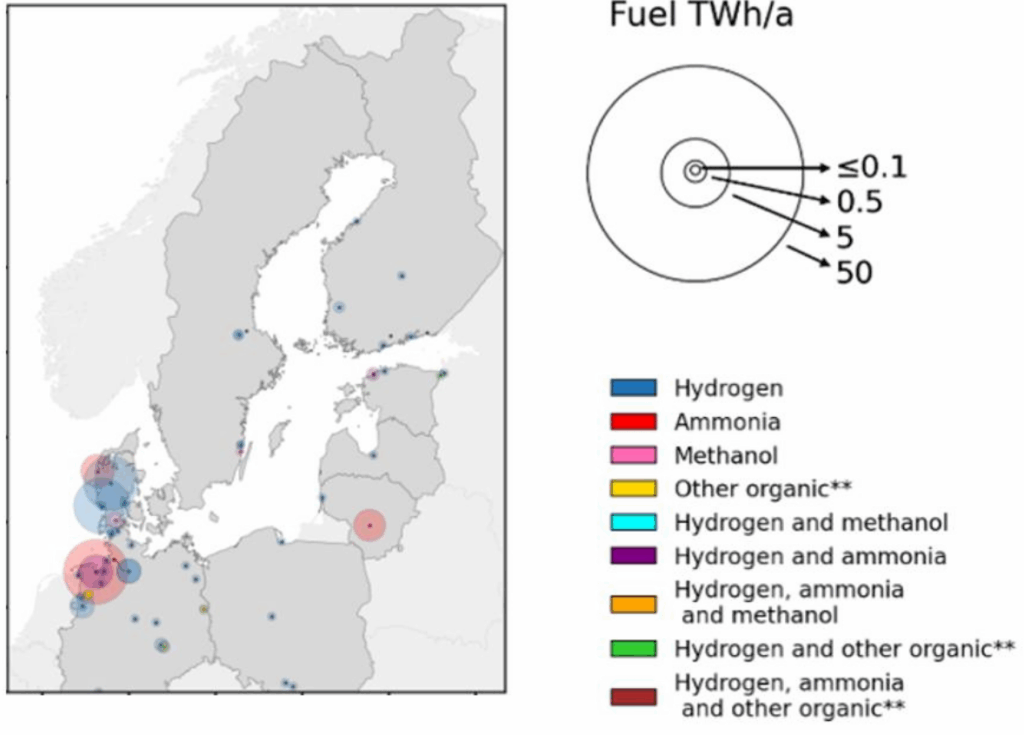
Map showing projects that are in operation, under construction, or decided i.e., where a final investment decision (FID)
has been made as of 2025
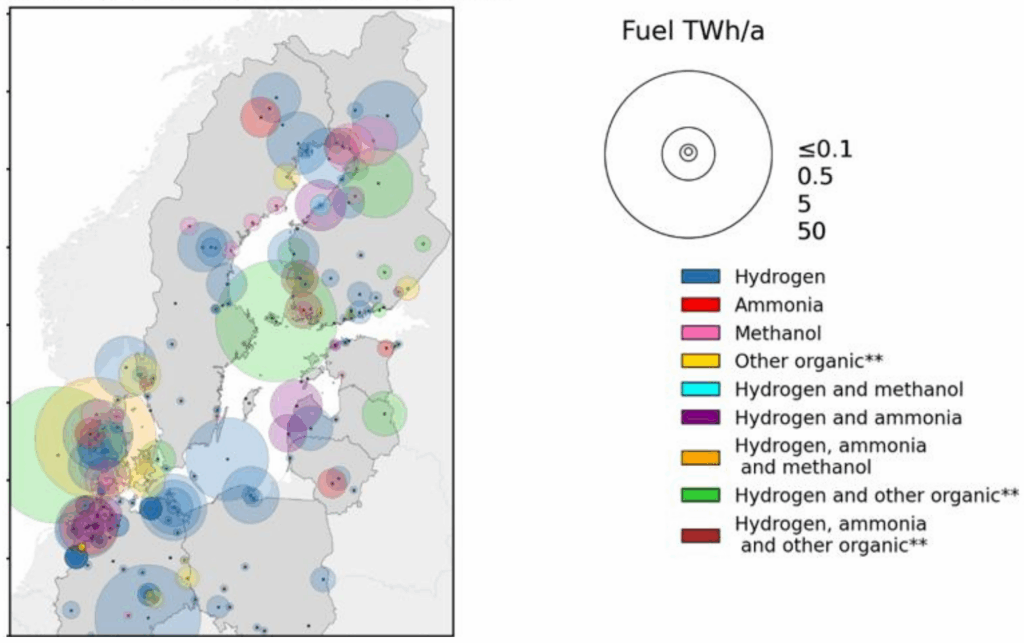
Map showing all non-cancelled projects in the Baltic Sea Region that are currently in operation or could potentially be
operational by 2030
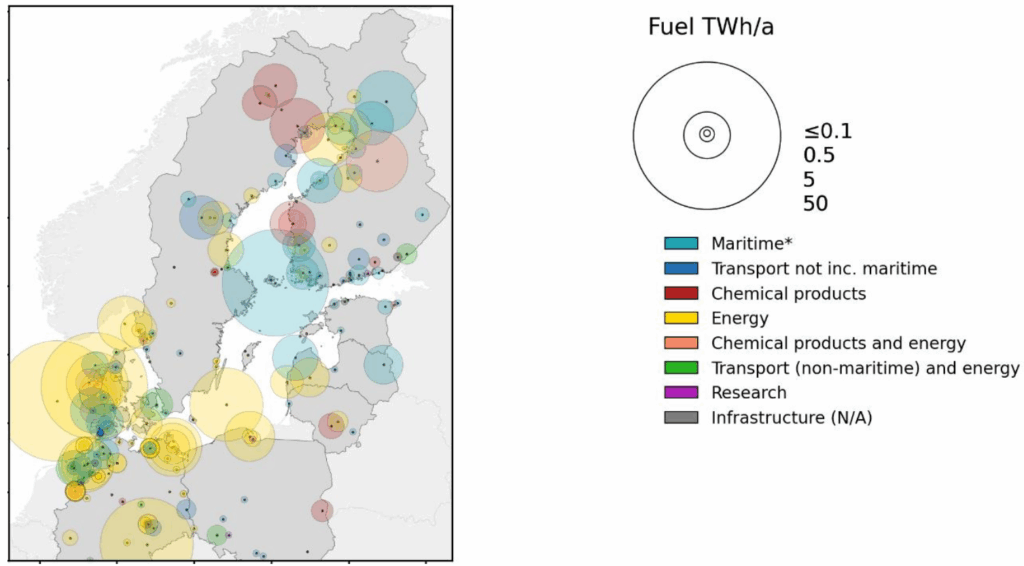
Potential electrofuel production in the Baltic Sea Region divided by end-use sector
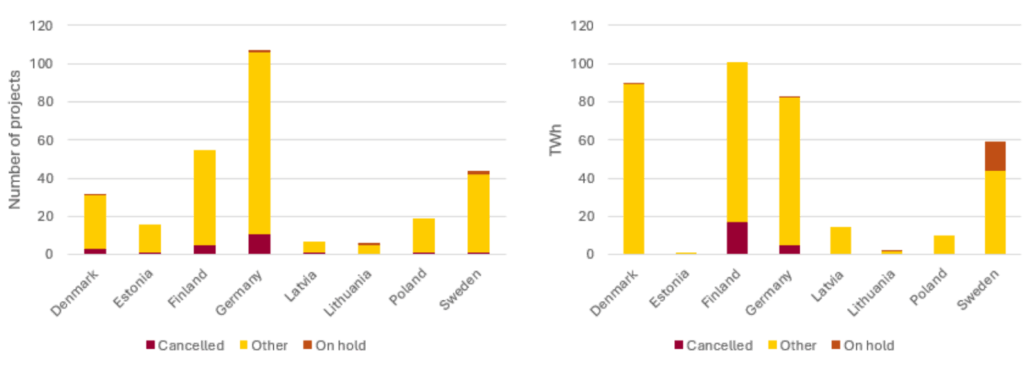
Total number of projects and total potential electrofuel production per country in the BSR
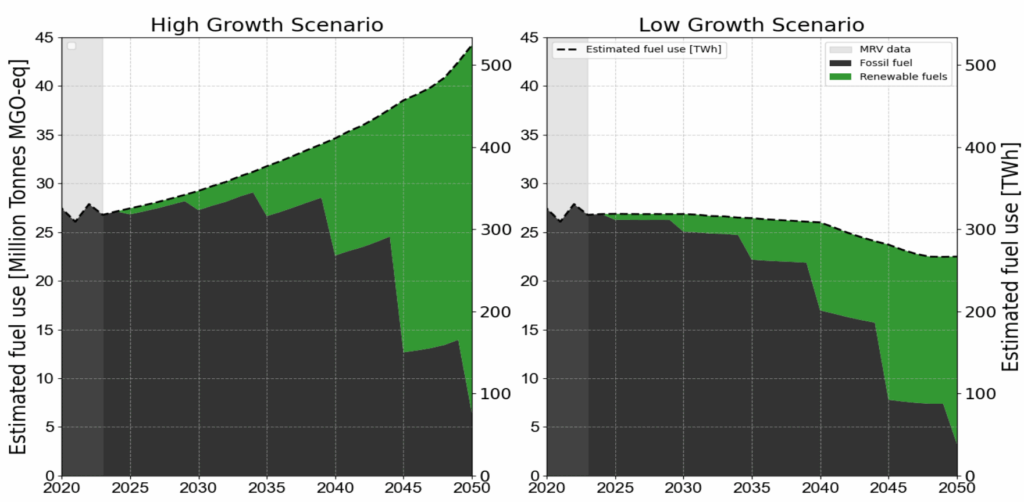
Potential demand of renewable fuel alternatives in the European Shipping fleet to meet the FuelEU Maritime targets

Interactive map showing pilot locations. Use the arrow keys to move the map view and the zoom controls to zoom in or out. Press the Tab key to navigate between markers. Press Enter or click a marker to view pilot project details.
details
-
Homepage
-
Project typeCore Project

-
ImplementationMarch 2025 - February 2028
-
StatusOngoing
-
Contribution to EUSBSRPolicy Area Energy, Policy Area Ship

-
Target groups
- Business support organisation
- Infrastructure and public service provider
- Large enterprise
-
Social media
-
Additional links
-
Tags