




Piloting in Latvia
28 April 2026
APRIORA becomes practical – goal of piloting the approach:
To make sure our developed solution works well, we were testing the approach in five river catchments across the Baltic Sea Region countries Finland, Germany, Latvia, Poland and Sweden. This included all three modules from monitoring, modelling and risk assessment as well as learning and teaching how to apply the QGIS tool. Regional authorities in charge took care of the piloting, working alongside scientific experts to ensure the solution meets their actual needs.
Piloting in Latvia – this is their story
The Bērze catchment – a river system influenced by multiple pollution sources
Invisible pollution
Most water pollution is not visible to the naked eye, yet it still deteriorates water quality. One important group is micropollutants, including pharmaceuticals, personal care products, and industrial chemicals, which can pass through wastewater treatment plants and enter rivers in trace amounts. As WWTPs are not designed to remove micropollutants, these substances may persist and accumulate in aquatic environments, affecting aquatic organisms and water use. Understanding and managing this “invisible pollution” is therefore becoming an essential task in modern water management.
Bērze river catchment
The Bērze river catchment is located in central Latvia and represents a typical small-to-medium-sized river basin influenced by agricultural activities and municipal wastewater discharges. The catchment contains 23 WWTPs, the largest of which is the Dobele WWTP with more than 10,000 PE, making the catchment suitable for testing risk-based prioritisation approaches for micropollutant management.
Four monitoring campaigns were carried out to characterise the presence of selected micropollutants in the Bērze catchment across different seasons between November 2024 and September 2025. Sampling covered river reaches both upstream and downstream of wastewater discharge sites, as well as selected tributaries. Influent and effluent samples were also collected from three WWTPs: Dobele, Jaunpils and Gardene. Grab samples were taken from rivers, and 24 h time-proportional sampling was carried out in the WWTPs.
Sampling was carried out by the Latvian Environment, Geology and Meteorology Centre in close collaboration with the company “Dobele Water”, which operates the WWTPs. Samples were analysed at Kristianstad University.
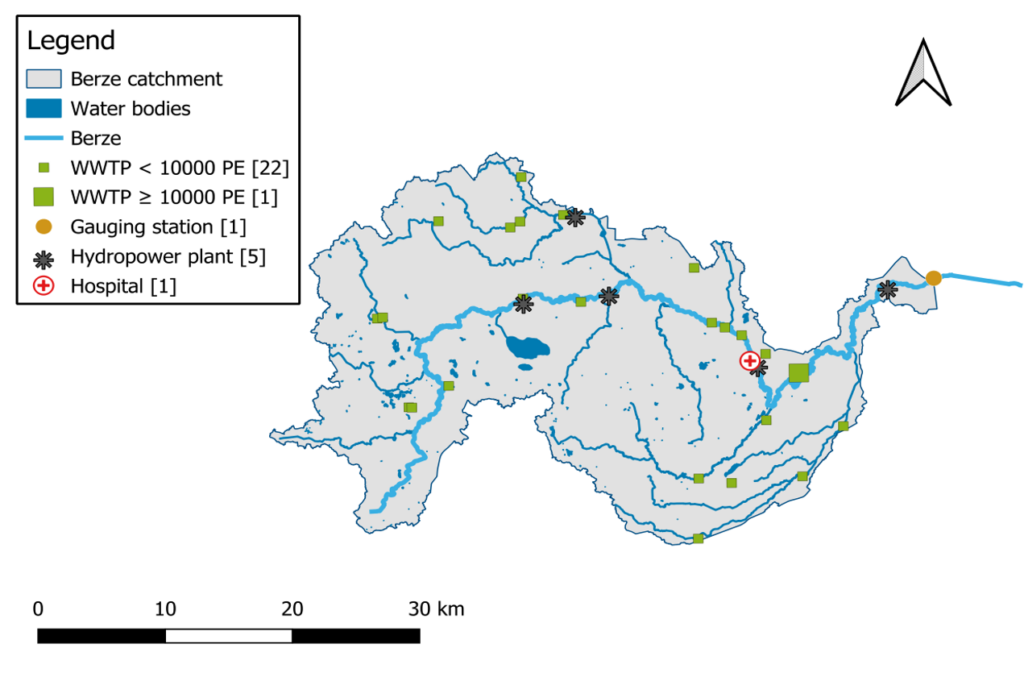
Figure 1. Map of the Bērze river catchment.
The monitoring data collected were complemented by modelling to estimate the distribution and dilution of micropollutants within the river system. The results helped identify areas with potentially elevated risk. The model also enables assessing mitigation measures, for example whether quaternary treatment could reduce risks to the environment and human health.
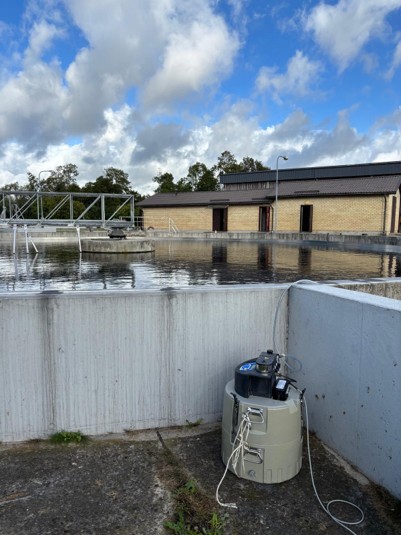
Figure 2. 24-hour sampling taken from Dobele WWTP, photo by A. Konošonoks
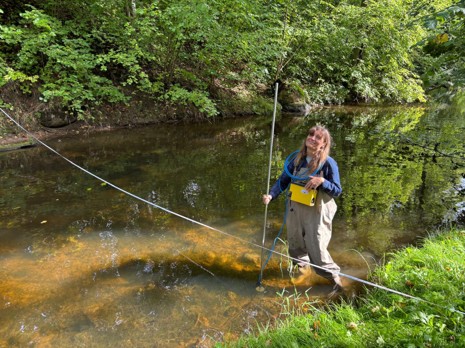
Figure 3. Flow measurements in Bikstupe, upstream Jaunpils, photo by A. Konošonoks
Findings from both monitoring and modelling indicate that elevated concentrations of diclofenac (Figure 4) and estrone are already causing environmental risks downstream of the Dobele WWTP.
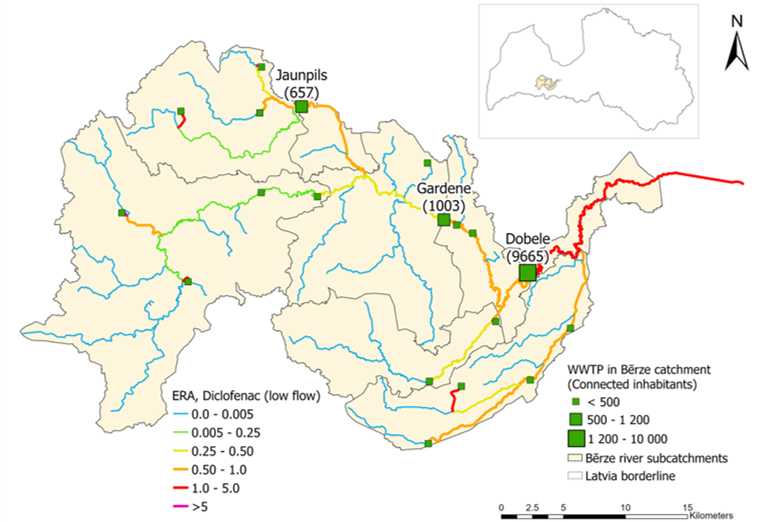
Figure 4. Modelling results for diclofenac in the Bērze river basin district under low‑flow (Q) conditions
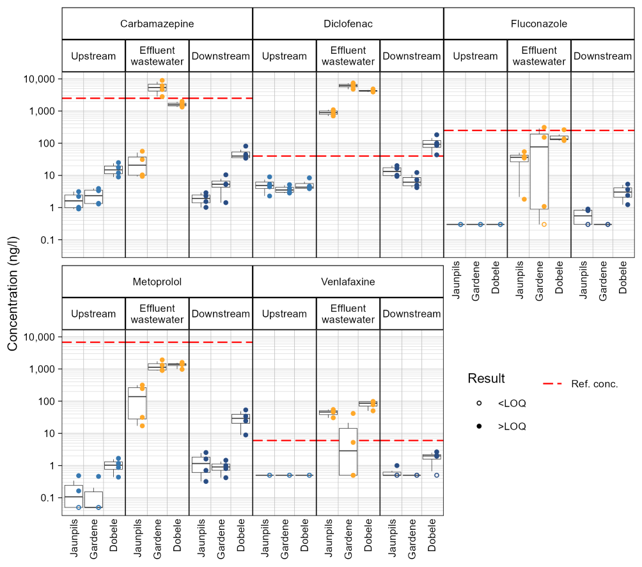
Figure 5. Concentrations of APIs in effluent, and in river water upstream and downstream of the wastewater discharge sites in Bērze catchment.
National screening
These striking results provided the foundation for expanding national‑scale mapping of the invisible threats posed by micropollutants. Through collaboration with Kristianstad University, the Latvian team gained access to the iFiST methodology, enabling large‑scale and cost‑efficient sampling of micropollutants across Latvia.
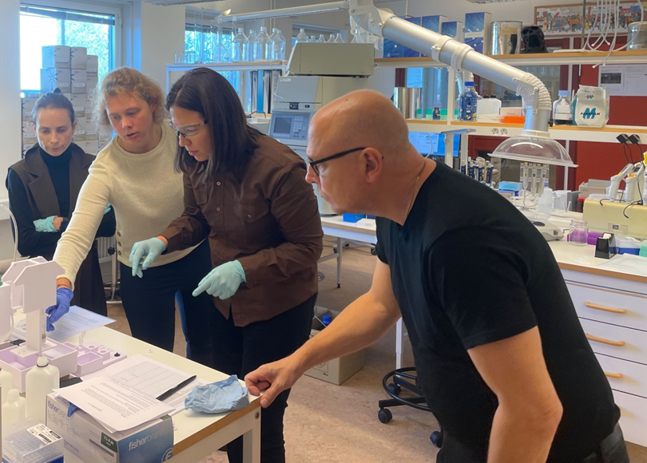
Figure 6. Learning to operate the iFiST (in field sampling technology) sampling equipment, photo by O. Svahn
This enabled the screening of multiple WWTPs and river systems using harmonised methods suitable for future implementation under the revised Urban Wastewater Treatment Directive (UWWTD). The approach illustrates how countries can prioritise WWTPs where advanced (quaternary) treatment is most needed, based on actual environmental risk. Findings from the first sampling campaign showed that micropollutant emissions from WWTPs pose a clear risk to the aquatic environment. Diclofenac was identified as the main pollutant of concern, exceeding environmental quality standards (EQS) at 8 out of 19 wastewater-impacted sites. Venlafaxine concentrations in surface waters also exceeded EQS downstream of five WWTP discharges. The screening clearly demonstrated that environmental risks are not limited to the largest WWTPs but may also occur downstream of medium-sized plants during low-flow conditions, where dilution is not an effective solution. Particular attention should be given to the low‑flow season, when the highest risks are expected. Climate change may further aggravate these risks through increased droughts and lower dilution capacity in rivers.
What comes next?
The Latvian results show that investment decisions should be based not only on WWTP size, but also on the actual environmental risk downstream of each discharge. For Latvian water policy, the findings underline the need to integrate micropollutant screening, low-flow risk assessment and climate change considerations into future wastewater investment programmes. This will help ensure that limited resources are directed to the sites where advanced treatment can deliver the greatest benefit for rivers, ecosystems, and long-term compliance with emerging EU requirements.

Interactive map showing pilot locations. Use the arrow keys to move the map view and the zoom controls to zoom in or out. Press the Tab key to navigate between markers. Press Enter or click a marker to view pilot project details.
Additional links
details
-
Homepage
-
Project typeCore Project

-
ImplementationNovember 2023 - October 2026
-
StatusOngoing
-
Contribution to EUSBSRPolicy Area Hazards

-
Target groups
- Infrastructure and public service provider
- Sectoral agency
-
Social media
-
Additional links
-
Tags