




Webinar – Maps from Sweden and Finland
Project: CEforestry
Virtual Meeting
03. December 2025
07:30 - 08:15 (CET)
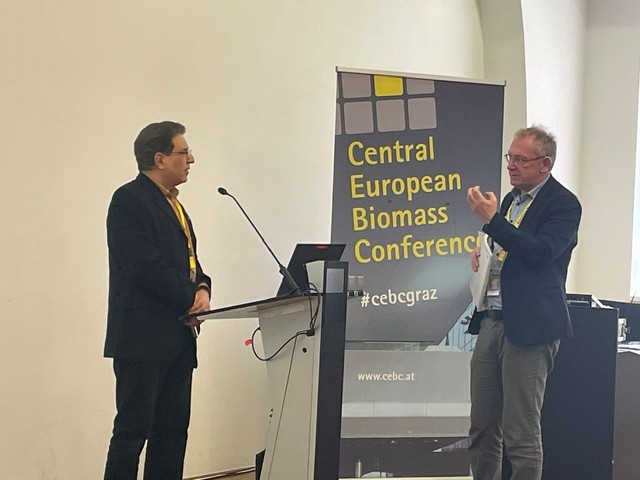
Topic: Sustainability, Circular Economy and Policy
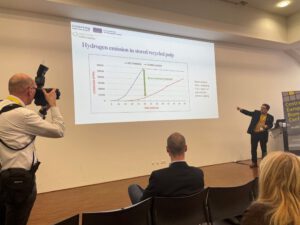
Title: Evaluation of Spruce Bark Extract for Reducing Gas Formation and Bacterial Growth in Recycled Pulp: Results from Pilot Testing and Technology Transfer in the BSR Region
Authors: Associate Professor Mehrdad Arshadi1, Maria Hedberg2, Michael Finell1, Anders Johansson2
Email: mehrdad.arshadi@slu.se
Abstract:
In alignment with the circular economy in forestry, this study investigates the potential of spruce bark extract as a sustainable alternative to fossil-based biocides in recycled pulp and industrial water systems. Spruce bark, sourced and refined at Biomass Technology Centre (the SLU pilot plant), was processed using hot water extraction technology to obtain bioactive compounds. The resulting extract was applied to industrial fresh pulp samples, and gas emissions were monitored over several hours. These results were compared to reference samples without spruce bark extract addition. The extract exhibited strong antimicrobial activity and significantly reduced gas formation. Large-scale pilot trials confirmed its effectiveness, demonstrating a notably extended half-life (exceeding 7 hours) compared to conventional synthetic biocide agents. This property offers advantages such as reduced dosing frequency and lower operational costs.
Beyond laboratory validation, this work supports regional technology transfer within the Baltic Sea Region (BSR) through the BSR Interreg project. The approach utilizes underexploited forest residues—specifically bark—to extract valuable compounds such as tannins, fatty acids, and resin acids. The extract was tested as a biocide replacement in two industrial water systems, where it successfully inhibited microbial activity and suppressed the production of hydrogen sulphide and hydrogen gas.
Key target groups include chemical manufacturers pursuing bio-based biocide production, the pulp and paper industry, and treatment facilities,—each of which faces challenges related to microbial growth and gas emissions. This technology provides an eco-friendly, scalable solution that supports circular bioeconomy objectives across European BSR countries.
Acknowledgment:
This work was supported by the Interreg Baltic Sea Region Programme in the CEforestry project. Their contributions made this research and technology demonstration possible. We also gratefully acknowledge the BIO4Energy project for supporting the conference travel costs.
Keywords: Spruce bark extract, sustainable biocides, pulp and paper industry, recycled materials, antimicrobial treatment, circular bioeconomy, wastewater management, Baltic Sea Region.
Project: CEforestry
Virtual Meeting
03. December 2025
07:30 - 08:15 (CET)
Project: CEforestry
Virtual Meeting & Physical Meeting
19. - 21. November 2025
13:00 - 12:00 (BST)
Project: CEforestry
Virtual Meeting
22. October 2025
13:30 - 16:00 (EEST)