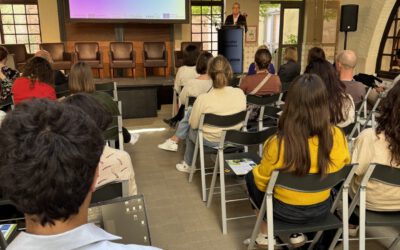

The EUSBSR Annual Forum is the main yearly event of the EU Strategy for the Baltic Sea Region. It brings together policymakers, public authorities, project representatives, researchers, and organisations from across the region to exchange experiences, present results,...
Interreg Baltic Sea Region
News
ReNutriWater: Closing the Water Loop in the Baltic Sea Region
Three Sets of Pilots, One Goal The project was built around three interconnected pilot phases. The first focused on disinfection — testing technologies such as ozonation, UV radiation, active carbon filtration, and peracetic acid to ensure reclaimed water meets EU...
Interview with Andreas Ahrens
“Only by connecting efforts along the full life cycle of chemicals can we achieve a truly non-toxic environment.” Today we spoke with Andreas Ahrens, Senior Advisor for Chemicals Policy at Baltic Environmental Forum Germany, about why connecting upstream...
Acting on Health – Can everyone be a link worker?
Can everyone be a link worker? That’s the question I want to begin with today. We often hear the success stories from the Arts on Prescription (AoP) programme—participants expressing that they feel more self-worth, less loneliness, gaining new talents, and a sense of...
Webinar Recording: Urban Mobility and TEN‑T Readiness: Key Insights from the Baltic Sea Region
The Urban Mobility and TEN‑T Readiness webinar was held on 11 March 2026, bringing together around 50 mobility professionals from across the Baltic Sea Region to explore new survey findings on sustainable urban mobility, logistics planning and cities’ preparedness for...
Webinar Recording: Urban Mobility and TEN‑T Readiness: Key Insights from the Baltic Sea Region
The two surveys presented in the webinar were conducted in late 2025 and early 2026. The Survey on Sustainable Urban Mobility and Logistics Planning ran from December 2025 to February 2026, targeting cities and regions across the Baltic Sea Region. The...
Circular Ports meeting in Lappeenranta highlighted pilot progress
Over the course of the day, partners revisited the main results of Work Package 1 and explored how these outputs will support the next phase of the project. The methodology for circular economy data collection and the regulatory sandbox framework provide a shared...
DIVERSE_GENE_WATCH Report: How Can We Monitor the Genetic Future of Baltic Forests?
Forests are changing. Climate stress, pests, pathogens, fragmentation and shifting environmental conditions are already affecting tree populations across Europe. But one of the most important questions often remains hidden: do forest trees still have the genetic...
DIVERSE_GENE_WATCH Report – How to Enrich Genetic Diversity in Forest Tree Populations
Genetic diversity is what gives tree populations the ability to adapt, recover and survive over the long term. When it declines, forests may become more vulnerable to disease, climate stress or poor regeneration. So, the key question is not only how to monitor these...
REAVES goes Places
Second Transnational Partner Meeting in the Cultural Pearl Jakobstad, Finland The REAVES project has taken the next step on the way to increasing visibility and impact of the results of the 22 projects fuelling REAVES and interconnecting the creative economy sectors...