




Promoting circular approaches for energy independency in business and communities.
Energy Circle
Energy Circle at Poland’s Ministry of Development Funds and Regional Policy – Knowledge Exchange Among 30 Interreg Projects
24 November 2026
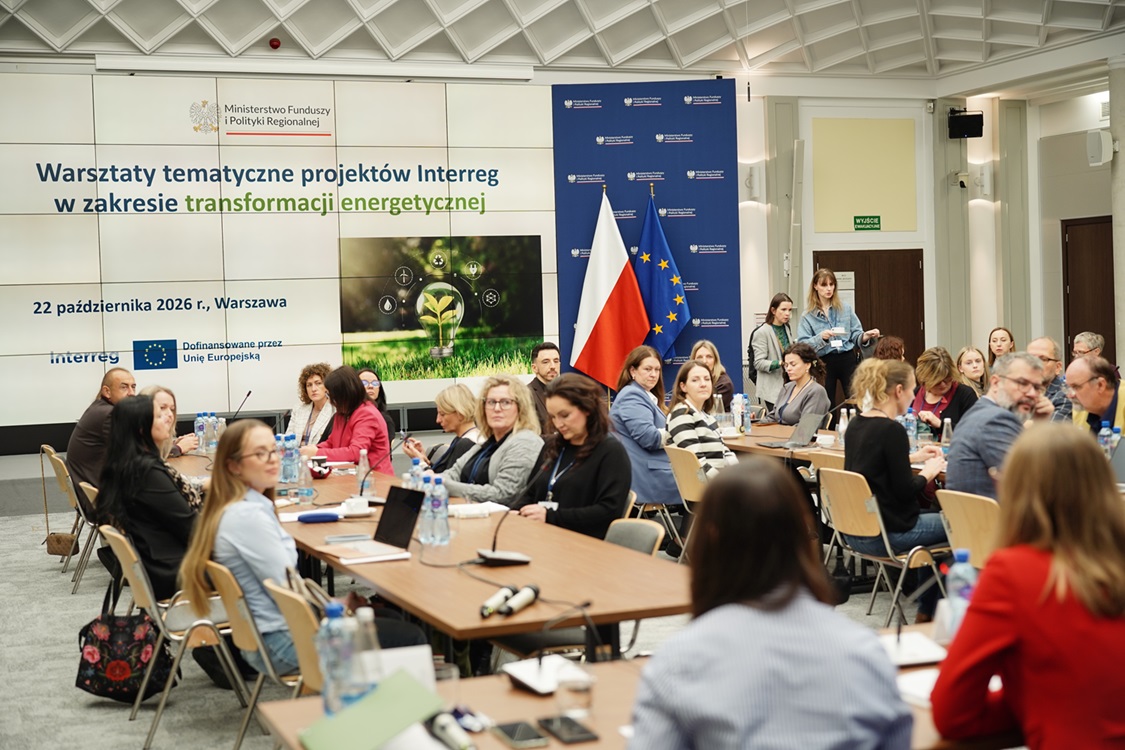
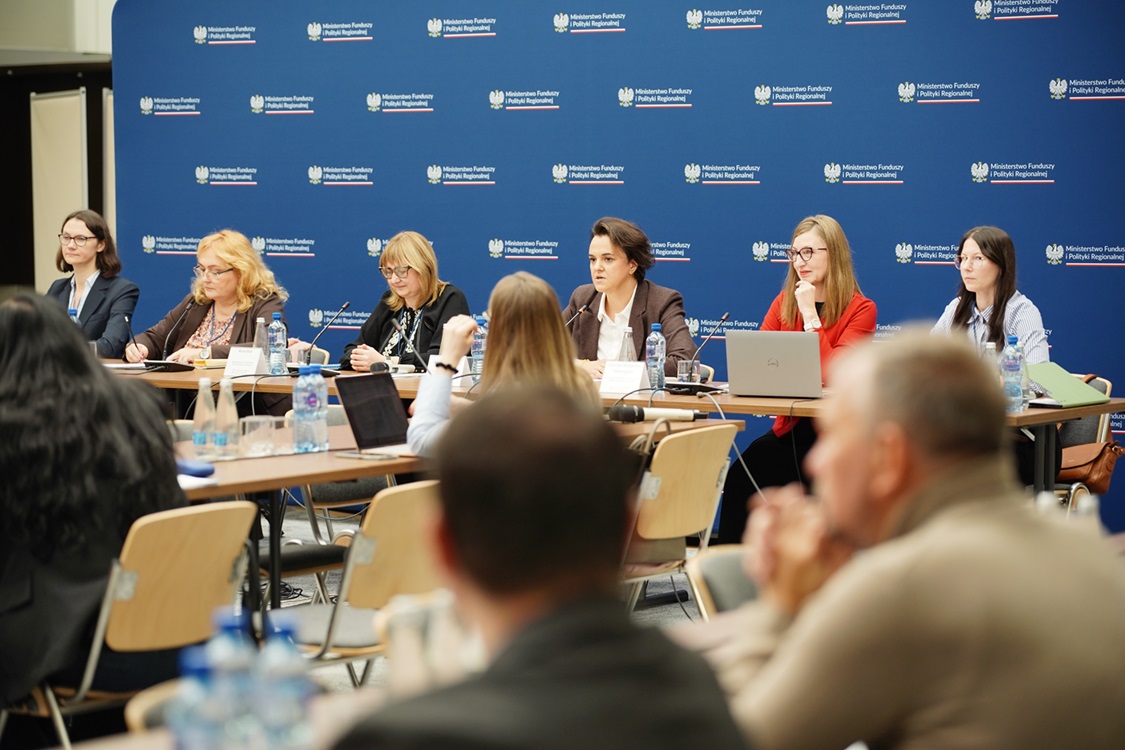
On 22 October 2026, Polish partners representing 30 projects from six Interreg programmes gathered at Poland’s Ministry of Development Funds and Regional Policy in Warsaw to exchange experiences and good practices in energy transition. Energy Circle was among the projects presented, represented by the Regional Development Agency in Bielsko-Biała.
30 Interreg Projects – Shared Challenges in Energy Transition
The energy transition is one of the key development challenges facing Europe. Strengthening energy security, improving resource efficiency and increasing the use of renewable energy require cooperation between public authorities, businesses, organisations and local communities.
On 22 October 2026, a thematic workshop dedicated to these issues took place in Warsaw, Poland. The event was organised by the Territorial Cooperation Department of Poland’s Ministry of Development Funds and Regional Policy.
The workshop brought together Polish partners from 30 projects implemented under six Interreg programmes: Poland–Saxony, South Baltic, Mecklenburg-Vorpommern/Brandenburg–Poland, Baltic Sea Region, Central Europe and Interreg Europe.
Participants included representatives of national and local authorities, development agencies, research institutions, businesses and non-governmental organisations.
The projects presented addressed a wide range of topics, including renewable energy development, energy efficiency, innovative energy systems, energy communities and support for a just transition in European regions.
The workshop provided an opportunity to bring together experiences from different projects and identify solutions that could also be applied in other European regions.
Energy Circle – Towards Greater Energy Independence
Among the initiatives presented during the workshop was Energy Circle, implemented under the Interreg Baltic Sea Region Programme 2021–2027.
The project was represented by Agnieszka Kowejsza from the Regional Development Agency in Bielsko-Biała, Poland, who introduced its objectives and planned solutions. She also participated in discussions and exchanged experiences with representatives of other Interreg projects.
Energy Circle aims to support businesses, local authorities and communities in achieving greater energy independence through approaches based on circular economy principles.
The project addresses challenges related to energy price volatility, dependence on external energy supplies and the need to strengthen the resilience of local economies to energy crises.
A central element of Energy Circle is the shift from isolated, short-term energy measures towards comprehensive, long-term planning. This approach considers the use of local renewable energy sources, energy recovery and storage, as well as the interconnections between different investments.
One of the solutions being developed is the EnergyCircle Roadmap methodology, designed to help businesses and public authorities define long-term pathways towards greater energy independence.
Other planned solutions include competence assessment tools, educational resources, examples of good practices and a One-Stop-Energy-Shop support model.
These tools are intended primarily for local public authorities, business support organisations and small and medium-sized enterprises.
Knowledge Exchange to Support Long-Term Energy Planning
One of the main benefits of the workshop was the opportunity to explore the energy transition from the perspectives of different projects and institutions.
Although individual initiatives focus on different aspects of the energy transition, many challenges are shared. These include access to relevant expertise, effective investment planning, the use of local resources and cooperation between stakeholders.
For Energy Circle, a long-term and systemic approach to energy independence is particularly important
Better planning can help avoid fragmented investments that fail to consider the future needs of businesses and communities.
Exchanging experiences with other Interreg projects creates opportunities to explore tools, cooperation models and solutions that may support this approach.
The programme also included presentations by representatives of the Polish Ministry of Energy, focusing on international cooperation in the energy sector and the strategic directions of Poland’s energy transition.
The workshop concluded with a discussion on good practices and lessons learned from the implementation of Interreg projects.
Cooperation That Extends the Impact of Project Results
Energy Circle’s participation in the workshop provided an opportunity to present its approach to institutions working on different aspects of the energy transition.
The event supported the exchange of knowledge, exploration of solutions developed by other initiatives and networking with organisations addressing similar challenges.
Such meetings are particularly valuable for international cooperation projects. They help place project results in a broader context and encourage their potential application beyond the regions directly involved in project activities.
Energy independence depends not only on technologies and investments, but also on long-term planning, cooperation and the effective use of available resources.
This is the approach promoted by Energy Circle as it works to support the energy transition of businesses and communities across the Baltic Sea Region.
We thank Poland’s Ministry of Development Funds and Regional Policy for organising the workshop and providing a valuable platform for exchanging experiences among Polish partners of Interreg projects.
More information:
Workshop summary on the Interreg Poland website (in Polish)
Energy Circle project page – Interreg Baltic Sea Region
The Energy Circle project is co-financed by the European Union through the European Regional Development Fund (ERDF) under the Interreg Baltic Sea Region Programme 2021–2027.

Additional links
details
-
Homepage
-
Project typeCore Project
-
ImplementationMarch 2025 - February 2028
-
StatusOngoing
-
Contribution to EUSBSRPolicy Area Energy

-
Target groups
- Business support organisation
- Local public authority
-
Social media
-
Additional links
-
Tags