




Everyday questions, easier answers: lesson's from Finlands pilots
20 November 2026
Finding information about multiple sclerosis (MS) can take time and energy. In Finland, the HybReDe project explored whether a virtual assistant could make information and rehabilitation guidance easier to access in everyday life.
Ten people living with MS and six rehabilitation professionals joined a two-month pilot. Using separate versions of the assistant on smartphones or tablets, they asked questions according to their own needs. Surveys and a follow-up group interview captured their experiences.
Information within easier reach
Quick access to information stood out in the interview. Participants appreciated receiving answers without searching across several websites.
“You don’t have to go and look for the information yourself; it just comes to you,” one participant explained.
References to sources helped participants trust the answers. Being able to ask again and return to earlier conversations also mattered, particularly when remembering information was difficult. The assistant offered a way to revisit familiar information at the user’s own pace.
Participants saw particular potential for people recently diagnosed with MS and professionals new to the field. Those with longer experience of the condition often found that the assistant confirmed what they already knew. Their reflections underlined that information needs vary with experience.
“You don’t have to go and look for
the information yourself;
it just comes to you,”
Making support fit everyday life
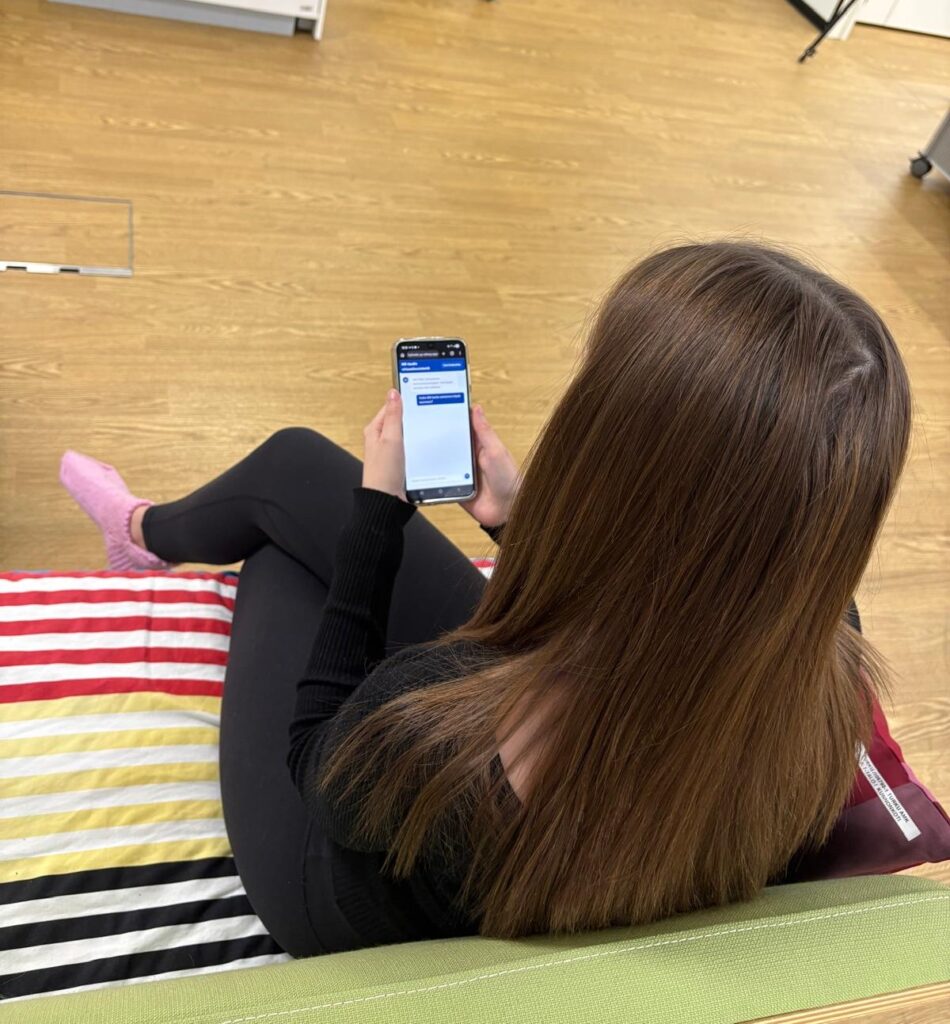
Survey respondents generally found the assistant easy to use. Yet use remained occasional, and practical benefits were less clearly established. Some participants found logging in cumbersome or struggled to phrase their questions. Answers did not always meet individual needs.
These experiences suggest concrete improvements: simpler access, example questions and guidance that connects more closely with rehabilitation goals. Professionals also saw potential for using the assistant together with clients as a starting point for discussion. Such uses could give the tool a clearer role alongside appointments and everyday rehabilitation.
Human contact remained central to participants’ expectations. As one participant put it: “Well, another person is still another person, after all.” Their feedback points to a supporting role for the assistant alongside personal guidance.
Learning across the Baltic Sea region
HybReDe brings together partners from Finland, Sweden, Estonia and Poland. Other pilots explored support for people with chronic pain in Estonia and chronic obstructive pulmonary disease in Poland.
Interreg cooperation creates an opportunity to learn across conditions and national service settings. The Finnish experience contributes a practical lesson: accessible technology also needs a clear purpose in people’s lives. The feedback provides a basis for developing virtual support that is easier to start using, more relevant and better connected to human care.

Additional links
details
-
Homepage
-
Project typeCore Project
-
ImplementationMarch 2025 - February 2028
-
StatusOngoing
-
Contribution to EUSBSRPolicy Area Health

-
Target groups
- Hospital and medical centre
- Interest group
- Small and medium enterprise
-
Social media
-
Additional links
-
Tags