




REDIRECT shares practical approaches to regenerative tourism with wider stakeholder groups
14 October 2026
Exploring the practical application of regenerative tourism
On 13 October, REDIRECT was presented at the ReStart Transnational Webinar on regenerative tourism, which brought together 71 participants from organisations and initiatives working with regenerative tourism across Europe.
Michael Ax from Skagen Uddannelsescenter introduced the REDIRECT Toolkit and its integrated approach to regenerative destination development.
The presentation generated discussions about the practical application and transferability of the tools. Participants expressed interest in accessing completed pilot examples, implementation plans, monitoring documentation and evaluation findings, as well as understanding the possibilities for adapting REDIRECT’s templates and Impact Calculator methodology to other Interreg projects.
These questions highlighted the importance of moving beyond conceptual frameworks towards practical guidance and documented examples that can support implementation in different destination contexts.
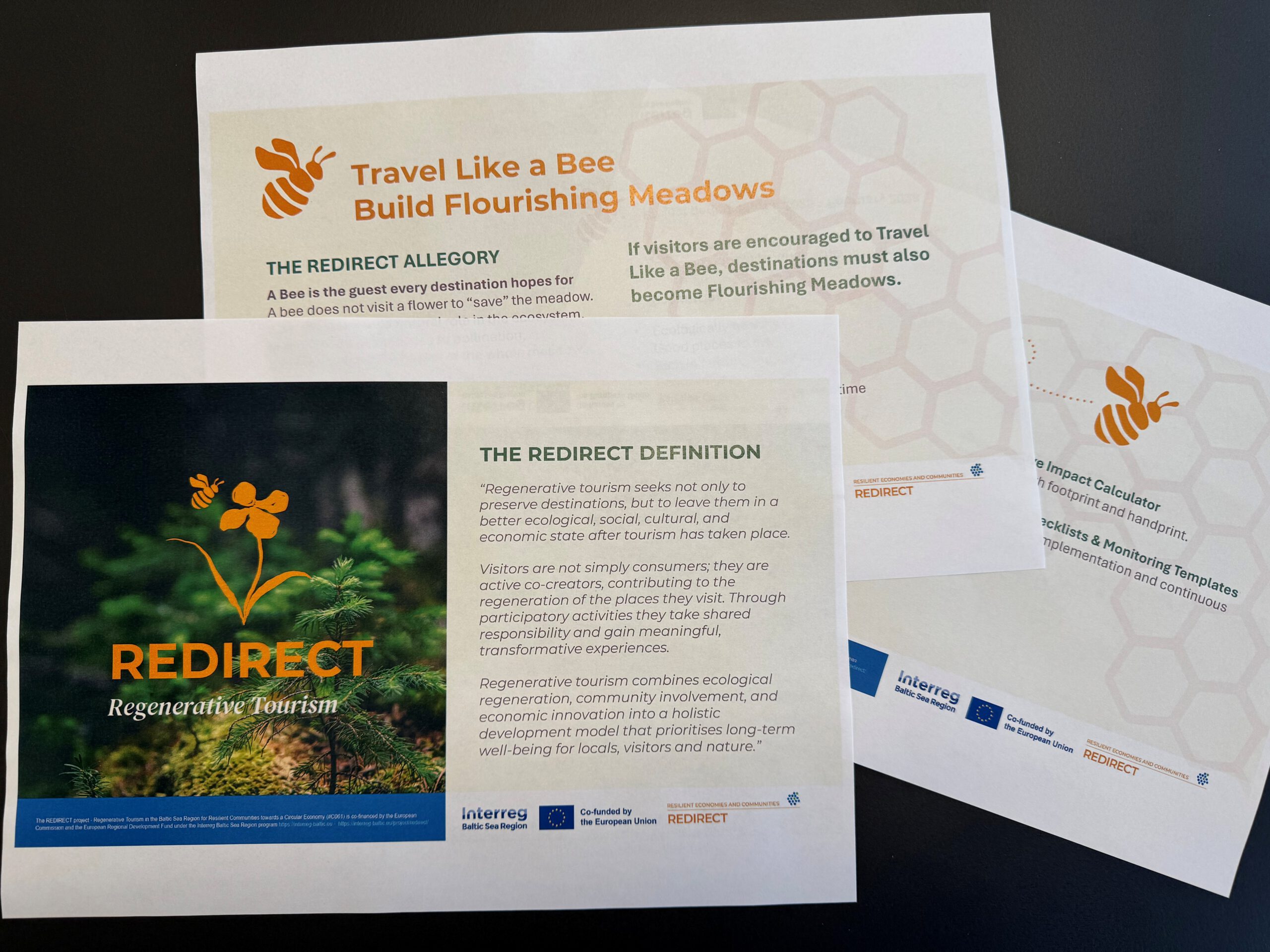
Particular interest was also expressed in REDIRECT’s Travel Like a Bee narrative. Several participants responded enthusiastically to the metaphor, highlighting its ability to communicate the principles of regenerative tourism in an accessible and relatable way.
The narrative presents a regenerative destination as a flourishing meadow, where ecosystems, local communities, businesses and visitors form an interconnected system. Within this framework, visitors are encouraged to move beyond minimising their negative impacts and consider how they can actively contribute to the places they visit.
The positive reception provided an encouraging indication of the narrative’s potential as a communication approach for making regenerative tourism more understandable to different stakeholder groups.
Connecting regenerative principles with existing local practices
On 15 October, REDIRECT partner DARR S.A. presented the project at EKOnferencja in Warsaw, Poland, reaching an audience of approximately 90 participants representing public authorities, tourism organisations, businesses, environmental institutions and local initiatives.
The presentation introduced REDIRECT’s objectives and practical tools, providing a basis for discussions about how regenerative principles relate to existing approaches to tourism and regional development.
An important observation from these exchanges was that several organisations are already implementing practices aligned with regenerative tourism, although they may not explicitly identify their activities within this framework.
Examples included initiatives supporting local producers and circular economic practices, reducing waste and encouraging more responsible interactions with natural environments.
The event also generated measurable engagement with REDIRECT’s communication materials. A total of 61 printed flyers were distributed or made available, and 26 online survey responses had been registered through the conference materials by 19 October.
Supporting the further development and transferability of REDIRECT’s tools
Although the two events addressed different professional audiences, both provided opportunities to introduce REDIRECT’s work beyond the partner regions and explore its relevance within wider discussions on regenerative tourism.
The exchanges also brought attention to two complementary aspects of the project’s ongoing work: the importance of communicating regenerative tourism through accessible concepts and the need for practical tools, examples and documentation that can support their application.
As testing continues across the REDIRECT partner regions, these perspectives are relevant to the further refinement, dissemination and potential transferability of the Toolkit.
By connecting the project’s methodological development with external professional dialogue, REDIRECT continues to build a foundation for broader understanding and future application of regenerative tourism principles across different destination contexts.

Additional links
details
-
Homepage
-
Project typeCore Project

-
ImplementationMarch 2025 - February 2028
-
StatusOngoing
-
Contribution to EUSBSRPolicy Area Tourism

-
Target groups
- Local public authority
- Small and medium enterprise
-
Social media
-
Additional links
-
Tags