




Circ@Home at Reusable Food Packaging Conference
19 November 2026
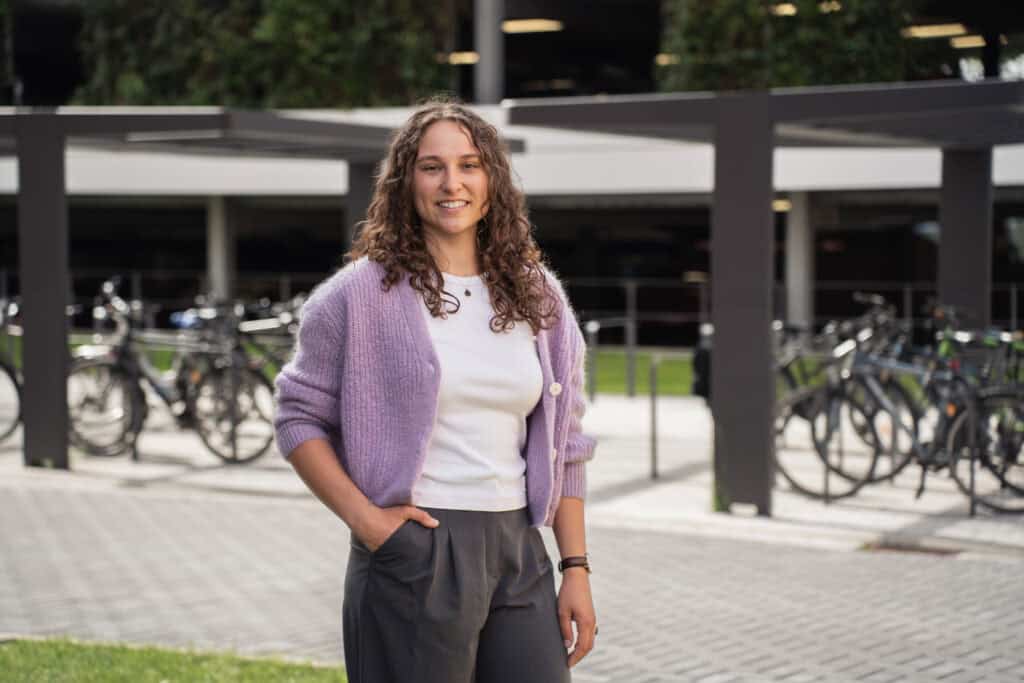
On 23 October 2026, the Circ@Home project manager attended the Reusable Food Packaging Conference in Copenhagen, exploring how reusable solutions can contribute to a more circular economy. From political perspectives to practical pilot projects, the conference offered valuable insights and inspiration. In this interview, she shares her key takeaways, highlights promising examples and reflects on how the lessons learned can contribute to the work of Circ@Home.
What made you interested in attending this conference, and what questions did you hope to find answers to?
There is a strong connection between our Circ@Home project and the Change(K)now! project. Since we take a holistic approach to the circular economy, reusables play a significant role in this. Therefore, it was very interesting for me to see the results of the Change(K)now! project and identify how the city, households and services work together to integrate a circular solution.
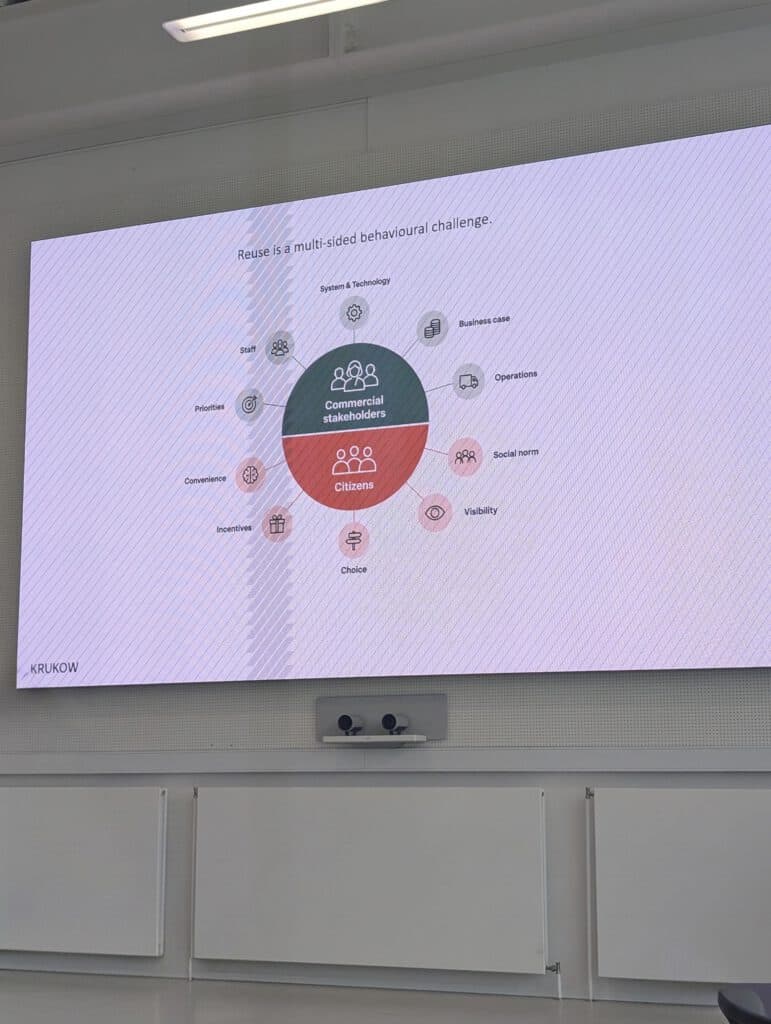
Was there anything you heard or saw at the conference that surprised you or made you look at packaging differently?
I really enjoyed the presentation by Rasmus Nordqvist (Member of the European Parliament), as he addressed a shift in the way we talk about the circular economy. At the political level, the concept is discussed from the perspective of security and resilience, rather than being primarily driven by climate change or sustainability interests. This is something I have been thinking about a lot lately.
Did you come across any examples or solutions that you think could work well in other places or projects? What made them stand out?
I found the pilot in Copenhagen particularly impressive. The collaboration with a major international stakeholder like Joe & The Juice highlighted two important things: first, that support from large stakeholders is essential to drive change and reach a wider audience; and second, that engaging such major partners is both achievable and can have a real impact.
How can the lessons from reusable packaging help us rethink the way we use resources and reduce waste?
It once again helps us to see that the topic is more complex than it seems. A reusable cup needs to be used several times before it becomes – from an ecological point of view – more sustainable than a single-use cup. And this varies considerably depending on which costs you include in your analysis. This teaches us that we need to really understand the different issues and think about good, holistic solutions. Some solutions may seem promising at first, but once all factors are taken into account, the perspective might change. We have to keep an open mind, be critical and reflect on our solutions.
After attending the conference, is there anything you would like to do differently in the Circ@Home work?
I think Circ@Home and Change(K)now! are difficult to compare, since one project takes a very holistic approach while the other focuses more on one part of the circular economy. However, what I hope for the Circ@Home project is that, in the end, we will have as many outputs and learnings as Change(K)now! and that we can present them to a broader audience in a similar way to how they did in Copenhagen.

Additional links
details
-
Homepage
-
Project typeCore Project

-
ImplementationMarch 2025 - February 2028
-
StatusOngoing
-
Contribution to EUSBSRPolicy Area Innovation

-
Target groups
- Interest group
- Local public authority
- NGO
- Small and medium enterprise
-
Social media
-
Additional links
-
Tags