





Regenerative tourism workshop attracted more than 70 participants at the 2026 Baltic Sea Region Tourism Forum in Helsingør
06 November 2026
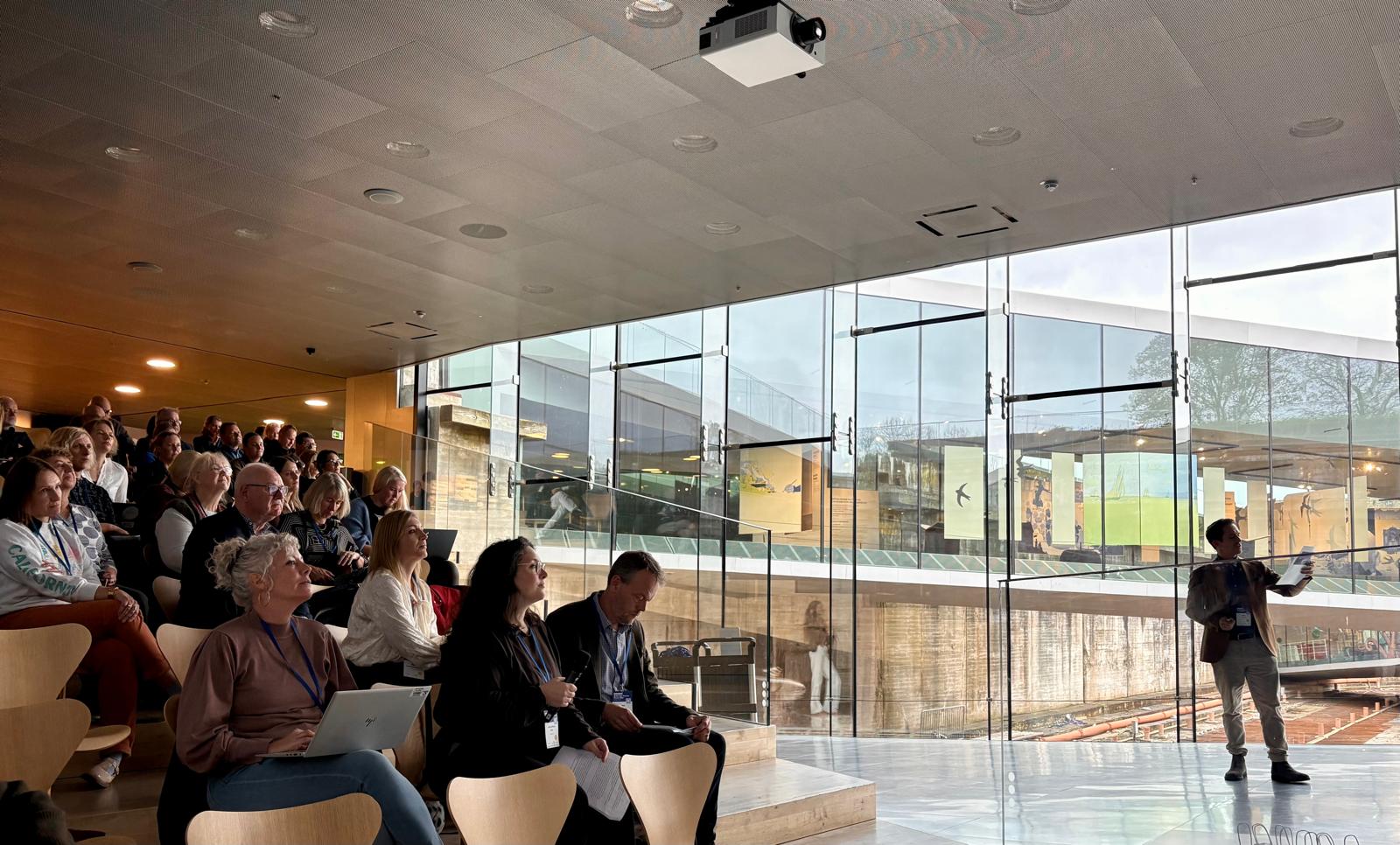
On 2 November, RegenT brought together over 70 destination organisations, national tourism organisations and ministries alongside, public authorities and tourism developers from nine countries at the Danish Maritime Museum in Helsingør for Creating a Shared Vision for Regenerative Tourism in the Baltic Sea Region. The day combined inspirational stories from across the region with a hands-on workshop on building a shared vision and action agenda and was arranged as part of the 2026 Baltic Sea Region Tourism Forum in Helsingør.
The event was part of RegenT’s work to help the tourism industry move towards actively strengthening places, communities and ecosystems. The project brings together results from seven European projects and is developing a knowledge hub, training and policy recommendations for public authorities, DMOs, NGOs and business support organisations. The workshop brought in further experiences and perspectives from the BSR.
Different places, a common question
The afternoon’s inspirational speakers approached regenerative tourism from very different settings, but a common theme quickly emerged, regeneration begins with the place.
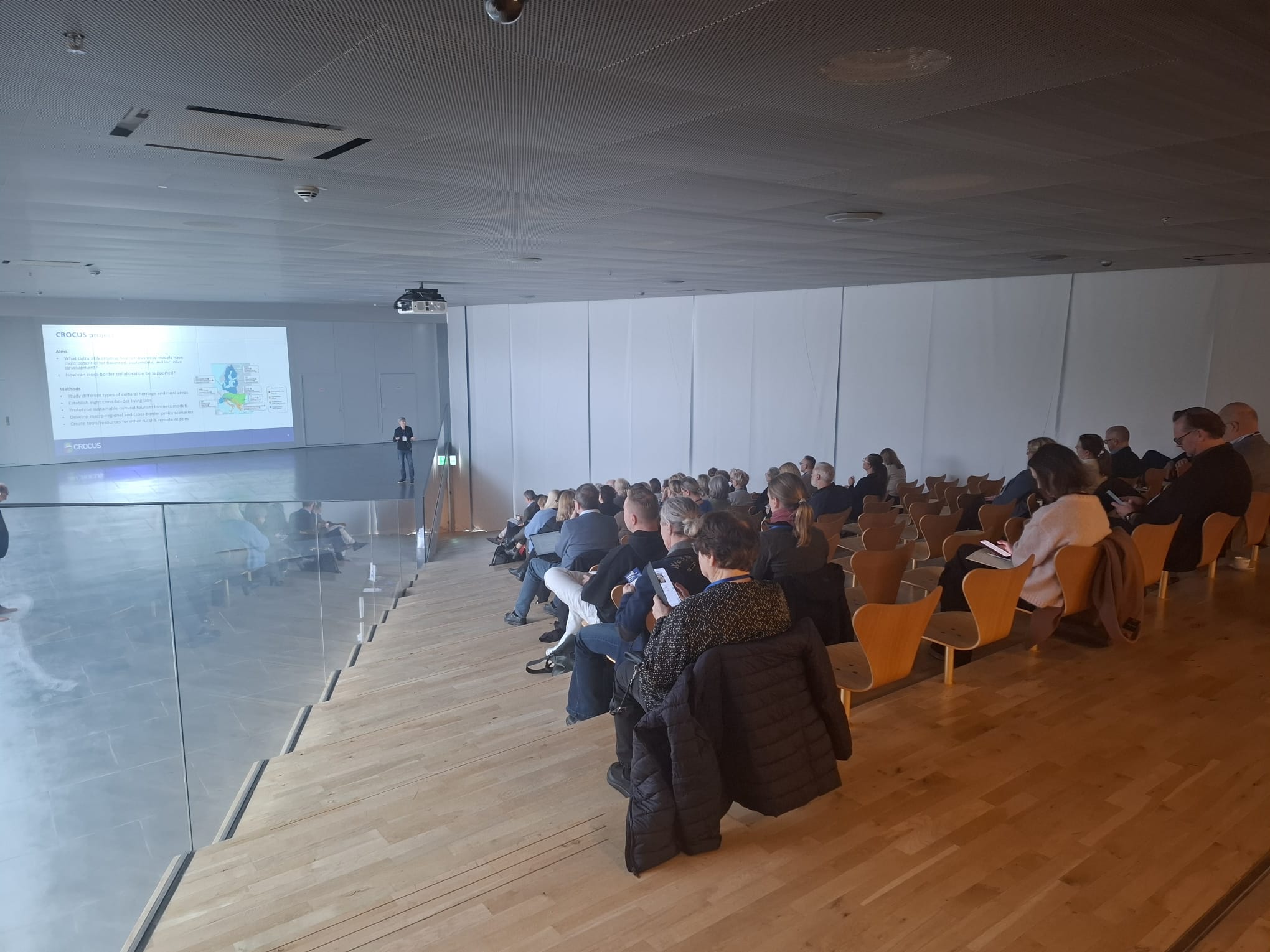
Laura James and Henrik Halkier from Aalborg University drew on the CROCUS project to show how cultural tourism can start with local resources, relationships and priorities rather than treating a place simply as a tourism product. Their examples demonstrated the potential of connecting residents, cultural organisations, businesses and authorities across borders, while balancing economic, cultural, social and environmental value. Many of the initiatives were NGO driven, but longevity however cannot rely upon volunteers alone, a viable business model must be found.
Hubert Gonera of Landbrand challenged participants to reconsider what is sometimes perceived as the weakness of peripheral regions. In Podlaskie, slower rhythms, living traditions, local food, nature and knowledge passed between generations become assets to protect rather than resources simply to package for consumption. His central message was equally important: authenticity alone is not regenerative. A place can still be “loved to death” unless tourism is designed to protect what makes it valuable.
That idea is being translated into practice through the Podlaskie Positive Tourism Network, which connects a visitor pledge to local businesses and experiences, encouraging travellers to slow down, respect local culture and nature, choose local products and leave something positive behind.
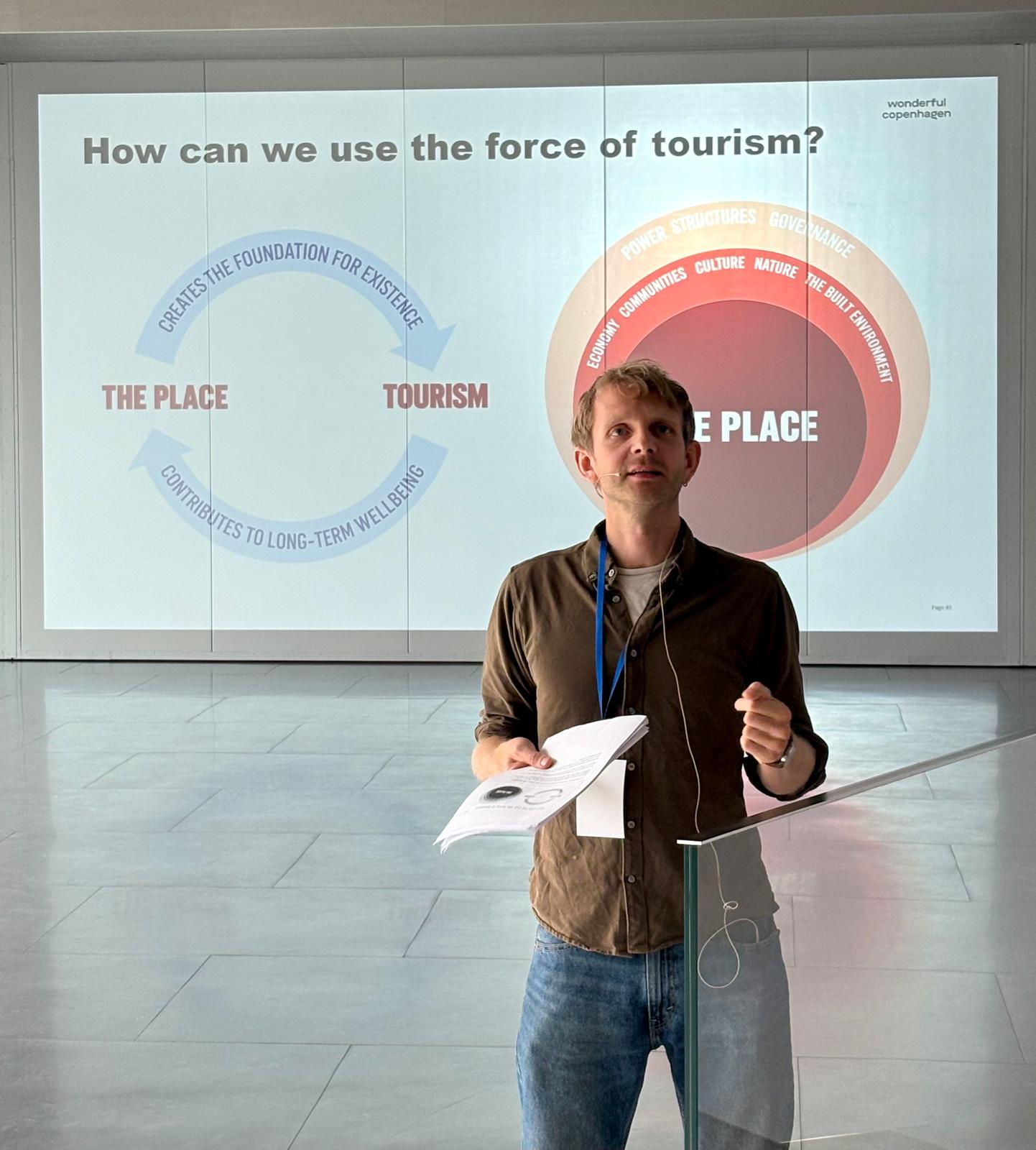
The urban perspective came from Morten Søgaard of Wonderful Copenhagen. His starting point was deliberately simple: rather than asking how tourism can become more regenerative, destinations can first ask what the place and the people living there actually need, and whether tourism can contribute.
In Copenhagen, this is opening connections with social enterprises, local businesses and communities that have traditionally sat outside the tourism economy. The emerging lessons include starting with the place rather than the product, looking beyond the conventional tourism industry, treating local organisations as genuine partners and measuring what actually changes for the community.
Marika Kose from the Estonian University of Life Sciences brought the discussion into rural Estonia, with examples including dugout boat traditions, smoke saunas, fishing communities and conservation camps. These cases demonstrated how cultural heritage, local knowledge, community engagement and nature restoration can become interconnected parts of the visitor experience.
Learning from 3ST and Theory of Change
Following a morning of inspirational examples, the RegenT workshop Creating a shared vision for regenerative tourism in the Baltic Sea Region shifted the focus from listening to working together. The workshop was designed as a first step in a longer conversation which will be continued both in national and Baltic Sea Region levels over the coming years.
The approach drew inspiration from the 3ST project and its experience of supporting collaboration and change in tourism. Led by Carolina Olsson and Fredrik Albin, participants were introduced to a simplified Theory of Change framework built around three straightforward questions:
What future would we like to see?
What needs to change for that to become possible?
What could we do to contribute to that change?
Importantly, the approach encouraged participants to begin with the future they wanted to create rather than jumping immediately to projects or activities. Facilitators from the RegenT consortium challenged broad concepts such as “sustainable”, “inclusive” or “thriving” by asking participants what these ideas would actually look like for a place or community.
Vision: what would be different?
The first stage invited participants to imagine tourism making a meaningful positive contribution to places and communities across the Baltic Sea Region and ask:
Change: what needs to shift?
Having considered the destination they wanted to reach, participants then worked backwards.
Action: what could help us move forward?
Finally, groups selected one of their priority shifts and explored what could help begin moving in that direction.
The questions also connected the discussion directly with RegenT’s needs analysis. What knowledge or practical skills are missing? What experience already exists elsewhere? What could collaboration across organisations or countries make possible? And what kinds of support could the emerging RegenT Knowledge Hub provide?
A starting point, not an endpoint
At the end of the session, the groups came together to share a priority shift and an important question or support need. Participants were then asked to reflect individually on one idea they would take back to their organisation and what they would like to explore further through RegenT.
The collected material will now help RegenT identify what resonates with tourism actors, where further dialogue is needed and what kinds of knowledge and support could usefully be developed through the Knowledge Hub. This will be shared on an upcoming news post.

Additional links
details
-
Homepage
-
Project typeProject Platform

-
ImplementationJuly 2025 - June 2028
-
StatusOngoing
-
Contribution to EUSBSRPolicy Area Tourism

-
Target groups
- Interest group
- International governmental organisation
- Local public authority
- Regional public authority
- Sectoral agency
-
Social media
-
Additional links
-
Tags