




Connecting material flows: LAB develops digital platform in Circular Ports
10 November 2026
Turning existing data into useful information
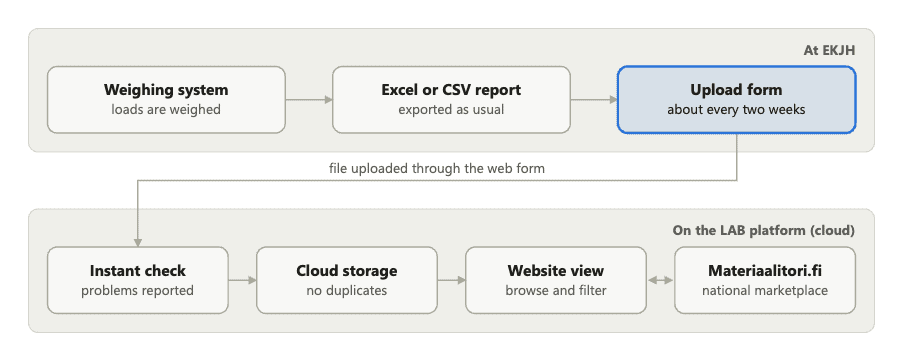
Rather than requiring companies to change their daily operations, the digital platform is being designed to work with their existing routines. This approach is now being tested in cooperation with Etelä-Karjalan Jätehuolto Oy (EKJH), which already weighs and records every load entering or leaving its sites, providing much of the data needed for the platform.
In practice, EKJH exports a report from its weighing system as usual and uploads it through a web form. The platform then checks the file, identifies any problematic rows and stores the data without altering it.
With this process in place, the next step is to turn the collected data into useful information. This helps identify how material flows change over time, which materials move in the largest volumes and where secondary materials could find new users.
Connecting the platform to Materiaalitori.fi
Another part of LAB’s work focuses on integrating the platform with Materiaalitori.fi, Finland’s national online marketplace for waste and side streams.
By connecting the platform with Materiaalitori.fi, LAB aims to make it easier for companies to access opportunities for material reuse. Users can already browse current Materiaalitori.fi announcements without leaving the platform.
The next step is to enable two-way communication, allowing companies to publish their own side streams on Materiaalitori.fi directly through the platform. This functionality is currently being developed and tested in cooperation with the marketplace’s administrator.
Together, these features aim to create a one-stop route from a company’s own material data to the national marketplace.
Lessons learned from the development process
The work has already provided several practical lessons about developing digital solutions for material flows.
One key lesson is the importance of agreeing on how data will be transferred before deciding what to build. Establishing this early helped save time and set realistic expectations for both sides.
The experience has also shown the value of working with data that partners already collect. Adapting the platform to an existing data export requires development work once, whereas asking partners to change their routines would create additional work every time they share data.
Another key finding is the importance of working with real sample files. They can reveal details about data structures and gaps that may be missed in written descriptions. Collecting historical data can also be valuable, even if it is not immediately needed.
These experiences are helping LAB develop and test a platform that builds on existing data and working practices while exploring new opportunities for material circulation.

details
-
Homepage
-
Project typeCore Project

-
ImplementationMarch 2025 - February 2028
-
StatusOngoing
-
Contribution to EUSBSRPolicy Area Transport, Policy Area Ship

-
Target groups
- Infrastructure and public service provider
- Local public authority
- Small and medium enterprise
-
Social media
-
Additional links
-
Tags