




Shaping the Future of e-Navigation: MaDaMe Final Seminar Highlights Progress and Next Steps for Digital Maritime Services
10 November 2026
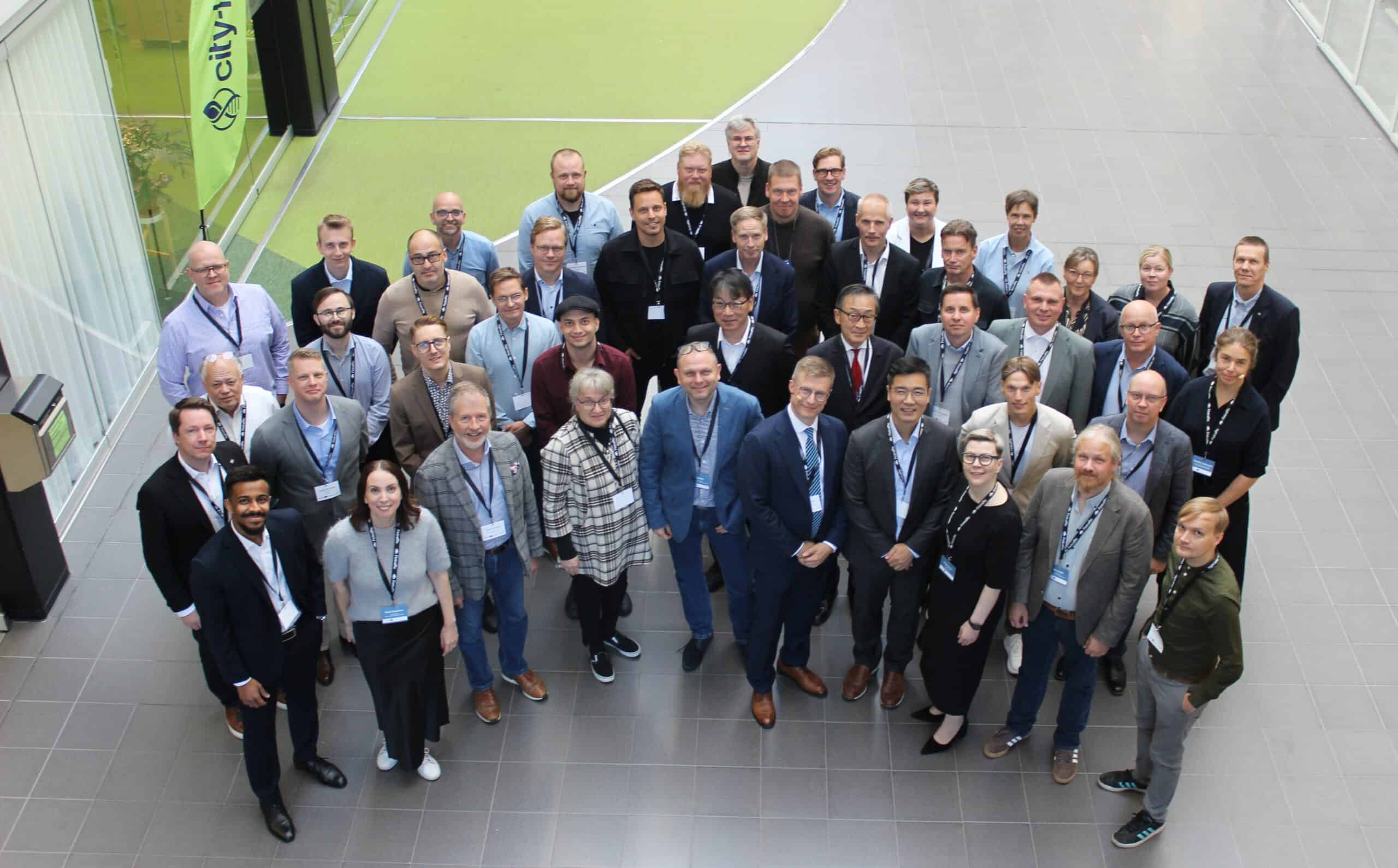
The MaDaMe project brought together 126 participants from 23 countries for its final seminar, Shaping the Future of e-Navigation, held on 30 September 2026 in Turku, Finland, and online. The event brought together maritime authorities, industry representatives, technology experts and other stakeholders to explore the project’s results and discuss the next steps towards operational digital maritime services, guided by the moderator of the day, Toni Sobott from the Finnish Transport Infrastructure Agency.
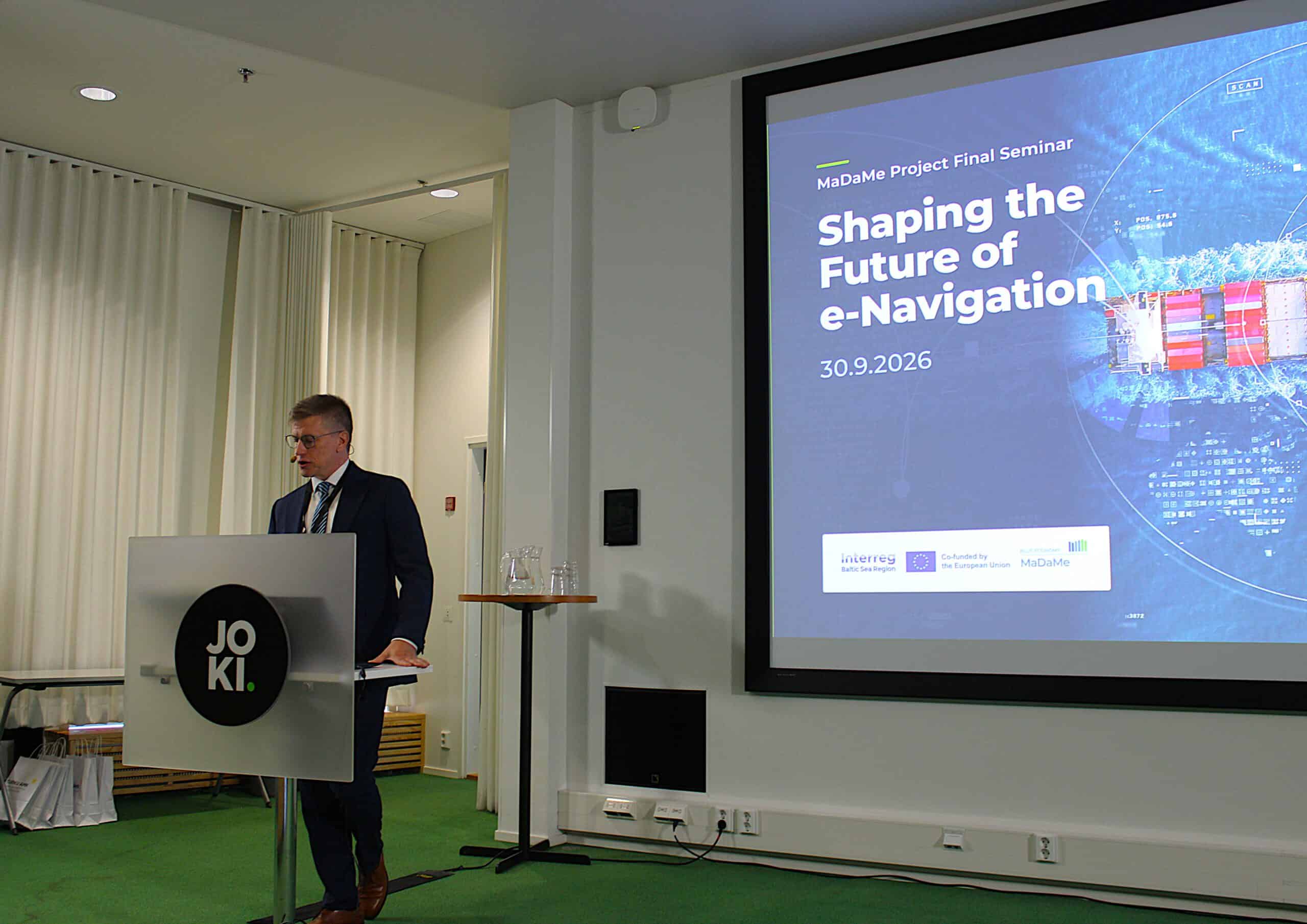
Over the past three years, the MaDaMe project, co-funded by the Interreg Baltic Sea Region Programme, has contributed to the development and piloting of digital maritime services and their supporting infrastructure. Following welcoming remarks by Tero Jokela from Turku University of Applied Sciences, the project’s lead partner, the seminar featured presentations on practical experiences and lessons learned from this work, covering S-100-based maritime services, secure connectivity, communication technologies and international standardization. The day concluded with a panel discussion bringing together perspectives from different maritime sectors to examine the benefits, challenges and operational implications of digitalization.
S-100 – Building the Foundation for Digital Maritime Services
The seminar’s first presentation, delivered by Juho Pitkänen from Fintraffic VTS, introduced S-100 as the common information foundation for the next generation of digital maritime services. Rather than simply being a new electronic chart format, S-100 provides a framework for integrating information from navigational charts, aids to navigation, weather services, vessel traffic services and other sources into a common navigational environment.
However, standardized information alone does not make a functioning digital service. As Pitkänen explained, delivering information reliably between shore-based service providers and vessels requires an entire ecosystem, combining common data models, harmonized service specifications, secure information exchange, trusted service infrastructure and suitable communication channels. These elements must also be integrated into existing systems and operational procedures.
The MaDaMe project demonstrated how these components can work together in practice. One example was the piloting of three digital maritime services in Finland within a shared technical environment, connecting shore-based service providers, the Maritime Connectivity Platform and ship-side systems. This represents an important step from developing individual technologies towards interoperable digital maritime services.
S-125 – Up-to-Date Information on Aids to Navigation
The Aids to Navigation (AtoN) Information Service, presented by Tuomas Martikainen from the Finnish Transport Infrastructure Agency, provides mariners with authoritative, up-to-date information on the status of physical and virtual aids to navigation. Based on the IHO S-125 product specification, the service complements electronic navigational charts with timely information on changes, such as missing, unlit or displaced navigation marks.
MaDaMe piloted the delivery of AtoN information using IP-based communication and standardized service interfaces through bridge simulator exercises, onboard trials on M/V Finnsirius and technical field measurements using mobile networks. The pilots demonstrated that near real-time AtoN status information can be delivered to vessels, with subscription-based updates enabling efficient information exchange. User feedback was generally positive, highlighting the value of up-to-date information for situational awareness. The tests also examined the combined presentation of AtoN information and S-124 Navigational Warnings, finding no significant problems with overlapping information.
An important outcome was demonstrating how IALA’s Technical Service specifications enable standardized delivery of S-125 information to end users. This opens opportunities for early operational implementation in non-ECDIS applications, without waiting for S-100-compatible ECDIS systems. Further work will focus on interoperability testing, alignment with evolving standards and progressing towards operational service provision.
S-124 – Bringing Navigational Warnings onto the Navigational Display
Navigational Warnings provide mariners with essential information about hazards and other circumstances affecting safe navigation. Christopher Saarnak from the Danish Emergency Management Agency explained how the S-124 standard enables a significant change in their delivery and use. Traditionally distributed through systems such as NAVTEX, navigational warnings can now be provided as machine-readable, georeferenced information and displayed directly on the ship’s navigational system, making it easier to identify warnings relevant to the vessel’s route and operating area.
The MaDaMe project tested S-124 Navigational Warning services in Finland, Poland and Denmark, using both IP-based connections and VDES (VHF Data Exchange System). The pilots successfully demonstrated that S-124 warnings can be transmitted from shore to ship using both communication methods and presented on a navigational display. The results also confirmed the applicability of the relevant international standards for data exchange and service delivery.
Wider adoption of S-124 will benefit from continued international coordination. The potential recognition of S-124 within the Global Maritime Distress and Safety System (GMDSS) could significantly expand its adoption and benefits, although it is not a prerequisite for operational implementation. Implementation must also be coordinated with other S-100-based products, including electronic navigational charts and Aids to Navigation information, to ensure interoperability and consistent presentation of information.
Further development and testing will continue through the DynaNav project, including cross-border cooperation between Denmark, Norway and Sweden and exploring satellite-based VDES communications to improve the availability of maritime safety information in areas such as the Arctic.
Traffic Clearance Service – The First Milestone in Digital VTS Services
The Traffic Clearance Service (TCS), presented by Sirpa Kannos from Fintraffic VTS, enables two-way operational communication between vessels and VTS, distinguishing it from the one-way information services presented earlier in the day. It is the first of a broader set of digital VTS services designed to work together, with the greatest benefits expected from their combined use.
MaDaMe piloted TCS in a bridge simulator at Aboa Mare in Turku and onboard Finnlines’ M/S Finnsirius, combining technical testing with feedback from the two main end-user groups: vessel navigators and VTS operators.
The pilots demonstrated the technical feasibility of TCS and its potential for operational communication. The findings highlighted benefits including improved clarity and traceability of communication. Moving routine communication to digital channels could also help reduce congestion on VHF channels, leaving capacity available for urgent, safety-critical or more complex situations.
Looking ahead, attention needs to shift beyond technical development towards the wider operational environment. Key areas include integration into existing VTS systems and operational procedures, defining how digital and voice communication are used alongside each other, maintaining a common situational picture, and training for both VTS operators and vessel-side users. These considerations apply not only to TCS but to the entire suite of digital VTS services.
The development and piloting of TCS also demonstrated the value of continuous two-way exchange between practical implementation and international standardization, with pilot findings contributing to IALA’s ongoing work.
Maritime Connectivity Platform – Building the Infrastructure for e-Navigation
The Maritime Connectivity Platform (MCP) provides essential infrastructure for secure and interoperable digital maritime services. Thomas Christensen from Digital Maritime Consultancy explained how MCP enables maritime organizations and systems to identify each other, discover available services and exchange information securely.
MCP consists of three main components: the Maritime Identity Registry (MIR), which supports digital identities and authentication; the Maritime Service Registry (MSR), which enables service discovery; and the Maritime Messaging Service (MMS), which supports communication across different connectivity channels. Its decentralized architecture allows organizations to operate their own infrastructure while remaining part of an interoperable network. With the relevant specifications becoming increasingly mature and standardized, MCP is developing into a key enabler for the secure delivery of dynamic S-100 data.
Christensen also introduced the Open Digital Incubator (ODI), an international collaboration bringing together maritime authorities, research organizations and commercial actors to accelerate the practical implementation of digital maritime services. The experience highlights the importance of moving beyond individual service implementations towards a shared, interoperable infrastructure. Through practical testing, international cooperation and continued development of standards, initiatives such as ODI are helping to lower the barriers to implementing digital maritime services and support their transition towards operational use.
Communication Channels – Secure Connectivity for Digital Maritime Services
Reliable and secure communication between vessels and shore-based systems is essential for digital maritime services. Mads Svendsen from Sternula presented an overview of the available communication technologies, focusing particularly on cybersecurity and the development of the VHF Data Exchange System (VDES).
Digital maritime services can be delivered through IP-based connections, such as mobile and satellite broadband networks, or through VDES, which provides a dedicated maritime communication channel. Svendsen emphasized the importance of security when selecting communication solutions, particularly as cyber threats to maritime systems continue to grow. He highlighted the security features of VDES, including digitally signed messages and the possibility of exchanging information without exposing onboard operational technology systems directly to IP networks.
MaDaMe used both IP-based communication and VDES in its pilot activities. Svendsen presented the results of two types of VDES testing for transmitting S-124 Navigational Warnings: terrestrial transmissions from a shore station in Korsør, Denmark, and satellite-based communication along a route between Klaipėda and Helsinki. Both approaches successfully delivered navigational warnings, although the tests also highlighted VDES limitations, including lower data rates compared with broadband connections and delays in satellite-based communication.
While VDES has developed significantly, further work is still ongoing to support its wider use in maritime operations. Different communication technologies will continue to have complementary roles in delivering digital maritime services, depending on coverage, capacity, security and operational requirements.
International Standardization – A Continuous Cycle of Development and Testing
International standardization is essential for ensuring that digital maritime services work together across systems and national borders. Caroline Johansson from the Swedish Maritime Administration highlighted the continuous feedback loop between standardization and practical implementation. Standards provide the basis for developing and testing digital services, while projects such as MaDaMe generate findings that contribute to their further development. Updated standards can then be implemented and tested again, repeating the cycle until they are sufficiently mature to support reliable and interoperable services.
Johansson illustrated this process through the development of the S-125 Aids to Navigation Information Service. Simulator, onboard and field trials generated findings on data content, portrayal and incremental updates. These results were fed into the joint IHO–IALA S-125 Task Group and IALA ARM Committee, providing practical evidence for refining the specifications.
MaDaMe has contributed to international standardization across the project’s activities, covering both digital maritime services and their supporting infrastructure. Its work has involved cooperation and exchange of information and experiences with experts and organizations beyond the project consortium, connecting practical development and testing with the work of the International Hydrographic Organization (IHO), the International Association of Marine Aids to Navigation and Lighthouse Authorities (IALA), the International Electrotechnical Commission (IEC) and the International Maritime Organization (IMO).
Panel Discussion – Who Benefits from Digital Maritime Services?
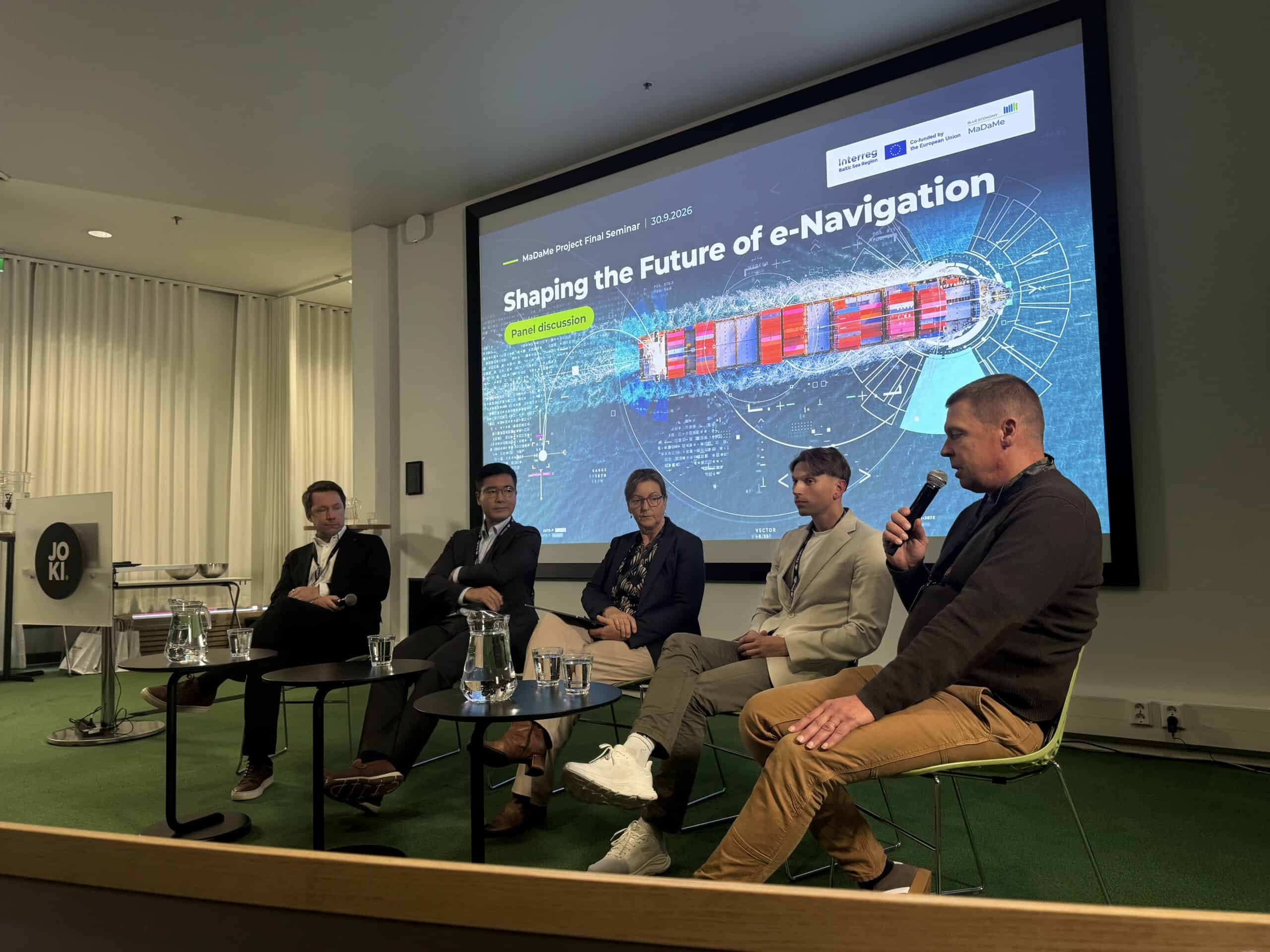
The seminar concluded with a panel discussion exploring the benefits, challenges and practical implications of digital maritime services from different perspectives. Moderated by Toni Sobott, the discussion brought together Minsu Jeon from IALA, Esa Kallio from Fintraffic VTS, Ulla Bjørndal Møller from the Danish Emergency Management Agency, Olli Taipale from Finnpilot Pilotage and Jussi Vaahtikari from ESL Shipping.
Improved maritime safety emerged as the primary benefit of digital maritime services, supported by more reliable information, better situational awareness, clearer communication and improved support for navigational and operational decision-making. Other benefits vary across the maritime sector, including more efficient resource allocation and just-in-time operations in pilotage, reduced workload and potential fuel savings in shipping, and faster delivery of reliable information to vessels by maritime authorities.
Fragmentation emerged as a major barrier to wider adoption, including differences in national approaches and implementation schedules, technological readiness, and shipowners’ resources and willingness to invest. The panelists emphasized international harmonization and common standards to prevent incompatible solutions and ensure interoperability. They also highlighted the need to demonstrate genuine added value through reliable, high-quality data and evidence of safety benefits.
The impact on everyday working practices was another important theme. Introducing digital services alongside established ways of working requires careful management of operational risks and human factors. Operating traditional and digital processes in parallel may initially increase workload before longer-term benefits can be realized. New systems must also be sufficiently reliable and robust from the very beginning to gain users’ confidence.
In the final round, the panelists were asked what needs to happen over the next five years to make digital maritime services part of everyday operations. The responses highlighted the importance of completing common standards and turning development efforts and international cooperation into practical results. The introduction of S-100 ECDIS in 2029 will be an important step, although challenges remain in ensuring the availability of compatible data and services. The importance of a broader approach to e-Navigation was also raised, recognizing that digital maritime services should not be developed in isolation from wider technological developments and global challenges.
MaDaMe Project Comes to an End, but the Work Continues
As the MaDaMe project comes to an end, its results and lessons learned provide a foundation for further development of digital maritime services. The final seminar demonstrated the progress made through practical piloting and international cooperation, while also highlighting the work still needed to bring these services into everyday maritime operations. Continued collaboration among all maritime stakeholders will be essential in taking the next steps towards operational implementation.

Additional links
details
-
Homepage
-
Project typeCore Project

-
ImplementationNovember 2023 - October 2026
-
StatusCompleted
-
Contribution to EUSBSRPolicy Area Safe, Policy Area Ship

-
Target groups
- International governmental organisation
- Large enterprise
- National public authority
- Small and medium enterprise
-
Social media
-
Additional links
-
Tags