




“The lesson is: Just get started”
31 December 2025
As climate change progresses, water recycling will become increasingly important in the Baltic Sea Region as well. The WaterMan project has shown that the region needs an approach of its own – and how much can already be achieved today by taking a pragmatic path and making smart use of existing technologies. In this interview, Lead Partner Tobias Facchini and Project Coordinator Jens Masuch look back on the project and share their most important lessons.
We have just returned from joint on-site visits to the Swedish WaterMan pilot measures. Most partners already knew them from presentations and videos. What difference does it make to see these solutions with your own eyes?
JM: Today was actually the first time I had seen the Swedish pilots fully implemented on site – and I immediately had a few eye-opening moments. I knew, for example, that Klas Eriksson’s mobile UV treatment system for water from the municipal wastewater treatment plant was a turnkey solution. But it was only today, here in Kalmar, that I realised that these simple container-based systems have already been used by Swedish farmers for years to treat rainwater. So this is a very versatile solution that could become a real game changer when it comes to getting water recycling off the ground in the Baltic Sea Region. It is compact, technically mature and can treat water from a wide range of sources to produce fit-for-purpose water for many different applications.
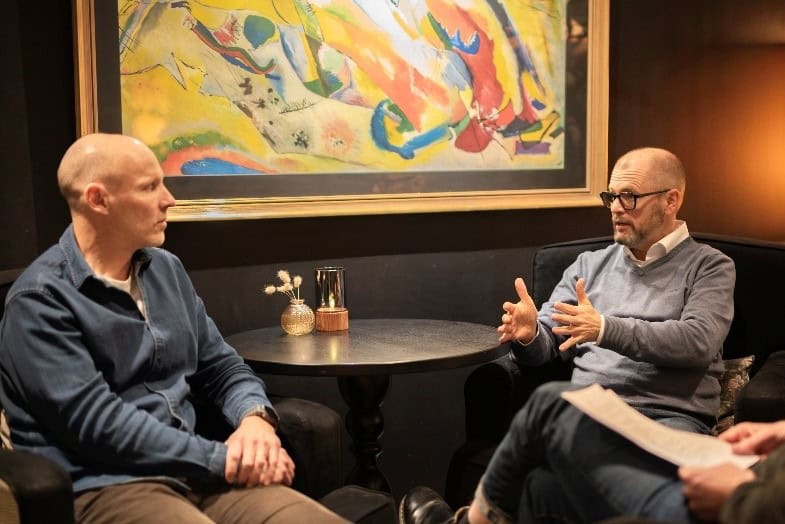
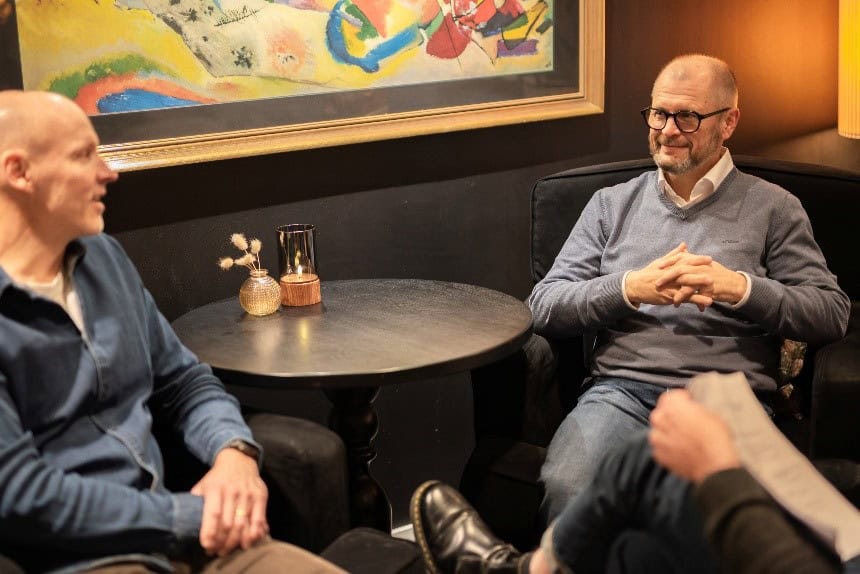
Tobias Facchini and Jens Masuch discussing the lessons learnt from the WaterMan project
TF: Even so, adapting the system for Kalmar still presented some challenges. The municipality wants to use it only when needed rather than operating it continuously. Even the developers were unsure whether that would work. But now it does – making the solution even easier to implement.
I live in Kalmar myself, and today I had another such eye-opening moment in our neighbouring region of Västervik. During the on-site visit, I realised just how strongly Anders Fröberg and his team are building on local knowledge with their multi-dam concept. The basic idea is to create smaller retention ponds with water abstraction points close to potential users. What I was not aware of was that they study historical maps and deliberately look for areas where bodies of water existed hundreds of years ago. Water is still naturally retained particularly well in these locations. This means there is no need for expensive artificial liners, which significantly reduces costs.
JM: They now have a locally developed tool that has been refined over many years and is extremely effective. That is impressive. And again, this is a relatively straightforward, practical water recycling solution that could be implemented in many other places across the Baltic Sea Region.
“There is a psychological dimension to it as well. Experiencing something first-hand on site changes the way you absorb information.”
You could have learned all of that from a presentation. Where does this ‘eye-opening’ effect of on-site visits come from?
JM: For one thing, you often only fully understand certain solutions once you have actually seen and experienced them in their real setting. There is a psychological dimension to it as well. Experiencing something first-hand on site changes the way you absorb information. Afterwards, you associate it with the atmosphere, the impressions and even the smells. It is simply a much richer learning experience than sitting in a conference room.
The smells of a wastewater treatment plant certainly stay with you.
JM: (laughs) In that respect, our topic probably gives us a slight advantage when it comes to memorable learning experiences. But seriously: WaterMan is all about hands-on solutions using existing technologies, combined with peer learning. These visits bring both together in a very concentrated way and create a much deeper understanding. That was extremely valuable for the joint development of the pilot solutions within the project. And because on-site visits like the ones today are such an effective way of sharing knowledge, our Helpdesk will continue to arrange and facilitate them for interested stakeholders even after the project has ended.
TF: Being on site is also often what prompts the really important questions.
Even though you are from Kalmar yourself, Tobias, you asked a lot of questions today.
TF: Sometimes during visits like these I deliberately ask questions even when I already know the answer – so that everyone else can hear it directly from the people involved.
JM: It is about creating a natural dialogue, not only with the people behind each pilot measure, but also among the visitors themselves. You have one very tangible example and many different perspectives and questions on it. That leads to a much deeper understanding and, at the same time, creates very effective networking.
Looking back, what was the core idea behind WaterMan – and did it work?
TF: It started with a realisation within the Water Core Group of Euroregion Baltic: climate change is increasingly bringing an alternation between heavy rainfall and dry periods even to the humid Baltic Sea Region. In some areas, including ours here in Kalmar, this is already leading to temporary water shortages. The idea was therefore to work with partners from six countries to implement pilot measures and develop local model strategies – taking a very hands-on approach and simply getting started with the technologies and knowledge already available. The aim was to put concrete water recycling measures into practice in the regions, supported by peer-learning sessions in which everyone shared their experiences and helped one another.
JM: The basic idea is this: instead of using valuable groundwater and drinking water for everything, everywhere, we add smaller recycling loops to the large natural water cycle. These loops treat water from alternative sources to the quality needed for different purposes. There is one important difference between humid areas like the Baltic Sea Region and the semi-arid regions in southern Europe. Here in the north, it is not only about recycling municipal wastewater. We still receive plenty of rain and are even facing growing problems with flooding. We can make use of this water during periods of shortage. And this is not only about irrigation in agriculture. It can also mean process water for industry or water for sports grounds and urban green spaces. In short, it is about developing a new approach to local water management through water recycling.
Hence the name “WaterMan”. And did it work? Absolutely. We now have six real-world solutions, four feasibility studies and seven local and regional model strategies demonstrating what can be achieved.
What developed differently from what you had expected – and why was that a good thing?
TF: WaterMan was an exceptionally hands-on project. I was genuinely surprised by the drive and determination some people brought to it. Take the partners from Saldus Municipality in Latvia, for example. Eva Jēkabsone and Janis Blūms took the municipal plans for a new fountain in Saldus’ central square and consistently developed them into a holistic solution combining flood protection and water recycling. The fact that the final design ultimately proved too expensive does not diminish that achievement. They turned their concept into a detailed feasibility study and a ready-to-build solution. As soon as funding is available, it can be implemented.
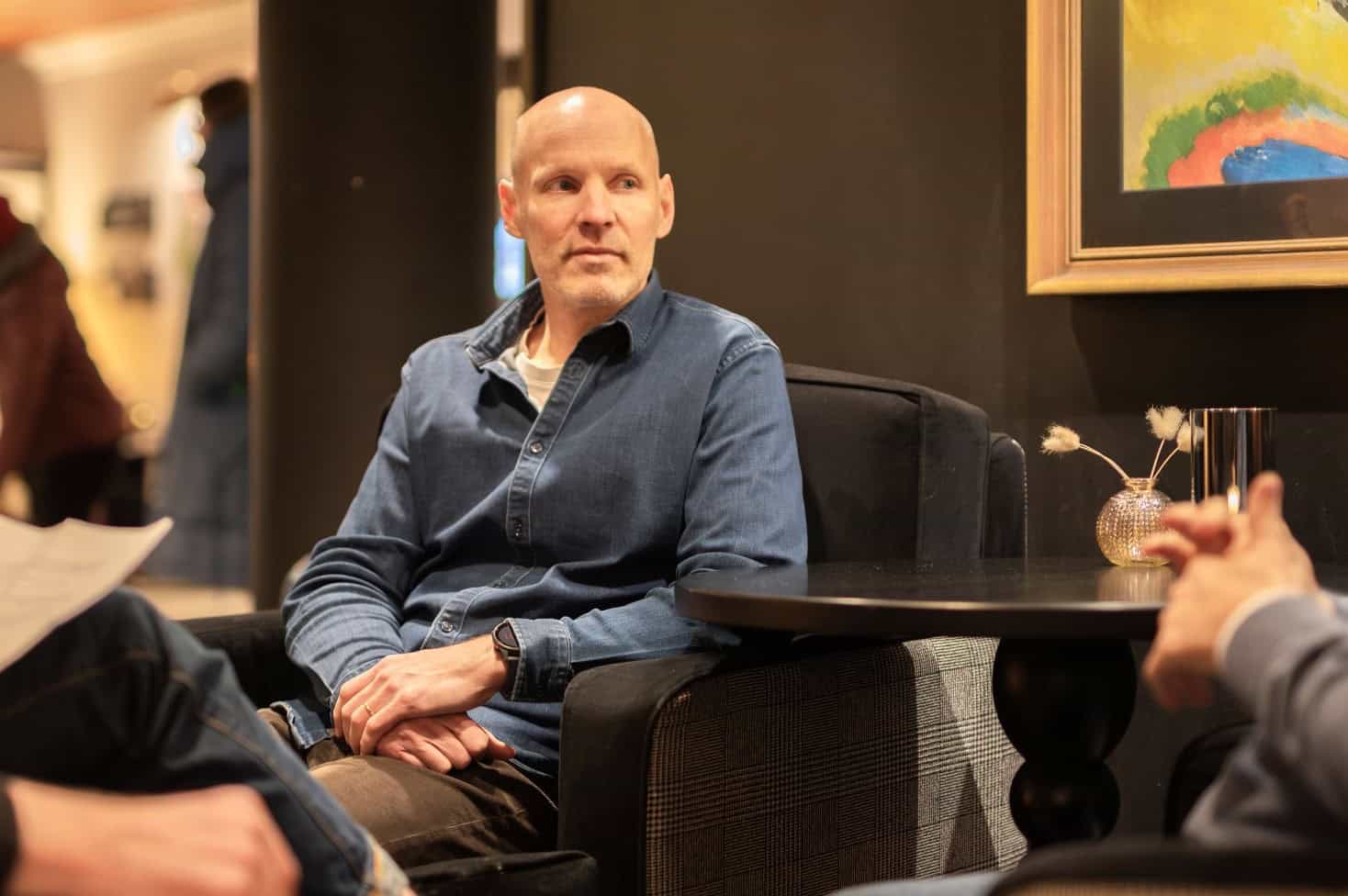
“WaterMan was an exceptionally hands-on project.I was genuinely surprised by the drive and determination some people brought to it.”
JM: When we brought the Latvian partners into the project, the relevance was not immediately obvious to everyone. Some sceptics suspected that water recycling had simply been added to the proposal to secure funding. In hindsight, that concern was completely unfounded. In fact, it was precisely because their concept became so sophisticated – including underground storage and stromwater purification – that the pilot measure ultimately exceeded the budget available within WaterMan. Turning it into a feasibility study was not a failure at all. It was the result of their determination to develop a genuinely integrated solution combining flood prevention and water recycling, and to make the most of the specific opportunities for water recycling in humid regions such as the Baltic Sea Region.
Among many other partners whom I cannot all mention here, Valdas Langas and Vytautas Bernadisius from Klaipėda University also impressed me greatly. In Lithuania, the challenge was to put water recycling on the agenda in the first place – starting with a retention pond that also allows water to be recycled. The way they drove the process forward and then implemented it together with Mindaugas Šatkus and Feliksas Žemgulys from Klaipėda District Municipality was remarkable. Valdas and Vytautas genuinely wanted to make a difference on the ground rather than focus primarily on academic recognition, as researchers sometimes do. That was exceptional.
“The increasingly extreme alternation between too much and too little water is precisely where a major opportunity lies for an approach to water recycling tailored to the Baltic Sea Region.”
Was everyone equally convinced that water recycling should be the main focus? When we talk about water management in the Baltic Sea Region, flood protection and reducing nutrient loads are important issues as well – and still the main concern.
JM: We had exactly those discussions at the beginning. In many regions, the increase in heavy rainfall events is still the most noticeable impact of climate change. Not everyone has yet experienced droughts as severe as those Kalmar has seen in recent years. But that is gradually changing. We considered all of this very carefully and concluded that the increasingly extreme alternation between too much and too little water presents a major opportunity for an approach to water recycling tailored to the Baltic Sea Region – one in which rainwater plays a central role as an easily available alternative water source. Not everyone was fully convinced straight away. After three years of WaterMan, however, the situation is different. Today, it seems to me that the importance of the issue is widely recognised.
Were there no persistent sceptics?
TF: Conditions vary considerably from one region to another. In Kalmar, after several summers of drought, it would be rather strange to still question the need for action. Here, the call for a new approach to water management is coming from the population itself. In one of the Baltic countries, where flooding is the more immediate problem, a sceptical attitude is easier to understand. Our response was that water recycling is not only about preventing water scarcity. It is about more sustainable water management in general and about creating targeted synergies with flood protection. That gave many people food for thought.Several partners also experienced heat and temporary water shortages in their own regions during the project. That fundamentally changes your perspective. Suddenly, improving water resilience simply makes sense.
JM: At the beginning, many participants associated the term “water scarcity” with images of desert landscapes. We first had to make one thing clear: nobody in the Baltic Sea Region is going to die of thirst in the future. We are talking about water scarcity that tends to occur in relatively small geographical areas and usually for shorter periods, but which can still have serious consequences. The first things to be restricted are usually the “nice-to-have” uses. In Kalmar, for example, there have already been periods when using drinking water to water private gardens or fill swimming pools was prohibited. As more and more of the participating regions experienced summers like that themselves, you could almost see the awareness shifting.
There were real-world pilot measures and there were feasibility studies. What was the role of each of these formats?
TF: Most partners had ideas they were able and eager to put into practice directly. Other pilot measures were not yet at that stage and driven rather by strategic considerations or first needed a stronger theoretical basis. But of course, the feasibility studies were also carried out with the ambition of implementing concrete measures sooner or later.
JM: That was the reason why the project’s overall heading was “bringing water recycling into practice”. At the same time, we learned that some ideas are more complex and need more preparation. Power-to-X on Bornholm is one example. Another is the fountain with a retention reservoir in Saldus that we have already mentioned. At those points, we decided that a feasibility study was the right format. The same applies to Berlin, where the focus is on a very large wastewater treatment plant and the potential recycling of water for industrial purposes. Implementing that within the project would simply have exceeded both the budget and the available timeframe. Even so, these studies have achieved a great deal. They have already paved around 60 to 70 per cent of the way towards concrete implementation. On top of that, the approaches are highly transferable and could just as well be implemented elsewhere.
Despite this strong practical focus, scientists were also involved. What role did they play?
TF: If you want to implement concrete pilots, it is important to keep reviewing the plans critically from a technical and scientific perspective throughout both the preparation and implementation phases: Is what we are doing sound? Where can we improve it? The researchers played an important role in this. We deliberately brought their expertise into the peer-learning sessions.
So rather than refining every detail theoretically first, you started pragmatically and added the scientific foundation alongside implementation?
JM: Exactly. The idea was to start pragmatically with existing technologies, but the accompanying scientific input was extremely valuable in helping us optimise the solutions. We deliberately called our meetings “Peer and Expert Review Sessions” because a small panel of experts was always involved as well – consisting of our partners from KWB in Berlin, Gdańsk University of Technology and Klaipėda University. For specific questions, we also brought in additional specialists.
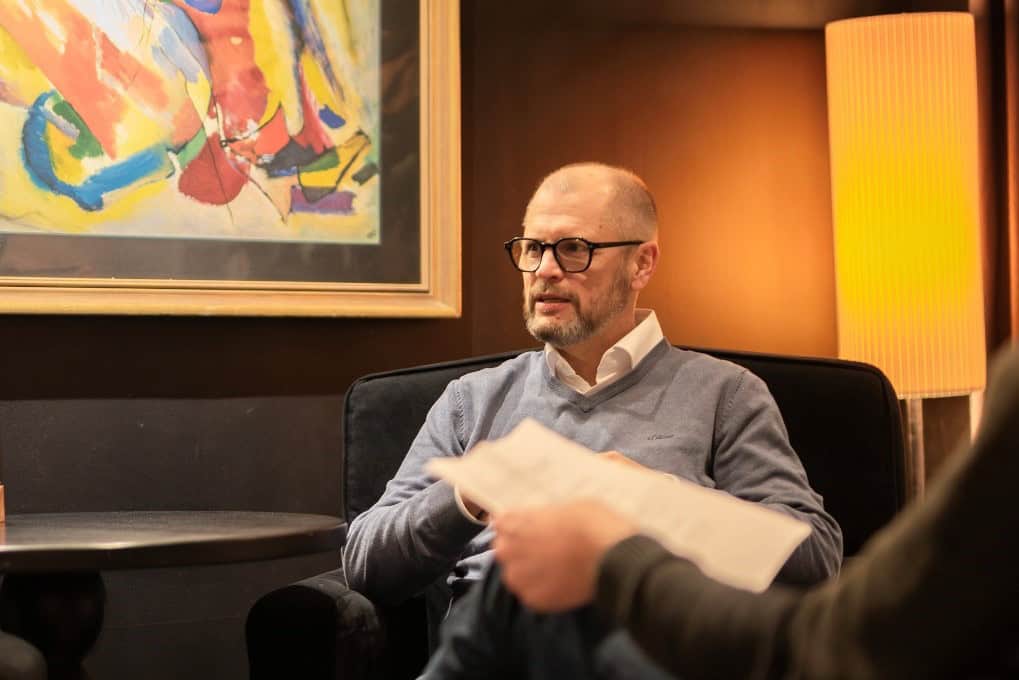
“We are talking about water scarcity that tends to occur in relatively small geographical areas and usually for shorter periods, but which can still have serious consequences.”
TF: It is also important to point out that the first reviews took place while the ideas were still being developed. This meant that many important adjustments could be made even before implementation began. The partners were also able to discuss specific issues directly with the researchers at any time and develop them further. I know, for example, that Klas Eriksson had several very productive online meetings with Berlin Centre of Competence for Water to advance his mobile container-based solution in Kalmar. The whole process was very iterative and dynamic.
Hands-on science for hands-on measures?
JM: It was applied research in the best sense of the term. The researchers and partner institutions were carefully selected. This was also an area where the international dimension of WaterMan was particularly valuable. Not every country had scientific advisers who combined such in-depth expertise in water recycling with a hands-on perspective.
All partner regions were also asked to define strategies for the further development of water recycling. How does that fit with the idea of “just getting started”?
JM: Extremely well. There is a tendency, particularly in Germany, to think of strategy in very linear and static terms: first think, then act. I initially expected us to take a more theoretical approach as well, based on research-driven analysis and a systematic definition of objectives and action plans. But that, too, developed quite differently: much more iteratively and dynamically. We realised that if you want to develop a viable strategy, you first need a good example. Once the pilots were in place in the partner regions, the local discussion about water recycling changed completely. It was almost as if the burden of proof had been reversed: suddenly, the question was no longer ‘Why should we do this?’ but ‘Why shouldn’t we, if it can be done so easily?’ And that is precisely the message we should be taking out into the world.
TF: This led to an impressive variety of model strategies: from an inspiration book for the Zemgale region in Latvia and a classic municipal action plan in Braniewo, Poland, to an internal innovation agenda for the utility company on the Danish island of Bornholm. That diversity reflects the very different local points of departures and stakeholder environments. What matters is not the exact structure of a strategy. What matters is that one institution is committed to addressing the issue and driving it forward within the scope of what is possible. If we had insisted on identical formats everywhere, the results would have been highly artificial. Instead, we now have many small sparks that can inspire action elsewhere as well.
JM: Lithuania is the best example of why this hands-on approach was so productive when developing the strategies, too. National statistics still suggest that drinking water is universally available there. The drought indicator maps are still entirely green. But Valdas and Vytautas travelled from municipality to municipality and from farmer to farmer and simply asked people about their experiences. In these personal conversations, almost everyone said they had already experienced water shortages. If anecdotal evidence is collected systematically, it can become a robust basis for developing a long-term strategy. And if the people directly affected are actively involved in developing that strategy and brought into dialogue with one another – in this case with the support of the Klaipėda Region Association – the proposed measures also have a much better chance of being implemented.
“Your national climate data may not show it yet. But that does not mean there is no problem. You need to look more closely and listen to the people affected.”
Can authorities and decision-makers really be convinced by anecdotal evidence? One of WaterMan’s objectives is also to bring water recycling onto the political agenda and advocate for better framework conditions and funding.
TF: That is not necessary everywhere. In Kalmar, the climate data clearly demonstrates the urgent need for action, and there is already an investment in a new water treatment facility costing EUR 220 million, which is due to become operational in 2028.
JM: As far as other regions are concerned, we have become much more confident in our position over the course of the project. We now say very clearly: your data may not show it yet, but that does not mean there is no problem. You need to look more closely and listen to the people affected. Rather than relying solely on a strictly data-driven argument, we are now making the case for the growing need for water recycling through an alliance of local and regional stakeholders who all say: this matters to us. Denmark is a good example. The national Ministry of Environment said that water recycling for agriculture did not have a viable business case in Denmark. Our WaterMan partner BEOF carried out pilot measures on Bornholm and entered into dialogue with farmers who said exactly the opposite. The ministry is now actually considering withdrawing Denmark’s opt-out from the EU Water Reuse Regulation.
TF: That is why regions, municipalities and local water utilities such as BEOF now need to become the driving forces. We need to strengthen and empower them. The best solutions are developed locally – and these alliances are essential if the Baltic Sea Region is to make its voice heard at political level.
What is the most important message in this respect?
JM: That humid regions such as ours have specific needs that differ significantly from those of the semi-arid regions of southern Europe – and that this should be reflected in the planned revision of the EU Water Reuse Regulation. If the EU creates a framework that covers alternative water sources such as rainwater in addition to municipal wastewater, and defines different quality levels for uses beyond agriculture, this would significantly increase confidence in recycled water.
TF: That said, the revision of the EU Water Reuse Regulation has moved a little bit into the background for the time being. First, the EU Water Resilience Strategy is opening up new opportunities. It brings together substantial funding over a seven-year period, which will be managed and allocated by the Member States. So the immediate priority is to convince national and regional decision-makers to provide further funding for water recycling. Broad local implementation of the practical solutions developed within WaterMan can help ensure that the necessary volumes of water will also be available in the future.
JM: We have had very good experiences with joint study trips and on-site visits when it comes to convincing stakeholders of the potential of water recycling.
Where to?
JM: Our joint study trip to Murcia in Spain was the first real game changer. People came away saying: “All right, this really works.” The next trip took us to Belgium and the Netherlands, where they realised that you do not even need to travel to semi-arid southern Europe. There are already excellent practical examples of water recycling in comparatively rainy parts of Europe. And now we have taken another major step forward. We ourselves have demonstrated what is possible right here in the Baltic Sea Region. Today, people can visit the WaterMan pilot measures on site – practically just around the corner.
 “With the WaterMan partners, we now have a group of 30 professionals who will act as ambassadors and multipliers for water recycling.”
TF: Murcia really was the first eye-opener: a region that recycles 98 per cent of its wastewater. The EU average is 7 per cent, while in the northern Member States it is below 5 per cent. Thomas Bergfeldt, CEO of Kalmar Water AB, was part of our group, for example. I know he was very impressed by that. And during today’s on-site visits, you could once again see how receptive he is to new ideas and approaches.
The WaterMan project has now ended. How have you made sure that its impact will continue – or perhaps only now begin to unfold fully?
TF: With the WaterMan Toolbox and our hands-on Helpdesk, we have created excellent conditions for that. The full set of examples, success stores and tools is available there, together with a very clear message: be bold and just get started. And if you run into a problem, we can solve it together within the network. Our experts and practitioners working on the ground are available to provide direct, personal support – not only until the project’s official end on 31 December 2025, but beyond that and for the years to come. We have committed ourselves to this. One call is all it takes: we will be happy to show you our pilot measures on site or provide expert advice on measures of your own.
JM: It is equally important for the dialogue and exchange to continue – regionally, nationally and internationally. Our experience shows that simply bringing people working on the ground together on a regular basis can have an enormous impact. With the WaterMan partners, we now have a group of 30 professionals who will act as ambassadors and multipliers for water recycling across the Baltic Sea Region. And they have their own networks, where a great deal is happening as well. From what we hear, there are now a number of additional local water recycling initiatives emerging across the Baltic Sea Region, for example in Ventspils, Helsingborg and Kalundborg. Tobias, I am counting on you and the Water Core Group of Euroregion Baltic to provide a lasting international framework for this.
TF: One concrete example is already in place: the new platform project “Symbioter”, in which we are participating and to which we will bring the results of WaterMan. We are very glad to see the Interreg Baltic Sea Region Programme supporting and enabling further intensive exchange on water recycling from summer 2026 onwards.
Finally, what was the most important lesson for each of you?
JM: For me as Project Coordinator, it is the strength of local partners and the hands-on pragmatism of people working on the ground when it comes to driving innovation and change. That is how six real-world pilot measures were created in six countries. They are already in regular operation and will demonstrate the potential of water recycling in the Baltic Sea Region every single day. Show me another project that has been bold enough to do that – and has actually achieved it. Our local partners are proud of what they have accomplished, and that alone will make them committed ambassadors for water recycling. I am convinced that they will go on to persuade other stakeholders and decision-makers across the Baltic Sea Region of its benefits.
TF: I completely agree. This was a bold project. And that boldness paid off. The key lesson – and our message to local stakeholders – is simple: Just get started!
About the “WaterMan” project
Due to climate change, periods of drought are becoming more frequent in the Baltic Sea Region and drinking water, which is mainly obtained from groundwater here, can get scarce in certain periods. For that reason it will be necessary to use water of different qualities and to tap into other sources of “usable water” in the future. “WaterMan” supports municipalities and water companies in adapting their strategies. A region-specific approach to water recycling uses the alternation of too much and too little water, which has become typical in the Baltic Sea Region, to make the local water supply more resilient.

Additional links
details
-
Homepage
-
Project typeCore Project
-
ImplementationJanuary 2023 - December 2025
-
StatusCompleted
-
Contribution to EUSBSRPolicy Area Nutri

-
Target groups
- Infrastructure and public service provider
- Interest group
- Local public authority
- National public authority
- Regional public authority
-
Social media
-
Additional links
-
Tags